


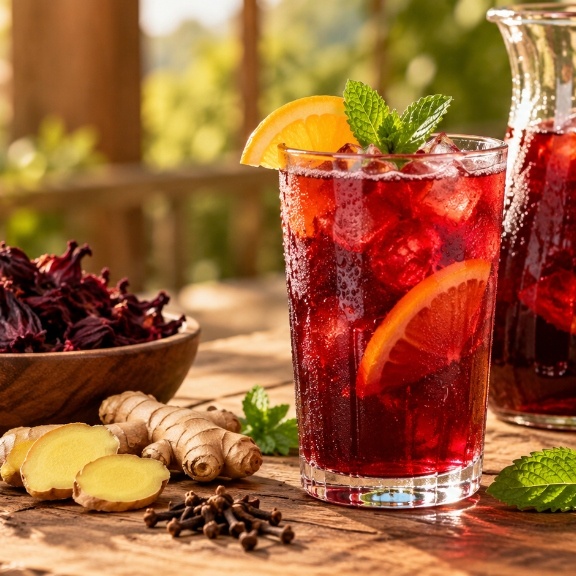
Arriving at a Nigerian celebration or exploring West African cuisine introduces you to a stunning ruby-red drink called zobo. Many people wonder what botanical leaves create its tart, spiced flavor and how to brew it cleanly at home without sandy sediment.
What Is Zobo Drink?
Zobo drink (also known as sobolo in Ghana or bissap in Senegal) is a traditional, non-alcoholic West African beverage made by simmering dried roselle calyces (Hibiscus sabdariffa) with fresh ginger, whole cloves, and pineapple peels. It is served chilled and delivers a bold sweet-tart flavor rich in heart-healthy antioxidants.
Clinical and Pregnancy Safety Notice: Concentrated hibiscus calyces (Hibiscus sabdariffa) contain active organic acids and anthocyanins that function as a documented emmenagogue, potentially stimulating uterine blood flow and menstrual bleeding. Pregnant individuals, individuals undergoing fertility treatments, and nursing mothers should avoid consuming concentrated zobo drink. Additionally, because hibiscus acts as a natural ACE-inhibitor and mild diuretic, individuals taking antihypertensive medications or hydrochlorothiazide must consult a physician to prevent hypotensive episodes.
This guide covers authentic Nigerian botanical ingredients, the science of hibiscus anthocyanins, blood pressure benefits, safe preparation practices, and a zero-grit traditional spiced recipe.
Here is everything you need to know about authentic Nigerian zobo, its science-backed health benefits, important pregnancy safety warnings, and how to brew a batch at home.
What is Zobo Drink?
Zobo is a deep magenta, full-bodied iced beverage made from the dried fleshy calyces (the cup-like structure supporting the flower petals) of the roselle hibiscus plant. In Nigerian markets, these dried botanical leaves are sold in bulk under the Hausa name zoborodo, which gave the drink its popular shorthand name: zobo.
Unlike quick tea-leaf infusions, hibiscus drinks represent slow botanical decoctions; discover the exact botanical definitions in our guide to what is a tisane. It is traditionally boiled on the stove with spicy and aromatic ingredients, particularly fresh crushed ginger root, whole cloves (kanafuru), and the peel of fresh pineapples, before being strained, sweetened, and poured over ice. Simmering fruit peels and warm baking spices with pigmented plants is also central to Andean tradition, notably in Peru's spiced purple corn brew, chicha morada.
Taste, Color, and Aroma
- Color: A rich, jewel-toned burgundy that looks like red wine or tart cherry juice, identical in hue to Mexican hibiscus agua fresca (agua de jamaica).
- Taste: Naturally tart and tangy, very similar to unsweetened wild cranberries or pomegranate juice, rounded out by the fiery warmth of ginger and the deep aroma of cloves.
- Mouthfeel: Full-bodied and crisp, leaving a refreshing astringency that quenches thirst on hot afternoons.
Is Zobo Drink Alcoholic?
Traditional Nigerian zobo is 100% non-alcoholic. It is enjoyed by families, children, and church and mosque communities alike, delivering the deep spiced warmth associated with simmered harvest drinks like hot spiced apple cider, but served over cracked ice. However, because it contains real fruit sugars from pineapple and orange, unpasteurized zobo will naturally ferment if left unrefrigerated for more than 48 hours, producing carbonation and trace alcohol.
The Global Hibiscus Family: Zobo vs. Jamaica vs. Sorrel vs. Bissap
Because Hibiscus sabdariffa traveled across historic tropical trade routes, almost every equatorial culture has created its own signature version of hibiscus punch. While they share the same botanical foundation, their spice blends and preparation methods create distinct culinary profiles. Alongside tart pod decoctions like traditional tamarind water and creamy grain refreshers like Mexican horchata, hibiscus beverages anchor cultural street-food celebrations worldwide.
| Beverage | Region / Country | Primary Spices & Flavorings | Serving Context |
|---|---|---|---|
| Zobo | Nigeria & West Africa | Pineapple peels, fresh ginger, whole cloves, cinnamon | Everyday cooler, weddings, street refreshment |
| Agua de Jamaica | Mexico & Central America | Cane sugar, fresh lime juice (rarely spiced) | Taquerias, family lunches, street markets |
| Bissap | Senegal & Ivory Coast | Fresh spearmint leaves, orange blossom water, sugar | National drink of Senegal; shared hospitality |
| Sorrel | Jamaica & Caribbean | Fresh ginger, allspice (pimento berries), cloves, orange zest | Holiday drink; often spiked with Jamaican white rum |
Proven Health Benefits of Zobo Drink
Because zobo uses whole hibiscus calyces without artificial powder flavorings, it delivers substantial nutritional benefits.
1. Blood Pressure Support
Hibiscus is one of the most thoroughly researched botanicals for cardiovascular health. Multiple clinical trials published by the American Heart Association demonstrate that drinking 2 to 3 cups of hibiscus tea daily significantly lowers systolic and diastolic blood pressure in adults with mild to moderate hypertension. Hibiscus acts as a mild natural ACE inhibitor and diuretic, helping relax blood vessel walls.
2. High Concentration of Anthocyanins
The stunning ruby color of zobo comes from anthocyanins, powerful flavonoid antioxidants that protect cells against oxidative damage. Anthocyanins help lower LDL (bad) cholesterol oxidation, reduce chronic inflammation, and protect liver cells from toxic stress.
3. Hydration and Kidney Cleansing
Because zobo has natural diuretic properties, it encourages the kidneys to flush excess sodium and fluid from the body. When brewed with minimal refined sugar, it provides refreshing hydration in hot weather without dehydrating caffeine.
Critical Safety Warning: Why Pregnant Women Should Avoid Zobo
While zobo is healthy for most adults, expectant mothers must exercise strict caution.
The Emmenagogue Effect & Pregnancy Risk
Hibiscus calyces are a documented emmenagogue, meaning they stimulate blood circulation in the pelvic area and encourage menstrual flow. Clinical studies show that concentrated hibiscus extracts can induce uterine contractions and increase the risk of premature labor or miscarriage. Obstetricians and herbalists strongly advise pregnant women to avoid drinking zobo throughout all trimesters of pregnancy.
Medication Notice: People taking prescription antihypertensive medications (such as lisinopril or amlodipine) should consult their physician, as combining them with large amounts of zobo can cause blood pressure to drop excessively (hypotension).
Authentic Nigerian Zobo Drink Recipe (With Pineapple and Ginger)
This tested recipe produces a fragrant, balanced zobo drink with zero gritty sediment. It yields roughly 2 quarts (8 servings).
Authentic Nigerian Zobo Drink with Pineapple and Ginger
Ingredients
- • 3 cups dried Nigerian hibiscus calyces (zobo leaves)
- • 1 ripe pineapple outer peel chopped, plus fresh fruit pureed for juice
- • 3 inches fresh ginger root, washed, peeled, and roughly crushed
- • 1 tablespoon whole cloves (kanafuru)
- • 1 whole cinnamon stick
- • 8 cups cold filtered water
- • Optional Natural Sweetener: 1/4 cup raw honey, pure date syrup, or brown cane sugar
- • Garnish: Fresh orange wheels, pineapple wedges, and fresh mint leaves
Equipment Needed
- - Large colander and mixing bowl (for zero-grit cold rinse)
- - Large 6-to-8-quart stainless steel stockpot
- - Nut milk bag or fine-mesh colander lined with cheesecloth
- - Blender (for fresh pineapple fruit)
- - Large glass pitcher
Preparation Method
Never boil dried zobo leaves straight out of the package without rinsing, as field-harvested hibiscus calyces often trap fine sand. A rapid 20-second dunk in a colander in cold water floats away desert grit without leaching out any of the precious anthocyanin colors or tart flavors.
How to Store and Preserve Fresh Zobo
Because homemade zobo contains real fruit juices and zero artificial preservatives, proper storage prevents premature fermentation:
Refrigeration (4 to 6 Days)
Store zobo in a sealed glass pitcher or bottle. It stays fresh in the coldest part of your refrigerator for 4 to 6 days. If you notice small carbonation bubbles or a sharp vinegar smell, the drink has begun fermenting and should be discarded.
Freezing (Up to 6 Months)
Zobo freezes exceptionally well. Pour the strained drink into plastic bottles or freezer bags, leaving 1 inch of space at the top for expansion. Freeze for up to 6 months. In Nigeria, freezing zobo in small plastic bags into ice pops (called "zobo lollies") is a favorite treat.
Frequently Asked Questions About Zobo Drink
Q. What is the English name for zobo leaves?
Q. Does zobo drink contain caffeine?
Q. Can I make zobo without sugar?
Q. Where can I buy dried zobo leaves in the United States?
The Bottom Line
Summary and Practical Takeaways
Nigerian zobo is a full-bodied, antioxidant-rich hibiscus beverage that pairs bright floral acidity with the fiery warmth of ginger and cloves.
- Botanical Calyx Foundation: Brewed from whole dried Hibiscus sabdariffa calyces, rich in heart-healthy anthocyanin antioxidants.
- Blood Pressure Support: Clinical trials confirm daily hibiscus infusions support healthy arterial relaxation and blood pressure balance.
- Strict Pregnancy Caution: Due to documented uterine-stimulating emmenagogue effects, expectant mothers must avoid zobo throughout pregnancy.
- Zero-Grit Technique: A rapid 20-second cold-water rinse removes desert dust without washing away the deep crimson pigments.
Commercial Formulation and Hospitality Sourcing
For commercial cold-pressed juice bars, ethnic fusion concepts, and boutique beverage distributors formulating bottled hibiscus coolers or non-alcoholic cocktail mixers, working with a reputable wholesale exotic drinks supplier guarantees pesticide-free whole calyces, reliable phytosanitary documentation, and bulk spice consignments.
Editorial Fact-Checking and Evidence Standards
- Blood pressure clinical outcomes and angiotensin-converting enzyme inhibition trials cite peer-reviewed American Heart Association (AHA) literature.
- Emmenagogue and uterine-stimulating pharmacology references indexed toxicology studies in the National Library of Medicine (PubMed/NCBI).
- Anthocyanin stability, delphinidin concentrations, and organic acid kinetics reflect published research in the Journal of Nutrition.
Sources and Review Standards
- American Heart Association (AHA): Clinical Trials on Hibiscus Sabdariffa and Blood Pressure Regulation
- National Center for Biotechnology Information (NCBI / PubMed): Emmenagogue and Uterine Stimulating Actions of Concentrated Hibiscus Extracts
- Journal of Nutrition: Anthocyanin Bioavailability and Vasodilatory Mechanisms of Roselle Calyces
- U.S. Department of Agriculture (USDA) FoodData Central: Micronutrient and Organic Acid Profiles of Hibiscus Tea and Fruit Infusions


Comments and reviews (0)