


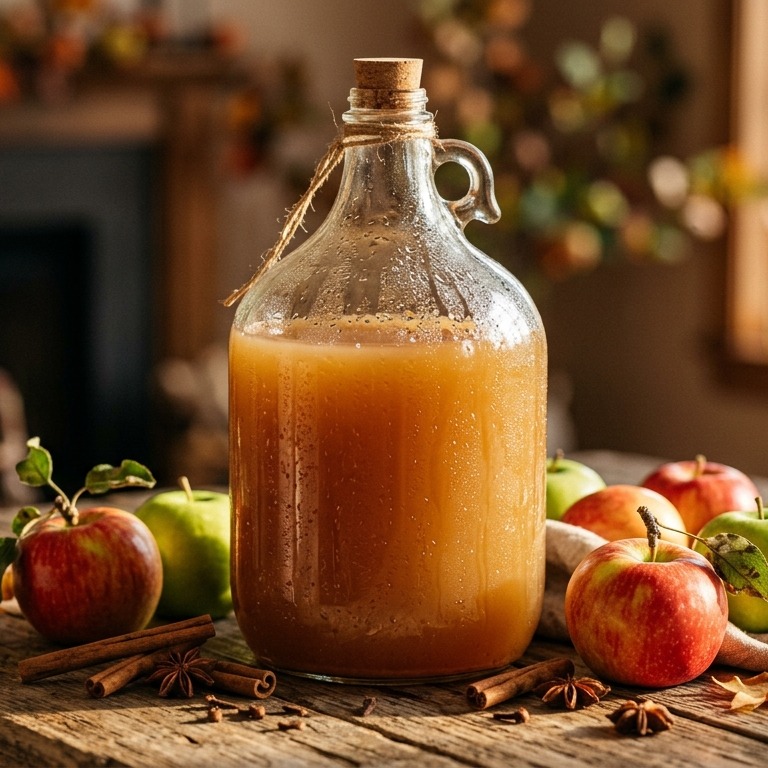
Strolling through a grocery store or visiting a local orchard in autumn brings rows of plastic gallon jugs labeled apple cider. Placed right next to standard bottles of clear apple juice, cider looks dark, cloudy, and full of floating particles. Many shoppers wonder whether apple cider is just unrefined juice, whether it contains alcohol, or why it tastes significantly tarter than regular bottled juice.
What Is Apple Cider?
Apple cider is raw, unfiltered, and unsweetened liquid pressed directly from fresh whole apples. Because it skips the extensive filtering and clarification steps used for commercial apple juice, it retains natural pulp, pectin, and sediment. This gives cider its cloudy caramel color and robust, tangy apple flavor. In the United States, traditional apple cider is completely non-alcoholic.
Safety & Culinary Overview: Unpasteurized orchard cider provides authentic harvest flavor but carries foodborne risk for vulnerable groups. Commercial supermarket cider is flash pasteurized or UV-treated for complete microbial safety without losing crisp acidity.
What is Apple Cider?
Apple cider (also known in North America as "sweet cider") is fresh juice pressed from harvested apples that has not undergone fine filtration.
Unlike commercial shelf-stable apple juice, authentic cider does not have added sugar, water, or high-fructose corn syrup. It is simply the pure liquid pressed out of a blend of sweet and tart apple varieties.
Taste, Color, and Texture
Because cider contains solid apple particles and skin fragments, its sensory profile is distinct:
- Color: It ranges from opaque golden amber to deep caramel brown.
- Texture: It feels heavier on the tongue than water. You can see a layer of fine sediment settle at the bottom of the jug after sitting undisturbed.
- Flavor: It tastes deeply tart, sweet, and aromatic. While commercial apple juice tastes uniformly sweet, cider carries the bright acidity and tannins found in fresh orchard fruit.
How Apple Cider is Made
Making apple cider involves three basic stages:
- Washing and sorting: Cider makers blend several apple varieties—combining sweet apples (like Gala or Fuji), tart apples (like Granny Smith or McIntosh), and aromatic apples (like Cortland or Honeycrisp) to balance acidity and sugar.
- Milling: Whole apples pass through a mechanical chopper or hammer mill, grinding them into a wet, chunky mash called apple pomace.
- Pressing: The pomace is placed onto heavy hydraulic press racks lined with coarse cloth. The machine exerts tons of pressure, squeezing the golden juice out of the fruit fibers. The liquid passes through a coarse screen to catch large seeds and stems, but fine pulp remains in the liquid.
Apple Cider vs. Apple Juice: The Key Differences
Shoppers frequently ask whether the two terms are interchangeable. While both beverages start with fresh apples, their processing and shelf stability set them apart.
| Feature | Fresh Apple Cider | Commercial Apple Juice | Hard Cider |
|---|---|---|---|
| Filtration | Coarse filtered (retains pulp and sediment) | Fine filtered, clarified, and stripped of solids | Filtered or unfiltered |
| Appearance | Cloudy, opaque, deep amber or brown | Clear, translucent, bright pale yellow | Varies (clear to hazy gold) |
| Pasteurization | Often unpasteurized or UV-treated | Heat pasteurized (shelf-stable) | Pasteurized or stabilized |
| Alcohol Content | 0.0% (Non-alcoholic) | 0.0% (Non-alcoholic) | 4.5% to 8.5% ABV |
| Added Sugar | None | Sometimes added (or made from concentrate) | Residual fruit sugar |
| Storage Location | Refrigerated produce section | Center grocery aisle (room temperature) | Beer and wine section |
| Shelf Life | 7 to 14 days refrigerated | 12+ months unopened in pantry | Months to years |
Filtration: Why Cider is Cloudy
The cloudiness in apple cider comes from suspended particles of apple flesh, cell wall fragments, and natural pectin.
To turn cider into commercial apple juice, manufacturers add enzymes (such as pectinase) that break down these natural starches. The liquid is then heated, spun through high-speed industrial centrifuges, and forced through microscopic filters. This process removes all solids, turning the cloudy amber liquid into clear, golden juice.
Flavor: Tart Complexity vs. Uniform Sweetness
Clarifying and heating apple juice strips away many volatile aromatic compounds and subtle fruit acids. To restore flavor, juice producers often reconstitute apple concentrate with water and sweetening agents.
Apple cider skips this stripping process, preserving the authentic, slightly tangy bite of the original orchard fruit.
Is Apple Cider Alcoholic? (Sweet Cider vs. Hard Cider)
In the United States and Canada, apple cider is non-alcoholic. If you purchase a jug of apple cider at an American grocery store, orchard, or roadside stand, you are buying a family-friendly drink.
The International Difference
If you travel to the United Kingdom, Ireland, France, Australia, or New Zealand, the word "cider" always refers to an alcoholic beverage made by fermenting apple juice.
In those countries:
- Cider: Refers to an alcoholic drink with 4% to 8% alcohol by volume.
- Apple juice: Refers to non-alcoholic apple drinks (whether cloudy or clear).
In North America, alcoholic cider is explicitly labeled as hard cider to avoid confusion.
What Happens When Sweet Cider Sits in the Refrigerator?
Because fresh apple cider contains natural wild yeasts from apple skins and plenty of fruit sugar, it will begin to ferment if left unpasteurized or kept past its expiration date.
If your jug of cider begins to puff outward, hisses when opened, or tastes fizzy and sharp on your tongue, natural fermentation has started. While early fermentation produces trace amounts of alcohol (less than 1%), continued wild fermentation without sanitized brewing equipment can introduce spoilage bacteria and mold. If your cider tastes sour or carbonated, it is best to discard it.
Pasteurized vs. Unpasteurized Cider: What You Need to Know
When shopping at local orchards and farmers' markets, you may encounter raw, unpasteurized cider. Understanding the difference is vital for family safety.
The FDA Warning on Raw Orchard Cider
Fresh apples that drop to the ground in orchards can come into contact with animal manure, carrying dangerous foodborne bacteria such as Escherichia coli (E. coli O157:H7), Salmonella, or Cryptosporidium.
Because unpasteurized cider is not heated to kill bacteria, the U.S. Food and Drug Administration (FDA) requires all untreated juices and ciders to carry an explicit warning label:
"WARNING: This product has not been pasteurized and, therefore, may contain harmful bacteria that can cause serious illness in children, the elderly, and persons with weakened immune systems."
If you are pregnant, serving young children, or immunocompromised, only purchase cider that is labeled as pasteurized, or bring raw cider to a rolling boil for at least one minute before drinking.
How Commercial Cider is Treated
Most ciders sold in American supermarkets are treated to kill bacteria without destroying fresh orchard flavor:
- Flash pasteurization: The cider is heated to roughly 160°F (71°C) for 6 to 15 seconds, destroying pathogens while preserving most of the crisp fruit flavor.
- UV light irradiation: The cider passes in a thin sheet past high-intensity ultraviolet lamps. The UV light destroys bacterial DNA at cold temperatures without applying any heat, keeping the flavor completely identical to raw cider.
How to Store Apple Cider and Shelf Life
Proper temperature management ensures your cider stays fresh and delicious:
- Refrigeration: Fresh cider must always be refrigerated, even before opening. Unopened, pasteurized cider stays fresh for roughly 10 to 14 days. Once opened, consume it within 7 to 10 days.
- Freezing: If you buy several gallons at an autumn orchard, cider freezes exceptionally well. Pour out about 1/2 cup from the top of the plastic jug to leave headspace for liquid expansion, then freeze for up to one year. Thaw in the refrigerator for 24 to 48 hours before serving.
How to Make Hot Spiced Apple Cider (Easy 15-Minute Recipe)
Hot mulled cider is one of the most popular autumn drinks in America. Heating the cider with whole spices fills your home with an inviting aroma and cuts through cold weather.
Classic Hot Spiced Mulled Apple Cider
Ingredients
- • 1/2 gallon (8 cups) fresh raw unfiltered apple cider (cloudy)
- • 3 whole cinnamon sticks
- • 5 whole allspice berries
- • 5 whole whole cloves
- • 1 medium fresh orange, washed and sliced into rounds
- • Optional: 1 whole star anise pod
Equipment Needed
- – Medium stainless steel saucepan or Dutch oven
- – Soup ladle
- – Fine wire mesh strainer
- – Ceramic mugs or heat-safe glasses
Preparation Method
Authentic hot mulled cider requires raw, unfiltered apple cider containing suspended pectin and apple solids. Filtered, pasteurized clear apple juice has its solids and tannins stripped away, producing a thin, overly sugary drink that lacks depth when heated.
Frequently Asked Questions About Apple Cider
Can you drink apple cider cold?
Yes. Apple cider is delicious cold straight from the refrigerator, poured over ice, or warmed up in a mug with mulling spices.
Can you use apple juice instead of apple cider in baking?
Yes, you can substitute apple juice for apple cider in baking recipes (such as apple cider donuts or cakes) using a 1-to-1 ratio. However, because apple juice lacks the acid and tannins of cider, the finished baked goods will have a milder flavor. For best results, simmer 2 cups of apple juice until it reduces to 1 cup before baking to concentrate its flavor.
Is apple cider the same as apple cider vinegar?
No. Apple cider is a sweet fruit beverage. Apple cider vinegar is a sour cooking condiment made by fermenting apple cider past the alcohol stage until acetobacter bacteria turn the alcohol into acetic acid.
Does apple cider have added sugar?
Authentic apple cider contains zero added sugar. All of its sweetness comes from the natural fruit sugars present in the pressed apples.
The Bottom Line
Summary and Practical Takeaways
Authentic fresh apple cider is unfiltered, unpasteurized or flash-pasteurized raw apple juice pressed from whole autumn orchard apples, containing all suspended pomace, pectin, and aromatic tannins.
- Cider vs. Clarified Juice: Apple cider is raw, cloudy, and unfiltered; commercial apple juice is filtered, clarified, and heavily pasteurized.
- Orchard Apple Blend: Best flavor relies on combining sweet dessert apples (Gala, Honeycrisp), tart culinary apples (Granny Smith), and high-tannin cider varietals.
- Soluble Fiber & Polyphenols: Retains active cloudiness containing up to four times the polyphenols and soluble pectin of clear clarified juice.
- Seasonal Storage: Fresh unpreserved cider naturally ferments within 7 to 10 days; keep strictly refrigerated or freeze for long-term storage.
Sources and Review Standards
- U.S. Food and Drug Administration (FDA): Guidance for Industry – Juice HACCP and Pasteurized Cider Regulations
- Cornell University Department of Food Science: Apple Varietal Selection and Polyphenol Preservation in Fresh Cider Pressing
- U.S. Department of Agriculture (USDA) Agricultural Research Service: Antioxidant Profiles of Unfiltered Apple Cider vs. Clarified Juice
- Journal of Agricultural and Food Chemistry: Pectin and Quercetin Retention in Traditional Orchard Apple Cider





Comments and reviews (0)