


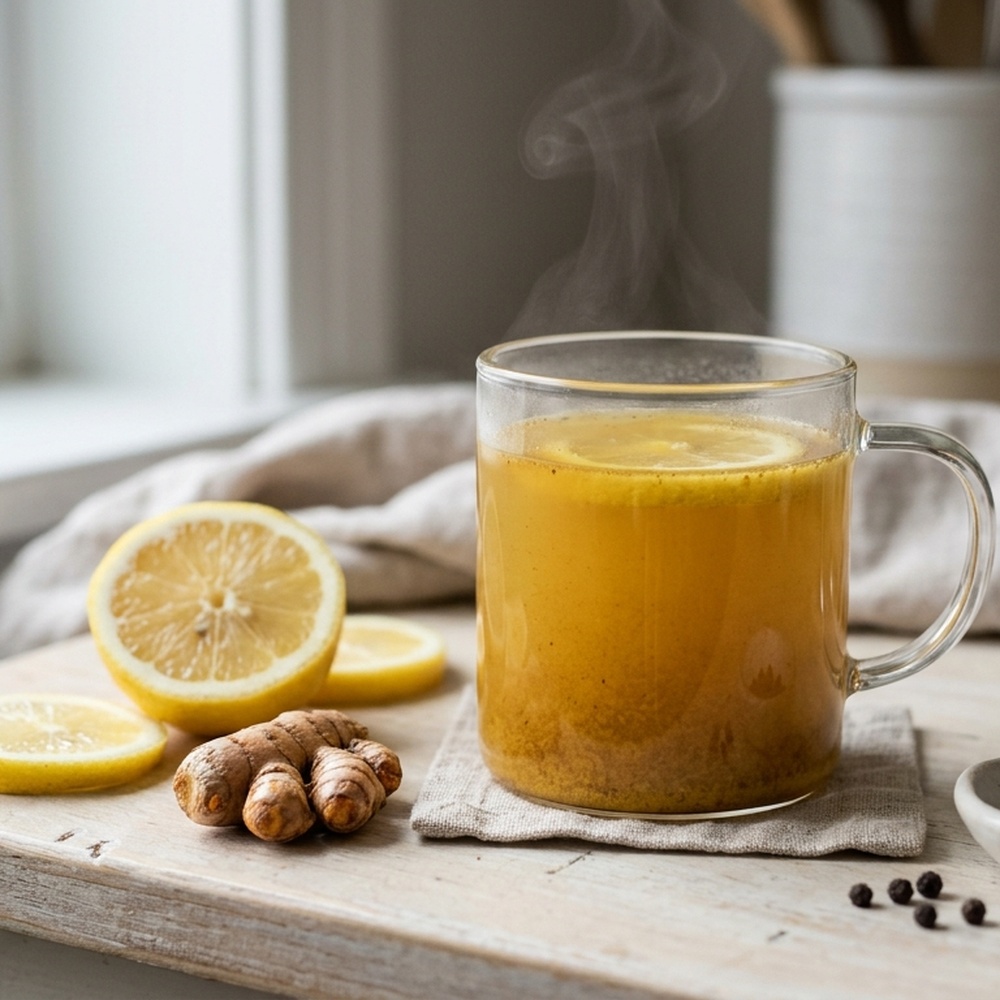
Turmeric water is a traditional spice infusion made with ground powder or sliced fresh rhizome. It has a distinct earthy, warm flavor and bright yellow-orange color. Many drinkers add lemon, ginger, or black pepper, but questions remain about absorption, joint health, and clinical safety.
Quick answer: Turmeric water provides calorie-free hydration and culinary flavor, but clinical findings on high-dose curcumin extract supplements cannot guarantee that a kitchen spice drink relieves joint pain, burns belly fat, or stabilizes blood glucose. A mild, balanced serving combines 1/4 teaspoon of ground turmeric in warm water with optional lemon and a pinch of black pepper.
Individuals with gallstones, bile duct obstruction, calcium oxalate kidney stones, or those taking prescription anticoagulants like warfarin must consult a physician before consuming regular daily turmeric drinks. Concentrated curcumin stimulates gallbladder contractions and may increase bleeding risk during surgery.
This guide examines the biological bioavailability of curcumin, explains the clinical research behind piperine and dietary fats, compares four popular morning drinks, provides a tested three-minute recipe, and details medical safety boundaries.
What Is Turmeric Water?
Turmeric comes from the underground rhizome of Curcuma longa, a perennial plant in the ginger family native to South Asia. The spice has played an essential role in Ayurvedic traditions and culinary heritage for centuries.
The golden rhizome contains curcuminoids, a family of active polyphenolic pigments led by curcumin. Ground turmeric stirred into water forms a cloudy, suspended beverage, while sliced fresh root produces a lighter herbal infusion. Both preparation methods differ fundamentally from standardized pharmacological curcumin capsules containing isolated 95 percent extracts.
Taste Profile and Palate Adjustments
Pure turmeric water has an earthy, warm, and distinctly bitter taste profile. An overly strong powder mixture can leave a chalky mouthfeel, especially near the bottom of the cup. Fresh lemon juice adds refreshing citric tartness, while a slice of ginger contributes warming heat. A modest drop of raw honey softens bitterness, while finely cracked black pepper imparts a subtle spicy kick.
Fresh Rhizome versus Ground Powder
Fresh turmeric root provides a bright, floral aroma and contains natural volatile oils. Thin slices are simple to steep and strain cleanly from hot water. Ground turmeric powder offers pantry convenience and uniform measuring, but insoluble plant particles inevitably settle at the base of the mug. One teaspoon of grated fresh root contains substantially more moisture than one teaspoon of dried powder, meaning they cannot be treated as equivalent curcumin dosages.
Turmeric Water with Black Pepper: What the Research Means
Bioavailability describes the proportion of an ingested nutrient that enters systemic circulation to exert biological activity. Pure curcumin possesses inherently low oral bioavailability because it is hydrophobic (poorly soluble in water) and undergoes rapid metabolic breakdown in the liver and intestinal mucosa.
Where Does the 2,000 Percent Absorption Claim Come From?
In a classic 1998 clinical trial published in Planta Medica, human volunteers received 2 grams of isolated curcumin paired with 20 milligrams of piperine, an alkaloid found in black pepper. Researchers observed a 2,000 percent increase in serum curcumin levels compared to curcumin administered alone. Piperine achieves this by inhibiting hepatic and intestinal glucuronidation enzymes.
However, that trial evaluated laboratory-purified chemical compounds. A pinch of coarse kitchen black pepper in a mug of water contains an unmeasured quantity of piperine and cannot replicate standardized clinical absorption kinetics. Furthermore, elevated blood levels do not automatically guarantee clinical symptom relief.
Does Turmeric Water Require Added Fat?
Curcumin is lipophilic, meaning it dissolves readily in dietary fats rather than water. While specialized lipid emulsions are studied in pharmaceutical labs, whisking a teaspoon of coconut oil or ghee into hot water does not create a stable emulsion; the oil droplets float to the surface while the turmeric particles sink. Drinking turmeric water alongside a balanced meal containing natural healthy fats is far more effective than forcing melted oil into a morning mug.
Turmeric Water Benefits: What Is Supported by Evidence?
The primary guaranteed benefit of drinking homemade turmeric water is clean, sugar-free fluid replenishment. Replacing sugary carbonated beverages with a warm spice brew reduces daily caloric load while contributing to baseline hydration. For those comparing morning botanical options, our comprehensive hydrating drinks guide explains how fluid retention varies across common beverages.
Joint Discomfort and Inflammation
Curcumin has demonstrated inhibitory effects on nuclear factor kappa B (NF-kB), an intracellular protein complex governing inflammatory gene expression. While systematic reviews from the National Center for Complementary and Integrative Health note positive trends for joint stiffness in knee osteoarthritis, these studies utilize high-potency extracts delivering 1,000 to 1,500 milligrams of standardized curcuminoids daily. Kitchen turmeric water delivers significantly lower active amounts and cannot replace rheumatology care.
Digestion and Gallbladder Motility
Small clinical trials using ultrasound imaging have documented that curcumin stimulates measurable gallbladder contractions, prompting bile secretion into the duodenum. While this physiological action supports dietary fat digestion in healthy individuals, it also explains why persons with existing gallstones must exercise caution.
Blood Sugar and Metabolic Claims
Consuming plain unsweetened turmeric water before breakfast does not magically blunt postprandial glucose spikes. Individuals managing diabetes should note that adding honey or maple syrup introduces simple carbohydrates that must be factored into their daily meal plan.
Detoxification and Belly Fat Myths
There is zero scientific evidence that turmeric water targets visceral abdominal fat or detoxifies internal organs. The human liver and kidneys continuously neutralize and excrete metabolic wastes without requiring commercial detox cleanses.
Turmeric Water, Golden Milk, Lemon Water, and Ginger Tea Compared
Selecting the best morning beverage depends on your flavor preferences, digestive tolerance, and nutritional goals:
| Morning Drink | Core Ingredients | Palate & Mouthfeel | Nutritional & Practical Checks |
|---|---|---|---|
| Turmeric Water | Water, ground or fresh turmeric, optional lemon/pepper | Earthy, warm, slightly bitter; powder settles | Virtually zero calories without honey; sediment requires stirring |
| Traditional Golden Milk | Dairy or plant milk, turmeric, black pepper, cinnamon | Creamy, rich, velvety, warming spice finish | Provides healthy fats, protein, and calcium depending on milk base |
| Fresh Lemon Water | Filtered water, freshly squeezed lemon juice | Bright, crisp, tart, citrus-forward acidity | Delivers natural vitamin C; rinse mouth to protect dental enamel |
| Simmered Ginger Tea | Water steeped with sliced fresh Zingiber rhizome | Spicy, warming, usually easy to strain | Easy to strain cleanly; natural gingerols support gastric comfort |
Mild 3-Minute Turmeric Water Recipe
Mild 3-Minute Turmeric Water
Key Ingredients
- ✓1 cup (240 ml) Warm drinking water (between 120°F and 140°F)
- ✓1/4 tsp Food-grade organic ground turmeric powder
- ✓1 pinch Freshly cracked black pepper (optional, for flavor)
- ✓1 to 2 tsp Fresh lemon juice (optional, for bright tartness)
- ✓1/2 tsp Raw honey or pure maple syrup (optional, to soften bitterness)
Preparation Steps
Creating a smooth paste with a single spoonful of water before filling the mug prevents dry turmeric powder from floating on the surface in unappetizing hydrophobic clusters.
Why Turmeric Sinks and How to Reduce Grittiness
Dried turmeric powder consists of ground fibrous plant cells that do not dissolve in water. They remain briefly suspended in hot liquid before gravity pulls them to the bottom. Warm water, citric acid, and vigorous whisking will not force insoluble cellulose to dissolve.
To minimize sediment and improve texture:
- Always make a loose slurry paste in the mug first before adding the full volume of water.
- Start with 1/8 to 1/4 teaspoon for a lighter, more drinkable body.
- Keep a small spoon in the mug to stir lightly between sips.
- Switch to thinly sliced fresh turmeric rhizome simmered for 5 minutes and strained through a fine sieve.
Turmeric Water Side Effects and Clinical Precautions
While culinary amounts of turmeric used in home cooking are safe for the general population, daily therapeutic consumption requires careful medical awareness:
Gallstones and Biliary Obstruction
The European Medicines Agency (EMA) explicitly advises against medicinal turmeric preparations in patients with gallstones, biliary tract blockages, or acute liver disease. By stimulating cholecystokinetic contractions, turmeric can precipitate biliary colic in individuals with obstructed bile ducts.
Kidney Stones and Oxalates
Turmeric contains soluble oxalates that bind calcium during excretion. Clinical crossover studies have shown that supplemental turmeric ingestion significantly increases urinary oxalate excretion, elevating the risk of calcium oxalate urolithiasis in susceptible stone formers.
Anticoagulants and Elective Surgery
Curcumin exhibits mild antiplatelet activity. Health regulatory bodies like Medsafe caution individuals taking warfarin, clopidogrel, or direct oral anticoagulants (apixaban, rivaroxaban) to discuss regular turmeric beverages with their prescribing physician. Daily intake should be discontinued two weeks prior to major elective surgical or dental operations.
Dental Enamel and Clear Aligners
Curcumin is an intense natural yellow dye that readily discolors plastic orthodontic retainers and clear aligners. Always remove aligners before drinking. When adding lemon juice, rinse the mouth with plain water afterward and wait at least 30 minutes before tooth brushing, following American Dental Association guidelines.
Commercial Botanical Formulation and Bulk Supply
For beverage manufacturers, commercial juice bars, and wellness brands developing ready-to-drink functional shots and botanical waters, securing batch-certified, heavy-metal-tested turmeric rhizomes and cold-pressed ginger roots is vital. Sourcing through an established wholesale exotic drinks supplier ensures dependable organic supply chains, standardized brix levels, and commercial wholesale packaging.
Frequently Asked Questions About Turmeric Water
Q. What are the benefits of drinking turmeric water?
Q. What happens when you drink turmeric water every morning?
Q. Must you add black pepper to turmeric water?
Q. Does turmeric water need fat?
Q. How much turmeric powder should you put in water?
Q. How much turmeric is safe to drink every day?
Q. Is hot or cold turmeric water better?
Q. Should you drink turmeric water on an empty stomach?
Q. Why does turmeric sink to the bottom?
Q. Is fresh turmeric better than powder?
Q. Does turmeric water help joint pain?
Q. Can turmeric water reduce belly fat?
Q. Does turmeric water lower blood sugar?
Q. Can turmeric water cause kidney stones?
Q. Who should be cautious with turmeric water?
Q. Can turmeric water dissolve gallstones?
Q. Can turmeric water stain teeth or retainers?
Q. Is turmeric water the same as golden milk?
Q. How long can you store turmeric water?
Sensible Botanical Enjoyment Without Exaggerated Claims
Turmeric water is an aromatic, sugar-free culinary beverage that contributes to daily hydration. Enjoy it for its distinct earthy warmth rather than expecting pharmaceutical treatment effects, and respect clinical precautions regarding gallstones, oxalates, and blood thinners.
Editorial Fact-Checking and Evidence Standards
- Pharmacokinetics and Bioavailability: Evaluation of curcumin and piperine absorption kinetics based on published trials in Planta Medica and European Journal of Drug Metabolism.
- Biliary Motility and Gallbladder Function: Clinical ultrasound documentation of postprandial gallbladder contractions following curcumin ingestion in human subjects.
- Regulatory Monograph and Safety Warnings: Contraindications and pharmacovigilance advisories compiled from the European Medicines Agency, Australian TGA, and Medsafe New Zealand.
Sources and References
- Influence of Piperine on the Pharmacokinetics of Curcumin in Animals and Human Volunteers (Shoba et al., 1998) - Planta Medica / PubMed
- Turmeric Monograph on Biliary and Hepatic Safety - European Medicines Agency (EMA)
- Effect of Turmeric on Urinary Oxalate Excretion - American Journal of Clinical Nutrition / PubMed
- Turmeric and Curcumin Dietary Supplements: Clinical Overview - National Center for Complementary and Integrative Health (NCCIH)
- Medsafe Safety Alert: Curcumin and Anticoagulant Interactions - New Zealand Medicines and Medical Devices Safety Authority






Comments and reviews (0)