


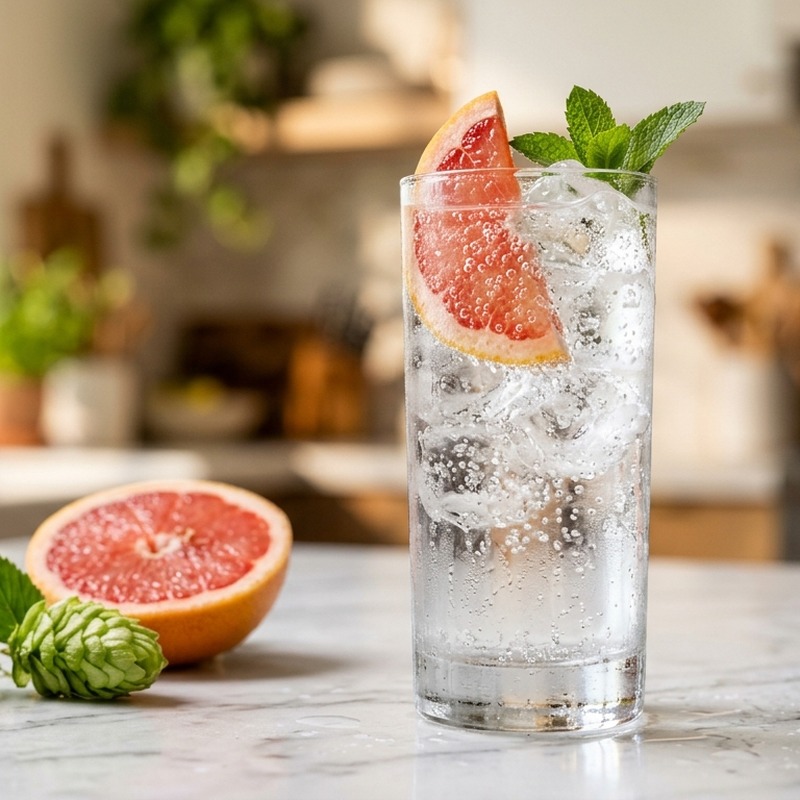
Hop water is sparkling water flavored with hops. These flowers give beer much of its aroma and bitterness. The drink usually has a light body with citrus, floral, tropical or pine notes. Many versions carry a 0.0% alcohol label and list zero calories. Ingredients and nutrition vary by product.
What Is Hop Water and How Does It Taste?
Hop water is an effervescent, alcohol-free beverage made by steeping brewer's hops in carbonated water. It captures the bright citrus, resinous pine, and tropical fruit aromas of dry-hopped craft IPAs while avoiding malt grains, fermentation sugars, yeast, and alcohol. Most commercial varieties contain 0.0% ABV, zero carbohydrates, and zero calories, offering a refreshing, bitter-tinged alternative to sugary sodas and alcoholic beers.
Sobriety, Pregnancy, and Botanical Safety Notice: While standard hop water is lab-certified 0.0% ABV, its distinct hoppy aroma, beer-like sensory cues, and packaging can trigger psychological cravings in individuals recovering from alcohol use disorder. Furthermore, functional hop blends containing added botanicals like ashwagandha, reishi, or L-theanine carry distinct herbal safety advisories. The National Center for Complementary and Integrative Health (NCCIH) advises avoiding ashwagandha during pregnancy and breastfeeding. Always check exact can ingredients.
Its light body differs from most beer. Some versions contain only a few ingredients. Others add juice, vitamins or herbal extracts. This guide covers taste, labels, brands and how the drink is made. It also includes a small kitchen batch. For more choices, see our non-alcoholic drinks guide.
Hop Water at a Glance
| Question | Short Answer |
|---|---|
| What is the base? | Water, hop flavor and usually carbonation. |
| Does it contain alcohol? | Many makers state 0.0% ABV. Confirm the exact product. |
| Does it taste like beer? | It can share an IPA's hop aroma but usually lacks malt flavor and body. |
| Is it calorie-free? | Many plain versions list zero calories. Juice and other additions can change that. |
| Is it gluten-free? | Hops contain no gluten. Check the whole product and handling controls. |
| Does it contain caffeine? | Basic hop water does not need caffeine; check tea and functional blends. |
| Does it help you sleep? | A can is not an established treatment for sleep problems or anxiety. |
What Are Hops?
Hops are the cone-shaped flowers of Humulus lupulus. Brewers use them for aroma, flavor and bitterness. Small yellow lupulin glands in the cones hold oils and resins that contribute to those qualities.
Hops share the plant family Cannabaceae with cannabis, as shown in Kew's botanical record. That family link does not make hop water a cannabis drink. Check for separately added THC or CBD rather than assuming all hop drinks contain them.
Hop Oils and the Flavor They Bring
Hop oils contain many aroma compounds. Common examples include myrcene, humulene, caryophyllene and linalool. Their balance changes with the hop variety, crop and extraction method.
| Compound | Notes Often Associated With It |
|---|---|
| Myrcene | Resinous, green, herbal and citrus-like notes |
| Humulene | Woody, earthy and herbal notes |
| Caryophyllene | Woody, spicy or pepper-like notes |
| Linalool | Floral and citrus-like notes |
These are flavor clues, not a recipe for predicting one can's taste. Yakima Chief Hops' aroma handbook explains a key point. A compound's level in raw hops does not show how strong it will be in a drink.
Hops also contain alpha acids and beta acids. Heating can turn alpha acids into compounds that give beer much of its familiar bitterness. Cooler extraction often favors aroma, but it can still draw out bitter or drying flavors.
How Is Hop Water Made?
Makers flavor water with whole hops, hop pellets or extracts made for beverages. They may adjust acidity and minerals, filter the drink, add other ingredients and carbonate it. The order and treatment steps vary.
Many hop waters avoid the malt-sugar fermentation used to make beer. However, "all hop water is yeast-free" is too broad. Lagunitas describes using brewer's yeast to develop aroma in Hoppy Refresher. It declares the finished drink 0.0% ABV.
Dry Hopping, Warm Steeping and Extracts
Dry hopping means adding hops without boiling them in the beer kettle. It helps explain hop water's aroma-led approach, though makers do not all follow one cold-steeping process.
Warm infusions can work too. Time, temperature, hop dose and filtration affect the result. Extracts allow a maker to add selected hop character with less plant material in the liquid.
"Low alpha acid" is not the only way to choose a hop for water. A variety used for bittering beer can still give useful aroma when handled differently. Follow the method rather than judging by a single number on the hop packet.
What Does Acidity Do?
Citric acid, lactic acid or citrus ingredients can change the drink's flavor and pH. Water minerals also affect how much acid a recipe needs. A small fixed dose of lemon juice cannot guarantee the same pH in every batch.
Acidity can help balance the flavor. It does not remove every grassy note or stop all bitterness. Long contact with plant material can still leave a harsh or drying finish.
Most importantly, adding acid does not make a kitchen infusion shelf-stable. Commercial makers use controlled processes. The FDA's processing guidance covers such controls. One pH reading cannot establish safe storage at room temperature for a homemade drink.
Hop Water vs Non-Alcoholic Beer vs Seltzer
Choose between these drinks based on the taste and ingredients you want. None has one fixed nutrition profile across every brand.
| Feature | Hop Water | Non-Alcoholic Beer | Plain Seltzer |
|---|---|---|---|
| Usual base | Water with hops or hop extract | A beer-style grain base; methods vary | Water and carbon dioxide |
| Flavor | Hop aroma, light body, variable bitterness | More malt, bread or grain character | Neutral, fizzy water |
| Alcohol | Many products declare 0.0% | May contain trace alcohol; some are alcohol-free | No alcohol in the plain product |
| Calories and carbs | Often labeled zero; additions matter | Depend on the specific beer | Usually labeled zero |
| Gluten | Check the finished product | Often contains barley or wheat; exceptions exist | None in plain water |
| Functional extras | Optional herbal extracts or vitamins | Product-specific | Usually none |
Non-alcoholic beer can be made by limiting alcohol formation or by removing alcohol. It is not always a fully fermented beer that has been dealcoholized.
Our gluten-free non-alcoholic beer guide covers the label checks that beer requires. Hop water's lighter body may suit someone who mainly enjoys hop aroma. Beer may suit someone who wants a malty finish.
Does Hop Water Have Alcohol?
Several major hop-water makers declare zero alcohol or 0.0% ABV. That is a useful distinction from a drink that is described only as nonalcoholic. Still, verify the exact can rather than treating the category name as a test result.
For US malt beverages, TTB labeling guidance gives two distinct terms. "Non-alcoholic" means less than 0.5% ABV. "Alcohol free" requires no alcohol. Those are malt-beverage rules, not a single global definition for every sparkling water. If strict alcohol avoidance matters, check the maker's stated alcohol content and ask about testing. A homemade batch has not been tested simply because its recipe omits yeast.
Is Hop Water Suitable During Recovery?
A verified zero-alcohol drink may fit some people's recovery plans. For others, beer-like smells, cans or drinking rituals may be unhelpful. Talk with your support team if you are unsure how those cues affect you. There is no need to choose a beer-like drink to take part in a social occasion; our alcohol alternatives guide covers other styles.
Hop Water Calories, Carbs and Possible Benefits
What the Nutrition Label Can Tell You
Many plain hop waters list zero calories, zero sugar and zero carbs. Fruit juice or other additions can change those numbers. The figures for one original flavor should not be copied to a whole product range.
US labels allow rounding. For example, FDA labeling guidance allows fewer than five calories per serving to be shown as zero. That value may still represent a tiny amount of energy. Use the label and serving size when you compare drinks. If you count carbs for diabetes or a ketogenic diet, read the actual panel and serving size. Hop water does not treat diabetes or guarantee a particular blood-sugar response.
What Benefits Are Realistic?
A hop water you enjoy can give you another way to replace an alcoholic drink or a sugary soda. Whether that reduces alcohol, calories or sugar depends on the product and what it replaces.
It also supplies fluid, like other water-based drinks. There is no need to claim that hops make it hydrate better than plain water; our hydrating drinks guide covers everyday options. Taste, convenience and a suitable ingredient list are sound reasons to choose it. A promise to cure anxiety, improve sleep or provide a "detox" is not.
Does Hop Water Give You a Buzz, Relax You or Make You Sleepy?
A drink verified to contain no alcohol will not cause an alcohol buzz. That does not mean every added botanical is suitable for every person or task.
What the Research on Hops Actually Means
Some lab studies look at hop compounds and GABA receptors. These receptors help control signals in the brain. For example, research on humulone examines one bitter-acid compound. It does not prove that the myrcene or linalool in a can will relax a person.
The European Medicines Agency's hops assessment supports certain traditional herbal uses. It also notes limits in the clinical evidence. Herbal extracts, combined sleep products and ordinary hop water are different products. Hop water is not a proven sleep aid or anxiety treatment. If it makes you feel drowsy, stop and review the ingredients. Avoid driving or using machinery when you feel impaired.
What About Ashwagandha, Reishi and L-Theanine?
Some brands sell functional blends with added compounds. You may see the words "adaptogen" or "nootropic." These terms do not prove that a drink improves stress or thinking.
Formulas change. HOPWTR's current FAQ lists reishi extract, L-theanine and vitamin C. Older descriptions may mention ashwagandha. Read your exact can and the current product information. An old review may list different ingredients. Ashwagandha needs particular care: NCCIH advises avoiding it during pregnancy and breastfeeding and describes possible side effects and medicine interactions. Ask a clinician or pharmacist before using a functional blend if you take medicine or have a health condition. Zero alcohol is only one part of that decision. Do not use it as a blanket pregnancy, breastfeeding, child-safety or workplace-safety claim.
What Does Hop Water Taste Like?
Expect a light, sparkling texture with a hop aroma that may seem citrusy, tropical, floral, herbal or piney. Some versions taste gently bitter. Others focus on aroma with very little bitterness. It usually has less body and no obvious malt sweetness compared with beer. An IPA drinker may recognize the hop notes but miss the grain flavor. A seltzer drinker may notice a stronger herbal aroma than expected.
| Hop Variety | Common Flavor Direction |
|---|---|
| Citra | Citrus and tropical-fruit notes |
| Mosaic | Berry, citrus and tropical notes |
| Amarillo | Orange, floral and citrus notes |
| Simcoe | Pine, citrus and fruit notes |
| Centennial | Citrus and floral notes |
These are broad descriptions. A blend, an extract or a fruit addition can change the final result. An orange-like aroma can come from hops even when the drink contains no orange juice or sugar. Serve it chilled and try a small pour in a clean glass to notice the aroma. Tacos, grilled food, sandwiches and pizza are reasonable pairing ideas if you enjoy citrus and herbal flavors. These are serving suggestions, not results from a taste test.
Hop Water Brands to Compare in the United States
The following figures are manufacturer statements checked on October 22, 2026. They are not independent lab results or a blind-tasting ranking. Confirm the serving size and exact flavor on the can.
Alcohol and Nutrition Comparison
The table keeps uncertain information visible rather than replacing missing figures with guesses.
| Product | Declared Alcohol | Listed Calories | Listed Carbs |
|---|---|---|---|
| Lagunitas Hoppy Refresher Original | 0.0% ABV | 0 | 0 g |
| Sierra Nevada Hop Splash Original | 0.0% ABV | 0 | Conflicting website figures; check can |
| HOPWTR Classic | Maker says nonalcoholic; confirm exact ABV | 0 | 0 g |
| H2OPS Original | Maker states zero alcohol | 0 | Not confirmed in reviewed page text |
| Partake Hop Twist | 0.0% ABV | 0 | 0 g |
Sierra Nevada's shop description says no carbs, while its statistics block lists 1.0 g. Check the actual can or ask the maker before using a precise figure. Its juice-flavored versions can also have different nutrition from Original.
Hop Varieties and Added Ingredients
| Product | Maker's Hop Information | Ingredients or Format Worth Checking |
|---|---|---|
| Lagunitas Hoppy Refresher | Citra, Equinox and Centennial | Maker describes yeast-assisted aroma development. |
| Sierra Nevada Hop Splash Original | Citra and Amarillo | Separate Original from juice-flavored variants. |
| HOPWTR | Citra, Amarillo, Mosaic and Azacca | Check the exact functional blend and current can. |
| H2OPS Original | Hop blend; exact varieties not confirmed | Maker describes an adaptogen-free option. |
| Partake Hop Twist | Citra and Mosaic | Contains lemon juice from concentrate. |
The report also names Athletic Brewing DayPack. Its official DayPack collection showed no products during this check. We could not confirm it as a current buying option. Some retailers may still hold stock. An empty listing does not prove the maker has stopped it permanently.
How to Choose Your First Pack
For a simple starting point, look for a product without added functional ingredients. If you enjoy fruit flavors, compare a citrus version with the original rather than assuming they share the same nutrition. Buy a small pack before committing to a subscription. Check local stock through the maker's store finder or the retailer. You may find hop water in the nonalcoholic drinks aisle, beer section or sparkling-water area, but placement and availability vary.
How to Make Hop Water at Home
This is an educational flavor method, not a tested copy of a commercial product or a validated shelf-stable process. It adapts the report's small-batch idea by steeping in still water first and adding store-bought fizz after cooling. That avoids filtering away most of the bubbles or sealing carbonated liquid in an ordinary jar.
Fresh Sparkling Citrus Hop Water
10 mins
10 to 12 mins
45 mins (with chilling)
4 Servings (1 Liter)
0 kcal
Ingredients & Equipment
- ✓ 2 cups still drinking water, about 500 ml
- ✓ 3 g food-grade brewing hop pellets, such as Citra or Mosaic
- ✓ 2 cups chilled plain sparkling water, about 500 ml
- ✓ Optional: up to 1 teaspoon bottled lemon juice, added to taste
- Tools: saucepan, thermometer, hop bag or strainer with paper filter, heat-safe jug, ice bath
Method Steps
- Clean and Prep: Wash your hands and clean the tools and jug. Use fresh food-grade hops stored according to the supplier's directions.
- Heat Still Water: Heat the still water to about 162 to 167°F, or 72 to 75°C. Add the hops in a clean bag. Steep for 10 to 12 minutes without boiling.
- Filter Gently: Remove the hops and filter the liquid into the heat-safe jug. Avoid squeezing hard, which can push more fine particles into the drink.
- Chill Promptly: Cool it promptly in an ice bath, then refrigerate at 40°F, or 4°C, or colder. Keep the cooling liquid protected from dirt. Do not leave it on the counter for an overnight infusion.
- Adjust Acidity: Once cold, add a little bottled lemon juice if you want a sharper flavor. It is a flavor choice, not a measured preservation step.
- Add Fizz and Serve: Pour equal parts cold infusion and sparkling water into each glass. Serve promptly. Keep any unused infusion refrigerated and make small quantities rather than storing a large home batch.
- Treating lemon juice and citric acid powder as interchangeable teaspoon doses; their acidity differs.
- Assuming cold steeping prevents all bitterness; hop dose and contact time still matter.
- Calling an ordinary mason jar pressure-safe; add carbonation only at serving in this method.
- Adding yeast or sugar and leaving a sealed bottle warm; that can create fermentation, alcohol and pressure.
- Carbonating an infusion in equipment designed for plain water only; follow the appliance maker's instructions.
- Calling the home batch zero-calorie, sterile or alcohol-tested without evidence.
Choosing a Hop Water
Start with the flavor you want, then check alcohol, carbs and any added functional ingredients. Compare the exact products rather than assuming a zero claim applies to the whole category. For a kitchen version, keep the method small, clean and cold, and add sparkling water at serving. Hop aroma can be a useful change from plain seltzer without needing a health promise.
For beverage program directors, craft cafes, and hospitality venues seeking curated non-alcoholic draught or packaged can selections, partnering with an established wholesale exotic drinks supplier ensures reliable cold-chain delivery and verified label documentation.
Frequently Asked Questions
Q. What is hop water?
Hop water is water flavored with hops, usually with carbonation. It often has citrus, floral, tropical or pine notes. Many versions list zero alcohol and zero calories, but the exact product matters.
Q. Does hop water have alcohol?
Many makers declare 0.0% ABV or zero alcohol. Check the specific product and ask about testing if strict avoidance matters. The name alone does not verify the contents of a can or homemade batch.
Q. Is hop water the same as non-alcoholic beer?
No. Hop water is usually a lighter water-based drink with hop flavor. Non-alcoholic beer has a beer-style base and more grain or malt character. Its alcohol, carbs and gluten status depend on the product.
Q. Does hop water taste like beer?
It can share the citrus, floral or pine aroma of a hoppy beer. It usually lacks beer's malt sweetness and fuller body. Bitterness varies, so some versions taste closer to flavored seltzer.
Q. Can hop water give you a buzz?
A drink verified to contain no alcohol will not cause an alcohol buzz. Functional ingredients may have other effects. Check the label and avoid driving or using machinery if you feel drowsy or impaired.
Q. Does hop water make you sleepy?
It is not an established sleep aid. Research on hop extracts or combined herbal products does not prove a sleep effect from an ordinary can. Review the ingredients if a drink makes you feel drowsy.
Q. Is hop water good for anxiety?
Hop water is not a proven anxiety treatment. An alcohol-free drink may fit your routine. Claims about hop compounds or added herbs do not prove a health benefit from the finished drink.
Q. Does hop water contain caffeine?
Basic water-and-hop drinks do not need caffeine. Tea-based or other specialty blends may differ. Check the ingredient list and caffeine information on the exact product.
Q. Is hop water gluten-free?
Hops contain no gluten, and many hop waters are labeled gluten-free. Check the finished product, other ingredients and cross-contact controls if you have celiac disease or an allergy.
Q. Does hop water have calories?
Many plain versions list zero calories. Juice and other additions may change the number, and labels allow rounding. Check the serving size and nutrition panel rather than assuming every flavor is identical.
Q. Can people with diabetes drink hop water?
It depends on the product and care plan. Check total carbs, serving size and added ingredients. Hop water does not treat diabetes or guarantee a blood-sugar response. Ask about functional blends if you take medicine.
Q. Can I drink hop water while pregnant or breastfeeding?
Do not use zero alcohol as blanket approval. Ask your maternity care team about the specific drink and its herbal ingredients. Ashwagandha should be avoided during pregnancy and breastfeeding, according to NCCIH.
Q. Is hop water suitable for someone in alcohol recovery?
A verified zero-alcohol product may suit some recovery plans. Beer-like aromas or rituals may be unhelpful for others. Check the product and discuss it with your support team if you are unsure.
Q. Does hop water break a fast?
It depends on the product and the purpose of the fast. A labeled zero-calorie drink may fit some personal plans, but a water-only, religious or medical fast may have different rules. Follow medical preparation instructions exactly.
Q. Is hop water keto-friendly?
A product labeled zero carbs may fit a ketogenic plan. Check each flavor, serving size and any juice or sugar additions. The category name alone does not establish its carb content.
Q. Can children drink hop water?
Do not assume that a zero-alcohol label makes every botanical blend suitable for children. Ask a child's clinician about products with hops or functional extracts, and check the full ingredient list.
Q. Does hop water contain cannabis?
Hops and cannabis belong to the same plant family, but hops do not make a drink a cannabis product. Check for separately added THC, CBD or other ingredients on the label.
Q. Can I make hop water without a keg?
Yes. A small hop infusion can be cooled and mixed with store-bought sparkling water just before serving. Use food-grade ingredients and clean equipment. Avoid sealed fermentation or pressure in jars not designed for it.
Q. Where can I buy hop water?
Check the maker's online shop, store finder or a local retailer's stock. It may be in the beer, nonalcoholic or sparkling-water section. Availability differs by product and location.
Q. How should I store hop water?
Follow the commercial product's label for unopened and opened storage. A homemade infusion needs refrigeration and has no validated shelf life in this guide. Make small batches and discard anything suspect without tasting it.
Editorial Fact-Checking and Evidence Standards
- Labeling & ABV Compliance: TTB and FDA malt beverage guidelines cross-referenced to distinguish 0.0% alcohol-free definitions from non-alcoholic thresholds.
- Botanical Safety: European Medicines Agency herbal monographs on Humulus lupulus and NCCIH safety bulletins on ashwagandha verified.
- Commercial Lineup Integrity: Real product specifications verified directly from manufacturer ingredient sheets (Lagunitas, Sierra Nevada, HOPWTR, H2OPS, and Partake).
Sources and References
- U.S. Alcohol and Tobacco Tax and Trade Bureau (TTB) - Malt Beverage Labeling & Alcohol Free Guidance
- U.S. Food and Drug Administration (FDA) - Guidance for Industry: Food Labeling & Calorie Declarations
- European Medicines Agency (EMA) - Committee on Herbal Medicinal Products Assessment Report on Humulus lupulus L.
- National Center for Complementary and Integrative Health (NCCIH) - Ashwagandha: Health Information and Safety Profile
- Royal Botanic Gardens, Kew - Plants of the World Online: Humulus lupulus L. (Cannabaceae) Taxonomy
- Yakima Chief Hops - Hop Aroma Handbook & Terpene Oil Distribution Profiles


Comments and reviews (0)