


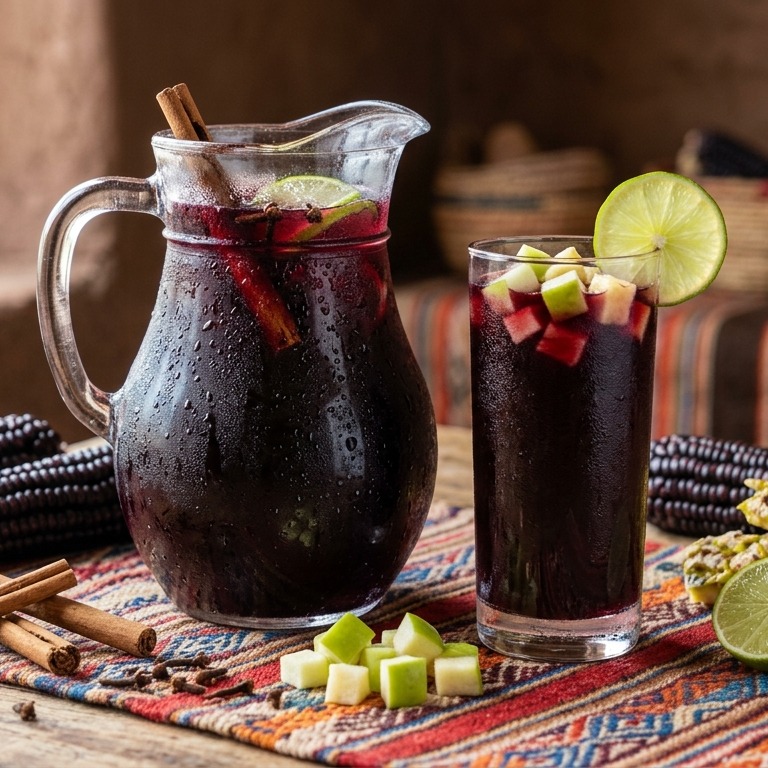
What is chicha morada? Learn about Peru's traditional purple corn drink, its spiced fruit flavor, potent anthocyanin antioxidants, and an authentic homemade recipe.
Seeing a tall glass of dark purple liquid on a Peruvian restaurant table often sparks immediate curiosity. Many diners wonder if the drink contains wine, berry juice, or artificial food dye.
What Is Chicha Morada?
Chicha morada is a traditional non-alcoholic Peruvian drink brewed by simmering dried purple corn (maíz morado) with pineapple rinds, apples, cinnamon, and cloves. Much like Mexico's celebrated aguas frescas, authentic chicha morada is unfermented, naturally sweet, and crafted to provide thirst-quenching hydration in warm climates. It is finished with fresh lime juice and sugar, giving it a sweet, spiced, and pleasantly tart fruit punch flavor with 0.0 percent alcohol by volume.
Clinical and Dietary Notice: While traditional chicha morada contains concentrated anthocyanin polyphenols, classic recipes incorporate unrefined cane sugar (chancaca) and simple fruit sugars from boiled pineapple and apples that may impact blood glucose regulation for diabetic individuals. Additionally, those sensitive to warm botanical spices should note potent concentrations of cinnamaldehyde and eugenol from simmered cinnamon bark and cloves. To prevent microbial contamination from unpasteurized fruit peels, raw pineapple skins must be thoroughly scrubbed before simmering.
This guide covers the distinct flavor profile of chicha morada, its traditional Andean ingredients, antioxidant health benefits, and an authentic step-by-step recipe you can brew from scratch.
What Does Chicha Morada Taste Like?
Chicha morada tastes like a spiced, citrusy fruit punch with earthy depth. The primary notes come from sweet pineapple peel, warm cinnamon, and pungent whole cloves, reminiscent of spiced autumnal hot apple cider. Freshly squeezed lime juice cuts through the sweetness with sharp acidity. The purple corn provides a round, earthy foundation that prevents the drink from tasting like simple sugary syrup. This balance of whole simmered botanicals, tart acidity, and ice-cold sweetness mirrors other beloved Latin American refreshers, including tart tamarind water and Mexico's fruit-forward traditional aguas frescas.
Core Ingredients: The Anatomy of the Drink
Traditional chicha morada relies on staple ingredients from the Andean highlands and coastal fruit valleys of Peru. The technique of simmering whole fruit peels with warm spices shares remarkable culinary parallels with West African zobo drink, which similarly simmers pineapple rinds and cloves with dried botanical calyces:
- Dried Purple Corn (Maíz Morado): Cobs of deep purple, almost black corn native to the Andes. The kernels and cobs release intense anthocyanin pigments and minerals into the boiling water, much like the grain-simmering traditions used for traditional horchata.
- Pineapple Rind (Cáscara de Piña): Outer peels of ripe pineapple. As they simmer, they impart natural fruit sugars, aromatics, and tart enzymes.
- Apples or Quince (Membrillo): Tart green apples or fragrant quince provide pectin, body, and gentle acidity.
- Warm Baking Spices: Whole cinnamon sticks (Ceylon or cassia) and whole cloves infuse the brew with festive aroma.
- Fresh Lime Juice (Jugo de Limón): Stirred in cold right before serving. The citric acid brightens flavor and transforms the liquid from inky dark purple into brilliant ruby.
- Sweetener: Traditional recipes use unrefined whole cane sugar (chancaca or panela), though granulated white sugar or raw cane sugar is common, continuing Mesoamerican traditions of lightly sweetening rich botanical brews like ceremonial cacao drinks.
Step-by-Step Traditional Brewing Method
Making authentic chicha morada at home is straightforward and requires only one large stockpot:
Authentic Andean Chicha Morada (Purple Corn Punch)
Ingredients
- • 1 pound (450g) dried Peruvian purple corn cobs (maiz morado)
- • 1 whole ripe pineapple well-scrubbed peel and core peelings
- • 2 whole Granny Smith or tart green apples, quartered
- • 2 whole cinnamon sticks (canela) & 6 whole cloves
- • 3 to 4 quarts cold filtered water
- • 1/2 to 3/4 cup raw cane sugar, chancaca (panela), or granulated sugar
- • 1/2 cup (3-4 limes) freshly squeezed lime juice (added only after cooling)
- • Garnish: Finely diced green apple cubes and fresh lime wheels
Equipment Needed
- - Large 6-to-8-quart stainless steel stockpot
- - Fine wire mesh strainer or cheesecloth
- - Large glass pitcher or container
- - Tall drinking glasses with plenty of ice
Preparation Method
Never add lime juice while the liquid is boiling hot, as heat destroys ascorbic acid and turns citrus oils bitter. Waiting until the brew cools before adding lime causes the purple corn anthocyanins (C3G) to react with citric acid's low pH, instantly transforming the liquid into a brilliant, glowing ruby magenta.
Health Benefits: The Science of Purple Corn Anthocyanins
Peruvian purple corn contains some of the highest concentrations of anthocyanins found in the plant kingdom, specifically cyanidin-3-glucoside (C3G). These potent water-soluble polyphenols give the corn its intense dark pigment and offer proven physiological benefits:
- Vascular Support: Anthocyanins support healthy endothelial function and arterial flexibility.
- Antioxidant Defense: Laboratory assays show purple corn antioxidant capacity surpasses blueberries and acai berries on an equal dry-weight basis.
- Anti-Inflammatory Action: C3G helps modulate inflammatory markers and cellular oxidative stress.
Comparison: Chicha Morada vs Chicha de Jora vs Fruit Punch
| Feature | Chicha Morada | Chicha de Jora | Commercial Fruit Punch |
|---|---|---|---|
| Alcohol (ABV) | 0.0% ABV (Non-alcoholic) | 1.0% - 3.5% ABV (Fermented) | 0.0% ABV |
| Base Grain | Purple corn (maíz morado) | Germinated yellow corn (jora) | None (water & syrup) |
| Preparation | Boiled with fruit rinds & spices | Fermented in clay vats | Syrup concentrate dilution |
| Flavor Profile | Sweet, spiced, tart, citrusy | Sour, yeasty, cider-like | High fructose candy sweet |
| Antioxidant Level | Exceptionally high (C3G anthocyanins) | Low to moderate | Negligible to zero |
Culinary Pairings: What Dishes Go With Chicha Morada?
Chicha morada is the universal table beverage of Peru because its sharp lime acidity and sweet spice bouquet complement bold savory flavors:
- Peruvian Ceviche: The sweetness and cold citrus of chicha morada cut through the intense heat of rocoto chiles and lime-marinated raw fish.
- Lomo Saltado: The spiced drink cleanses the palate between rich bites of soy-glazed stir-fried beef, onions, and crispy french fries.
- Pollo a la Brasa: Rotisserie chicken seasoned with cumin, garlic, and ají amarillo sauce finds balance against chilled purple corn punch.
Frequently Asked Questions (FAQ)
Q. Does chicha morada have alcohol?
Q. What makes chicha morada purple?
Q. Can you buy chicha morada pre-made in the US?
Q. How long does homemade chicha morada keep in the refrigerator?
Q. What is chicha morada called in English, and what does it mean?
Q. Is chicha morada good for you?
Q. Where can you buy authentic chicha morada near you in the UK?
The Bottom Line
Summary and Practical Takeaways
Chicha Morada is Peru's signature non-alcoholic heritage beverage, brewed by simmering whole dried purple maize cobs with fresh pineapple rinds, green apples, cinnamon, and whole cloves, finished with fresh lime juice.
- Anthocyanin Powerhouse: Powered by dried Peruvian maíz morado, one of the planet's richest natural sources of cyanidin-3-glucoside (C3G).
- Decoction Technique: Whole purple cobs, spices, and fruit peels are boiled gently for 45 to 60 minutes to extract deep pigments and complex aromatics.
- The Lime Chemistry Shift: Adding fresh lime juice right before serving alters beverage pH, shifting the deep purple brew to a brilliant ruby-violet tint.
- Zero Alcohol: Unlike traditional fermented corn chicha de jora, chicha morada is completely unfermented, chilled, and caffeine-free.
Commercial Formulation and Hospitality Sourcing
For restaurant groups, Latin American dining concepts, and specialty cocktail bars introducing authentic Andean chicha morada, securing consistent dried purple corn cobs and bulk botanical infusions from an accredited wholesale exotic drinks supplier guarantees verified anthocyanin extraction standards, food safety compliance, and reliable supply chains.
Editorial Fact-Checking and Evidence Standards
- All antioxidant measurements and cyanidin-3-glucoside (C3G) biochemical values are verified against peer-reviewed studies published in the National Library of Medicine (PubMed).
- Ethnobotanical research and Andean agricultural classifications are cross-referenced directly with data from the International Potato Center (CIP) and Andean Grain Research initiatives.
- Food safety parameters regarding unpasteurized fruit peels and cold holding storage times follow official FDA Food Code standards.
Sources and Review Standards
- National Institutes of Health (PubMed): High Anthocyanin Concentrations and Cyanidin-3-Glucoside in Peruvian Purple Corn (Zea mays L.)
- Journal of Food Science: Thermal Stability and Antioxidant Properties of Maíz Morado Polyphenols During Beverage Decoction
- International Potato Center (CIP) & Andean Grain Research: Biodiversity and Ethnobotanical Uses of Heritage Andean Purple Maize
- U.S. Department of Agriculture (USDA) FoodData Central: Micronutrient and Organic Acid Profiles of Traditional Andean Fruit Beverages


Comments and reviews (0)