


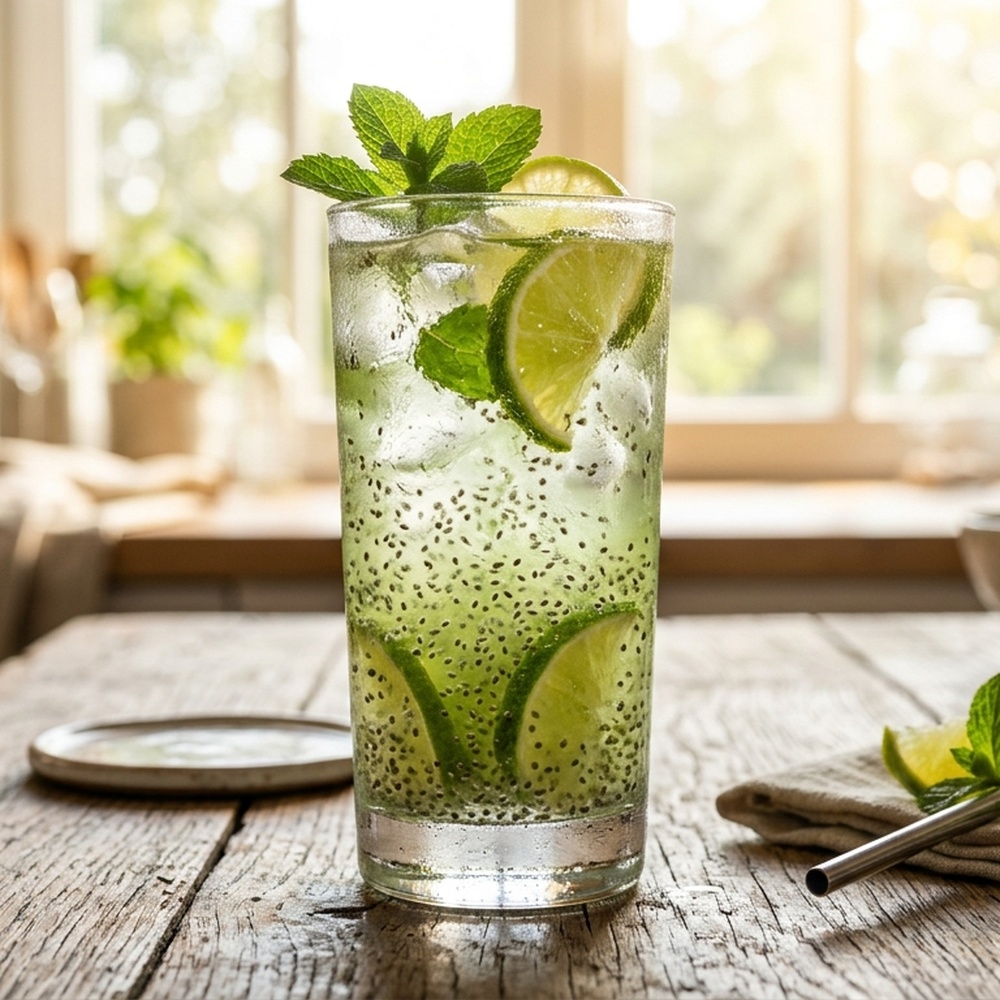
Fitness feeds frequently feature tall glasses of gel-coated black seeds suspended in citrus water, praised as an ancient superfood hydrator. Many enthusiastic readers attempt making a chia seed drink at home to support endurance or digestion, only to produce a clumped, unpalatable mass resting stubbornly at the bottom of the glass.
What Is a Chia Seed Drink (Chia Fresca)?
A chia seed drink is a functional plant beverage made by soaking whole chia seeds (Salvia hispanica) in water, fruit juice, or cold tea, traditionally prepared across Mexico as Chia Fresca or Iskiate with fresh lime juice and honey. Chia seeds absorb 10 to 12 times their dry weight in water, forming a soluble fiber hydrogel that slows digestion, delivers sustained cellular hydration, and supplies plant-based omega-3 alpha-linolenic acid (ALA).
Critical Pre-Soaking & Choking Warning: Always soak whole chia seeds in liquid for a minimum of 10 to 15 minutes before drinking. Swallowing dry, unhydrated chia seeds poses an immediate esophageal choking hazard because the seeds expand rapidly upon contacting moisture in the esophagus. Individuals with esophageal motility disorders or difficulty swallowing must strictly avoid dry seeds.
This guide explains the nutritional biochemistry of chia seeds, explores the indigenous endurance history of Iskiate, compares chia directly to basil and flax seeds, shares a clump-free 10-minute recipe, and outlines digestive safety guidelines.
What Is a Chia Seed Drink (Chia Fresca)?
A chia seed drink combines hydrated seeds from the desert plant Salvia hispanica, an annual herbaceous member of the mint family (Lamiaceae), with cold water, citrus juices, or unsweetened herbal infusions. Unlike culinary sunflower or pumpkin seeds that stay firm when wet, chia seeds possess an unusual water-soluble outer pericarp.
When introduced to water, the seed's outer mucilage hull absorbs fluid rapidly, creating an edible, transparent hydrogel envelope around every seed. The finished beverage resembles fresh fruit juice layered with soft popping beads, providing a smooth, satisfying mouthfeel that you can both sip and lightly chew. In traditional Mexican beverage culture, street vendors serve this refreshing preparation as Chia Fresca or Agua de Chia.
Raw chia seeds carry an exceptionally neutral, subtle flavor. They act as botanical flavor sponges, absorbing the aroma of whatever fresh lime, lemon, or cold-pressed fruit base you use to hydrate them. In classic preparations, the drink offers a crisp, tart citrus profile rounded out by natural honey sweetness.
The Science of Mucilage & Water Absorption Kinetics
The physical transformation of chia seeds in liquid is governed by polymer food chemistry. A single tablespoon of dry chia seeds can absorb up to 12 times its weight in water, locking moisture inside an edible polysaccharide network composed of xylose, glucose, and glucuronic acid.
In plant biology, this mucilaginous capsule acts as a moisture reservoir, preventing seed dehydration in arid desert climates. When consumed by humans, that same gel matrix exerts distinct physiological benefits in the stomach. The viscous soluble fiber physically traps water and dissolved carbohydrates, creating a protective barrier that slows gastric enzymatic breakdown and blunts postprandial glucose absorption.
The Heritage of Iskiate: Tarahumara Ultra-Endurance Fuel
The athletic reputation of chia seed drinks originates with the indigenous Rarámuri (Tarahumara) people of the rugged Copper Canyons in northwestern Mexico. Widely celebrated as some of the greatest long-distance ultra-runners on earth, Rarámuri runners routinely cover 50 to 100 miles across steep mountain canyons in handmade tire-tread sandals.
Their primary endurance fuel is a traditional beverage called Iskiate. Before and during arduous mountain runs, runners consume gourds filled with water, whole chia seeds, lime juice, and a touch of raw cane sugar. The drink delivers a dual-phase hydration dynamic: the free citrus water quenches acute thirst, while the gelatinous chia hulls release bound water, electrolytes, and complex fatty acid calories slowly across hours of physical exertion. For everyday athletic hydration options, see our guide to homemade clean electrolyte drinks.
Nutritional Breakdown of Whole Chia Seeds
Chia seeds represent one of the densest plant-based sources of essential fatty acids and soluble dietary fiber known in human nutrition. A standard two-tablespoon (roughly 25-gram) serving of dry chia seeds provides the following nutritional profile:
| Nutrient Metric | Amount (Per 2 tbsp / 25g) | % Daily Value (% DV) | Physiological Mechanism |
|---|---|---|---|
| Energy / Calories | 120 to 135 kcal | 6% | High-density energy derived from healthy plant lipids and protein |
| Total Dietary Fiber | 8.5 to 10.0 g | 34% to 40% | High soluble mucilage content slows digestion and supports regular transit |
| Plant Protein | 4.0 to 4.5 g | 9% | Delivers all nine essential amino acids for muscular tissue repair |
| Total Fat (Lipids) | 7.5 to 8.5 g | 11% | Over 80% unsaturated fats; predominantly alpha-linolenic acid (ALA) |
| Omega-3 (ALA) | 4,500 to 5,000 mg | 300% to 400% | Essential plant-derived anti-inflammatory omega-3 fatty acid |
| Calcium (Ca2+) | 160 to 180 mg | 14% to 18% | Supports bone mineral density; higher calcium per gram than whole milk |
| Magnesium (Mg2+) | 80 to 95 mg | 20% to 24% | Cofactor for over 300 enzymatic reactions and muscle contraction relaxation |
The substantial soluble fiber payload explains why chia seed drinks promote extended satiety. Once the swollen seeds enter the gastric tract, the viscous gel exerts gentle pressure on stomach distension receptors, stimulating the release of satiety hormones that suppress between-meal snacking.
Seed Drink Showdown: Chia vs. Basil vs. Flax vs. Tapioca
With numerous botanical seed and pearl drinks gaining popularity in juice bars, consumers often wonder how chia compares to alternative texture options:
| Botanical Ingredient | Soaking Time | Gel Texture | Dominant Nutrient | Best Beverage Fit |
|---|---|---|---|---|
| Chia Seeds (Salvia hispanica) | 10 to 15 minutes | Soft, uniform gel halo; gentle central crunch | Omega-3 ALA & Soluble Fiber | Citrus refreshers, sports hydration, morning waters |
| Basil Seeds (Sabja) | 5 to 8 minutes | Crisp popping pearl bead; separate gelatinous skin | Soluble Fiber & Plant Minerals | Floral lemonades, iced teas, Persian sharbats |
| Ground Flaxseed | Instant thickening | Dense, grainy, viscous paste without beads | Lignans & Insoluble Fiber | Blended green smoothies, hot breakfast porridges |
| Tapioca Pearls (Boba) | Boiled 30 mins | Dense, chewy, starch-heavy gummy bead | Refined Starch (200+ kcal) | Milk teas, dessert drinks, sweetened cafe treats |
If you prefer distinct popping beads that hydrate in under eight minutes, read our comprehensive guide on basil seed drink benefits and recipes. If your goal is omega-3 fatty acid intake, chia seeds remain the clear winner.
Authentic Mexican Chia Fresca (Iskiate) Recipe
The primary challenge when preparing chia drinks at home is seed clumping. Dry chia seeds clump together if poured all at once into cold water. This proven method guarantees evenly suspended, silky chia beads every time.
Authentic Mexican Chia Fresca (Iskiate)
Key Ingredients
- ✓2 tbsp (25 g) Whole black or white culinary chia seeds (Salvia hispanica)
- ✓3 cups (720 ml) Cold filtered drinking water or pure coconut water
- ✓3 tbsp (45 ml) Freshly squeezed lime juice (approx. 2 medium limes)
- ✓1.5 tbsp (22 ml) Raw clover honey, pure blue agave nectar, or maple syrup
- ✓1 pinch Fine unrefined sea salt to support mineral hydration
- ✓1 cup Clean ice cubes
Preparation Steps
Whisking the seeds twice during the initial five-minute hydration window is the secret to completely clump-free, evenly suspended chia beads.
Frequently Asked Questions About Chia Seed Drinks
Q. What is a chia seed drink?
Q. What does a chia seed drink taste like?
Q. Can you drink chia seeds without soaking them first?
Q. Does drinking chia seed water help with weight management?
Q. How long do you need to soak chia seeds for a drink?
Q. Can you drink chia seed water every day?
Q. Do chia seed drinks help with digestion and constipation?
Q. How long does homemade chia fresca last in the refrigerator?
Commercial Beverage Formulation & Bulk Chia Supply
For commercial beverage formulators, RTD functional drink manufacturers, and health brand developers seeking certified organic black or white chia seeds, verified seed purity, microbiological screening, and stable suspension technology are vital. Connect directly with our enterprise team as an established wholesale exotic drinks supplier to access certified organic chia seeds, aseptic botanical bases, and custom contract formulation support.
Editorial Fact-Checking and Evidence Standards
- Lipid & Omega-3 Biochemical Quantification: Alpha-linolenic acid (ALA) concentrations and fatty acid ratios verified through USDA FoodData Central and biochemical lipid chromatography literature.
- Hydrocolloid Polysaccharide Mechanics: Hydration kinetics, mucilage swelling ratios, and gastric emptying dynamics corroborated with published peer-reviewed food polymer studies.
- Esophageal Safety & Choking Prevention: Pre-soaking protocols and esophageal obstruction case studies cross-referenced with clinical gastroenterology emergency medicine guidelines.
Sources and References
- USDA FoodData Central: Seeds, Chia Seeds, Dried Nutrient Analysis (FDC ID 170554) - U.S. Department of Agriculture
- PubMed / Clinical Study: Dietary Chia Seed (Salvia hispanica L.) and Cardiovascular Risk Factors - National Library of Medicine
- Harvard T.H. Chan School of Public Health: Chia Seeds Health Benefits and Fiber Profiles - Harvard Nutrition Source
- Journal of Food Science and Technology: Functional Characterization of Chia Seed Mucilage - Springer BioSciences
- National Institutes of Health (NIH): Dietary Fiber Intake and Human Health - National Library of Medicine


Comments and reviews (0)