


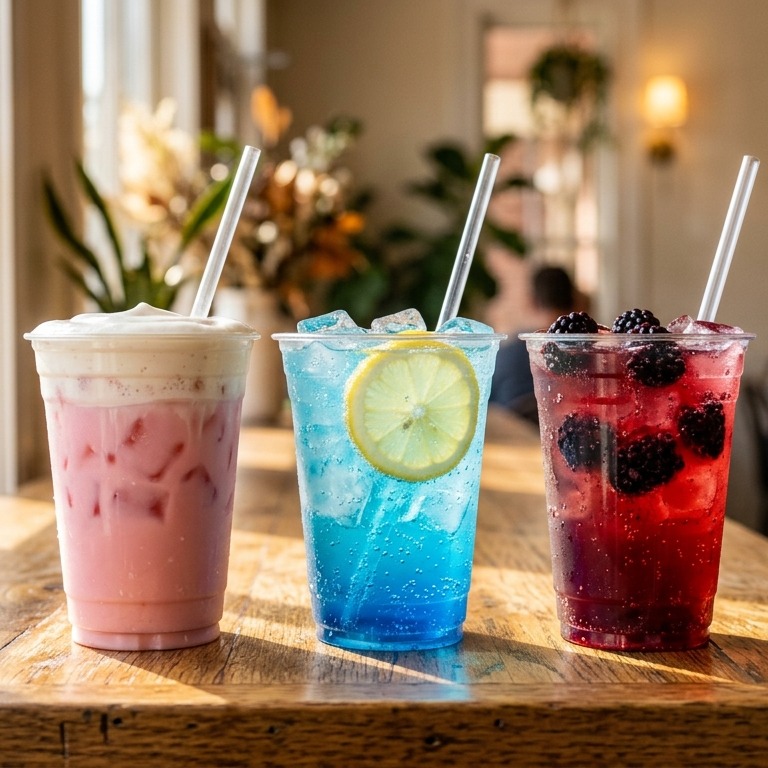
Drive-thru coffee kiosks across the United States have seen a surge in colorful, neon-bright iced drinks poured in clear plastic cups. For customers who want an afternoon energy boost without drinking coffee or artificial canned energy drinks, these colorful beverages have become a nationwide sensation.
What Is a Lotus Drink?
A Lotus drink is a handcrafted, plant-based energy beverage made in coffee shops and drive-thrus using Lotus Energy Concentrate. Baristas mix the botanical concentrate with sparkling water or club soda, flavored fruit syrups, and ice, often topping it with sweet cream or cold foam. It gets its clean energy from green coffee beans, guayusa tea, and adaptogenic herbs, providing approximately 80 to 120 mg of natural caffeine per cup.
| Lotus Drinks at a Glance | |
|---|---|
| Primary Base | Lotus Plant Energy Concentrate (liquid botanical base) |
| Caffeine Sources | Green coffee bean extract and organic guayusa leaf |
| Typical Caffeine | 80 mg (16 oz cup) to 120-160 mg (24-32 oz cup) |
| Key Botanicals | Cascara (coffee fruit), lotus flower extract, rhodiola root, schisandra berry, and B-complex vitamins |
| Standard Preparation | 1 oz Lotus concentrate + 1 oz fruit syrup + 8-10 oz club soda over fresh ice (optional cream float) |
| Origin & Culture | Popularized in Pacific Northwest independent drive-thru cafes |
Clinical and Caffeine Safety Boundary: A standard 16 to 24-ounce Lotus drink delivers between 80 and 160 mg of concentrated botanical caffeine from green coffee beans and guayusa, combined with active adaptogenic botanicals (rhodiola rosea and schisandra berry). Pregnant or lactating individuals, adolescents, and people with cardiac arrhythmias or severe caffeine sensitivity should moderate intake or consult a physician regarding botanical adaptogen interactions.
This guide covers how lotus drinks work, the seven botanical ingredients inside the concentrate, popular drive-thru recipe combinations, and how to craft sparkling lotus drinks at home.
Inside the Concentrate: The Plant Power 7 Ingredients
Traditional canned energy drinks rely on lab-synthesized caffeine, artificial flavorings, and taurine. Lotus Energy Concentrate was formulated as a clean-label alternative built on whole plant extracts. Long before modern coffee kiosk syrups existed, agrarian workers mixed raw ginger, apple cider vinegar, and honey for natural stamina in heritage tonics like apple cider switchel.
At the core of every Lotus drink is the signature Plant Power 7 (PE7) botanical blend:
| Botanical Element | Source Plant | Physiological Function & Purpose |
|---|---|---|
| Green Coffee Beans | Coffea arabica | Unroasted coffee seeds supply pure, natural caffeine without coffee bite |
| Organic Guayusa Leaf | Ilex guayusa | Amazonian holly leaf rich in theobromine for smooth, sustained alertness |
| Cascara (Coffee Fruit) | Dried coffee fruit outer skin | Packed with polyphenols and natural antioxidants; sustainable upcycling |
| Lotus Flower Extract | Nelumbo nucifera | Sacred Asian botanical that adds a smooth floral finish and calm focus |
| Rhodiola Rosea Root | Golden root herb | Adaptogenic herb that helps reduce physical fatigue and mental burnout |
| Schisandra Berry | Five-flavor berry | Adaptogen that supports mental stamina and immune balance |
| B-Vitamin Complex | B3, B5, B6, B12 | Supports normal cellular metabolism and natural energy conversion |
Natural Caffeine Sources (Green Coffee and Guayusa)
Unlike standard coffee, green coffee beans are unroasted. They contain caffeine along with chlorogenic acids, which slow caffeine absorption into the bloodstream.
Combined with guayusa leaves (a revered Amazonian tea related to yerba mate), Lotus delivers clean, steady alertness without the heart-pounding jitters or sudden afternoon crashes caused by synthetic caffeine.
Adaptogens for Crash-Free Focus (Rhodiola and Schisandra)
The addition of adaptogens sets Lotus apart from standard sodas. Adaptogens are botanical plants that support the body's natural response to physical and mental stress. Rhodiola rosea and schisandra berry help balance cortisol levels, supporting calm alertness while you work or study, applying similar botanical extraction principles found when steeping whole roots for a calming herbal tisane.
How Much Caffeine and Sugar Are in a Lotus Drink?
Because Lotus drinks are customized on the spot, the nutritional profile depends on cup size, syrup choices, and whether you order the Original or Skinny base.
| Drink Size | Concentrate Used | Natural Caffeine | Typical Calories (Original vs. Skinny) |
|---|---|---|---|
| Small (16 oz) | 1 Pump (1 fl oz) | 80 mg | Original: 120-160 cal | Skinny: 10 cal |
| Medium (20-24 oz) | 1.5 Pumps (1.5 fl oz) | 120 mg | Original: 180-240 cal | Skinny: 15 cal |
| Large (32 oz) | 2 Pumps (2 fl oz) | 160 mg | Original: 250-320 cal | Skinny: 20 cal |
Original Cane Sugar vs. Skinny Zero-Sugar Lotus
- Original Lotus Concentrate: Sweetened with pure cane sugar. One pump provides roughly 17 grams of sugar and 70 calories before flavored syrups are added.
- Skinny Lotus Concentrate: Sweetened with plant-based stevia and erythritol. It contains zero net carbs, zero sugar, and only 5 calories per pump.
If you order an Original Lotus base and add two ounces of standard Torani peach and mango syrup, your finished 24-ounce drink can easily exceed 45 grams of added sugar. To keep calories low, order a Skinny Lotus base with sugar-free syrups and plain club soda.
Lotus Drinks vs. Red Bull Infusions vs. Starbucks Refreshers
How does a handcrafted Lotus drink stack up against its most common cafe competitors? While coffee kiosks formulate high-caffeine plant energy drinks, drinkers looking for all-natural, caffeine-free fruit refreshment often prefer traditional whole-fruit preparations like Mexican aguas frescas.
| Beverage | Caffeine Source | Sweetener Type | Customization & Presentation |
|---|---|---|---|
| Lotus Energy Drink | Green coffee & guayusa leaf (80-160 mg) | Pure cane sugar or Stevia/erythritol (Skinny) | Endless syrup flavors; sparkling soda; layered cream floats |
| Red Bull Infusion | Synthetic caffeine & taurine (80-114 mg) | Sucrose & glucose (Sugar-free uses sucralose) | Canned soda poured over ice with syrup; distinct medicinal tang |
| Starbucks Refresher | Green coffee extract (45 to 50 mg per cup) | Sugar and white grape juice concentrate | Pre-batched juice bases (strawberry acai, mango dragonfruit); light fizz |
| Drip Coffee (12 oz Cup) | Roasted coffee beans (120-160 mg) | Unsweetened (unless added) | Dark, roasted, hot or iced; not sweet or carbonated |
Lotus drinks provide significantly cleaner plant ingredients than Red Bull infusions, while offering far greater flavor customization and higher caffeine content than Starbucks Refreshers.
The 4-Step Coffee Shop Ordering Formula
Walking up to a drive-thru coffee window with a massive Lotus menu can feel overwhelming. Follow this simple four-step ordering formula to build your perfect cup:
| The 4-Step Lotus Ordering Blueprint | |
|---|---|
| Step 1: Base Color |
Choose your Lotus Concentrate base:
|
| Step 2: Syrups | Pick 1 or 2 flavored syrups (e.g., coconut, peach, mango, strawberry, watermelon, lavender, passionfruit). |
| Step 3: The Mixer | Club soda / sparkling water (standard), lemonade, or coconut water. |
| Step 4: The Finish | Keep it sparkling clear, or ask for a "Cream Float" (a splash of heavy cream, coconut milk, or sweet cold foam). |
Five Famous Coffee Shop Lotus Drink Recipes
These five flavor combinations are legendary across American coffee shacks:
| Recipe Name | Exact Formula (For 24 oz Cup) | Sensory Flavor & Visual Appearance |
|---|---|---|
| 1. Pink Starburst |
• 1.5 oz Pink Lotus Concentrate • 1 oz Strawberry syrup • 1/2 oz Vanilla syrup • Club soda + splash of heavy cream |
Sweet strawberry candy flavor with a dreamy pastel pink swirl; tastes like the iconic pink chewy candy. |
| 2. Blue Hawaiian |
• 1.5 oz Blue Lotus Concentrate • 1 oz Pineapple syrup • 1/2 oz Coconut syrup • Club soda over ice |
Electric turquoise hue with tropical coconut sweetness and bright citrus notes; highly refreshing. |
| 3. Tiger's Blood |
• 1.5 oz Red Lotus Concentrate • 1 oz Strawberry syrup • 1/2 oz Watermelon syrup • 1/2 oz Coconut syrup + Club soda |
Vivid ruby-red gradient with rich shaved-ice nostalgic flavors; popular with summer festival crowds. |
| 4. Purple Haze |
• 1.5 oz Purple Lotus Concentrate • 1 oz Blackberry syrup • 1/2 oz Blue Raspberry syrup • Club soda over ice |
Deep amethyst royal purple; rich berry sweetness balanced with light vanilla undertones. |
| 5. Sunrise Splash |
• 1.5 oz Gold / White Lotus • 1 oz Peach syrup • Lemonade mixer + splash grenadine |
Brilliant two-tone yellow and red sunset; tart citrus punch paired with sweet summer peach. |
How to Make a Copycat Lotus Drink at Home (3-Minute Recipe)
You can easily recreate a cafe-quality Lotus drink in your kitchen without commercial gear.
Handcrafted Sparkling Lotus Plant-Energy Drink
Ingredients
- • 2 tablespoons (1 oz) Lotus Energy Concentrate (Pink, Blue, or Gold Base)
- • 2 tablespoons (1 oz) flavored fruit syrup (strawberry, peach, blue raspberry, or citrus syrups inspired by Japanese yuzu drinks)
- • 8 to 10 ounces chilled club soda or sparkling seltzer water
- • 1 large cup (24 oz) filled completely with solid ice cubes
- • Optional Cream Float: 2 tablespoons half-and-half, heavy cream, or sweetened oat milk
Equipment Needed
- • Large 20 to 24 oz clear glass tumbler or cafe cup
- • Long bar spoon or straw
- • Liquid measuring jigger or tablespoon
Preparation Method
Unlike commercial canned energy drinks formulated with synthetic anhydrous caffeine and taurine, Lotus concentrate utilizes naturally occurring caffeine from raw green coffee beans combined with 7 adaptogenic botanicals (Lotus flower, rhodiola, schisandra, ashwagandha, cordyceps, echinacea, and green tea) for sustained alertness without jitters. For another natural, jitter-free morning lift powered by gentle plant alkaloids, explore our guide on cacao drink benefits and theobromine.
Frequently Asked Questions About Lotus Drinks
Q. Does a Lotus drink contain actual coffee?
Q. Are Lotus drinks safe for teenagers and kids?
Q. Can you get a Lotus drink with zero sugar?
Q. What is the most popular Lotus drink color?
Q. Can pregnant women drink Lotus energy drinks?
The Bottom Line
Summary and Practical Takeaways
Lotus energy drinks are plant-based handcrafted energy beverages made by combining carbonated water, flavored artisan syrups, and a specialized botanical energy concentrate derived from white, red, or blue lotus flower extracts.
- Plant-Based Energy Base: Utilizes natural green coffee bean caffeine (80 mg per 1 oz concentrate) paired with lotus flower extract, rhodiola rosea, and schisandra berry.
- Adaptogenic Profile: Designed to provide clean, sustained alertness without the synthetic taurine and chemical aftertaste of standard canned energy drinks.
- Cafe Customization: Layered over clear pebble ice with sparkling seltzer, fruit purées, and heavy cream or coconut milk cold foam, mirroring modern cafe specialty drinks like creamy taro drinks.
- Sugar Awareness: Combine concentrated plant bases with sugar-free flavor syrups and unflavored sparkling water to control overall caloric intake.
Commercial Formulation and Hospitality Sourcing
For drive-thru coffee kiosks, specialty beverage bars, and multi-unit franchises seeking clean-label energy alternatives without synthetic taurine or petroleum dyes, sourcing authentic plant-based concentrates and organic botanical extracts through an accredited wholesale exotic drinks supplier ensures heavy-metal purity screening, high-volume supply reliability, and optimal pump-dispense viscosity.
Editorial Fact-Checking and Evidence Standards
- Caffeine content thresholds, maximum daily recommendations (400 mg), and pediatric guidelines cite official dietary directives from the U.S. Food and Drug Administration (FDA).
- Adaptogen pharmacological mechanisms for Rhodiola rosea and Schisandra chinensis reference systematic reviews published by the National Center for Complementary and Integrative Health (NCCIH).
- Phytochemical flavonoid concentrations and epigallocatechin gallate (EGCG) synergies in green tea extracts cite research from the American Journal of Clinical Nutrition.
Sources and Review Standards
- U.S. Food and Drug Administration (FDA): Guidance on Caffeine Content in Dietary Supplements and Carbonated Energy Beverages
- National Center for Complementary and Integrative Health (NCCIH): Rhodiola and Botanical Adaptogens in Stress and Fatigue Support
- Journal of Ethnopharmacology: Bioactive Alkaloids and Antioxidant Flavonoids in Nelumbo nucifera (Sacred Lotus)
- American Journal of Clinical Nutrition: Comparative Pharmacokinetics of Natural Botanical vs. Synthetic Caffeine


Comments and reviews (0)