


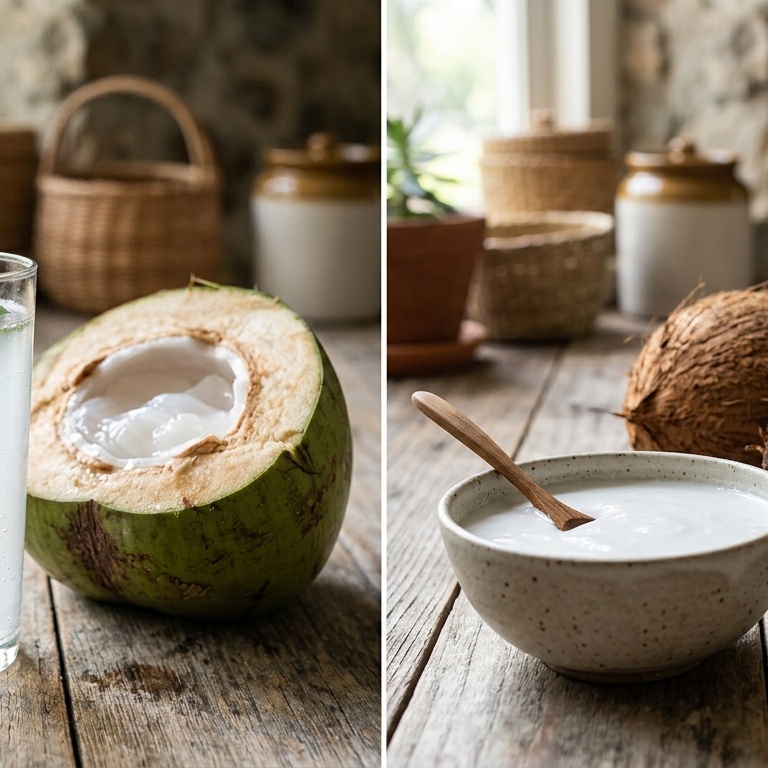
Coconut water is the clear liquid inside a young green coconut. Coconut milk is a creamy mixture made by pressing grated meat from a mature coconut with water. They come from the same plant, but their calories, fat, texture, and kitchen uses are very different.
What Is the Difference Between Coconut Water and Coconut Milk?
Coconut water is the clear, naturally sweet liquid tapped from young green coconuts, low in calories and fat (about 45 calories per cup). Coconut milk is an emulsion made by pressing grated mature coconut meat with water, creating a thick, high-fat culinary ingredient (about 450 to 550 calories per cup). Coconut water is best for light drinking and hydration, while canned coconut milk provides rich body for curries, soups, sauces, and baking.
Choose coconut water for drinking, light fruit smoothies, mocktails, and delicate rice dishes. Choose canned coconut milk when a curry, soup, sauce, or dessert needs richness and body. Refrigerated carton coconut milk beverage is a third category, formulated primarily as a dairy-free milk alternative for drinking or pouring over cereal.
Coconut Water vs. Coconut Milk at a Glance
| Feature | Coconut Water | Canned Coconut Milk | Carton Coconut Beverage |
|---|---|---|---|
| Source | Natural liquid inside young green coconut | Mature coconut meat pressed with water | Coconut base diluted with water, often fortified |
| Appearance | Clear to slightly translucent cloudy | Opaque, thick, and velvety creamy | White, thin, and easily pourable |
| Typical calories | About 45 to 50 per cup (240 ml) | About 450 to 550 per cup (full-fat) | Often about 40 to 70 per cup |
| Fat content | Virtually zero ( | High (about 48 to 57 g, mainly saturated) | Low (about 2.5 to 5 g per cup) |
| Primary kitchen use | Beverage, light smoothies, post-workout | Curries, soups, rich sauces, baking, desserts | Cereal, iced coffee, everyday pouring |
| Direct 1:1 substitute? | Cannot replace coconut milk | Cannot replace coconut water | Poor substitute for canned milk in curries |
Those calorie figures serve as practical reference benchmarks. Fresh coconut water, packaged shelf-stable cartons, culinary canned products, and refrigerated milk substitutes have varying ingredient profiles. Always verify the Nutrition Facts label on the specific carton or can you purchase.
What Is the Difference Between Coconut Water and Coconut Milk?
The primary biological difference is the portion of the coconut used.
Coconut water develops naturally inside the hollow cavity of the fruit. Botanists classify it as liquid endosperm. It consists of over 94% water, carrying naturally occurring simple carbohydrates and key dietary minerals like potassium and magnesium.
Coconut milk does not exist as liquid inside the coconut. Instead, producers harvest the firm white meat (solid endosperm) from mature coconuts, grate it finely, blend it with warm water, and press or strain it. This process extracts coconut fats, proteins, and fine solids into the liquid, forming an oil-in-water emulsion.
This explains the distinct physical behaviors in the kitchen: coconut water pours freely like juice, while full-fat canned coconut milk behaves like heavy cream.
Both products originate from the coconut palm (Cocos nucifera). The maturity stage of the fruit and the production method determine which product reaches grocery shelves.
How Coconut Water and Coconut Milk Are Made
Coconut Water Comes From Young Green Coconuts
Young green coconuts (harvested around 6 to 9 months of maturity) contain a large reservoir of clear liquid and a thin, translucent layer of soft, gelatinous meat. Commercial growers harvest them specifically for beverage consumption.
After husking and cracking the shell, the sterile water is collected immediately. Packaged retail coconut water may be micro-filtered, flash-pasteurized, or reconstituted from concentrate. Select products labeled "100% pure coconut water" with no added sugars or preservatives for the cleanest nutritional profile.
Coconut Milk Comes From Mature Coconut Meat
As the coconut ripens over 10 to 12 months, the outer green husk turns fibrous and brown, the interior liquid diminishes, and the inner meat thickens into dense, oil-rich white flesh. Commercial processors grate this mature endosperm and press it with water.
A first pressing with little or no added water yields thick, concentrated coconut cream. Subsequent pressings with additional hot water yield standard culinary coconut milk. Modern canned products may contain plant-based stabilizers (such as guar gum) to prevent the natural fat layer from separating permanently.
What Are Coconut Cream and Cream of Coconut?
Coconut cream is an unsweetened, highly concentrated culinary product containing 20% to 25% or more coconut fat. It is thicker and richer than standard coconut milk.
Cream of coconut is heavily sweetened with added sugar, formulated specifically for cocktails like Piña Coladas and sweet desserts. It is not an interchangeable substitute for unsweetened canned coconut milk in savory Thai curries or soups.
Coconut Water vs. Coconut Milk Nutrition
The table below compares standard nutritional values per 1 cup (240 ml) based on USDA FoodData Central reference data for raw coconut water and full-fat culinary coconut milk.
| Nutrient (Per 1 Cup / 240 ml) | Coconut Water | Full-Fat Canned Coconut Milk |
|---|---|---|
| Calories | About 46 kcal | About 552 kcal |
| Total Fat | About 0.5 g | About 57.1 g |
| Saturated Fat | About 0.2 g | About 50.8 g |
| Total Carbohydrate | About 8.9 g | About 13.3 g |
| Total Natural Sugars | About 6.3 g | About 8.0 g |
| Protein | About 1.7 g | About 5.5 g |
| Potassium | About 600 mg | About 630 mg |
| Sodium | About 250 mg | About 36 mg |
| Magnesium | About 60 mg | About 89 mg |
Calories in Coconut Water vs. Coconut Milk
Coconut water derives the majority of its calories from natural carbohydrates. At approximately 46 calories per cup, it functions nutritionally like a light fruit juice.
Full-fat canned coconut milk derives roughly 90% of its calories from fat, packing over 550 calories per cup. That fat concentration is essential for producing silky, luxurious curries, but it makes portion sizes a key consideration. Most culinary recipes distribute one 13.5-ounce can across four to six servings.
Refrigerated coconut milk beverages in cartons are significantly diluted with water. An unsweetened cup usually contains only 40 to 70 calories.
Coconut Water vs. Coconut Milk Electrolytes
Coconut water is recognized for its high potassium concentration (around 600 mg per cup). However, sweat lost during heavy athletic exertion contains primarily sodium, with only modest amounts of potassium.
While often marketed as an "isotonic sports drink," clinical trials comparing coconut water to plain water and sports drinks show comparable hydration markers rather than superior athletic performance. For typical daily activities and moderate workouts, water or coconut water provides refreshing rehydration. For prolonged endurance exercise in high heat, commercial electrolyte formulas with higher sodium ratios are generally more effective.
Canned coconut milk also contains substantial potassium, but its high fat density makes it a cooking staple rather than a viable rehydration beverage.
Lauric Acid and Saturated Fats
The vast majority of fat in coconut milk is saturated. Lauric acid (C12:0) constitutes approximately 50% of these fatty acids. While sometimes classified as a medium-chain fatty acid, lauric acid behaves metabolically more like a long-chain saturated fat than the shorter C8 and C10 triglycerides found in isolated MCT oils.
The American Heart Association advises moderating saturated fat intake to support cardiovascular health. Individuals managing elevated LDL cholesterol should enjoy full-fat coconut milk dishes mindfully.
Neither coconut water nor coconut milk contains dietary cholesterol, as cholesterol occurs exclusively in animal-derived foods.
Canned Coconut Milk vs. Carton Coconut Milk
One of the most frequent kitchen errors is substituting carton coconut milk beverage for canned culinary milk in savory cooking.
| Feature | Canned Coconut Milk | Carton Coconut Milk Beverage |
|---|---|---|
| Store location | Asian / International aisle or baking section | Refrigerated dairy/plant milk case |
| Viscosity | Thick, opaque, and spoonable | Fluid, pourable, like skim or 2% dairy milk |
| Coconut concentration | High (pure coconut extract + water) | Low (diluted base + vitamins + stabilizers) |
| Calories per cup | 450 to 552 kcal | 40 to 70 kcal (unsweetened) |
| Best application | Curries, laksa, rich soups, coconut rice | Morning cereal, iced matcha, everyday drinking |
When to Use Coconut Water vs. Coconut Milk in Cooking
Best Uses for Coconut Water
- Everyday drinking: Served chilled over ice as a refreshing, hydrating alternative to soda.
- Light fruit smoothies: Blends effortlessly with frozen mango, berries, and spinach without making the smoothie dense or heavy.
- Steaming grains: Substitute coconut water for half or all of the cooking water when preparing jasmine rice or quinoa for a subtle tropical fragrance.
- Zero-proof mocktails: Combines naturally with fresh lime, crushed mint, and soda water.
Best Uses for Canned Coconut Milk
- Southeast Asian curries: Essential for Thai green, red, and massaman curries, creating a velvety sauce that binds aromatics.
- Rich soups: Forms the backbone of classic Tom Kha Gai and roasted squash bisques.
- Dairy-free baking: Acts as a direct 1:1 replacement for heavy cream or whole dairy milk in cakes and frostings.
- Coconut sticky rice: Simmered with sugar and salt to create the traditional topping for fresh mango sticky rice.
Can You Substitute Coconut Water for Coconut Milk?
Generally, no. In savory cooking, coconut water supplies liquid, while coconut milk supplies liquid, fat, and thickening solids. Substituting coconut water into a curry recipe will result in a thin, watery broth that fails to cling to vegetables and proteins.
In smoothies, substitution is entirely viable if you intentionally desire a lighter, juice-like consistency rather than a thick, milkshake-like texture.
Frequently Asked Questions
Q. What is the difference between coconut water and coconut milk?
Coconut water is the natural fluid tapped directly from young green coconuts. Coconut milk is an emulsion produced by grating and pressing mature coconut meat with water.
Q. Is coconut milk just diluted coconut water?
No. Coconut milk is made from coconut meat and water. Coconut water is the clear liquid from the interior cavity of young coconuts.
Q. Can you substitute coconut water for coconut milk in curry?
No. Coconut water lacks the emulsified fats and solids required to give curry sauce its thick body and carry fat-soluble spice aromas.
Q. Can coconut water replace coconut milk in a smoothie?
Yes, if you prefer a light, refreshing, juice-like texture instead of a rich, creamy consistency.
Q. Which has more calories, coconut water or coconut milk?
Full-fat canned coconut milk has dramatically more calories: approximately 552 kcal per cup compared to about 46 kcal per cup for coconut water.
Q. Which is better for weight loss, coconut water or coconut milk?
Coconut water is far lower in calories and fat, making it much easier to incorporate into a calorie-controlled eating plan.
Q. Which has more potassium, coconut water or coconut milk?
They are roughly comparable per cup (around 600 mg for coconut water and 630 mg for coconut milk), but coconut water is consumed in much larger serving sizes.
Q. Does coconut water contain fat?
Virtually none. Reference analyses report less than 0.5 grams of fat per cup, which rounds to zero on commercial nutrition panels.
Q. Does coconut water contain sugar?
Plain coconut water contains about 6 grams of naturally occurring fruit sugars per cup. Check ingredient lists for added sweeteners.
Q. Is coconut milk dairy-free?
Yes. Pure coconut milk is 100% plant-based and naturally free from lactose, casein, and whey.
Q. Is coconut milk high in cholesterol?
No. It contains zero dietary cholesterol, but full-fat canned varieties are rich in saturated fatty acids.
Q. What is the difference between canned coconut milk and carton coconut milk?
Canned coconut milk is concentrated for cooking. Carton coconut milk is diluted with water and fortified with vitamins for drinking and cereal.
Q. Why does canned coconut milk separate?
Coconut fat naturally rises to the top and solidifies at cool temperatures. Shaking or whisking restores a smooth emulsion.
Q. Can you drink canned coconut milk directly?
It is safe, but extremely thick and heavy. Most people find carton beverages much more pleasant for drinking.
Q. Is coconut water better than water after exercise?
It provides fluid and potassium, but randomized trials show comparable hydration to plain water for moderate workouts.
Q. Is coconut water safe for kidney disease?
Patients with chronic kidney disease or hyperkalemia should consult their renal dietitian before consuming coconut water due to its high potassium content.
Q. How long do they last after opening?
Transfer both to clean, airtight glass or plastic containers and refrigerate promptly. Use within 4 to 6 days.
Q. Can you freeze coconut milk?
Yes. Freeze in silicone trays or airtight containers for up to 3 months. Whisk or blend after thawing to re-emulsify.
The Bottom Line
Summary and Practical Takeaways
Choosing between coconut water and coconut milk comes down to identifying whether your body or recipe needs light hydration or rich culinary fat.
- Source matters: Coconut water is tapped directly from young green coconuts; coconut milk is pressed from mature coconut meat.
- Calorie contrast: Coconut water contains about 46 calories per cup; full-fat canned coconut milk delivers over 550 calories.
- Culinary roles: Use coconut water for drinking, light fruit smoothies, and rice; reserve canned coconut milk for creamy curries, soups, and dairy-free baking.
- Check packaging: Never mistake diluted carton coconut beverage for concentrated canned culinary milk when making sauces or curries.
Sources and Review Standards
- U.S. Department of Agriculture (USDA) FoodData Central: Raw Coconut Water (FDC ID 170174) & Canned Coconut Milk (FDC ID 170172)
- American Heart Association (AHA): Dietary Fats, Saturated Fatty Acids, and Cardiovascular Health
- National Kidney Foundation: Potassium Content and Safety in Renal Diets
- National Institutes of Health (PubMed): Systematic Review of Dietary Lauric Acid and Lipid Profiles










Comments and reviews (0)