


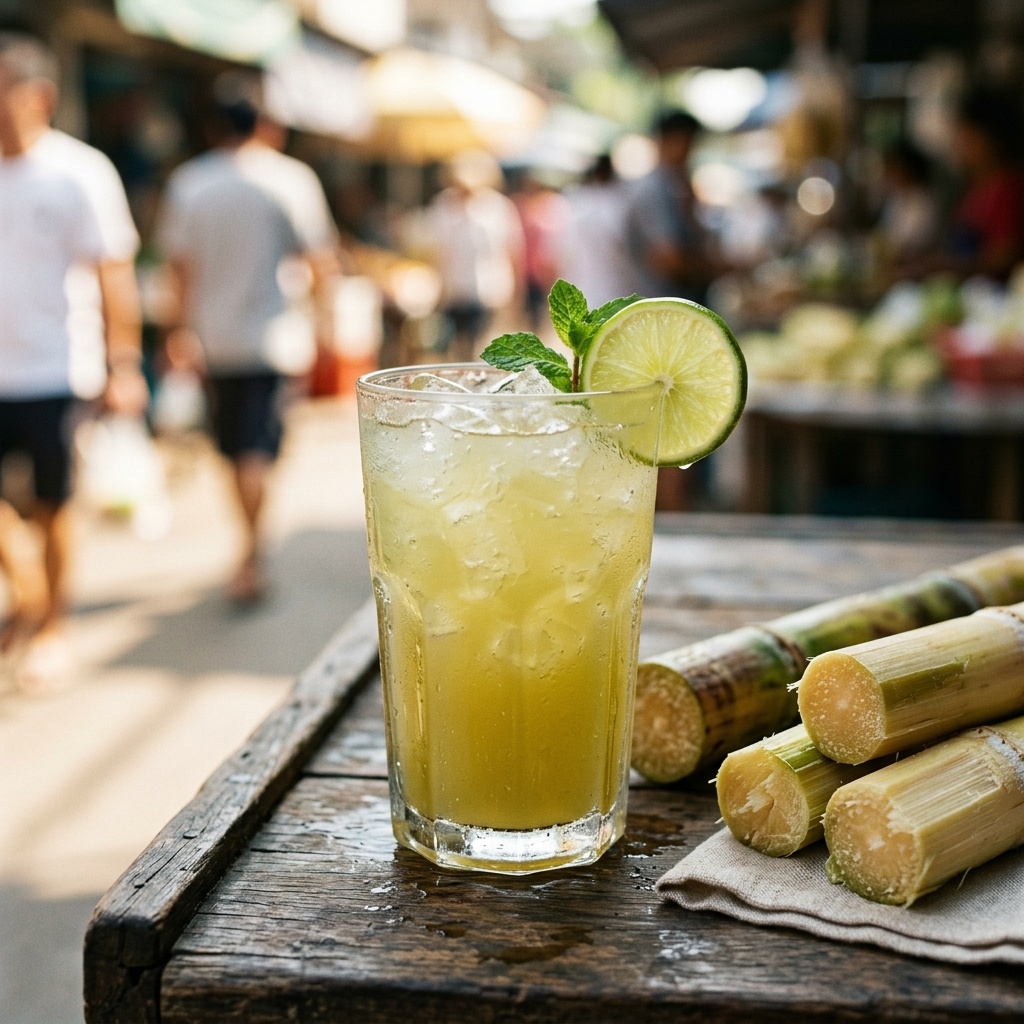
Guarapo is fresh sugarcane juice, usually served cold with ice and lime. In Cuba, the drink is strongly linked with cane presses and street service. In Colombia and other parts of Latin America, the same word can also refer to fermented cane drinks or drinks made with panela.
Fresh guarapo tastes sweet, grassy, lightly floral, and clean. It is very different from refined sugar mixed with water because the juice still carries the aroma and plant compounds found in fresh cane.
This guide explains what guarapo is, where the name comes from, how Cuban and Colombian styles differ, whether it contains alcohol, what the nutrition research says, and how to make fresh and fermented versions at home.
Quick Answer: What Is Guarapo?
Guarapo is a Latin American name for sugarcane juice. Fresh guarapo is pressed from raw cane stalks and is normally non-alcoholic. Fermented forms can develop alcohol. Regional meanings vary, so the name alone does not always tell you which version is being served.
| Question | Short answer |
|---|---|
| Main ingredient | Fresh sugarcane |
| Scientific name used in the report | Saccharum officinarum |
| Traditional press | Trapiche |
| Fresh version | Non-alcoholic sugarcane juice |
| Fermented version | Can develop alcohol |
| Typical taste | Sweet, grassy, floral, tropical |
| Common serving style | Cold, often with lime and ice |
What Does Guarapo Taste Like?
Fresh guarapo has a clear cane sweetness, but it is not flat or syrupy. The juice can taste grassy, green, floral, and lightly tropical. The exact flavour changes with the cane variety, freshness, and serving method.
Lime is a common addition because its acidity cuts the sweetness. A small amount of ginger can add heat, while mint or cucumber can make the drink taste lighter.
Fermentation changes the drink. As microbes use the sugars, the flavour can become more sour, tangy, and lightly fizzy. The alcohol level also becomes less predictable in a home or traditional spontaneous fermentation.
Where Does the Word Guarapo Come From?
The Association of Academies of the Spanish Language (ASALE) traces guarapo to the Quechua word warapu. Its dictionary records several regional meanings, including fermented sugarcane juice, unfermented sugarcane juice, and refreshing drinks made from cane juice.
There is one point worth keeping precise. The Quechua origin appears in major Spanish dictionaries, but historical linguists have also proposed other origins, including an African or Atlantic route. The safest wording is that ASALE gives a Quechua origin while the deeper etymology is not fully settled.
Cuban lexicographer Esteban Pichardo included guarapo in his nineteenth-century work. A later study quoting Pichardo's 1875 edition gives his definition as the liquid from sugarcane extracted by the rollers of a trapiche or a similar method.
How Sugarcane Reached the Caribbean
Sugarcane did not originate in the Caribbean. Historical sources place its arrival in the region during the early Spanish colonial period.
A reference work from Oxford University Press states that Christopher Columbus carried sugarcane to the Caribbean on his second voyage in 1493. Other historical sources place the first Caribbean planting on Hispaniola soon after.
That history later became tied to colonial plantation systems and forced labour. A complete history of Caribbean cane should treat that part of the story directly rather than presenting sugarcane as only a food tradition.
Cuban Guarapo
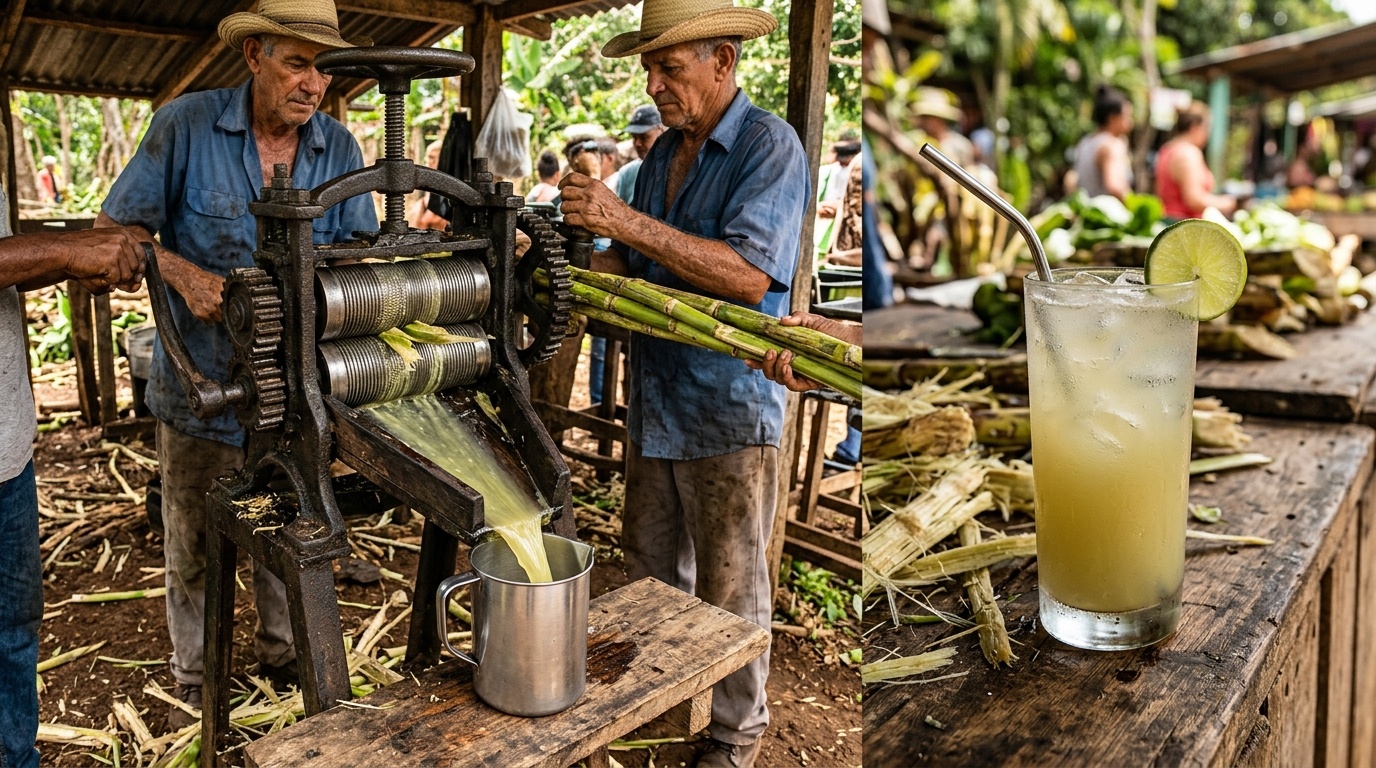
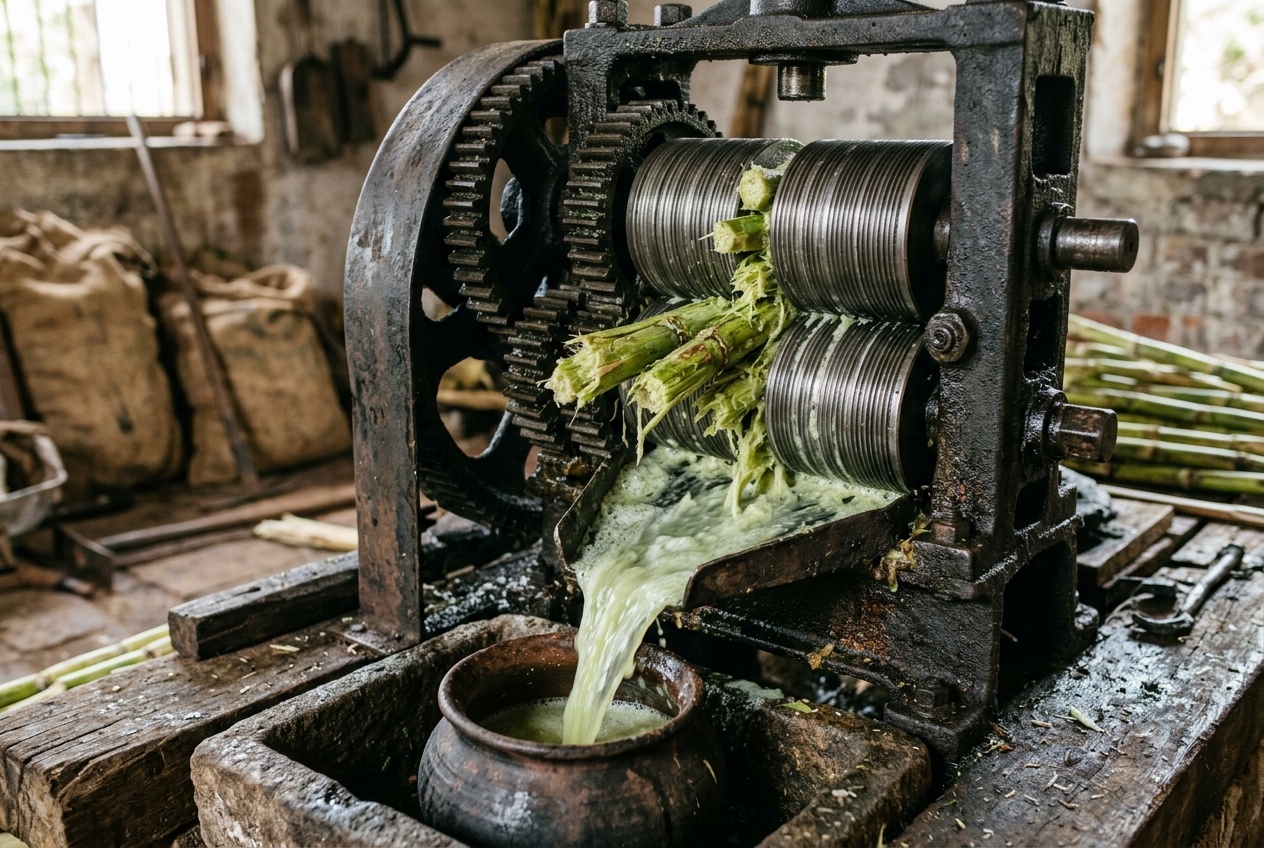
Cuban guarapo usually means fresh cane juice pressed from the stalk. A traditional cane press is called a trapiche. The rollers crush the cane and collect the liquid below.
Pichardo's nineteenth-century definition directly links guarapo with juice taken from sugarcane by the rollers of a trapiche. That gives the drink a long written record in Cuban cane culture.
Modern serving styles often pair the juice with ice and lime. The historical record also mentions limón criollo as a traditional Cuban serving detail. That is useful cultural context, but the amount of lime is a matter of taste rather than a fixed formula.
What Is a Trapiche?
A trapiche is a mill or press used to crush sugarcane and squeeze out its juice. Traditional presses can be hand-operated or animal-driven, while modern commercial operations use heavy motor-powered rollers.
The key difference from a household blender is the way the cane is handled. A trapiche presses the whole stalk, separating juice from solid cane fibres in one motion, whereas a blender cuts and pulverizes the stalk, requiring manual fine straining.
Colombian Guarapo
The word guarapo has a wider meaning in Colombia than one single recipe. ASALE records it for fresh sugarcane juice and for fermented drinks made with sugarcane juice or panela.
Panela is concentrated, unrefined cane sugar. A panela drink can taste deeper and more caramel-like than fresh-pressed cane juice because the cane juice has already been heated and concentrated.
Colombian serving ideas often incorporate extra lime, fresh ginger, or a small pinch of salt. These work well as flavour options, but regional practice varies widely across Andean and coastal communities.
Guarapo vs. Related Cane and Fermented Drinks
Guarapo sits within a rich family of Latin American and Caribbean traditional beverages. Understanding how it compares to drinks like fresh Mexican agua fresca, fermented pineapple tepache, and brewed traditional ginger beer clarifies its unique culinary role:
| Drink | Base | Method | Alcohol status | Typical character |
|---|---|---|---|---|
| Fresh guarapo | Sugarcane stalks | Direct pressing | Non-alcoholic when fresh | Sweet, grassy, floral |
| Guarapo agrio | Sugarcane juice or cane-based mixture | Spontaneous fermentation | Alcohol can develop | Sour, tangy, sometimes fizzy |
| Aguapanela (Panela water) | Panela + water | Dissolved | Non-alcoholic | Deeper cooked-cane sweetness |
| Tepache | Pineapple peel/rind + panela/sugar | Short fermentation | Alcohol can develop (trace to low) | Fruity, tart, spiced |
| Guarapo de piña | Regional pineapple-peel drink | Regional fermentation method | Alcohol can develop | Pineapple, tart, fermented |
| Malt Drink | Malted barley grain | Brewed / steeped grain | Non-alcoholic (Malta) or alcoholic | Toasty, cereal, rich caramel |
Regional naming needs care. Guarapo de piña appears in Panama, Colombia, and Venezuela. ASALE specifically records guarapo de piña in Venezuela as a drink made with sugar or panela and fresh pineapple peels fermented in water for two or three days. While closely related in fermentation style to Mexican tepache, regional names reflect distinct local traditions.
Is Guarapo the Same as Sugarcane Juice?
Fresh guarapo is sugarcane juice. The cultural name adds regional meaning, but the basic drink comes from pressing cane stalks.
The word can also cover fermented versions in some countries. That is why context matters. If a menu says fresh guarapo, it usually points to pressed juice. If it says guarapo agrio or describes fermentation, alcohol may be present.
Is Guarapo Alcoholic?
Freshly pressed guarapo is intended as a non-alcoholic juice. Fermentation changes that.
Estimates for fermented guarapo agrio often range around 0.5% to 2% ABV for short ferments, but spontaneous fermentation depends on time, ambient temperature, sugar density, and wild microflora, so home batches can vary significantly.
Research on sugarcane fermentation shows that spontaneous systems contain mixed communities of yeasts and bacteria. While Saccharomyces cerevisiae plays a major role in controlled sugarcane alcohol fermentations, wild batches harbor diverse microorganisms.
Guarapo Nutrition: What the Evidence Supports
Fresh sugarcane juice is mostly water and carbohydrate. Its exact composition changes with cane variety, growing conditions, harvest timing, extraction, and dilution.
A 2024 scientific review describes fresh sugarcane juice as roughly 82% water and 17% carbohydrate, with very small amounts of protein, fat, ash, and minerals.
Typical 240 ml servings are estimated at approximately 100 to 130 calories and 22 to 30 g of carbohydrate. A separate laboratory analysis reported 197 g/L total soluble sugar, with sucrose as the largest share, plus smaller quantities of glucose and fructose, with potassium representing the primary mineral.
Guarapo Calories and Sugar Content
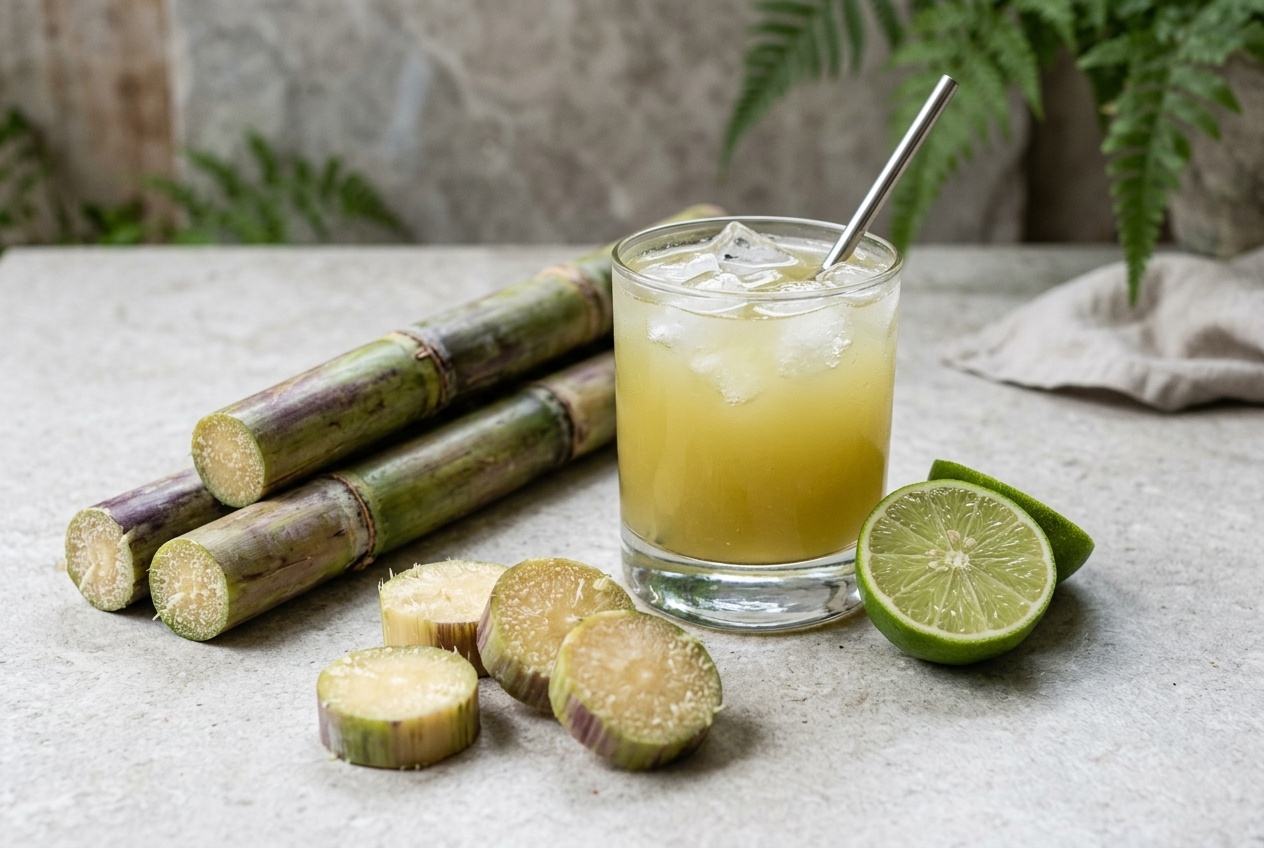
Sugarcane juice derives almost all its calories from natural sugars. A larger street serving will naturally deliver more calories unless diluted with ice or water. Natural does not mean low-sugar, so portion awareness is important for balanced diets.
What Is the Glycemic Index of Guarapo?
Research reviews report a glycemic index value of approximately 43 for fresh sugarcane juice. However, this reported figure should be treated as an estimate rather than a clinical guarantee. Even with a moderate GI, guarapo contains a substantial carbohydrate load per serving.
Is Guarapo Healthy?
Guarapo contains beneficial plant compounds beyond simple sugars, but health claims need realistic restraint.
Studies have identified phenolic acids and flavonoids in sugarcane juice, including caffeic acid and flavones such as apigenin, luteolin, and tricin derivatives. While laboratory assays demonstrate antioxidant potential in sugarcane extracts, this does not translate into medical disease prevention.
A fair summary: fresh guarapo provides natural hydration, carbohydrates, minerals, and polyphenols, but it is still a sugar-dense beverage where portion control matters.
Can People With Diabetes Drink Guarapo?
A moderate GI estimate of ~43 is not sufficient permission for unrestricted intake. Because guarapo delivers 22 to 30 g of rapidly digestible carbohydrates per cup, individuals managing diabetes must factor portion size, medication timing, and personal blood glucose response into any dietary choice, consulting healthcare providers for personalized guidance.
Why Fresh Guarapo Is Best Served Soon
Fresh cane juice oxidizes and changes rapidly after extraction. Colour, flavour, acidity, and microbial counts shift within hours.
Food chemistry research shows that untreated sugarcane juice can spoil within 24 hours at room temperature (~27°C) and within several days under refrigeration. Raw street-vendor juice can also carry microbial risks if equipment sanitation is poor.
Best practice is to consume guarapo freshly pressed over ice. While fresh lime juice lowers pH and brightens flavour, it does not make raw sugarcane juice shelf-stable.
Recipe 1: Fresh Guarapo at Home Without a Trapiche
While a traditional roller press provides optimal yield, you can make delicious fresh guarapo at home using a standard kitchen blender.
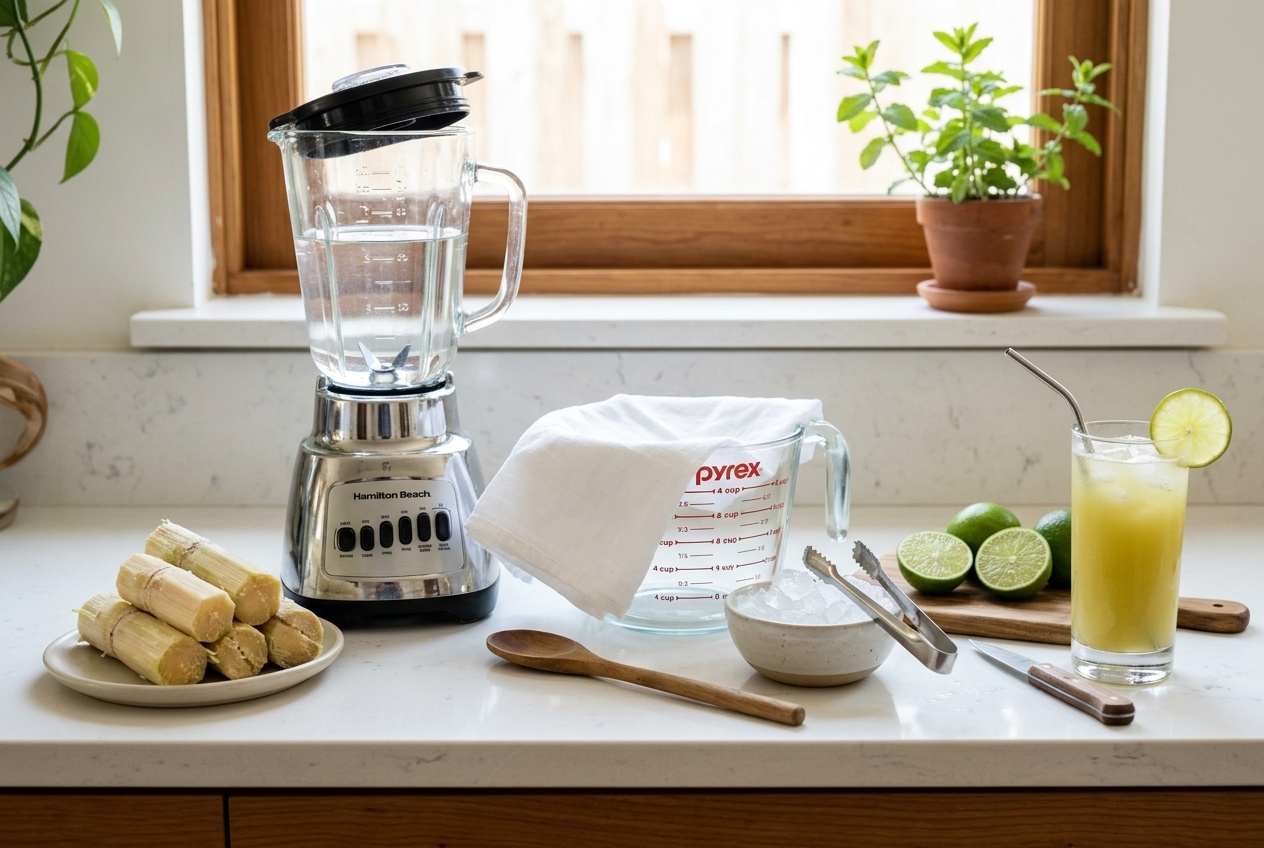
Yield: About 2 servings
Prep time: 15 minutes
Ingredients
- 1 lb (450 g) fresh sugarcane stalks
- 1/2 cup cold filtered water
- Juice of 1 fresh lime
- 1/4 tsp minced fresh ginger (optional)
- Small pinch of sea salt (optional)
- Crushed ice for serving
Method
- Wash the sugarcane stalks thoroughly. On a sturdy cutting board, carefully slice away the tough fibrous green outer rind with a sharp knife.
- Chop the pale inner fibrous cane into small 1-inch (2.5 cm) cubes suitable for your blender.
- Place the chopped cane cubes and cold filtered water into the blender jar.
- Pulse in short bursts (5 to 6 pulses of 3 to 4 seconds each). Avoid continuous high-speed blending, which can release excess bitter tannins from the inner pith.
- Pour the blended pulp through a fine muslin straining cloth or cheesecloth set over a clean glass bowl. Gather the edges and firmly twist and squeeze to extract every drop of fresh juice.
- Stir in fresh lime juice, plus minced ginger or a pinch of salt if desired.
- Pour the fresh golden-green guarapo over tall glasses filled with crushed ice and serve immediately.
Recipe 2: Traditional-Style Fermented Guarapo Agrio
In Colombian and Andean traditions, guarapo is often allowed to ferment spontaneously, developing a tart, complex, slightly effervescent profile.
Ingredients
- 1 litre fresh unpasteurized guarapo (without added lime)
- 1 tbsp grated raw panela (or unrefined piloncillo)
- 1/4 tsp salt
- A small clean piece of raw sugarcane stalk
Method
- Combine the fresh guarapo, panela, and salt in a thoroughly sanitized wide-mouth glass fermentation vessel.
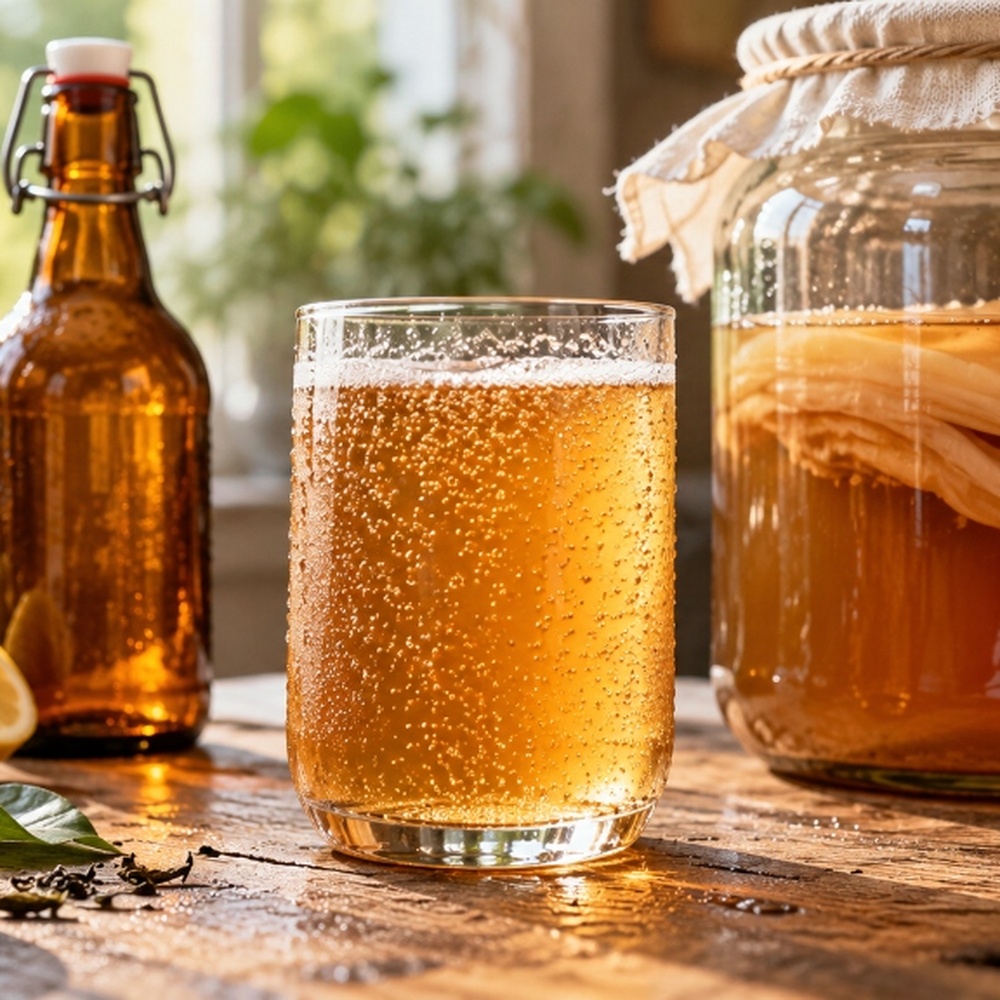
- Submerge the small piece of raw cane stalk, which introduces natural wild yeast and lactic acid bacteria.
- Cover the jar with breathable cheesecloth secured with a rubber band to allow fermentation gases to escape freely. Never seal in an airtight container during active fermentation.
- Let sit at ambient room temperature (20°C to 25°C) for 24 to 48 hours. Taste daily until the beverage achieves a pleasing sour-tangy profile.
- Strain out the cane piece, transfer the fermented guarapo to clean bottles, and refrigerate immediately to slow microbial activity.
Fermentation safety note: Spontaneous fermentation can produce variable alcohol levels (typically 0.5% to 2% ABV) and unpredictable microbial strains. Fermented guarapo is not suitable for pregnant individuals, children, or anyone avoiding alcohol.
Guarapo Flavor Variations
Fresh sugarcane juice pairs naturally with vibrant botanical, citrus, and herbal ingredients:
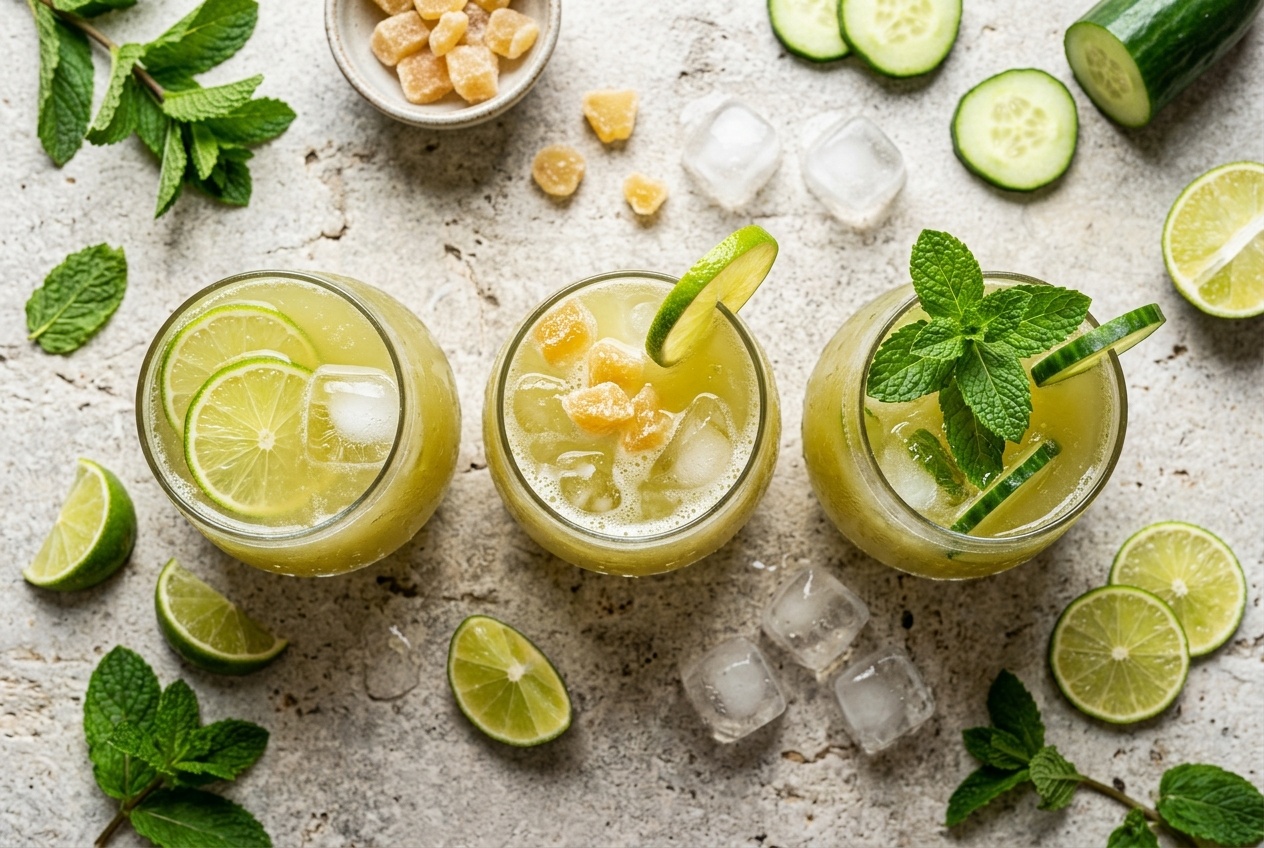
| Variation | What to add | Taste profile |
|---|---|---|
| Classic lime | Freshly squeezed lime juice | Sweet-tart, crisp, and bright |
| Ginger-lime | Grated fresh ginger + lime juice | Zesty, warming, spicy-sweet |
| Mint-cucumber | Muddled fresh mint + cucumber slices | Cooling, herbal, ultra-refreshing |
| Pineapple-style | Fresh pineapple peel or juice in fermented style | Tropical, tangy, reminiscent of tepache |
| Coconut water blend | 50/50 guarapo and raw coconut water | Light, hydrating, delicate tropical sweetness |
Guarapo and Latin American Cane Culture
Beyond its role as a thirst-quenching street drink, guarapo represents centuries of shared agricultural heritage spanning Cuba, Colombia, Puerto Rico, the Dominican Republic, Mexico, and Venezuela.
Whether enjoyed freshly pressed at a roadside Cuban guarapería or fermented with panela in the Colombian countryside, guarapo stands alongside traditional Caribbean drinks like spiced hibiscus sorrel, Mexican tamarindo agua fresca, and modern botanical sparkling tea as a celebration of authentic plant-based refreshment.
Frequently Asked Questions About Guarapo
What is guarapo?
Guarapo is a Latin American name used for fresh-pressed sugarcane juice and, in some regions, related fermented cane drinks. Fresh guarapo is extracted directly from raw cane stalks and served cold over ice with lime.
Is guarapo alcoholic?
Freshly pressed guarapo is completely non-alcoholic. Fermented versions (such as Colombian guarapo agrio) can develop alcohol, typically between 0.5% and 2% ABV depending on fermentation time.
What does guarapo taste like?
Fresh guarapo tastes naturally sweet, grassy, lightly floral, and tropical. Adding fresh lime juice balances the sweetness with refreshing acidity.
Is guarapo the same as sugarcane juice?
Yes. Fresh guarapo is the cultural and regional Latin American term for sugarcane juice pressed from raw cane stalks.
Is guarapo healthy?
Guarapo provides natural hydration, dietary energy, essential minerals like potassium, and antioxidant polyphenols. However, it is high in natural sugars and should be consumed in balanced portions.
Can people with diabetes drink guarapo?
Because guarapo contains 22 to 30 g of natural sugars per cup, people with diabetes should consult their healthcare provider and manage portion sizes carefully rather than relying solely on glycemic index estimates.
Sources and References
- ASALE, Diccionario de americanismos: guarapo definition and regional terms
- Islas y voces del azúcar I: historical lexicography quoting Pichardo (1875)
- Oxford Companion to Spirits & Cocktails: sugar cane history in the Americas
- Food Chemistry: Phenolic profile, antioxidant potential and DNA damage protecting activity of sugarcane
- Food Chemistry: Phenolic profile of sugarcane juice, harvest season and processing
- GCB Bioenergy: Nutrient composition and mineral profile of sugarcane juice
- Frontiers in Sustainable Food Systems: Quality and safety of fresh sugarcane juice sold by street vendors
- Food Chemistry: Changes in quality of sugarcane juice upon delayed extraction and storage
- PMC: An Overview of Spirits Made from Sugarcane Juice and Fermentation Dynamics
- Foods Review: Sweeteners and Glycemic Index Database
- University of Chile: Historical study on competing Latin American guarapo etymologies
- Comprehensive Reviews in Food Science and Food Safety: Sugarcane nutrient composition review
- BioEnergy Research: High-throughput profiling of sugar composition in sugarcane juice
- PMC: Sugarcane polyphenolic review, including plant flavones and tissue extracts


Comments and reviews (0)