


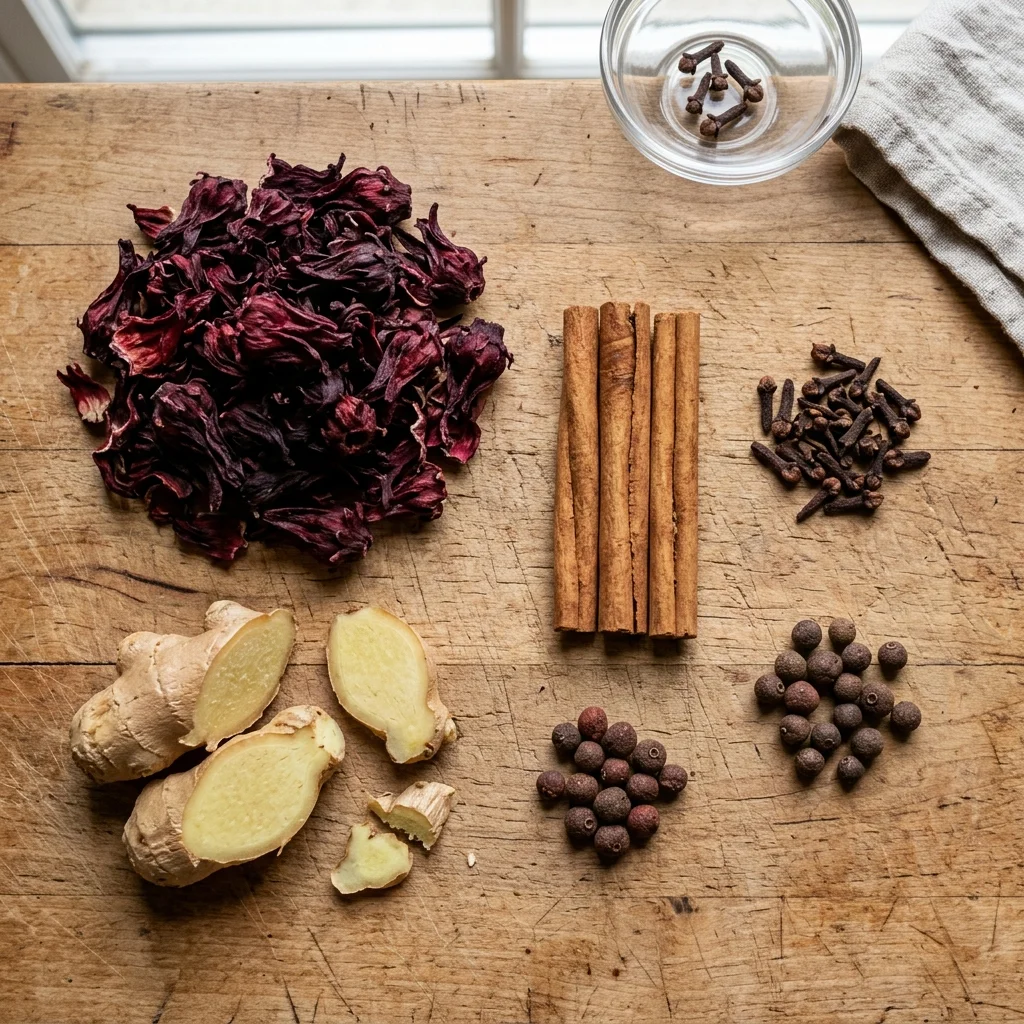
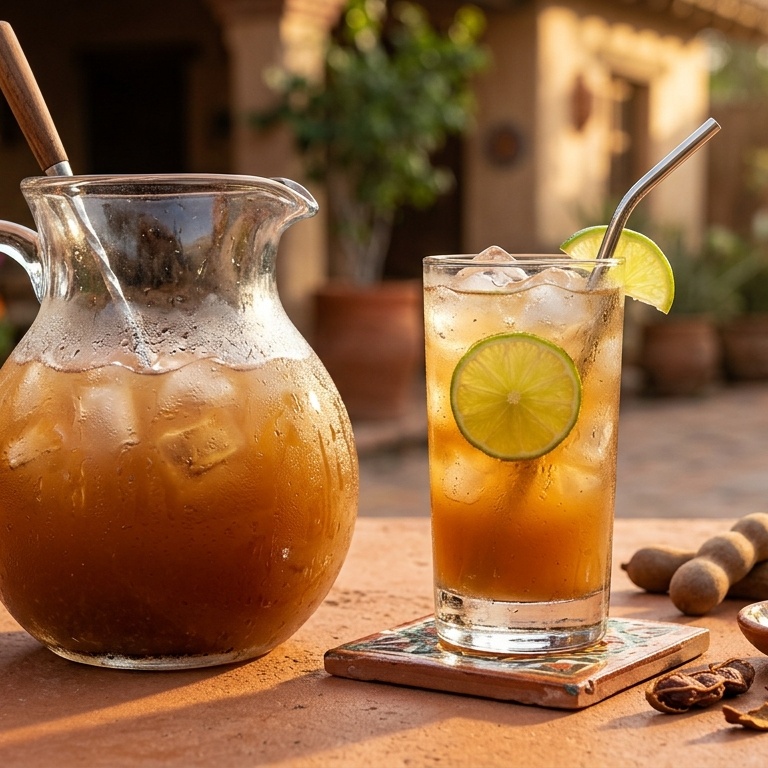
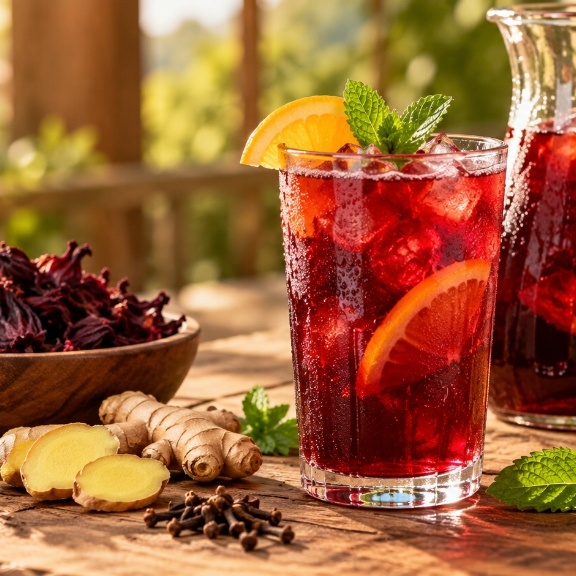
During the winter holidays, households across the Caribbean are filled with the warm aroma of cinnamon, cloves, and ginger steeping on the stove. This festive preparation forms the base of sorrel, a vibrant crimson drink that is central to Christmas celebrations. For another traditional fruit beverage option, see our guide on Mexican tamarindo drink.
Quick answer: Sorrel drink is a Caribbean hibiscus drink made from dried roselle petals, water, spices, and sweetener. It tastes tart, floral, lightly spiced, and cranberry-like, and it is usually served cold during celebrations or warm-weather meals.
Dietary note: Sorrel is made from hibiscus and spices. If pregnant, nursing, or taking medication, check with a clinician before drinking concentrated hibiscus regularly.
This guide covers the Caribbean history of sorrel, its warm holiday spices, how it differs from zobo and French sorrel, and how to serve it.
Sorrel Drink at a Glance
Balancing the Holiday Spices and Clearing Naming Confusion
Many home cooks struggle to get the right spice balance when making sorrel. It is easy to add too much ginger, which can overpower the delicate floral taste of the hibiscus and burn your throat. Getting a balanced, clove-forward aroma requires measuring your spices carefully.
There is also a lot of confusion about the name "sorrel." In Europe and North America, sorrel refers to a green, leafy salad herb with a lemony taste. In the Caribbean, sorrel is the word for the red hibiscus flower calyces. If you buy leafy green sorrel by mistake, your holiday drink will not taste right!
To avoid this, look for dried hibiscus flowers, which are also sold as flor de jamaica or zobo leaves. Brew them with fresh ginger root, whole cloves, cinnamon sticks, and whole allspice berries. Let the mixture steep overnight to allow the warm spices to combine smoothly.
The Caribbean Christmas Tradition
In Jamaica, Trinidad, and other parts of the Caribbean, Christmas is incomplete without a batch of homemade sorrel. The drink is deeply tied to holiday hospitality. Steeping the calyces with ginger and warm spices fills homes with a comforting aroma, marking the start of the holiday season.
While the non-alcoholic version is popular for children and family gatherings, many adults prefer it spiked with overproof white rum. The mixture is often prepared weeks in advance, allowing the flavors to mature and combine in dark bottles, creating a rich, spiced holiday tradition. If you want to offer ready-to-serve tropical and traditional drinks for your business or events, you can find a variety of options through a wholesale exotic drinks supplier.
What Does Sorrel Taste Like?
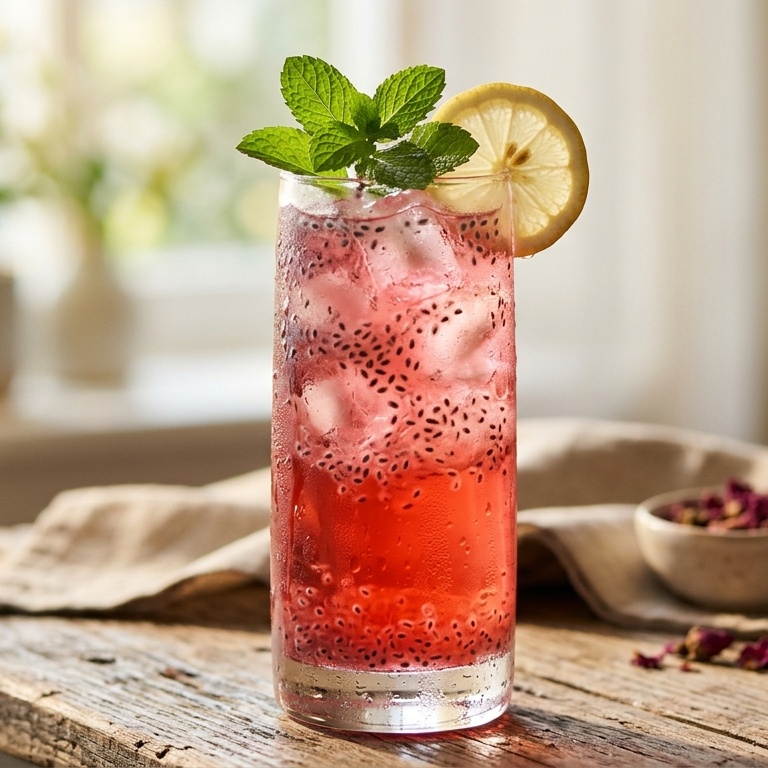
Caribbean sorrel has a bold, sweet-tart, and intensely spiced taste. The natural acidity of the hibiscus flower gives it a cranberry-like sourness, which is balanced by sugar. What sets it apart from simple hibiscus tea is the heavy addition of spices.
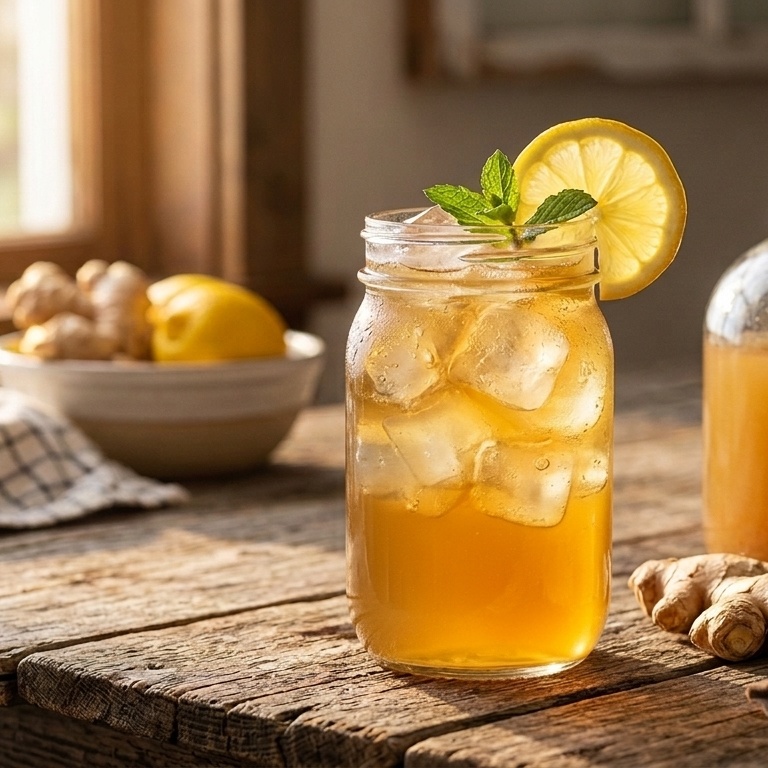
Fresh ginger adds a hot, zesty kick that tickles the throat, while cloves and cinnamon introduce a deep, woody warmth. Pimento (allspice) berries provide notes of nutmeg and pepper, producing a complex, comforting flavor profile that is served over ice.
Sorrel Ingredients and Botanical Profiles
Preparing Caribbean sorrel requires combining dried flowers with a specific blend of whole spices and fresh ginger:

- Sorrel / Hibiscus (Hibiscus sabdariffa): The dried red calyces supply the crimson color and tart flavor.
- Ginger (Zingiber officinale): Freshly sliced or grated ginger root provides spice.
- Pimento / Allspice (Pimenta dioica): Whole berries provide a peppery warmth.
- Cloves (Syzygium aromaticum) and Cinnamon (Cinnamomum verum): Classic holiday spices. If you enjoy spiced drinks, you can also explore how these botanicals are used in modern products like Mr. Mojito or Tropical Dream.
Sorrel Naming Confusion: Caribbean Sorrel vs. French Sorrel
A common point of confusion for searchers is the difference between Caribbean sorrel and French sorrel. While they share the same English name, they are fully different botanical species used for different purposes. If you want to compare different regional versions of hibiscus drinks, see our guide on West African bissap to learn about its Senegalese prep and sweet-minty taste profile.
Serving Guidelines and Safety Cautions
Essential Safety Guidelines
- Medication Interactions: Hibiscus has natural diuretic properties and can interact with high blood pressure medicines. Consult a doctor to monitor potential drops in blood pressure if consumed regularly.
- Pregnancy Caution: Concentrated hibiscus tea can stimulate uterine blood flow and estrogen levels. It is recommended to avoid hibiscus beverages like sorrel during pregnancy.
- Ginger Sensitivity: Caribbean sorrel contains significant amounts of fresh ginger. Excessive intake can cause mild digestive issues such as heartburn, stomach discomfort, or mouth irritation.
- Alcohol Control: Spiking sorrel with white rum is a common Caribbean practice. Label spiked batches clearly, store them out of reach of children, and monitor your alcohol consumption.
Troubleshooting Common Preparation Problems
Popular Claim vs. Reality
Final takeaway: Sorrel is a beautifully spiced, crimson holiday drink that brings zesty ginger and warm spice aromas to your table.
Best choice: Hibiscus brewed with fresh ginger, cinnamon sticks, cloves, and pimento berries, served chilled.
Main caution: Watch the sugar level and avoid spiked rum versions if managing blood glucose or avoiding alcohol.
Next step: Compare sorrel with other regional hibiscus drinks and view our traditional recipe.
Sorrel is part of the wider non-alcoholic world drinks family, especially the botanical and hibiscus-based side of the category. For the full category overview, see our non-alcoholic drinks guide.
References
- Da-Costa-Rocha, I., et al. (2014). Hibiscus sabdariffa L. - a phytochemical and pharmacological review. Food Chemistry, 165, 424-443. https://pubmed.ncbi.nlm.nih.gov/25038983/
- USDA FoodData Central. Hibiscus calyces nutrient composition and sugar profile search. https://fdc.nal.usda.gov/
- British Dietetic Association. Portion sizes and hydration guidelines for fruit/herbal infusions. https://www.bda.uk.com/



Comments and reviews (0)