


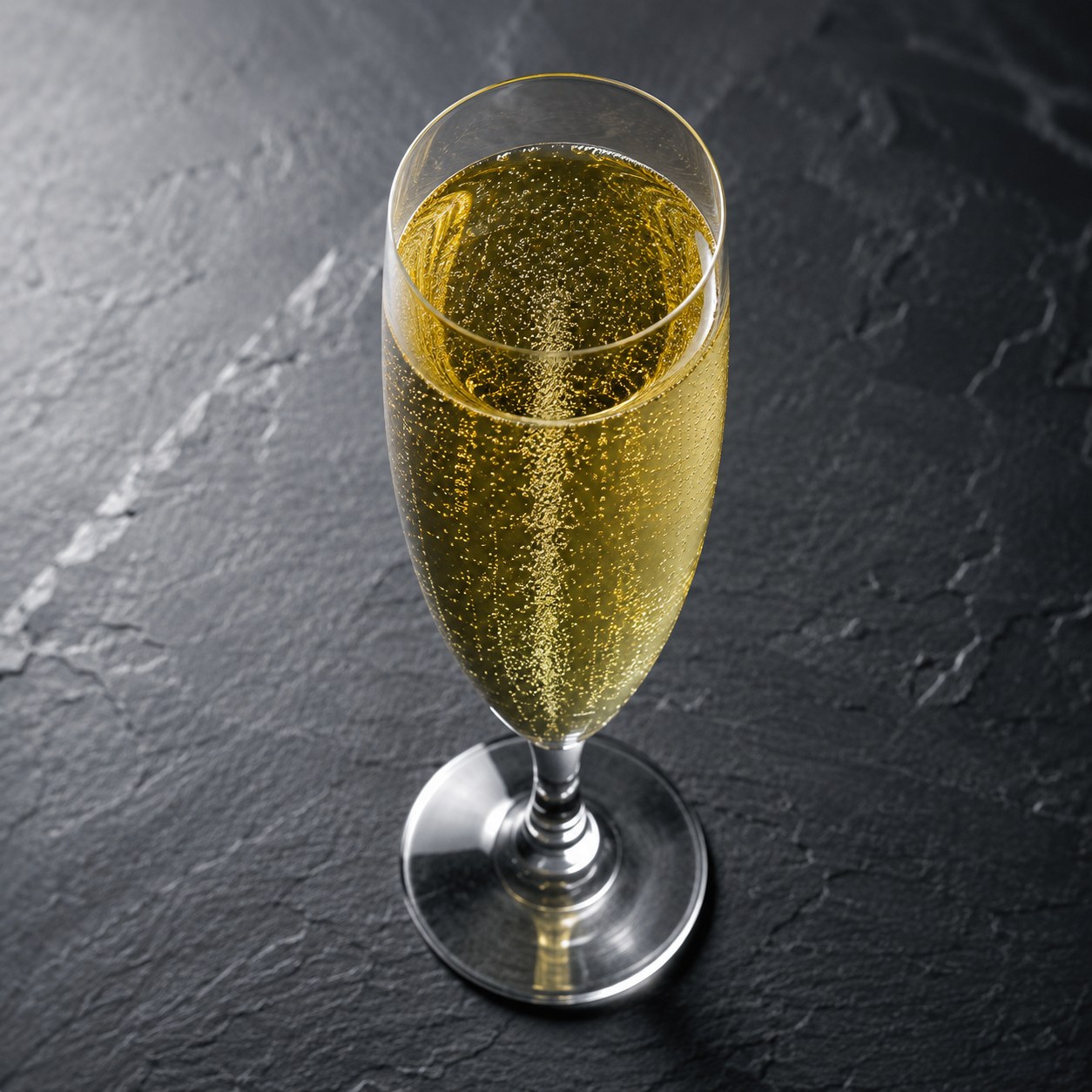
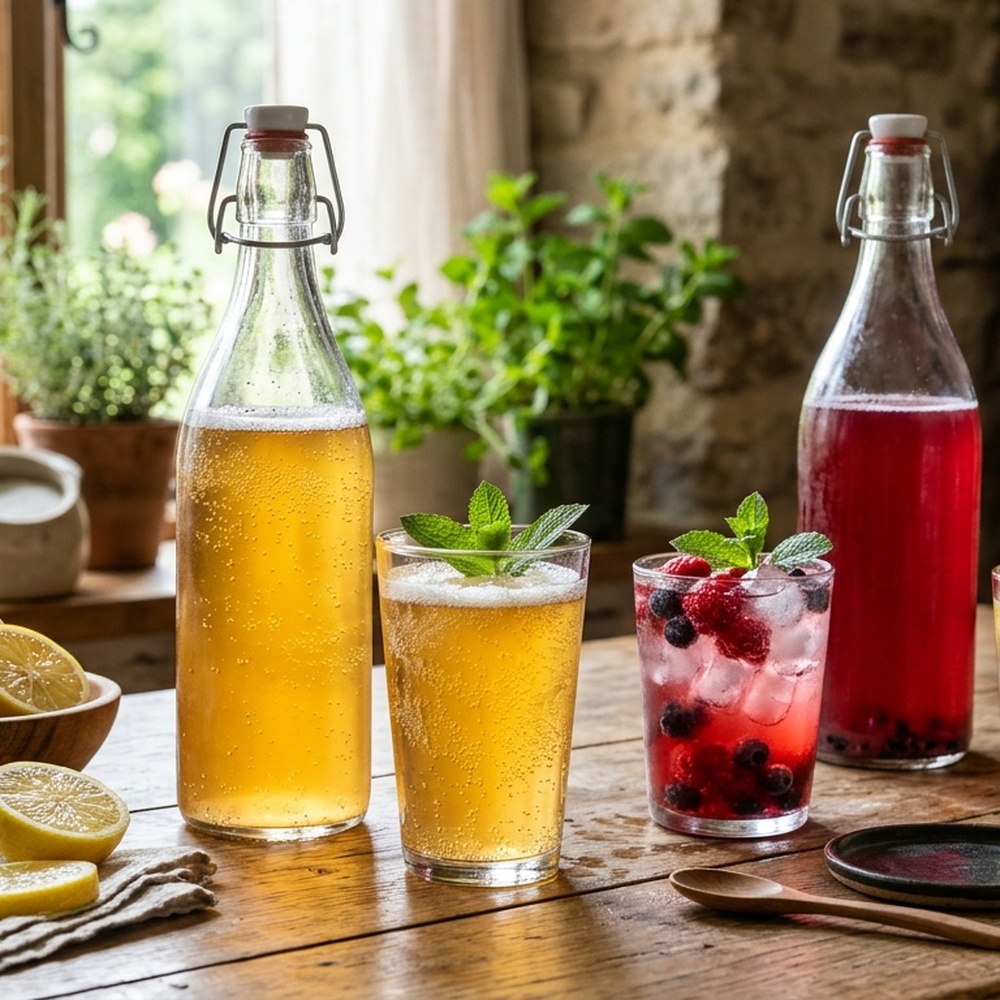
Picture a glass of seltzer that actually tastes like something. Or iced tea with the fizz of Champagne. That gap between plain sparkling water, sugary mocktails, and tangy kombucha is exactly what sparkling tea was built to fill.
Real flavour, real bubbles, no alcohol and no vinegar bite.
This guide covers what sparkling tea is, where it came from, how it stacks up against kombucha and soda, and what the research actually says about its caffeine and antioxidants. You'll also find the main styles of sparkling tea, three ways to carbonate tea at home, a brand guide, and a food pairing chart for anyone hosting a dinner.
Quick answer: Sparkling tea is a fizzy drink made by steeping whole leaf tea, herbs, or botanicals in water, then carbonating the liquid. Unlike kombucha, standard sparkling tea isn't fermented with a SCOBY. That means no sour, vinegar-like taste, no alcohol in most cases, and no need for a heavy dose of added sugar to balance it out.
The category covers a lot of ground. On one end: crisp, unsweetened, zero-calorie canned seltzers meant for daily drinking. On the other: complex, layered bottled blends poured into Champagne flutes at fine-dining restaurants as a non-alcoholic wine alternative.
Where Sparkling Tea Came From
From a Michelin Wine Cellar to a New Category
Sparkling tea traces back to 2010, when Copenhagen sommelier Jacob Kocemba was working at a Michelin-starred restaurant and couldn't find a wine to pair with a dessert, despite a cellar stocked with more than 1,700 bottles. He blended several premium teas into a tea extract instead. Diners loved it, and the improvised pairing became a house favourite.
Kocemba spent years refining the idea before turning it into a business. In 2017, he partnered with Bo Sten Hansen to found the Copenhagen Sparkling Tea Company. Their bottles today blend up to 13 organic whole leaf teas, including rare varieties like First Flush Darjeeling and Silver Needle, to mimic the acidity, structure, and complexity of fine sparkling wine.
The brand now sells in more than 50 countries and is poured at over 100 Michelin-starred restaurants.
Two Pillars of the Modern Market
The category splits into two distinct markets. The first is luxury bottled cuvées, typically sold in 750 mL bottles, meant for celebrations and formal dining. Copenhagen Sparkling Tea is the best-known name here.
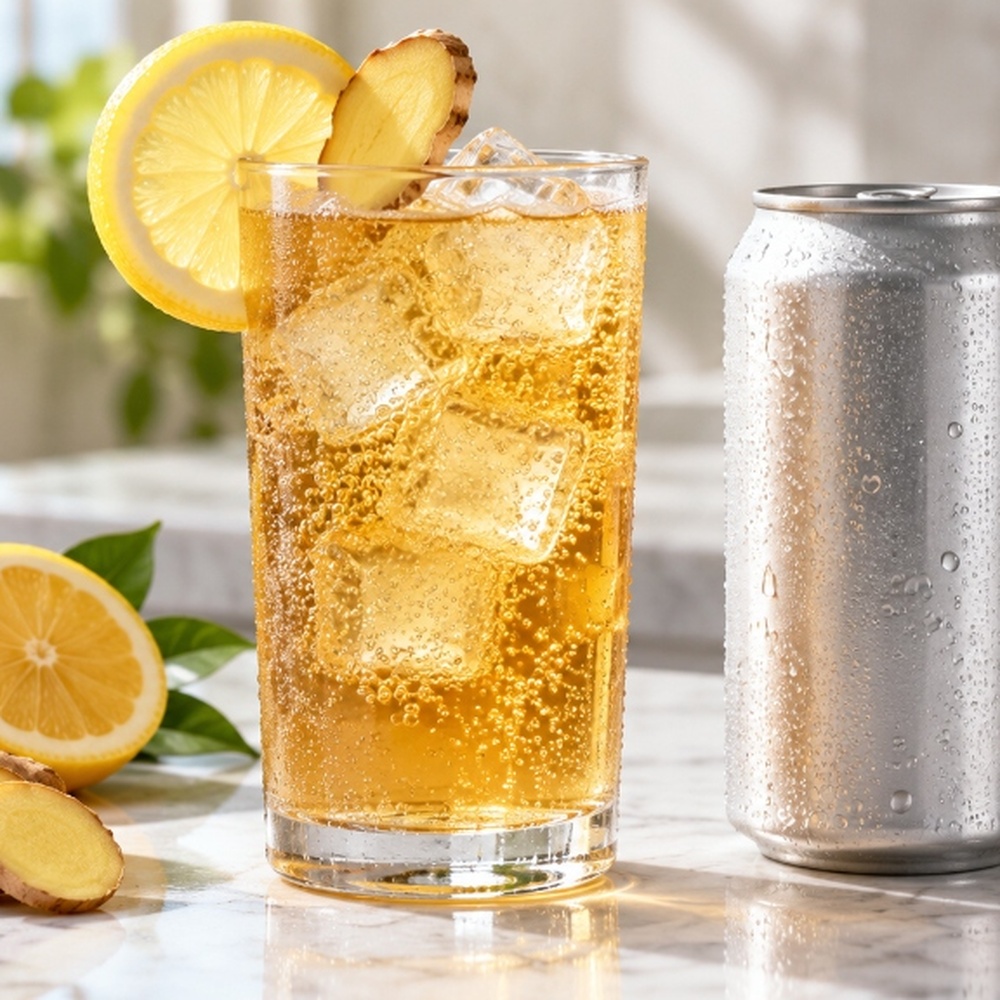
The second is everyday canned seltzers, usually 12 oz cans, built for casual, zero-sugar hydration rather than special occasions. Minna and Sound represent this side of the market.
Cold Extraction vs. Fermentation
Most sparkling tea brands use cold-brew extraction rather than fermentation. Steeping whole leaf tea in cold water for 12 to 24 hours pulls out aromatic oils and the amino acid L-theanine, while leaving most of the bitter tannins behind that hot brewing tends to release. The tea is then filtered and carbonated directly with pressurized CO2, the same basic principle behind a soda siphon.
A smaller number of producers took the fermentation route instead of force-carbonating. Golden Star Tea Company's White Jasmine Sparkling Tea, launched in 2008, was one of the best-known examples: silver needle jasmine tea fermented with cane sugar to produce natural carbonation and a trace of alcohol, usually under 0.5% ABV, similar to what shows up in some kombucha. The brand was served at the White House press corps luncheon in 2010 and built a strong following in its day, but business records and the near-total absence of current retail listings suggest the company stopped operating around 2012.
It's worth knowing about for how it shaped the category, but don't go hunting for a bottle. If you do come across a lightly fermented sparkling tea from another maker, check the label rather than assuming every sparkling tea is alcohol-free by default.
Sparkling Tea vs. Kombucha vs. Soda: Full Comparison
These three drinks often sit near each other on a store shelf, but they're made in completely different ways.
The short version: kombucha gets its tang from fermentation and carries live cultures. Soda gets its sweetness from syrup. Sparkling tea skips both and relies on real tea and CO2 for flavour and fizz.
Health, Polyphenols, and the L-Theanine Science
Calm Energy From Caffeine and L-Theanine
Caffeinated sparkling tea, made from Camellia sinensis leaves like white, green, oolong, and black tea, typically delivers 20 to 50 mg of natural caffeine per serving. That's roughly a quarter to half of what you'd get from a cup of coffee.
What makes tea's caffeine feel different from coffee's is L-theanine, an amino acid found almost exclusively in tea. Research has linked L-theanine to increased alpha brain wave activity, associated with a relaxed but alert mental state. Several studies on pairing caffeine with L-theanine suggest the combination can support sustained focus with fewer of the jitters or crash that caffeine alone sometimes causes.
This is general research on the compounds, not a claim specific to any bottled sparkling tea product, and results vary by individual.
Antioxidants Preserved by Cold Extraction
Steeping tea in cold water instead of boiling water protects heat-sensitive polyphenols. Green tea is especially rich in epigallocatechin gallate, usually shortened to EGCG, an antioxidant compound studied for its role in neutralizing free radicals and supporting blood vessel health. Black tea carries a related group of compounds called theaflavins, formed during the oxidation process that turns green tea leaves into black tea.
Cold extraction isn't just a flavour choice. Heat degrades some of these polyphenols, so a 12 to 24 hour cold steep retains more of them than a quick hot brew does.
Is Sparkling Tea Healthier Than Soda?
For most brands, yes, at least by the numbers on the label. A 12 oz canned sparkling tea typically runs 0 to 35 calories and 0 to 8 grams of sugar, compared to 140 to 180 calories and 35 to 45 grams of sugar in a conventional soda. Unsweetened sparkling tea also skips the artificial colours and flavours found in many sodas, and it brings polyphenols that plain soda doesn't have at all.
That comparison shifts for the luxury bottled cuvées, which add grape juice for body and land closer to 4 to 8 grams of sugar per glass. Still far below a can of soda, but not the zero-sugar profile of a canned seltzer, so the two formats aren't quite interchangeable if sugar is your main concern.
The Sugar Reality
Not every sparkling tea is sugar-free. Canned seltzer brands like Minna and Sound are typically unsweetened, landing at 0 grams of sugar and 0 calories per can. Luxury bottled cuvées are a different story.
Copenhagen Sparkling Tea, for one, adds a modest amount of organic grape juice, often in the 4 to 8 gram range per glass, to build a wine-like body and rounded sweetness. Some canned cold-brew tea products aimed at dessert-style flavours, like DAVIDsTEA's sparkling cold brew line, also list added cane sugar on the label. This is a category where reading the nutrition panel still matters, even for a drink positioned as a healthier soda alternative.
5 Core Types of Sparkling Tea
Sparkling tea isn't one flavour. Here are the styles you're most likely to run into.
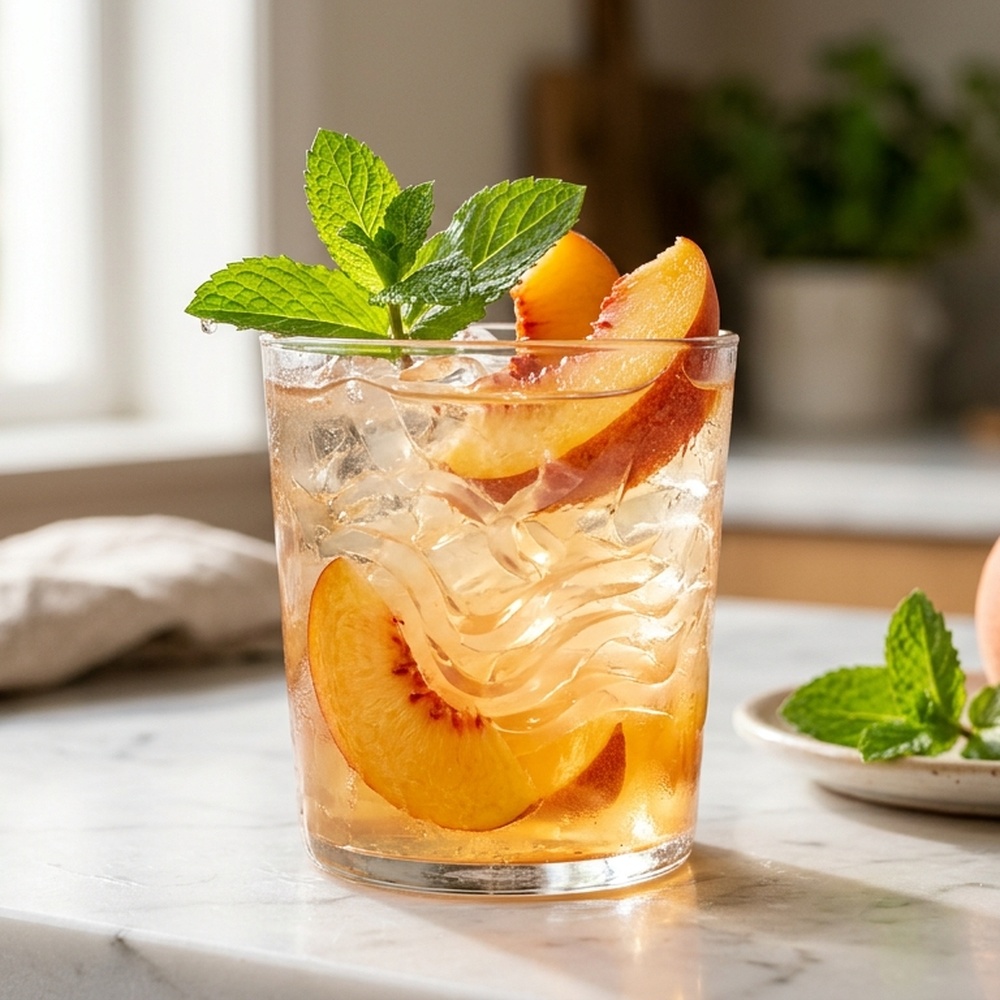
Sparkling white tea. Delicate and pale gold, often carrying white peach notes. This is the closest style to a Champagne-like aperitif and usually the lowest in caffeine among the caffeinated types.
Sparkling green and jasmine tea. Crisp, grassy, and floral, with the highest EGCG content of the group since green tea leaves are the least processed.
Sparkling oolong and black tea. Tannic and woody, often with a stone fruit character. This style works as a stand-in for red wine or dry cider at the table.
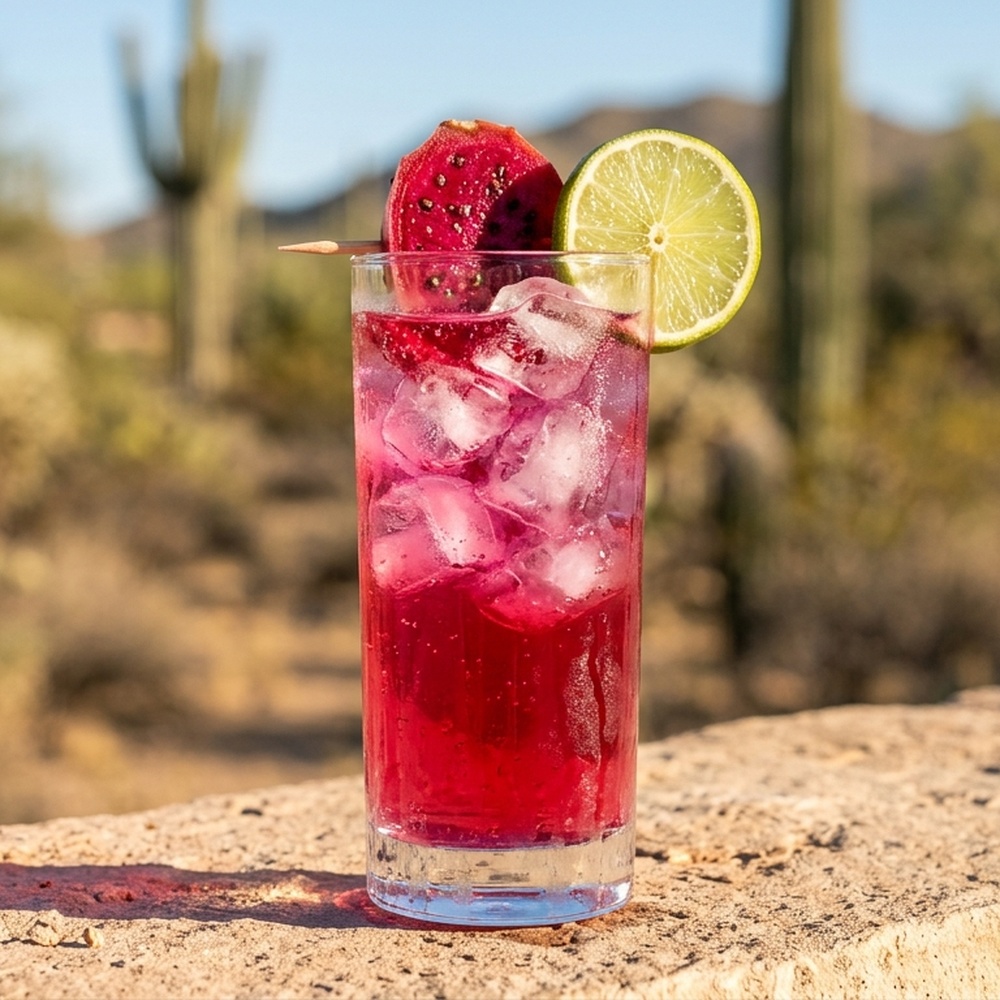
Sparkling herbal tea. Made from hibiscus, chamomile, or similar botanicals rather than Camellia sinensis, which means it's naturally caffeine-free. Hibiscus versions tend to be ruby-red and tart, while chamomile leans calming and floral.
Hop-infused sparkling tea. A newer style dry-hopped with varieties like Citra or Mosaic to mimic the aroma of an IPA, without the alcohol or the gluten found in traditional beer.
How to Make Sparkling Tea at Home: 3 Tested Methods
Why Temperature and Filtration Matter
Before getting into the methods, it helps to understand the basic chemistry. Carbon dioxide dissolves into cold liquid far more easily than into warm liquid, which is why every method below calls for chilling the tea before carbonating it. As CO2 dissolves, a small amount reacts with water to form carbonic acid, which gives carbonated drinks their light, tingling bite.
Fine particles left in the tea, like small leaf fragments, give CO2 bubbles a place to cling and escape too fast, which is why straining the tea well before carbonating helps it hold its fizz longer.
The starting ratio: 15 grams of loose whole leaf tea per 1 litre of cold, filtered water, steeped in the refrigerator for 12 to 16 hours.
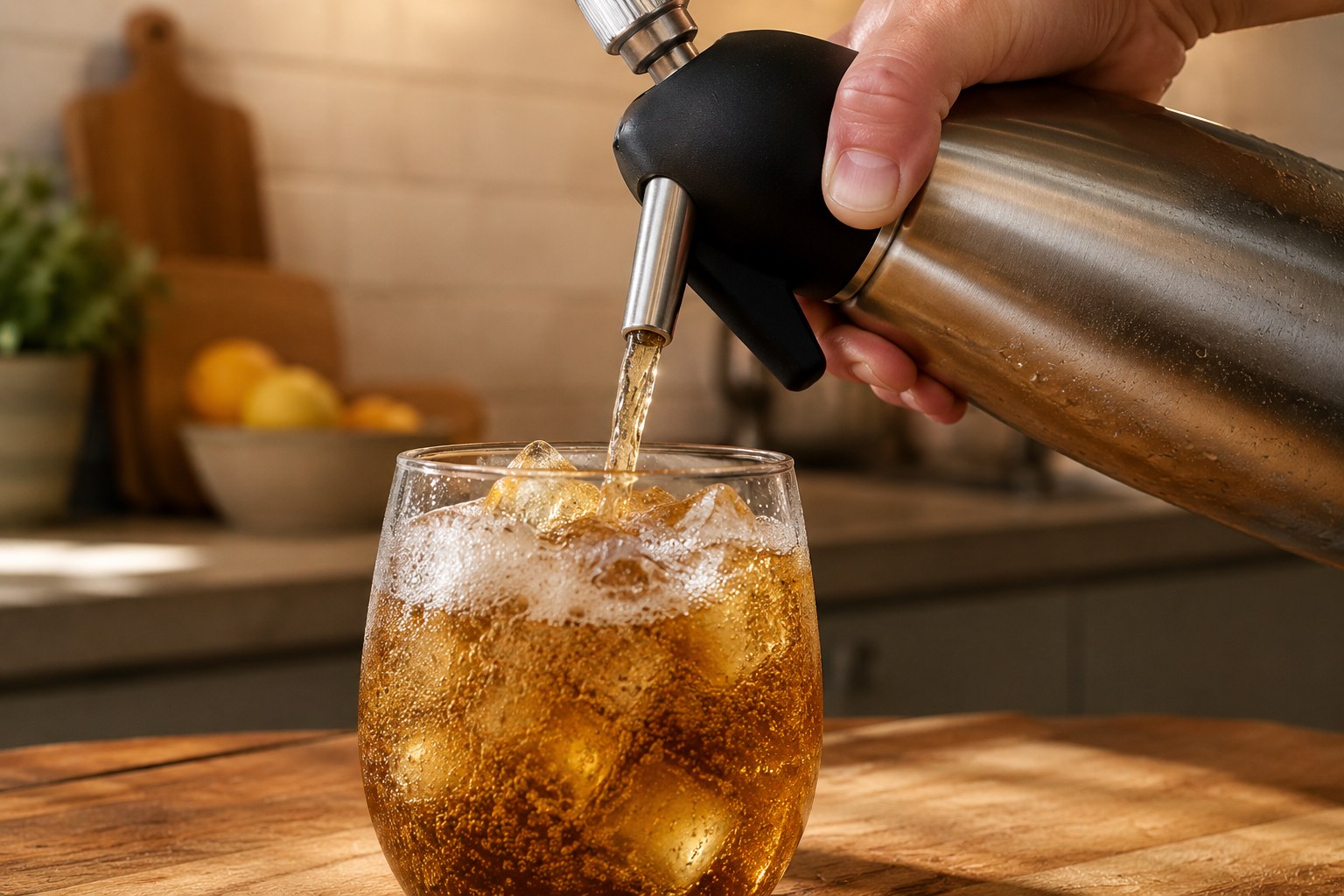
Method 1: Soda Siphon (the Bar-Standard Method)
- Double-filter your cold brew through a paper coffee filter to remove fine particles.
- Chill the strained tea in the freezer until it reaches about 1 to 2 degrees Celsius, cold enough for maximum CO2 uptake without freezing.
- Pour the chilled tea into a soda siphon and charge it with one CO2 cartridge.
- Shake for about 30 seconds, then let it rest in the refrigerator for 15 minutes.
- Dispense at roughly a 45 degree angle into chilled Champagne flutes to preserve the bubbles.
Method 2: Drinkmate Carbonator (No Straw-Style Sipper Needed)
- Chill your filtered tea below 3 degrees Celsius.
- Carbonate in short, one-second bursts inside a Drinkmate bottle. Drinkmate machines are built to handle non-water liquids, unlike most standard SodaStream units.
- Vent any foam that builds up between bursts.
- Serve immediately over ice.
Method 3: Concentrate Top-Up (No Special Equipment Required)
- Steep 4 tablespoons of loose tea in 1 cup of hot water for 6 minutes to make a strong concentrate.
- Chill the concentrate completely in the refrigerator.
- Pour 1/4 cup of the concentrate over ice.
- Top with 3/4 cup of chilled, store-bought sparkling water, such as Topo Chico.
This last method skips home carbonation entirely and is the easiest starting point if you're not ready to invest in equipment.
Related read: interested in a bubbly, alcohol-free option for a dinner party? See our full guide to non-alcoholic drinks.
Brand Guide (US Market)
A note on Golden Star Tea Company: its lightly fermented White Jasmine Sparkling Tea was a genuine pioneer of the category and a fixture at Whole Foods and upscale restaurants between 2008 and roughly 2012. It's excluded from the buying table above because current business records and the lack of any active retail listings suggest the company is no longer operating. If you spot it in a shop, it's likely old stock rather than a current product line.
Looking Specifically for Canned Sparkling Tea?
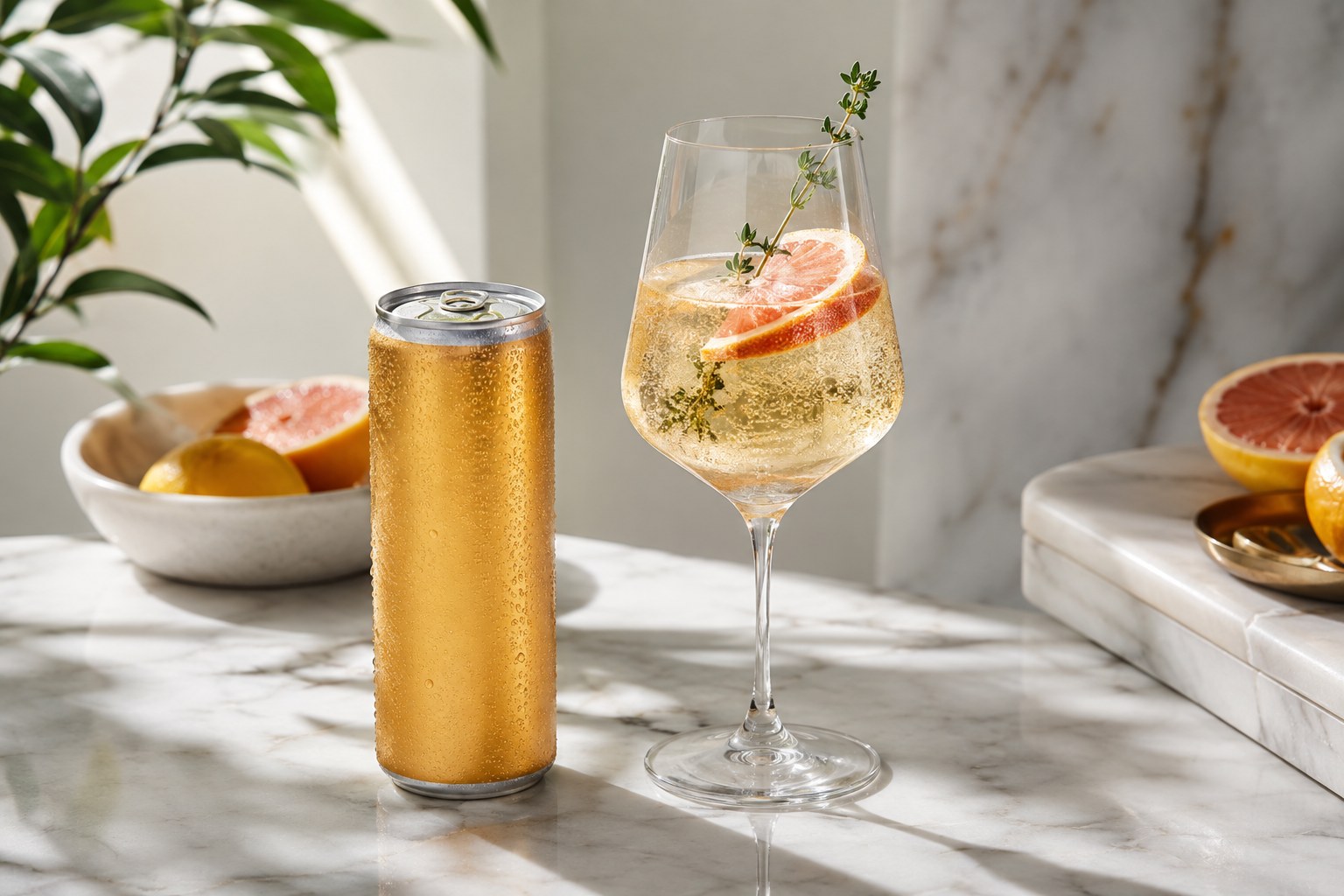
If you want an everyday, grab-and-go option rather than a bottle saved for special occasions, canned sparkling tea is the format to shop. Minna and Sound both sell 12 oz cans at 0 grams of sugar, positioned as a direct swap for soda or flavoured seltzer. DAVIDsTEA also sells its sparkling cold brew in a can, though its dessert-inspired flavours carry added cane sugar, so it sits closer to a treat than a daily hydration drink.
If zero sugar is the goal, Minna and Sound are the two canned brands to check first.
Sommelier Food Pairing Matrix
If you're serving sparkling tea the way a sommelier would serve wine, matching the tea's body and acidity to the dish makes a real difference.
Serving Ideas: Sparkling Tea as a Non-Alcoholic Champagne Alternative
Sparkling tea works just as well as a mixer as it does on its own. A few simple ways to serve it:
As a toast pour. Serve a bottled cuvée straight in a Champagne flute, chilled, with no additions. This is the most common way sparkling tea shows up as a non-alcoholic Champagne alternative at weddings and celebrations.
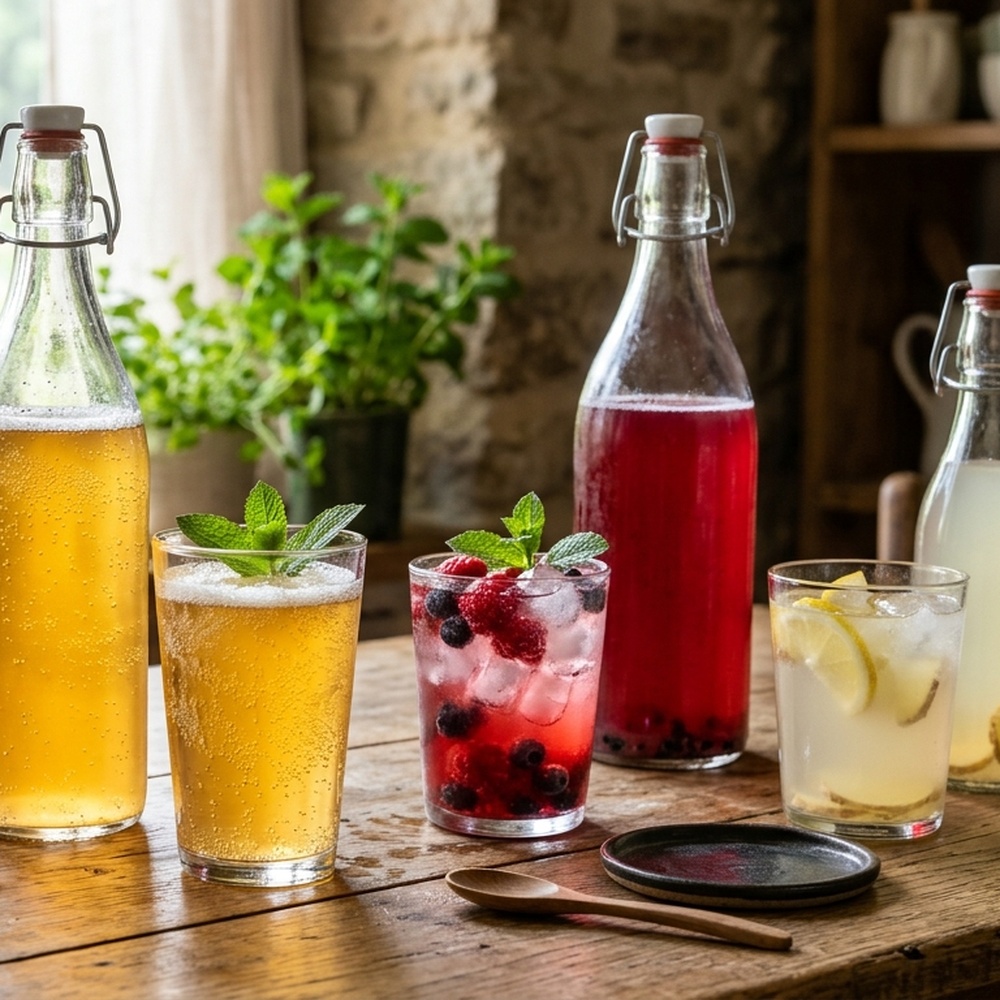
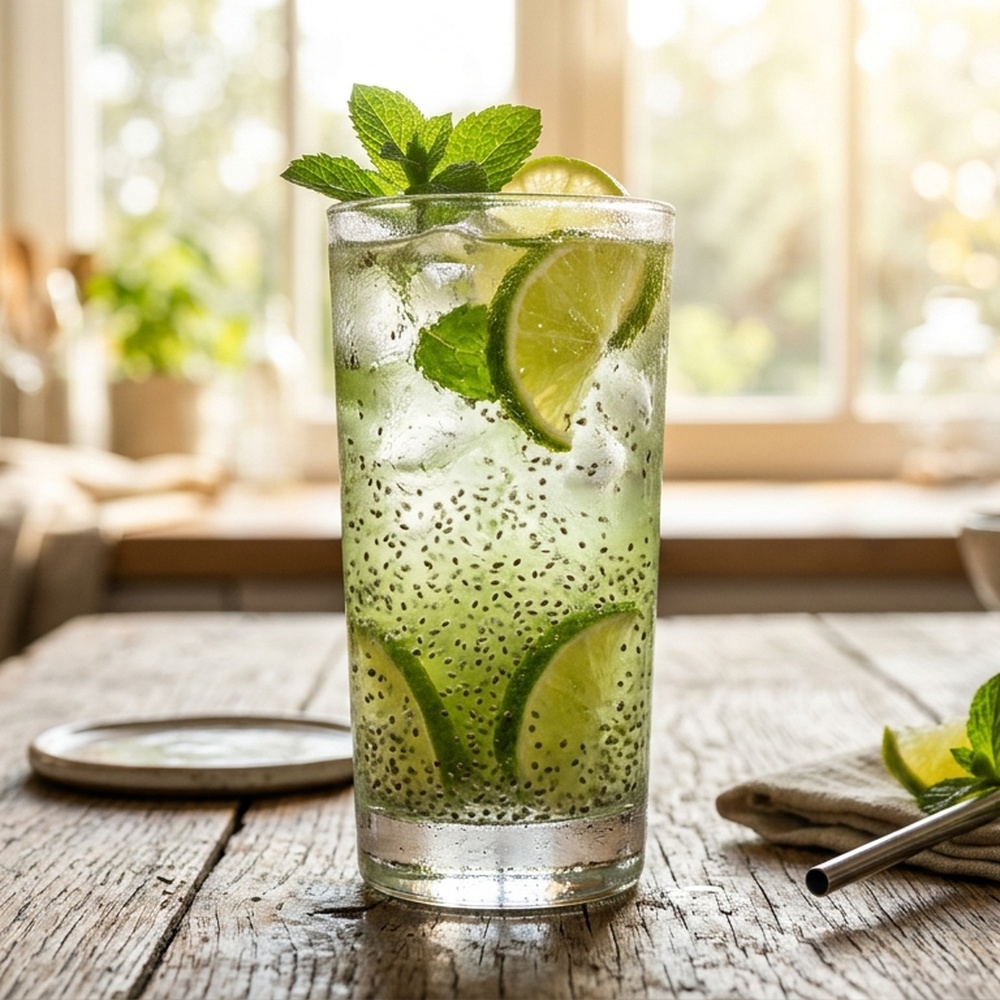
As a fizzy tea mocktail. Combine sparkling hibiscus tea with a splash of fresh lime juice and a few mint leaves over ice for a tart, refreshing mocktail. Sparkling white or green tea pairs well with a thin cucumber ribbon and a dash of elderflower syrup for something more floral.
As a brunch spritzer. Mix equal parts sparkling black tea and fresh orange juice for a lower-sugar twist on a mimosa.
As a cocktail mixer. Bartenders sometimes use unsweetened sparkling tea in place of soda water in a highball, since the tea's tannins add structure that plain soda water lacks.
For trade menus, sparkling tea sits naturally beside alcohol-free spritzes and bottled mocktails. See the London Juice Company non-alcoholic mocktail supplier page if you are sourcing ready-to-serve options.
Frequently Asked Questions
What is sparkling tea?
Sparkling tea is a carbonated beverage made by infusing whole tea leaves or herbs into water and adding CO2. Most versions are unfermented and non-alcoholic.
What is the difference between sparkling tea and kombucha?
Sparkling tea isn't fermented with a SCOBY, so it has no vinegar-like acidity, no live cultures, and no alcohol in most cases. Kombucha is fermented and carries a tart, tangy flavour along with trace alcohol.
Does sparkling tea have caffeine?
Sparkling teas made from Camellia sinensis, meaning white, green, black, and oolong tea, contain roughly 20 to 50 mg of natural caffeine per serving. Herbal versions made from hibiscus or chamomile are naturally caffeine-free.
Can you use a SodaStream to make sparkling tea?
Standard SodaStream machines are built for plain water only, since tea particles and oils can clog the carbonating valve. Carbonate plain water first, then mix it with a strong tea concentrate, or use a Drinkmate machine, which is designed to carbonate liquids other than water.
How long does homemade sparkling tea stay fizzy?
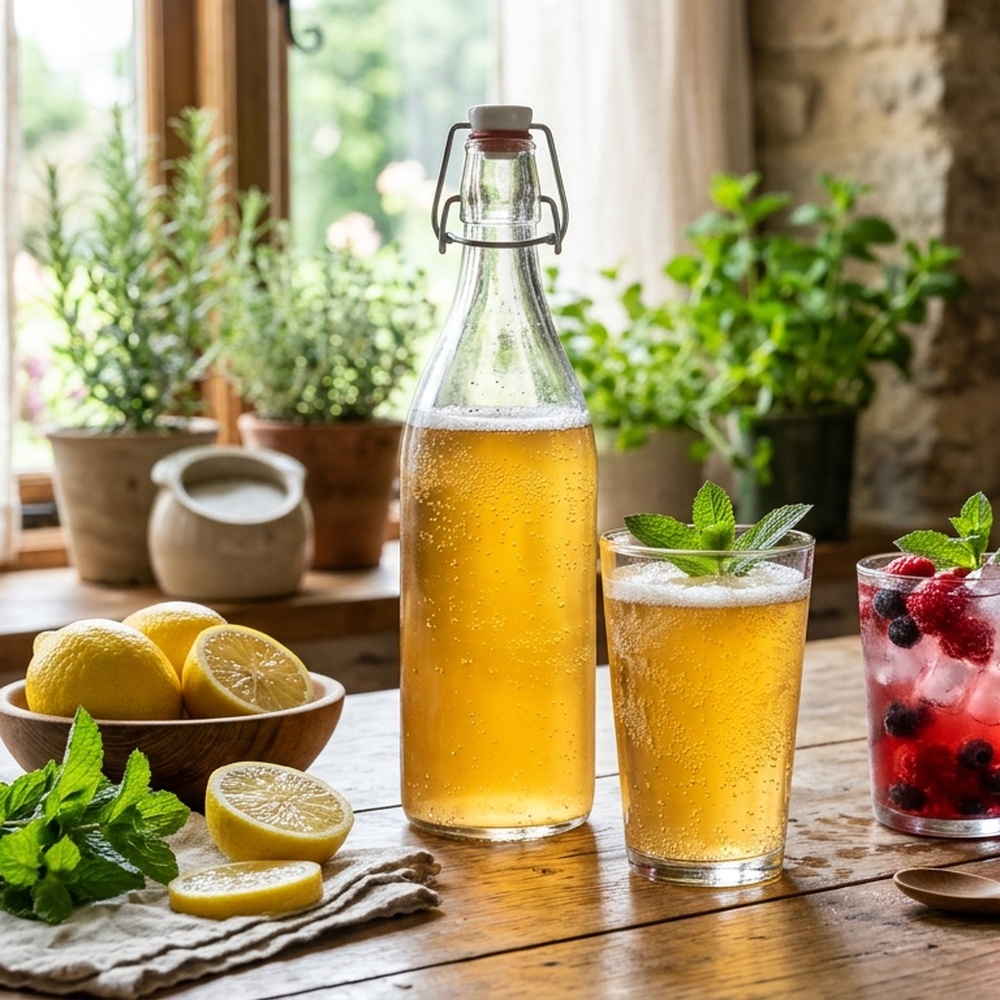
About three to five days when stored in a sealed swing-top glass bottle or a soda siphon in the refrigerator. Keep the bottle cold and tightly sealed so the bubbles last as long as possible.
Sources and Methodology
The history of the Copenhagen Sparkling Tea Company and sommelier Jacob Kocemba is drawn from the company's own brand materials alongside independent trade coverage. Brand and product details for Minna, Sound, and DAVIDsTEA come from each brand's current retail listings and product pages, gathered at the time of writing. Golden Star Tea Company's history is documented in period trade press and reviews from 2008 to 2013; its current operating status is based on third-party business records rather than a direct company statement, since the brand has no active retail presence to confirm against.
Formulations, flavour names, and sugar content can change when a brand updates its lineup, so always confirm exact figures on the current label rather than relying on any single source, including this guide. The caffeine and L-theanine research referenced above reflects general findings from published nutrition and food science literature rather than a single study, and it describes typical effects rather than a guarantee for any individual.


Comments and reviews (0)