


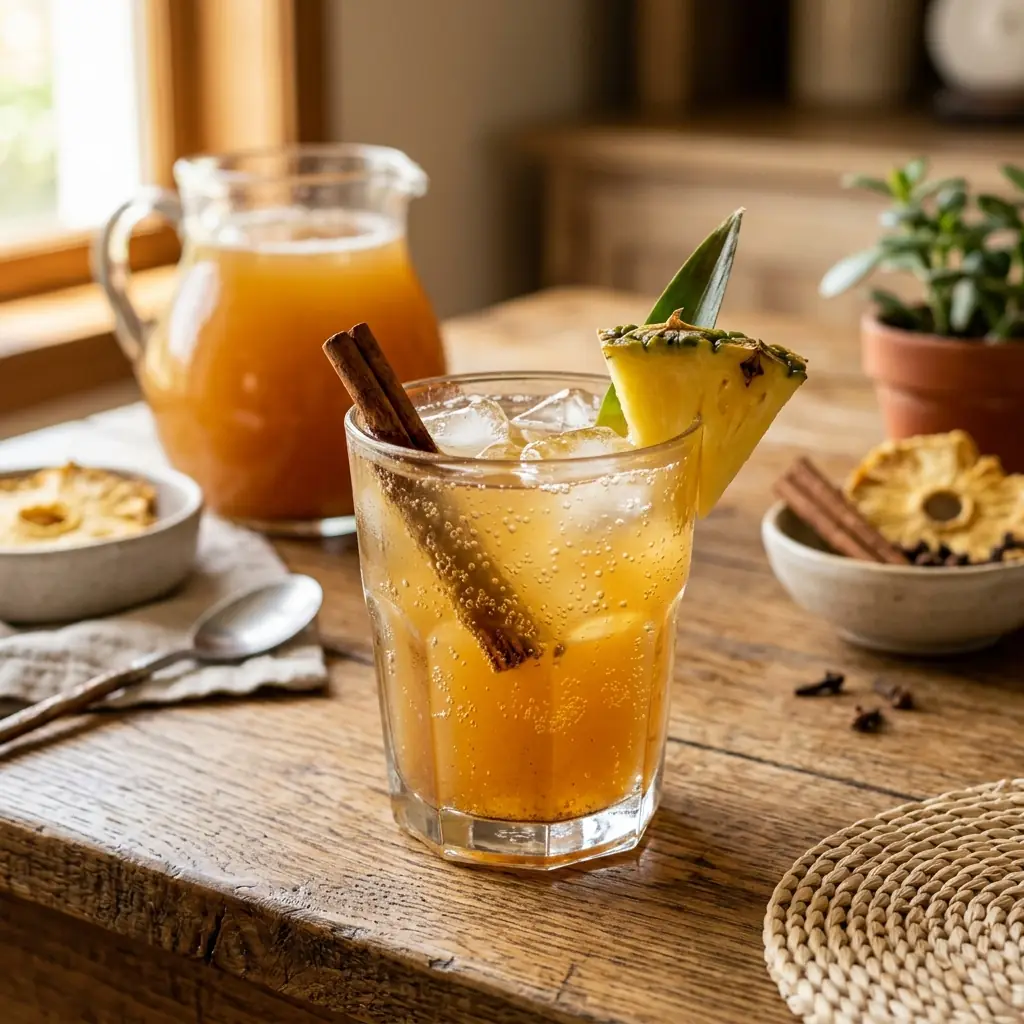
Standard fruit sodas contain synthetic syrups and artificial colorings, while store-bought kombucha often tastes sharp, acidic, and aggressively vinegary. That leaves many people searching for a naturally fizzy, refreshing fermented drink with gentle tropical sweetness.
What Is Tepache and Is It Alcoholic?
Tepache is a traditional Mexican fermented beverage made by steeping pineapple rinds, cores, and unrefined cane sugar (piloncillo) with water, cinnamon, and cloves. Driven by wild yeasts naturally present on the pineapple skin, it ferments in two to three days into a lightly effervescent, sweet, and tangy drink with low alcohol levels (typically 0.5% to 2.0% ABV).
Important Safety Note: Fact-checked October 24, 2026. Because homemade tepache ferments with wild ambient microbes, alcohol content can reach between 1.0% and 2.0% ABV within 48 to 72 hours. Pregnant women, nursing mothers, and individuals abstaining from alcohol should avoid homemade batches. In addition, individuals with severe pineapple allergies or sensitivities to proteolytic enzymes should avoid consuming unfiltered tepache.
This guide explores the fermentation science behind tepache, its true alcohol content, gut health benefits, safe home brewing practices, and an authentic zero-waste recipe you can make on your kitchen counter.
What Is Tepache and How Did It Originate?
The history of tepache stretches back to pre-Columbian Mesoamerica. The name derives from the Nahuatl word tepatli, which translates to "drink made from corn," or tepachitl, meaning "crushed maize."
Centuries before European contact, indigenous Nahua and Maya communities across Central and Southern Mexico prepared lightly fermented beverages from ground corn kernels, spring water, and aromatic herbs. These drinks provided daily hydration and served as sacred offerings during religious ceremonies.
Following the Spanish arrival in the sixteenth century, two major agricultural changes reshaped the drink:
1. The Introduction of Sugarcane: Spanish colonizers established massive sugarcane plantations, introducing dark, unrefined whole cane sugar pressed into compact cones known as piloncillo.
2. The Growth of Pineapple Cultivation: Pineapple (Ananas comosus), native to tropical South America, flourished across the warm coastal lowlands of Veracruz, Oaxaca, and Jalisco.
Mexican home cooks discovered that the fibrous rinds and sweet cores of ripe pineapples hosted active wild yeasts capable of fermenting sweetened water in just a couple of days. Pineapple quickly replaced corn as the primary base across Mexico, creating the golden, effervescent street beverage enjoyed today, much like how traditional agua fresca varieties refreshed bustling markets.
In contemporary Mexico, street vendors known as tepacheros serve the chilled drink from large glass barrel dispensers (vitroleros) or traditional wooden barrels. Poured over ice in plastic bags tied with a straw or in heavy glass mugs with a chili-salt rim, it provides instant relief from midday heat outside bustling street markets and taquerias.
The Science of Wild Fermentation: Microorganisms, Nutrients, and Carbonation
Unlike commercial beer or wine that rely on lab-grown strains of isolated yeast, authentic tepache relies on spontaneous wild fermentation. The drink belongs to a celebrated family of cultured tonics documented in our comprehensive fermented drinks guide.
The outer peel of a fresh, ripe pineapple hosts an active community of microscopic beneficial organisms known as an epiphytic microbiome. When you submerge the peels in water sweetened with unrefined cane sugar, these microorganisms awaken and multiply:
1. Lactic Acid Bacteria (LAB)
Strains of Lactobacillus plantarum, Leuconostoc mesenteroides, and Weissella confusa thrive in the initial stages of fermentation. These beneficial bacteria consume simple sugars and produce natural lactic acid. This acid lowers the pH of the liquid from roughly 5.5 down to between 3.8 and 4.2. That sharp drop creates a pleasantly tart taste and establishes an acidic barrier that prevents harmful food-spoilage bacteria from taking hold.
2. Wild Yeasts
Species including Saccharomyces cerevisiae, Torulaspora delbrueckii, and Hanseniaspora uvarum live directly on the textured pineapple skin. These yeasts consume glucose and fructose from the piloncillo and fruit pulp, producing two primary metabolic byproducts:
- Carbon Dioxide (CO2): Tiny micro-bubbles of gas create tepache's signature creamy foam head and gentle effervescence, similar to the natural fizz seen in sparkling water kefir.
- Ethanol: Small amounts of alcohol lend a warm, cider-like finish to the drink.
3. The Nutritional Role of Piloncillo
Authentic recipes insist on piloncillo rather than bleached white granulated sugar. Piloncillo is raw, unrefined cane sugar made by boiling pure sugarcane juice into thick syrup and pouring it into wooden cone molds. Because it avoids industrial refining, piloncillo retains rich molasses, providing potassium, magnesium, calcium, and trace iron. These minerals supply essential yeast nutrients, supporting steady fermentation and lending a deep caramel undertone that balances bright tropical acid.
Is Tepache Alcoholic? Kinetics and Legal Boundaries
One of the most common questions surrounding tepache concerns its alcohol content. Because tepache is a wild-fermented beverage, yeasts naturally produce ethanol. However, because the traditional primary fermentation window is exceptionally short (typically 24 to 72 hours), wild yeasts only convert a fraction of the available sugars into alcohol before fermentation stops.
Here is how alcohol develops over time in a standard home batch kept at room temperature (72°F to 78°F / 22°C to 26°C):
- 24 to 36 Hours of Fermentation: The beverage is lightly fizzy, very sweet, and mildly tart. Alcohol content ranges between 0.5% and 0.8% ABV (Alcohol By Volume), similar to commercial kombucha.
- 48 to 72 Hours of Fermentation: The sweetness balances with tart acidity, creating pronounced effervescence and pleasant cider notes. Alcohol content reaches 1.0% to 2.0% ABV.
- 4 to 6 Days (Extended Fermentation): Yeasts consume remaining sugars, driving alcohol levels up to 3.0% to 4.0% ABV. At this point, wild Acetobacter bacteria begin converting ethanol into acetic acid, turning the beverage progressively sharper until it becomes pineapple vinegar.
Clear Safety and Dietary Boundaries
Under United States federal law, beverages containing less than 0.5% ABV carry a non-alcoholic classification. Because homemade tepache regularly reaches between 1.0% and 2.0% ABV, it cannot be considered completely alcohol-free.
- Pregnant and Breastfeeding Women: Medical professionals advise avoiding homemade wild-fermented beverages due to unregulated trace alcohol and live wild microbes.
- Children: While older children in Mexico traditionally drink lightly fermented 24-hour tepache, parents in the United States should exercise caution, as home batches can easily exceed 1.0% ABV.
- Recovering Alcoholics and Abstainers: Individuals abstaining from alcohol for medical, psychological, or religious reasons should treat homemade tepache as a low-alcohol beverage. For guaranteed zero-proof options, consider exploring our caffeine-free drinks guide.
What Does Tepache Taste Like?
Tepache delivers an energetic flavor that is sweet, tart, tropical, and warm. The first sip greets you with the bright, sun-ripened flavor of juicy pineapple, quickly followed by a round, caramel sweetness from the piloncillo. As the liquid crosses your tongue, gentle lactic acidity provides a clean, palate-cleansing tartness.
The finish is warm and aromatic, shaped by the woody spice of Mexican canela and the floral sharpness of whole cloves. The gentle effervescence creates a tingling mouthfeel, while a creamy head of white foam softens the acidity.
How It Compares to Other Cultured Drinks
- Tepache vs Kombucha: Kombucha ferments with a rubbery SCOBY using brewed tea, resulting in a strong, vinegary bite driven by acetic acid. If you compare it to a standard kombucha flavor profile, tepache ferments without tea, relying primarily on lactic acid bacteria and wild fruit yeasts. It tastes fruitier, sweeter, and far less vinegary than kombucha.
- Tepache vs Hard Apple Cider: Hard cider ferments until dry (5.0% to 7.0% ABV) with clean apple notes. Tepache is sweeter, lighter in alcohol, and distinctly tropical.
- Tepache vs Pineapple Soda: Commercial pineapple soda is artificially flavored water saturated with high-fructose corn syrup. Tepache is naturally cultured, containing real fruit polyphenols, wild fermentation complexities, and balanced sweetness.
Nutritional Profile & Health Benefits
Because tepache is a live cultured food made from whole fruit and unrefined cane sugar, it delivers active nutritional benefits.
| Nutritional Metric | Amount per 1 Cup (240 ml) Serving | Daily Value (% DV) | Health Significance |
|---|---|---|---|
| Calories | 80 kcal | 4% | Moderate energy; far lighter than standard soda |
| Total Fat | 0.1 g | 0% | Naturally fat-free beverage |
| Cholesterol | 0 mg | 0% | 100% plant-based and cholesterol-free |
| Sodium | 10 mg | Naturally very low in sodium | |
| Total Carbohydrates | 19.0 g | 7% | Energy from fruit sugars and unrefined piloncillo |
| Dietary Fiber | 0.5 g | 2% | Soluble pectin released from pineapple peel |
| Total Sugars | 16.0 g | * | Partially metabolized by yeasts during brewing |
| Protein | 0.5 g | 1% | Trace amino acids from pineapple tissue |
| Vitamin C (Ascorbic Acid) | 18.0 mg | 20% | Supports collagen synthesis and immune defense |
| Potassium | 120 mg | 3% | Intracellular electrolyte provided by molasses |
| Bromelain | Natural Enzyme Complex | * | Proteolytic enzyme supporting digestive comfort |
| Live Probiotic Count | ~10^7 CFU/ml | * | Active lactic acid bacteria supporting gut health |
*Note: Percent Daily Values (% DV) are based on a standard 2,000-calorie daily diet. Exact metrics fluctuate depending on fermentation temperature, duration, and sugar concentration.
Evidence-Based Health Benefits
1. Supports a Balanced Gut Microbiome: Tepache is rich in live lactic acid bacteria, predominantly Lactobacillus species. Consuming unpasteurized fermented foods introduces beneficial microbes into the digestive tract, maintaining a healthy intestinal pH, outcompeting opportunistic pathogens, and supporting mucosal barrier integrity, similar to the gut-friendly bacteria in traditional spiced chaas.
2. Supplies Bromelain for Digestive Comfort: Pineapple rinds and cores contain the highest concentration of bromelain found anywhere in the fruit. Bromelain is a natural mixture of proteolytic enzymes that break down dietary proteins into smaller peptides and amino acids, easing gastric fullness after heavy meals.
3. Provides Protective Antioxidants: Pineapple peel contains natural polyphenols, flavonoids, and ascorbic acid (vitamin C). During fermentation, microbial enzymes break down complex plant cell walls, freeing bound antioxidants that neutralize reactive oxygen species (free radicals).
4. Eco-Conscious Zero-Waste Nutrition: Cooks discard roughly 30% to 40% of a pineapple's total weight by throwing away the tough outer rinds and fibrous central core. Making tepache upcycles these nutrient-dense parts into a functional probiotic cooler for pennies.
Clinical Safety, Fermentation Risks, and Mold Identification
Maintaining proper hygiene and temperature control during wild ambient fermentation prevents contamination while encouraging beneficial microbes to dominate.
Distinguishing Safe Kahm Yeast from Dangerous Mold
During ambient fermentation, home brewers often notice a thin, pale layer forming across the surface of the brew:
- Safe Kahm Yeast: Appears as a thin, flat, white or cream-colored film. It may look powdery, bubbly, or wrinkled, but it is completely harmless. It is simply wild aerobic yeast consuming trace oxygen. You can skim it off with a clean spoon or stir it back into the liquid.
- Harmful Mold: Appears as fuzzy, powdery, or hairy spots that are white, green, blue, or black. Mold grows in distinct circular islands and floats dry atop the liquid. If you see fuzzy or colorful mold, throw out the entire batch, sanitize your jar thoroughly, and start over with fresh fruit.
Practical Guidelines for a Clean Ferment
- Wash the Pineapple Exterior: Use clean running water and a vegetable brush to scrub dust and dirt from pineapple skin before peeling. Do not use chemical antibacterial soaps, which can kill wild yeasts.
- Choose Organic Fruit: Whenever possible, buy organic, pesticide-free pineapples to prevent synthetic chemicals from inhibiting wild yeast growth.
- Keep Fruit Submerged: Floating pieces of pineapple exposed to air remain vulnerable to mold spores. Keep peels submerged under sweetened water using a clean glass weight or small ceramic plate.
- Use a Breathable Cover: Cover your jar with a tightly woven cloth or tea towel secured with a sturdy rubber band to let carbon dioxide escape while blocking fruit flies (Drosophila melanogaster).
Step-by-Step Authentic Mexican Tepache Recipe
Authentic Mexican Pineapple Tepache
Ingredients
- Rinds and core from 1 large, ripe organic pineapple (washed thoroughly)
- 8 cups (0.5 gallon / 2 liters) non-chlorinated filtered spring water
- 1 cone (approx. 7 to 8 oz / 200 to 230 g) Mexican piloncillo (or 1 cup dark brown sugar)
- 1 stick Mexican canela (Ceylon cinnamon), cracked
- 3 whole cloves (optional: 1 star anise pod or 1-inch slice fresh ginger)
- For serving: Crushed ice, lime wedges, and Tajín chili-lime salt
Kitchen Equipment
- 1-gallon wide-mouth glass jar
- Wooden stirring spoon
- Breathable cotton cloth with rubber band
- Fine-mesh strainer
- Swing-top glass bottles (for carbonation)
Brewing Instructions
5-Way Fermented & Fruit Beverage Comparison Table
Review how authentic Mexican tepache compares to other popular cultured and fruit-based beverages (per standard 8-ounce serving):
| Beverage Name | Primary Base | Microorganisms / Fermentation | Alcohol Content (ABV) | Dominant Flavor Profile | Calorie Load | Best Use Case |
|---|---|---|---|---|---|---|
| Authentic Tepache | Pineapple rinds, piloncillo, water | Epiphytic wild yeasts and lactic acid bacteria | 0.5% to 2.0% ABV | Sweet, tart, tropical, spiced | ~80 kcal | Summer cooler, taco pairing, zero-waste brewing |
| Kombucha | Sweetened black or green tea | Symbiotic culture of bacteria and yeast (SCOBY) | Sour, vinegary, astringent, fizzy | ~30 to 50 kcal | Daily probiotic functional tonic | |
| Hard Apple Cider | Fermented pressed apple juice | Pitched brewing yeast (S. cerevisiae) | 5.0% to 7.0% ABV | Crisp, tart, dry, boozy apple | ~140 to 180 kcal | Alcoholic bar beverage, craft cider lovers |
| Water Kefir | Sugar water and dried fruit | Water kefir grains (bacteria and yeasts) | 0.5% to 1.5% ABV | Mildly sweet, yeast-forward, bubbly | ~40 to 60 kcal | Neutral-flavored dairy-free probiotic soda |
| Agua de Piña | Fresh blended pineapple flesh and water | Non-fermented (Fresh beverage) | 0.0% ABV | Intensely sweet, fresh, fruity | ~90 kcal | Family hydration, children's lunch drink |
Frequently Asked Questions About Tepache
Q. What does tepache taste like?
Tepache tastes like a refreshing blend of sparkling pineapple cider, light beer, and tropical fruit punch. It delivers a bright sweet-tart pineapple foundation balanced by the caramel richness of unrefined piloncillo sugar, a gentle tingle of natural carbonation, and warm notes of cinnamon and clove.
Q. Is tepache safe to drink every day?
Yes, healthy adults can enjoy a glass of tepache daily as part of a balanced diet. Its live probiotics and digestive enzymes support gut wellness. However, because it contains natural sugars and trace alcohol, moderation (one 8-ounce glass daily) is recommended.
Q. How much alcohol does homemade tepache have?
A standard 48-hour fermentation yields an alcohol content between 0.5% and 1.5% ABV. Fermenting for 72 hours or longer in warm conditions can raise alcohol levels up to 2.0% to 3.0% ABV. If fermented too long, yeasts consume all available sugars and bacteria convert the alcohol into sour pineapple vinegar.
Q. Can you get drunk from drinking tepache?
It is very unlikely for an adult to feel intoxicated from drinking standard 2-day tepache because the alcohol concentration is low (0.5% to 1.5% ABV), comparable to kombucha or non-alcoholic craft beer. However, drinking several large glasses of older, extended-ferment batches can deliver noticeable alcohol.
Q. Can pregnant women or children drink tepache?
Pregnant women should avoid homemade tepache because the wild fermentation process produces unregulated trace alcohol and contains live wild microbes. For children, commercial pasteurized versions are safer, while homemade batches should be avoided unless fermented for under 24 hours under close supervision.
Q. What is the white foam on top of fermenting tepache?
The white foam is a normal and healthy sign of active wild fermentation. It is created by millions of carbon dioxide micro-bubbles rising through the liquid and carrying natural pineapple starches and wild yeasts to the surface. Simply skim off excess foam with a clean spoon.
Q. Can I make tepache using regular white or brown sugar?
Yes. If Mexican piloncillo is unavailable, dark brown sugar is the closest substitute because it contains natural molasses. Regular white granulated sugar can be used, but the resulting tepache will taste lighter, sharper, and lack the deep caramel complexity provided by unrefined sugarcane.
Q. Do I need to peel the whole pineapple to make tepache?
No. Tepache is traditionally made using only the discarded rinds and the fibrous central core of the pineapple. You can eat or freeze the sweet inner flesh for smoothies, upcycling the parts you would normally throw into the trash.
Q. How long does finished tepache keep in the refrigerator?
Once strained and refrigerated, tepache keeps well for 5 to 7 days in an airtight glass container. Cold temperatures slow yeast activity, but the beverage will slowly become drier and more acidic over time. Enjoy it fresh for the best sweet-tart flavor.
Q. Can you mix tepache with beer?
Yes. A popular Mexican street specialty is cerveza con tepache. Pour equal parts cold tepache and crisp Mexican lager (such as Corona, Modelo Especial, or Pacifico) into an ice-filled glass rimmed with Tajín chili salt and fresh lime juice for a refreshing beer shandy.
Final Practical Takeaway
Tepache unites ancient Mesoamerican fermentation wisdom with modern zero-waste kitchen practices. By combining discarded pineapple peels with mineral-rich piloncillo and pure water, this traditional Mexican cooler transforms fruit scraps into an effervescent, probiotic beverage for pennies.
Whether you enjoy a fresh batch chilled over crushed ice with a Tajín-salted rim on a hot afternoon or mix it with Mexican lager for a crisp evening shandy, tepache delivers lively tropical refreshment with authentic cultural heritage. Keep your fermentation tools clean, submerge your fruit scraps, and enjoy crafting one of the world's most accessible wild-fermented drinks at home.
For restaurants, cafes, and commercial beverage developers looking to incorporate high-demand heritage beverages into their drink programs, partnering with a dependable wholesale exotic drinks supplier ensures access to consistent, high-grade tropical botanicals and authentic formulations.
Editorial Fact-Checking and Evidence Standards
- Microbiological Verification: Microbial taxonomy (Lactobacillus, Weissella, Saccharomyces) and alcohol kinetics reflect peer-reviewed food fermentation studies indexed in PubMed.
- Nutritional Data Integrity: Nutrient profiles, mineral retention, and caloric calculations were verified against the USDA FoodData Central national database.
- Food Safety Oversight: Guidelines on wild fermentation hygiene, mold differentiation, and alcohol warnings reflect literature from the US Food and Drug Administration (FDA) and university cooperative extension services.
- Authentic Cultural Standards: Historical documentation and culinary service traditions reflect verified Mexican culinary practices.
Sources and References
- USDA FoodData Central. "Pineapple, raw." FoodData Central ID: 169124. Available at: USDA FoodData Central Database
- National Center for Biotechnology Information (NCBI) / PubMed. "Microbial diversity and physicochemical characteristics of Tepache, a traditional Mexican fermented beverage." Frontiers in Microbiology, PMID: 31231326. Available at: PubMed PMID: 31231326
- National Center for Biotechnology Information (NCBI) / PubMed. "Bromelain: An overview of its mechanisms and therapeutic potential." Biomedical Reports, PMID: 27602208. Available at: PubMed PMID: 27602208
- US Food and Drug Administration (FDA). "Compliance Policy Guide: Fermented Foods and Labeling of Alcohol Content." Available at: FDA Compliance Policy Guidance
- University of California Division of Agriculture and Natural Resources (UC ANR). "Safe Methods for Home Fermentation and Kahm Yeast Identification." Available at: UC ANR Publication Repository


Comments and reviews (0)