


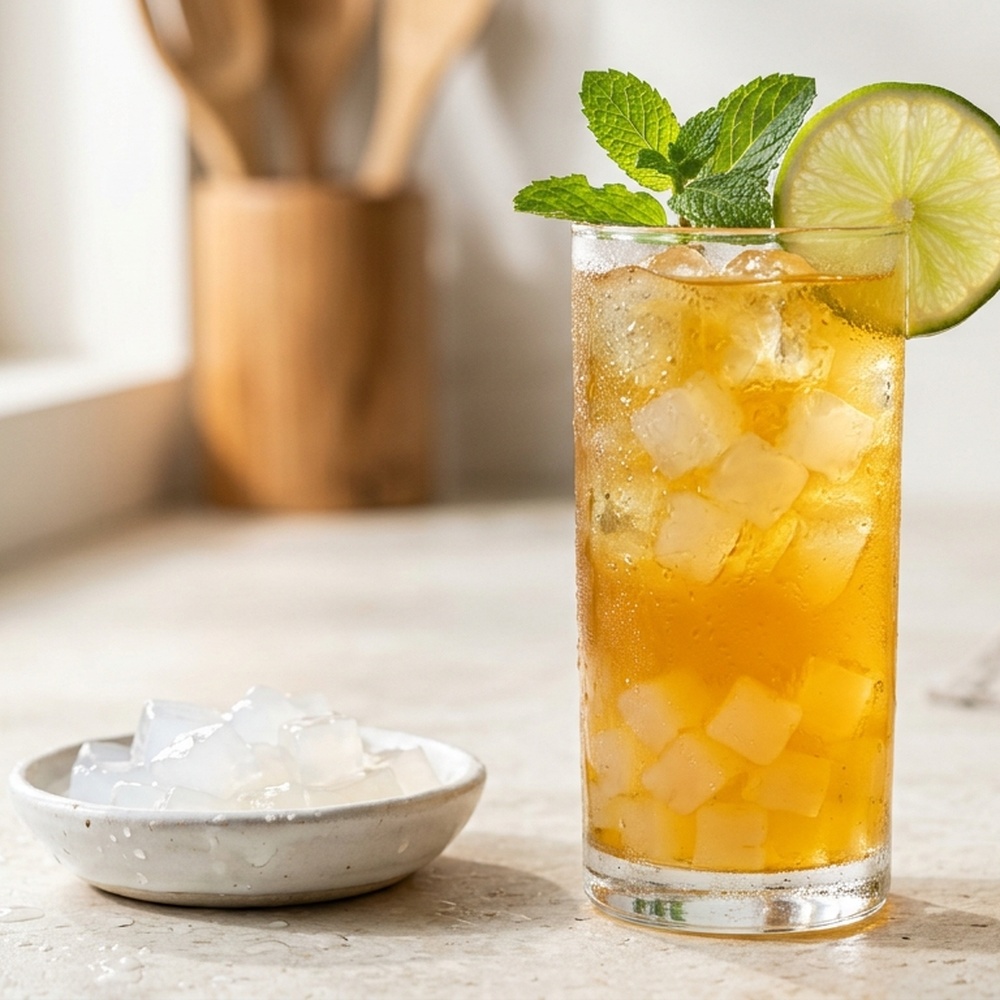
Bubble tea and fruit drinks often come with translucent white cubes settled at the bottom of the cup. With their firm chew and light sweetness, many people wonder what they are. Questions remain about whether this topping comes from real coconut meat, animal gelatin, or synthetic materials.
What Is Nata de Coco?
Nata de coco is a chewy, translucent jelly-like food product created by fermenting fresh coconut water with a beneficial bacterium called Komagataeibacter xylinus. Despite its jelly texture, it contains zero animal gelatin and zero starch. It is pure bacterial cellulose, an all-natural insoluble dietary fiber that originated in the Philippines in 1949. In its plain state, nata de coco is virtually calorie-free and fat-free, making it a lighter, fiber-rich alternative to traditional tapioca pearls.
Important Safety Note: Pure nata de coco is non-toxic insoluble fiber that supports digestive regularity. Eating very large quantities without adequate fluid intake can cause temporary bloating, abdominal fullness, or gas. This occurs primarily in individuals who are unaccustomed to high-fiber diets.
This guide explains the science of bacterial cellulose, debunks the persistent plastic jelly hoax, details how nata de coco is made from coconut water, compares its nutrition to traditional tapioca pearls, shares the cold-water sugar-rinsing technique, and provides three tested kitchen recipes.
What Is Nata de Coco? The Science of Coconut Jelly
The Spanish phrase translates literally to cream of coconut. Even so, nata de coco contains no coconut cream and no shredded white coconut meat.
The food begins as clear, fresh coconut water. Friendly acetic acid bacteria, in a clean process compliant with halal drink standards, feed on the natural simple sugars present in the liquid. As they metabolize, they spin microscopic ribbons of pure cellulose. These nano-fibers float to the liquid surface and interlock, forming a dense, glistening, jelly-like floating mat called a pellicle.
Bacterial Cellulose: Not Gelatin, Not Starch
Most culinary jellies rely on animal collagen (gelatin) or seaweed polysaccharides (agar-agar). Nata de coco is fundamentally distinct: it is microbial cellulose. The bacterium Komagataeibacter xylinus (formerly Acetobacter xylinum) produces ultra-pure, food-grade cellulose nanofibrils. These microscopic threads form an interconnected meshwork that traps significant volumes of water, creating a resilient jelly without animal bones or plant starches.
The Philippine Origin: Invented in 1949
Nata de coco was invented in 1949 by Filipina chemist Teodula Kalaw Rivera at the National Institute of Science and Technology in the Philippines. Rivera formulated it as a coconut alternative to nata de pina, a traditional Filipino delicacy made from fermenting pineapple juice. The Philippines generated vast quantities of surplus coconut water from copra agricultural operations; Rivera's ingenuity transformed an agricultural waste stream into an iconic international food export.
Flavor and Texture: What Does It Taste Like?
Raw, unflavored nata de coco possesses a neutral, clean, slightly refreshing taste. Its worldwide popularity stems from its distinctive mouthfeel. It is firmer and bouncier than gelatin, yielding a crisp, springy snap when bitten. Because the microbial cellulose matrix is naturally porous, it readily absorbs fruit syrups like pomegranate grenadine, botanical juices, and teas in which it is steeped. For another refreshing textured botanical drink, compare this with our guide to basil seed drink texture and benefits.
Debunking the Myth: Why Nata de Coco Is Not Made of Plastic
Periodic social media hoaxes depict people squeezing or attempting to burn nata de coco cubes, claiming they are made of synthetic industrial silicone or plastic because they bounce and resist tearing. This claim is completely false.
The Microscopic Nano-Weave of Bacterial Cellulose
Cellulose is the identical organic structural polymer found in trees, cotton plants, and vegetables like celery. Komagataeibacter xylinus weaves cellulose fibrils that are microscopic, highly ordered, and exceptionally durable. This biological nano-structure gives nata de coco its high tensile strength and signature bouncy bite. It is 100 percent natural, biodegradable food fiber.
Why Humans Cannot Digest Cellulose
Humans lack the endogenous digestive enzyme cellulase, which breaks down beta-1,4-glycosidic linkages in cellulose molecules. When you consume nata de coco, your stomach cannot break the polymer into absorbable glucose calories. It travels through the gastrointestinal tract intact as harmless, beneficial insoluble dietary fiber, adding healthy bulk to stool and supporting natural bowel motility.
How Nata de Coco Is Made: From Coconut Water to Sweet Cubes
Commercial production of nata de coco follows a precise natural fermentation procedure:
- Preparing the Growth Medium: Fresh coconut water is filtered and enriched with sugar and food-grade ammonium phosphate. It is acidified with acetic acid to establish an optimal pH of 4.5.
- Bacterial Inoculation: A pure mother culture of Komagataeibacter xylinus bacteria is thoroughly blended into wide, shallow fermentation trays.
- Quiescent Fermentation (10 to 14 Days): Trays rest undisturbed in warm, dark, ventilated rooms. As the bacteria metabolize the coconut sugars, they excrete cellulose nanofibrils that float upward, forming a thick rubbery pellicle slab.
- Harvesting and Acid Neutralization: Workers harvest the dense cellulose slabs, wash them in clean running water, and boil them repeatedly to remove all residual sour vinegar aroma.
- Dicing and Packaging: The pristine white slabs pass through mechanical cutters into uniform 1/2-inch cubes. The cubes are steeped in light sugar syrup, fruit juice, or coconut water before sealing into sterile jars.
Nata de Coco vs. Tapioca Pearls: Which Boba Topping Is Healthier?
When customizing bubble tea, choosing between traditional black tapioca pearls and fermented coconut jelly dramatically alters your beverage's nutritional profile:
| Feature / Criteria | Nata de Coco (Coconut Jelly) | Black Tapioca Pearls (Boba) | Nutritional Advantage |
|---|---|---|---|
| Primary Ingredient | Fermented Bacterial Cellulose | Cassava Root Starch | Nata de Coco (Pure Fiber) |
| Calories (1/2 Cup Serving) | 60 to 90 kcal (in light syrup) | 180 to 240 kcal | Nata de Coco (60% Fewer Calories) |
| Total Carbohydrates | 15 to 22 g (surface syrup) | 45 to 55 g (dense starch) | Nata de Coco (Lower Glycemic Load) |
| Dietary Fiber | 2 to 4 g (Insoluble Cellulose) | Less than 0.5 g | Nata de Coco (Supports Digestion) |
| Fat Content | 0 grams | 0 grams | Neutral (Both Fat-Free) |
| Chewiness Texture | Springy, crisp, juicy snap | Dense, gummy Q-bounce | Subjective Preference |
| Vegan and Gluten-Free? | Yes (100% Microbial/Plant) | Yes (Cassava Root Starch) | Both Suitable for Celiac Diets |
The Kitchen Rinsing Trick: Cut 60% of the Sugar
Plain bacterial cellulose contains zero native sugar or calories. However, commercial manufacturers steep the cubes in dense sugar syrup for shelf preservation, which can add 80 to 110 calories per serving. Professional baristas use this simple trick to remove excess sweetness:
- Pour jarred or canned nata de coco cubes into a fine-mesh colander.
- Allow the heavy packing syrup to drain away completely into the sink.
- Rinse the cubes under cold running tap water for 30 seconds while stirring gently.
- Let the cubes drain thoroughly for two minutes before adding them to your drink.
This quick step strips away 60 to 70 percent of surface sugars, leaving behind firm, low-calorie fiber cubes ready to absorb unsweetened iced tea, sparkling water, or pure coconut water.
Three Refreshing Nata de Coco Recipes
Iced Mango Passionfruit Green Tea with Coconut Jelly
Key Ingredients
- ✓3 tbsp Rinsed and drained nata de coco cubes
- ✓1 cup Freshly brewed jasmine green tea, thoroughly chilled
- ✓1/4 cup Unsweetened mango puree
- ✓1 tbsp Fresh passionfruit pulp (or freshly squeezed lime juice)
- ✓1/2 cup Cold filtered water and ice cubes
Preparation Steps
Rinsing the cubes prevents the sweet commercial syrup from overpowering the delicate floral notes of the jasmine tea.
Light Sparkling Calamansi-Lime Refresher
Key Ingredients
- ✓2 tbsp Rinsed nata de coco cubes
- ✓2 tbsp Fresh calamansi juice (or Key lime juice)
- ✓1 cup Cold sparkling mineral water or club soda
- ✓1 sprig Fresh garden mint
- ✓Handful Crushed ice cubes
Preparation Steps
Calamansi citrus provides an authentic Filipino flavor pairing with nata de coco that balances sweetness with bright acidity.
Modern Low-Sugar Buko Pandan Glass Dessert
Key Ingredients
- ✓1/2 cup Rinsed nata de coco cubes
- ✓1/2 cup Fresh young coconut meat strips (buko)
- ✓1/2 cup Unsweetened coconut milk or light coconut cream
- ✓1 drop Natural pandan extract
- ✓1 tsp Pure maple syrup or raw honey
Preparation Steps
Using unsweetened coconut milk instead of condensed milk cuts refined sugars by over 75 percent.
Commercial Nata de Coco Supply and Bulk Procurement
For bubble tea franchises, beverage co-packers, and Asian grocery distributors, sourcing certified food-grade bacterial cellulose in commercial formats (such as 3.5kg buckets or aseptically sealed pouches) requires strict microbiological quality control. Partnering with a trusted wholesale exotic drinks supplier guarantees uniform cube calibration, standardized syrup brix, and consistent wholesale pallet distribution.
Frequently Asked Questions About Nata de Coco
Q. What is nata de coco actually made of?
Q. Is nata de coco made of plastic?
Q. Is nata de coco healthier than tapioca pearls in boba?
Q. How many calories are in nata de coco?
Q. Is nata de coco vegan and gelatin-free?
Q. Is nata de coco gluten-free?
Q. Can nata de coco cause digestive upset?
Q. What is the difference between nata de coco and popping boba?
A Clean, Fiber-Dense Culinary Innovation
Nata de coco represents one of biotechnology's most sustainable triumphs: transforming surplus coconut water into a chewy, adaptable dietary fiber through bacterial fermentation. Rinsing commercial cubes under cool water strips away excess packing syrup, giving you a refreshing, low-calorie bubble tea topping that supports gut health.
Editorial Fact-Checking and Evidence Standards
- Microbial Bacterial Cellulose Synthesis: Food biotechnology literature regarding Komagataeibacter xylinus cellulose nanofibril polymerization, tensile strength, and industrial pellicle fermentation.
- Nutritional Chemistry and Dietary Fiber Analytics: Laboratory analysis of insoluble beta-1,4-glucan non-digestibility, caloric evaluation, and digestive transit mechanics from USDA and FAO references.
- Philippine Culinary History and Invention: Historical archives from the National Institute of Science and Technology documenting Teodula Kalaw Rivera's original 1949 coconut water fermentation patents.
Sources and References
- Bacterial Cellulose: Production, Properties and Applications in Food Science - Comprehensive Reviews in Food Science and Food Safety / PubMed
- Teodula Kalaw Rivera and the Invention of Nata de Coco - Department of Science and Technology (DOST) Philippines
- Fermentation Parameters of Komagataeibacter xylinus in Coconut Water Media - Frontiers in Microbiology / NCBI
- Dietary Fiber Classification and Health Impacts of Insoluble Cellulose - Nutrition Reviews / PubMed
- USDA FoodData Central: Coconut Water and Cellulose Analytical Tables - USDA Agricultural Research Service


Comments and reviews (0)