


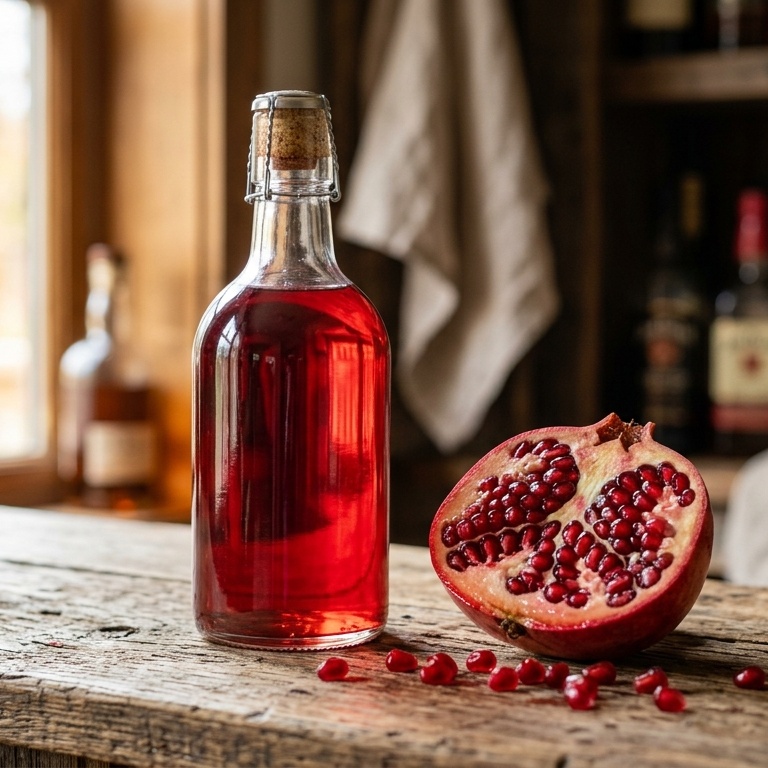
Many people see a bright red bottle on a back bar and assume grenadine is cherry syrup. Real grenadine begins with tart pomegranate juice rather than artificial cherry flavoring.
What Is Grenadine?
Grenadine is a sweet-tart, non-alcoholic cocktail syrup traditionally prepared from fresh pomegranate juice and sugar. Its name derives from the French word grenade, meaning pomegranate. Professional bartenders use grenadine to add rich fruit flavor, balanced acidity, ruby red color, and specific-gravity density to drinks like the Tequila Sunrise, Shirley Temple, Jack Rose, and Ward 8.
Additive and Sugar Considerations: Commercial mass-market syrups frequently substitute high-fructose corn syrup, artificial preservatives, and Red 40 synthetic dyes for genuine pomegranate fruit. Individuals managing diabetes, fructose malabsorption, or food dye sensitivities should verify ingredient statements or opt for traditional homemade pomegranate reductions.
This guide covers real grenadine fruit composition, commercial differences, cocktail density dynamics, ten-minute homemade recipes, and culinary substitutes.
Certain mass-market commercial bottles contain high-fructose corn syrup, artificial flavorings, and Red 40 with little or no pomegranate juice. Reading the back-panel ingredient list immediately reveals whether you are buying an authentic fruit syrup or artificial red syrup.
Grenadine also plays a major role in non-alcoholic mixology, bringing natural sweetness, tannins, and crimson color to craft sodas, fresh citrus drinks like homemade lemonade, sparkling zero-proof cocktails made with non-alcoholic sparkling wine, spritzes, and family punches without adding alcohol. To explore where craft syrups fit into the modern zero-proof movement, see our guide to non-alcoholic drinks.
What Fruit Is Grenadine Made From?
Authentic grenadine begins exclusively with pomegranates (Punica granatum). Inside each thick husk are hundreds of jewel-like seed pods called arils, packed with tart, deeply colored ruby juice.
The linguistic heritage confirms this botanical origin. The French word grenade translates directly to pomegranate, which English bar culture adopted as "grenadine" for sweetened pomegranate cordial.
Pomegranate juice provides natural malic and citric acidity, subtle astringent tannins, berry notes, and an organic crimson hue. Dissolved cane sugar softens the sour bite while creating the thick viscosity required of classic bar syrup.
Why Do People Think Grenadine Is Cherry Syrup?
The widespread misconception that grenadine is cherry syrup developed through twentieth-century American soda-fountain culture. Shirley Temples were universally garnished with neon-red maraschino cherries, and cheap commercial bar syrups mimicked that candy-like aesthetic.
Because mass-market manufacturers used red dye and artificial flavorings without actual pomegranate content, consumers naturally associated the bright red color with cherries. However, authentic maraschino cherry syrup and pomegranate grenadine have completely different flavor chemistry.
What Does Grenadine Taste Like?
Real grenadine tastes sweet and tart, with fresh pomegranate arils, dark berry notes, and a clean citrus lift. It should possess sufficient natural acidity to prevent the sugar from tasting heavy or cloying.
Artificial supermarket syrups taste overwhelmingly sugary and candy-like, resembling melted cherry popsicles because they rely on corn syrup and synthetic flavorings. Genuine pomegranate grenadine adds complex acidity, tannin structure, and body without overwhelming aged spirits or citrus juices.
Does Grenadine Contain Alcohol?
Standard grenadine syrup contains 0.0% alcohol. It is classified as a non-alcoholic cocktail mixer and sweetener, not a liqueur. For an exhaustive breakdown of bar practices and label laws, read does grenadine have alcohol.
Because liquor retailers frequently position grenadine next to bitters and spirits, shoppers occasionally assume it is alcoholic. Commercial retail bottles are alcohol-free, making them safe for children and non-drinkers, though their high sugar density warrants measured portions.
Real Grenadine vs. Commercial Red Syrup
Reviewing the ingredient panel reveals significant differences in flavor, mouthfeel, and culinary performance:
| Syrup Type | Common Ingredients | Flavor Profile | Visual Color |
|---|---|---|---|
| Homemade Grenadine | 100% pomegranate juice, cane sugar, orange blossom water | Tart, fruity, tannic, crisp fruit acidity | Natural dark ruby red |
| Craft Bottled Grenadine | Pomegranate juice, cane sugar, fruit acids, gum arabic | Rich, rounded, deep fruit depth, velvet body | Deep garnet crimson |
| Mass-Market Red Syrup | High-fructose corn syrup, water, artificial flavor, Red 40 | Very sweet, candy-like, lacking acidity | Bright neon cherry red |
| Pomegranate Molasses | Boiled concentrated pomegranate juice, citric acid | Intensely sour, astringent, savory fruit notes | Dark brown-burgundy |
Why Does Grenadine Sink in Drinks?
Grenadine sinks to the bottom of cocktail glasses because of its high dissolved sugar density. Mixologists quantify syrup concentration using the Brix scale, where 1 degree Brix represents 1 gram of dissolved sucrose in 100 grams of liquid.
Quality grenadine typically measures between 60° and 65° Brix, giving it a much higher specific gravity than citrus juice (typically 10° to 12° Brix) or 80-proof spirits (around 0.94 to 0.96 specific gravity).
When poured slowly into a cocktail containing orange juice or tequila, gravity draws the heavy syrup directly through the lighter liquids. It pools at the base and slowly diffuses upward, producing the iconic sunrise gradient in a Tequila Sunrise.
How to Pour a Clean Grenadine Layer
- Fill glass with ice: Cubed ice slows down liquid motion and stabilizes layering.
- Pour lighter ingredients first: Add tequila and fresh orange juice (or sodas).
- Use the bar spoon technique: Hold a twisted bar spoon touching the inside wall of the glass, and pour grenadine slowly down the spiral handle or over the inverted back of the spoon.
- Do not stir before serving: Allow the distinct ruby-to-gold gradient to settle naturally.
Classic Drinks Made with Grenadine
- Tequila Sunrise: 2 oz blanco tequila, 4 oz fresh orange juice, and ½ oz grenadine layered over ice.
- Shirley Temple: 5 oz ginger ale or lemon-lime soda, ½ oz grenadine, ¼ oz fresh lime juice, and a brandied cherry. Explore our complete guide to crafting the classic Shirley Temple drink.
- Jack Rose: 2 oz applejack brandy, ¾ oz fresh lemon or lime juice, and ½ oz real grenadine shaken and strained into a coupe.
- Ward 8: 2 oz rye whiskey, ½ oz orange juice, ½ oz lemon juice, and ¼ oz grenadine shaken over ice.
- El Presidente: 1½ oz white rum, ¾ oz dry vermouth, ¼ oz orange curaçao, and a barspoon of real grenadine.
How to Make Grenadine at Home in 10 Minutes
Making scratch grenadine takes less than ten minutes and requires no special bar equipment. Using 100% pure unsweetened pomegranate juice guarantees deep fruit flavor without artificial dyes.
Real Homemade Grenadine Syrup
Ingredients
- • 1 cup 100% pure unsweetened pomegranate juice (e.g. POM Wonderful)
- • 1 cup granulated cane sugar
- • 1 tsp fresh-squeezed lemon juice (for bright fruit acidity)
- • 2 to 3 drops (optional) orange blossom water (for floral aroma)
Equipment Needed
- – Small stainless steel saucepan
- – Whisk or wooden spoon
- – Sterilized glass bottle with stopper
- – Small kitchen funnel
Preparation Method
Never boil pomegranate juice when making grenadine. Boiling 'cooks' the delicate fruit compounds, turning fresh tart pomegranate into caramelized jam. Gentle low warmth dissolves sugar while preserving bright acidity.
Grenadine Substitutes
- Diluted Pomegranate Molasses: Mix 1 part pomegranate molasses with 1 part simple syrup to soften its aggressive sourness while retaining authentic pomegranate tannins.
- Raspberry Syrup: Delivers deep ruby color and sweet berry acidity, making an excellent fruit substitute in sours and sodas.
- Cranberry Reduction: Simmer equal parts unsweetened cranberry juice and sugar until dissolved for a tart, crimson cocktail mixer.
- Pomegranate Juice and Simple Syrup: Combine equal parts chilled juice and syrup for a lighter, thinner cocktail sweetener.
Frequently Asked Questions About Grenadine
Q. Is grenadine cherry or pomegranate?
Traditional grenadine is pomegranate syrup. Artificial commercial versions frequently use synthetic flavoring and Red 40, leading to the mistaken impression that it is cherry syrup.
Q. Does grenadine contain alcohol?
Standard grenadine contains 0.0% alcohol. It is a sweetening mixer used in both alcoholic cocktails and mocktails.
Q. Does grenadine need to be refrigerated?
Yes. Homemade and craft grenadines made without artificial preservatives should always be sealed and refrigerated, typically lasting 1 to 2 weeks.
Q. Is grenadine the same as pomegranate molasses?
No. Pomegranate molasses is pomegranate juice boiled down to a thick, intensely tart paste. To use it as a grenadine substitute, dilute it 1:1 with simple syrup.
Commercial Sourcing for Bar and Restaurant Programs
Beverage managers and high-volume cocktail lounges seeking consistent pomegranate cordials and authentic cocktail mixers rely on wholesale supply partners. Partnering with an established wholesale exotic drinks supplier guarantees access to premium fruit reductions, reliable bulk packaging, and competitive commercial pricing.
The Bottom Line
Summary and Key Takeaways
Grenadine is a classic pomegranate-based bar syrup that brings fruit acidity, deep crimson color, and dense layering weight to cocktails and zero-proof drinks. Read back labels to choose authentic fruit-based bottles over artificial red syrups, or mix an easy, unboiled batch at home in ten minutes with pure pomegranate juice and cane sugar.


Comments and reviews (0)