


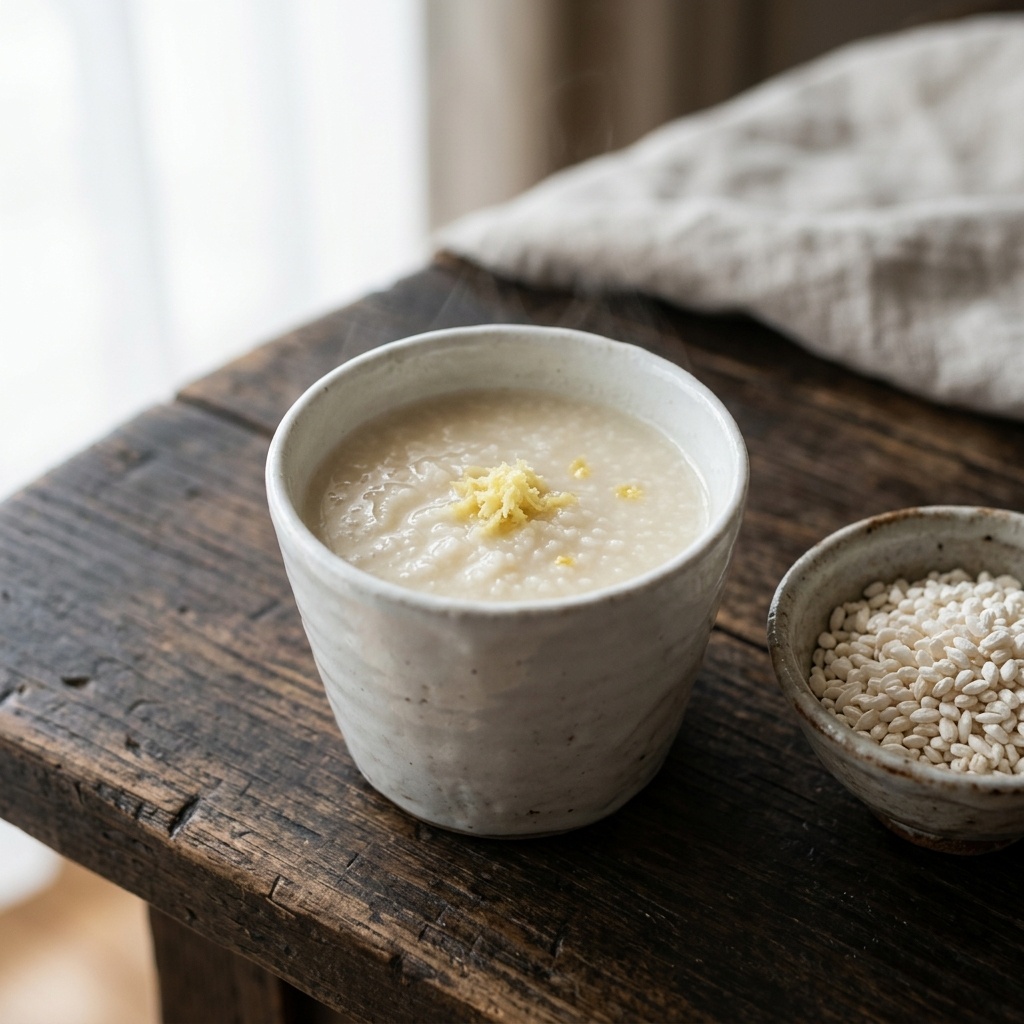
Amazake can taste intensely sweet even when no table sugar has been added. That sweetness is the main clue to how the drink works. In koji amazake, enzymes from kome koji break cooked rice starch into smaller sugars, especially glucose.
The result is a creamy Japanese rice drink that can be served warm, chilled, chunky, or blended smooth.
The name amazake is often translated as sweet sake. That can be confusing because not every amazake is alcoholic. The two main styles use different ingredients and need to be treated separately.
This guide explains what amazake is, what it tastes like, how koji makes it sweet, how to make it in a rice cooker, how koji amazake differs from sakekasu amazake, what the nutrition research can and cannot tell us, and where amazake fits in Japanese food culture.
Quick Answer: What Is Amazake?
Amazake is a traditional Japanese sweet rice drink. Koji amazake is naturally sweetened through enzyme-driven starch conversion and is non-alcoholic. Sakekasu amazake is made with sake brewing lees and can contain residual alcohol. In Japanese food culture, it is enjoyed hot in winter and chilled in summer.
What Is Amazake?
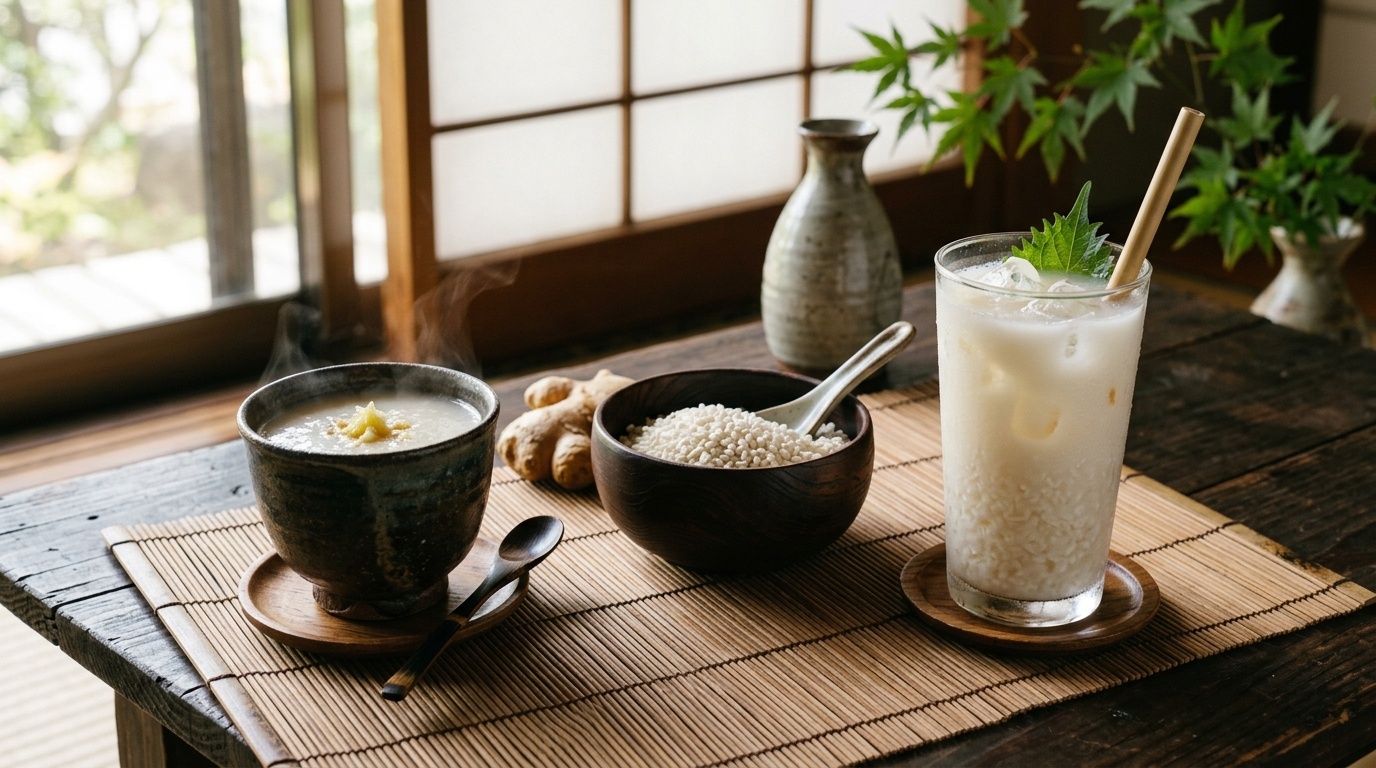
Amazake is a traditional Japanese sweet rice drink. Japan's Ministry of Agriculture, Forestry and Fisheries (MAFF) describes it as a heritage beverage made with either rice and koji or sake lees.
Koji amazake is made by combining cooked rice, rice koji, and water, then holding the mixture warm. Enzymes from Aspergillus oryzae act on the rice starch and create glucose. That is why koji amazake can become very sweet without added table sugar.
Sakekasu amazake starts with sake lees, the pressed solids left after sake brewing. Water and sugar are usually added. Because sake lees come from an alcoholic beverage, sakekasu amazake can contain residual alcohol.
If you are buying amazake for alcohol avoidance, children, pregnancy, or religious reasons, read the ingredient and alcohol information on the package rather than relying only on the word amazake.
What Does Amazake Taste Like?
Koji amazake tastes sweet, creamy, and softly rice-like. The texture can be close to a thin rice porridge if left unblended, or velvety smooth if blended.
The flavor profile brings a gentle, honey-like sweetness with mild rice depth and a faint tang. Fresh grated ginger is a common topping because its sharp flavor cuts through the rich sweetness.
Warm amazake feels richer and thicker, perfect for cold winter months. Cold amazake feels lighter and is traditionally poured over ice during hot summer days. Sakekasu amazake has a more noticeable sake and yeast character because the base ingredient comes from sake production.
Koji Amazake vs. Sakekasu Amazake
| Feature | Koji Amazake | Sakekasu Amazake |
|---|---|---|
| Main ingredients | Cooked rice + kome koji + water | Sake lees + water + usually sugar |
| Sweetness | Created naturally by enzymatic starch breakdown | Usually comes from added sweetener |
| Alcohol content | Made without sake lees (non-alcoholic, 0.0% ABV) | Can contain residual alcohol (~0.5% to 1.5% ABV) |
| Main process | Warm enzyme-driven saccharification | Sake lees dissolved and heated |
| Texture | Chunky, porridge-like, or blended smooth | Usually thinner liquid |
| Flavor | Sweet, mild, creamy, rice-like | Yeasty, complex, sake-like |
| Best label clue | Kome koji / rice koji | Sakekasu / sake lees |
What Is Kome Koji?
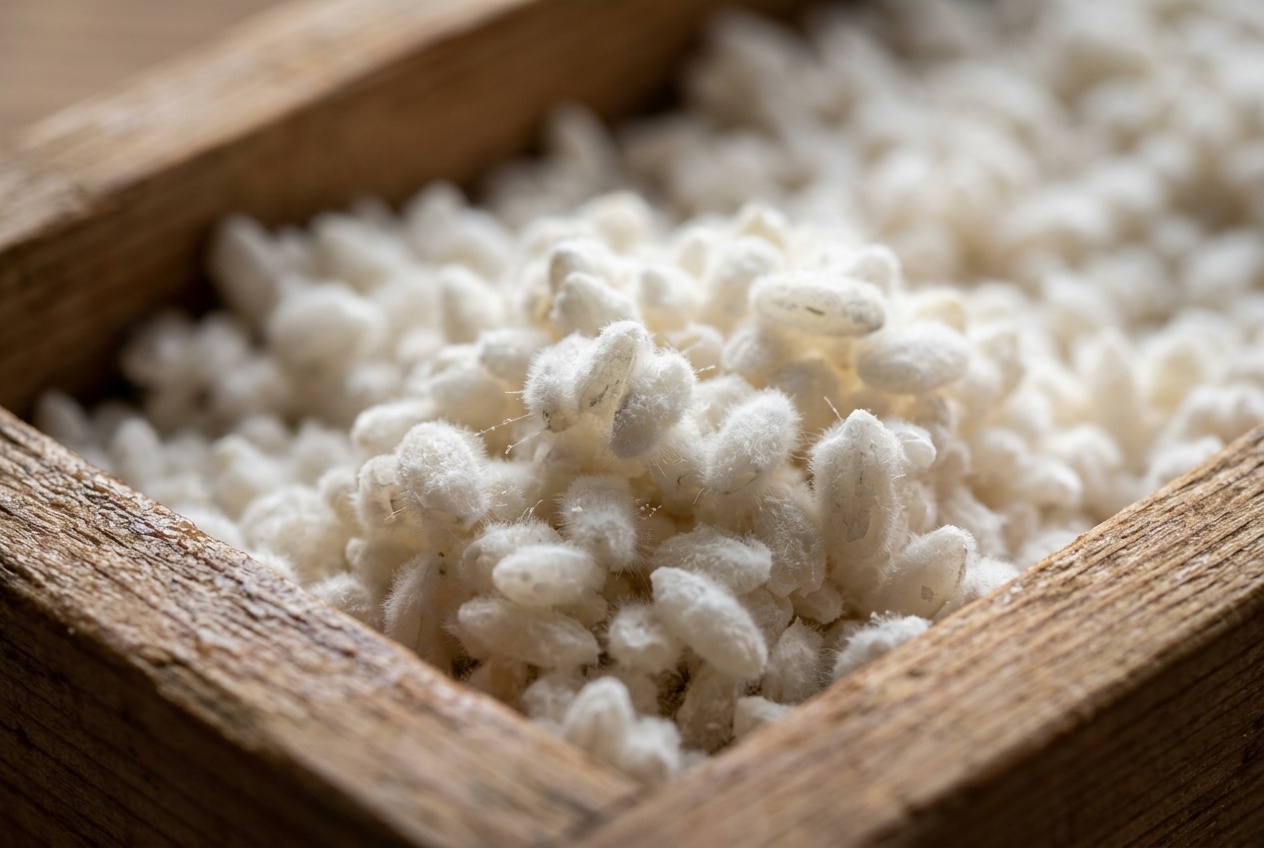
Kome koji is cooked rice cultured with Aspergillus oryzae. Koji is the cornerstone of traditional Japanese fermentation, used across miso, soy sauce, sake, rice vinegar, and amazake.
MAFF notes that koji is central to Japanese food culture, and the Brewing Society of Japan designated koji mold as Japan's national fungus in 2006.
For amazake, the crucial element is enzyme production. Koji supplies starch-breaking enzymes that convert complex starches into sweet, digestible simple sugars.
How Koji Makes Amazake Sweet: The Science of Saccharification
Cooked rice contains abundant starch built from long chains of glucose molecules. These long chains do not taste sweet to human taste buds.
Koji enzymes break those starch chains apart. Alpha-amylase cleaves long starch chains into shorter carbohydrates, while glucoamylase releases individual glucose molecules from the ends. This biochemical transformation is called saccharification.
A 2019 study on koji amazake confirmed that glucose is the primary source of natural sweetness and that Aspergillus oryzae enzymes actively drive this enzymatic starch digestion.
Is Amazake Fermented?
Amazake is commonly categorized as a fermented rice drink, and MAFF uses that classification for koji amazake.
However, there is a helpful technical distinction: while the koji itself is produced through solid-state fungal fermentation on rice, the primary reaction in the warm amazake pot is enzyme-driven saccharification rather than alcohol fermentation. Yeast is not required, which is why a koji batch develops intense sweetness without turning into alcoholic sake.
The Best Temperature for Koji Amazake
Temperature control is the most critical variable in making homemade amazake.
MAFF recommends holding cooked rice, water, and koji at about 55°C to 60°C (131°F to 140°F) overnight. Research indicates that amylase enzymes remain highly active across 50°C to 60°C, producing peak glucose and functional oligosaccharides.
If the temperature drops below 50°C, wild lactic acid bacteria can make the drink sour. If it exceeds 65°C, the delicate koji enzymes are denatured and permanently deactivated. A digital kitchen thermometer ensures your batch stays within the sweet spot.
How to Make Amazake in a Rice Cooker
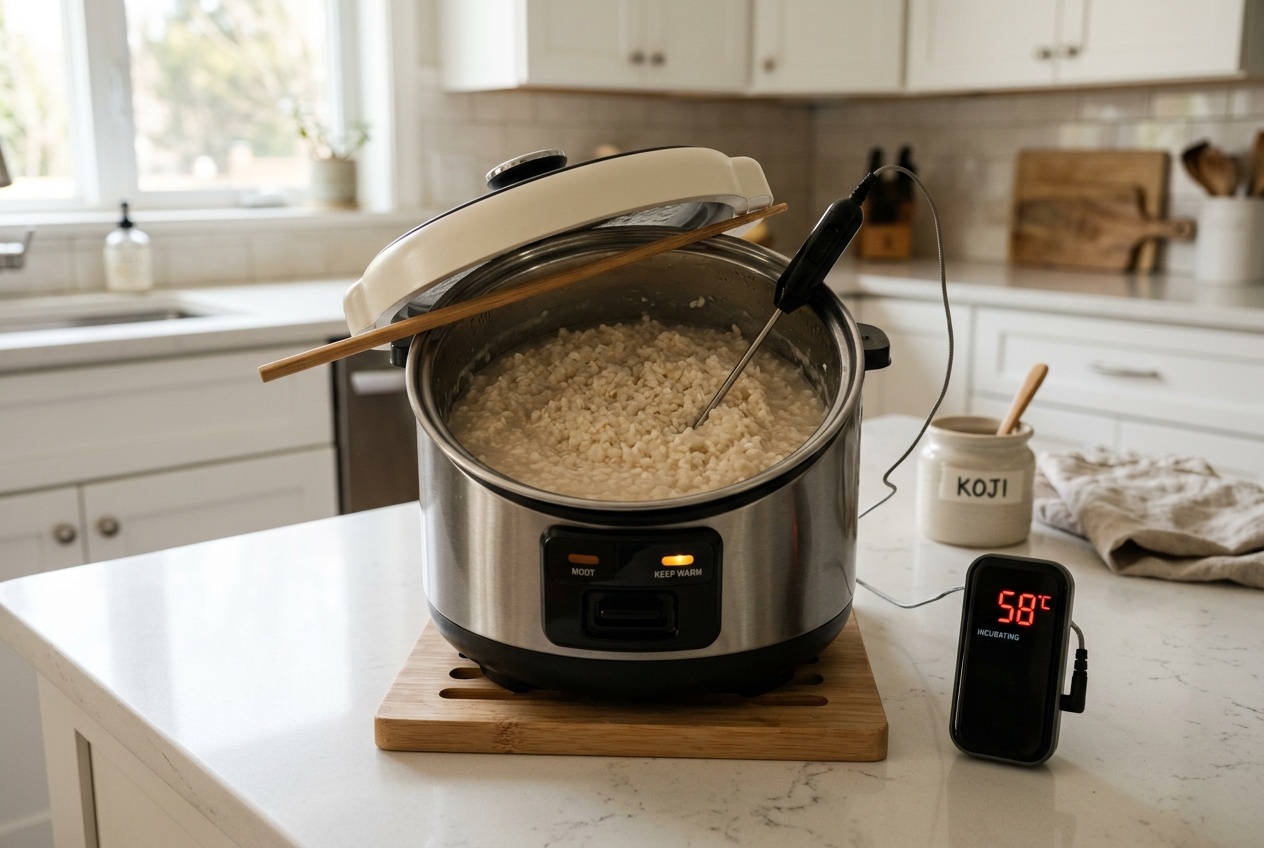
A standard electric rice cooker with a Keep Warm setting provides an ideal incubator for homemade koji amazake.
Yield: About 1 liter | Servings: 4 to 5 | Prep time: 15 minutes | Holding time: 8 to 10 hours
| Ingredient | Amount | Purpose |
|---|---|---|
| Short-grain white rice | 1 cup raw (cooked normally) | Provides cooked rice starch |
| Rice koji (kome koji) | 250 g | Supplies starch-breaking enzymes |
| Warm filtered water | 300 ml | Adjusts texture and holding temperature |
| Fresh grated ginger | About 1 tsp | Optional aromatic garnish for serving |
Step-by-Step Method
- Cook and cool the rice: Cook one cup of short-grain Japanese rice normally. When done, fluff the rice and allow it to cool to approximately 55°C to 60°C (131°F to 140°F). Never add koji to boiling hot rice.
- Add the kome koji: Crumble the dry rice koji into the warm rice. Add 300 ml of warm water (around 50°C) and stir thoroughly to distribute the koji evenly.
- Use Keep Warm with the lid vented: Place the inner pot into your rice cooker and set to Keep Warm. Prop the lid slightly ajar using a clean wooden chopstick or spoon to prevent the heating element from overheating the mixture. Cover the gap with a clean kitchen towel.
- Hold for 8 to 10 hours: Maintain the mixture between 55°C and 60°C, stirring every 2 to 3 hours. After 8 hours, the rice grains will soften completely and the liquid will taste remarkably sweet.
- Stop enzyme activity: Transfer the finished amazake to a saucepan and bring to a gentle heat at 80°C (176°F) for 5 minutes while stirring. This pasteurizes the drink and stabilizes its sweetness.
- Choose texture and serve: Enjoy chunky as a comforting rice porridge, or blend until silky smooth. Serve warm with freshly grated ginger, or chill in the refrigerator and pour over ice.
Amazake Nutrition Facts
A standard 200 ml serving of homemade koji amazake provides easily digestible carbohydrate energy along with natural fermentation byproducts:
| Nutrient | Report Estimate (per 200 ml) | Nutritional Role |
|---|---|---|
| Calories | 100 to 120 kcal | Quick natural carbohydrate energy |
| Carbohydrates | About 24 g | Main energy source from rice starches |
| Glucose | About 20 g | Naturally released during enzyme saccharification |
| Protein | About 3.5 to 4.5 g | Derived from rice and koji mycelium |
| B vitamins | 10% to 20% DV | Natural B-complex compounds synthesized by koji |
| Fiber & Oligosaccharides | About 1.5 to 2.5 g | Prebiotic nutrition supporting gut flora |
A comprehensive metabolomics study of koji amazake detected more than 300 distinct compounds, including glucose, free amino acids, organic acids, and B-complex vitamins.
Is Amazake Healthy?
Amazake is a nutrient-dense whole-food drink that provides rapid hydration and energy.
In Japan, amazake has long earned the popular cultural nickname nomu tenteki (drinkable IV drip) due to its concentration of glucose, amino acids, and B vitamins. While it is a nourishing dietary staple, it should be enjoyed as part of a balanced diet rather than viewed as clinical medicine.
For individuals managing blood sugar, portion control remains important because koji amazake naturally contains significant glucose despite having zero added table sugar.
The History of Amazake in Japan
Amazake has deep historical roots in Japan. Ancient chronicles like the 8th-century Nihon Shoki describe amanotamuzake, an early sweet rice-koji drink.
During the Edo period (1603 to 1867), before refined sugar became widely accessible, amazake was an indispensable source of natural sweetness. Street vendors sold chilled amazake during hot summer months to help townspeople combat summer exhaustion (natsubate), a tradition that continues across festivals and Shinto shrines today.
How Amazake Compares to Other Traditional Beverages
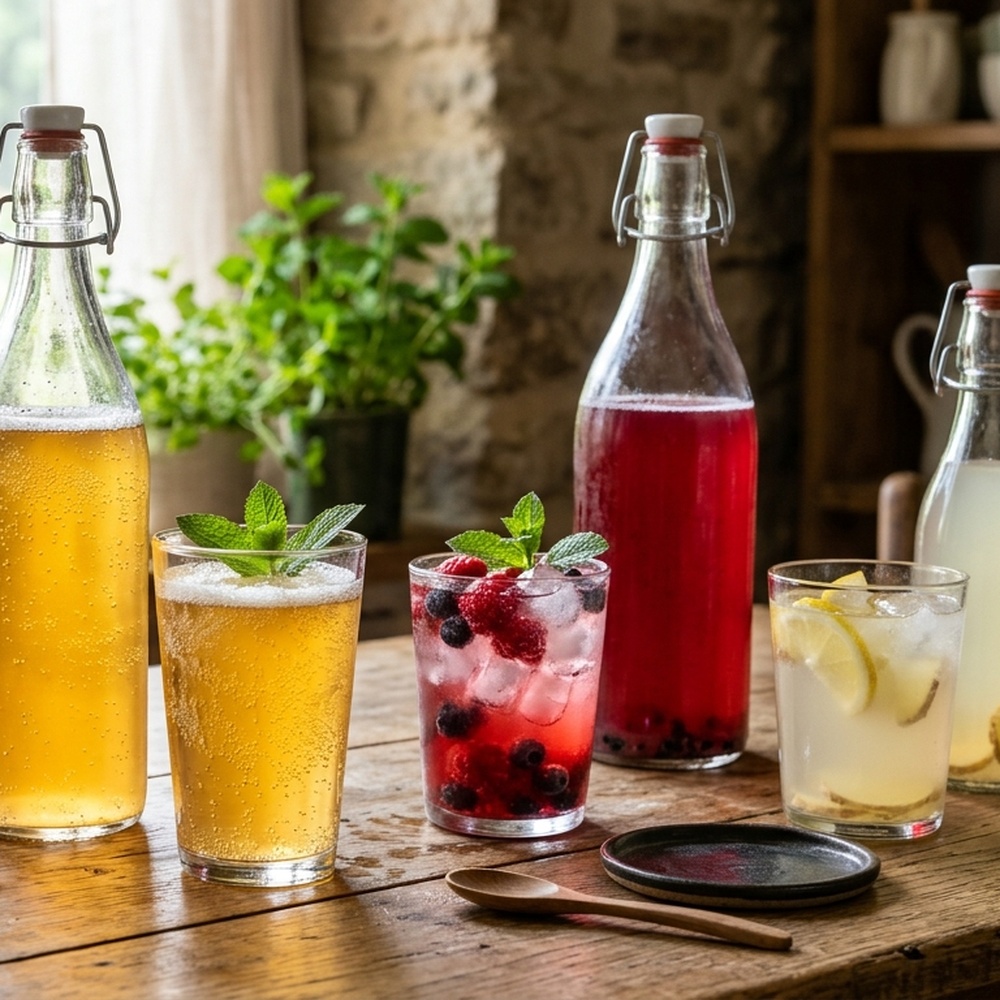
Amazake shares fascinating parallels with global grain-brewed and fermented drink traditions:
- Malt Drinks: While Caribbean and African malta uses malted barley enzymes to convert grain starches into sweetness, Japanese amazake relies on fungal enzymes from koji mold acting on short-grain rice.
- Peruvian Chicha Morada: Both celebrate native heritage grains, with Peruvian purple corn decoctions delivering deep berry-like anthocyanins compared to the creamy, comforting profile of amazake.
- Colombian Aguapanela & Guarapo: Latin American cane drinks derive their sweetness directly from unrefined sugarcane juice, offering clean caramel notes compared to the creamy rice sweetness of koji.
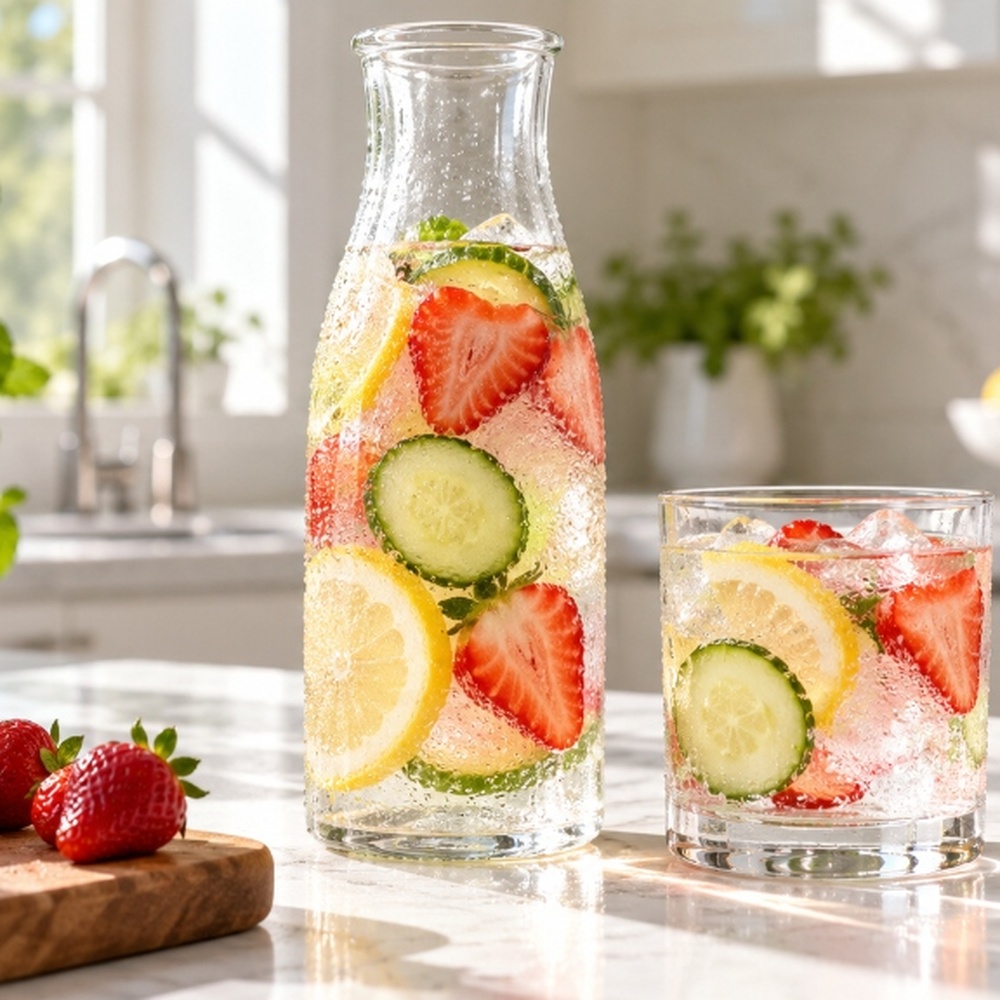
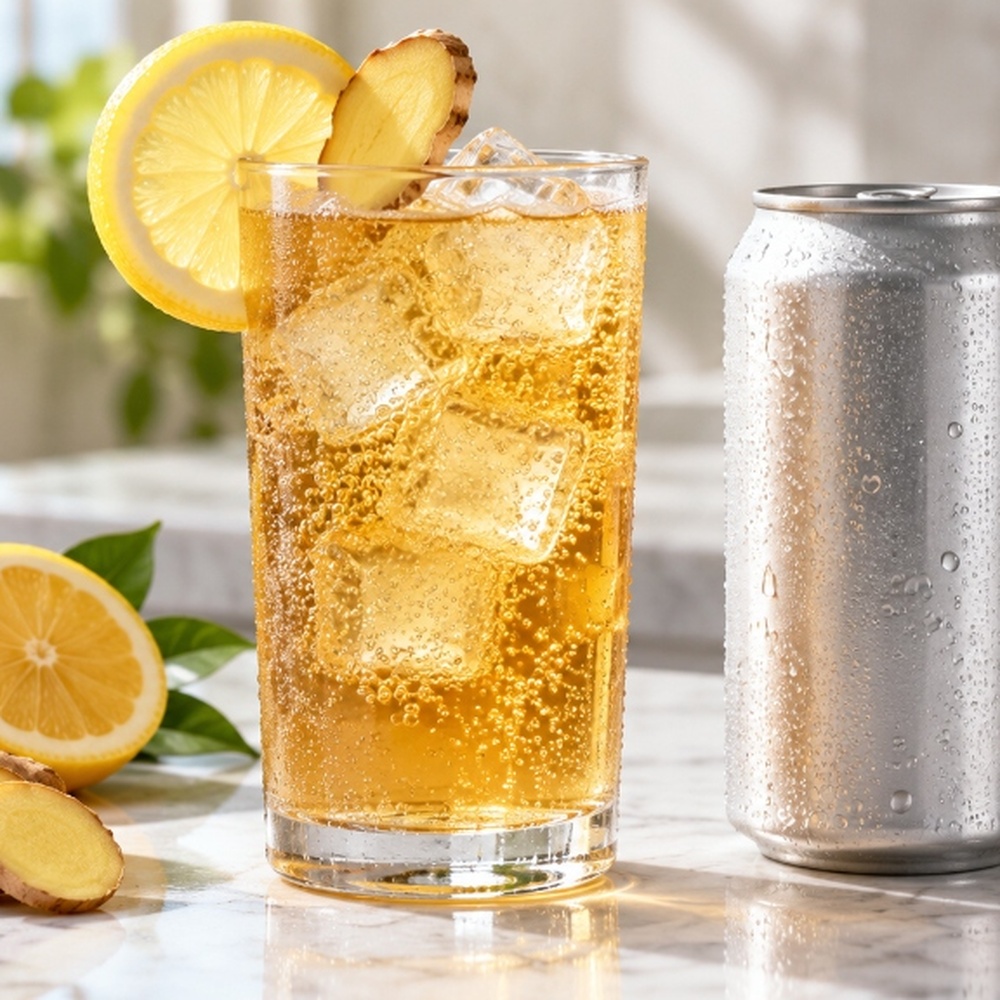
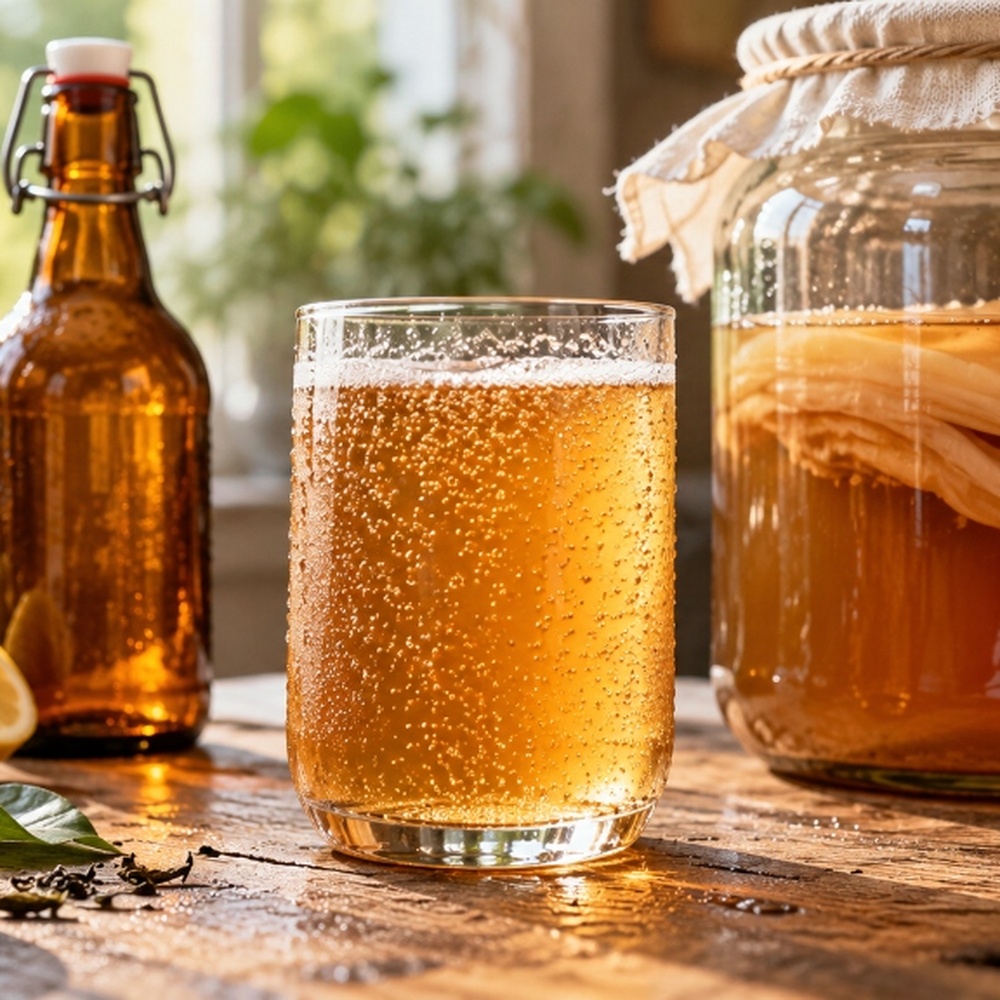
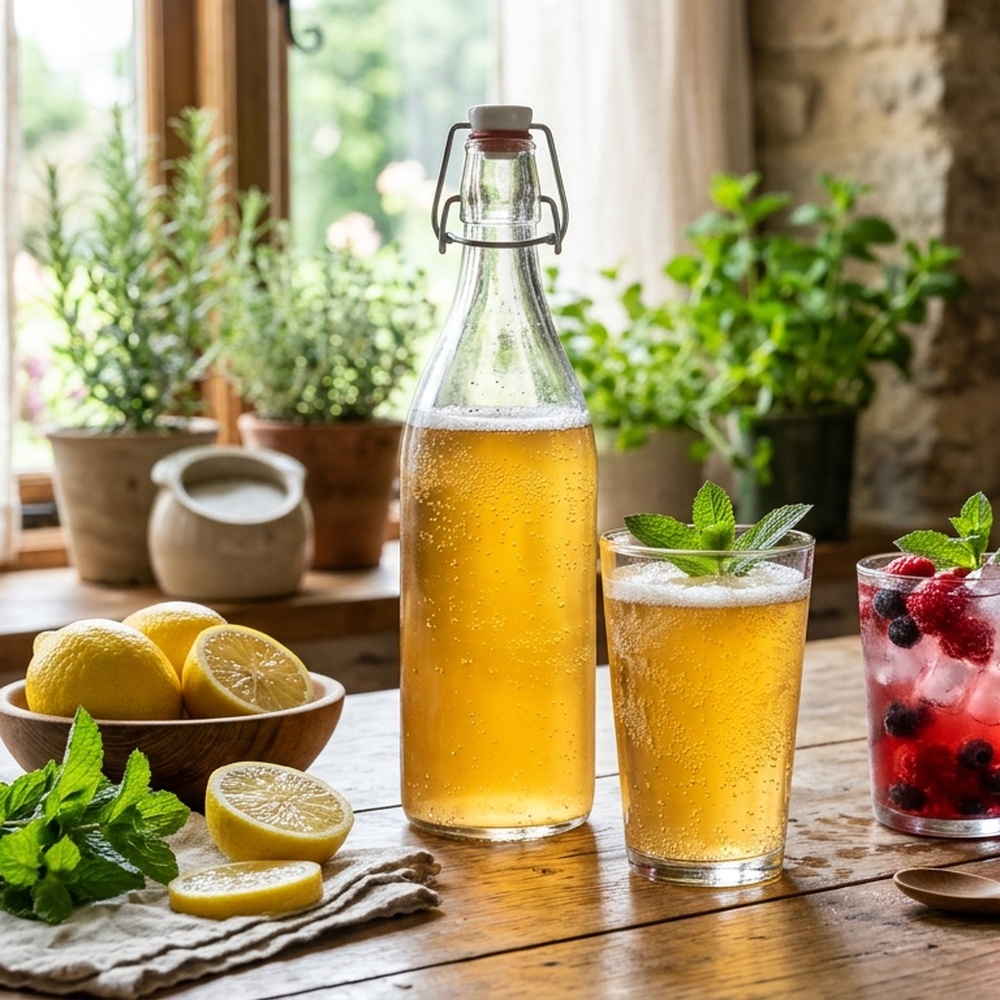
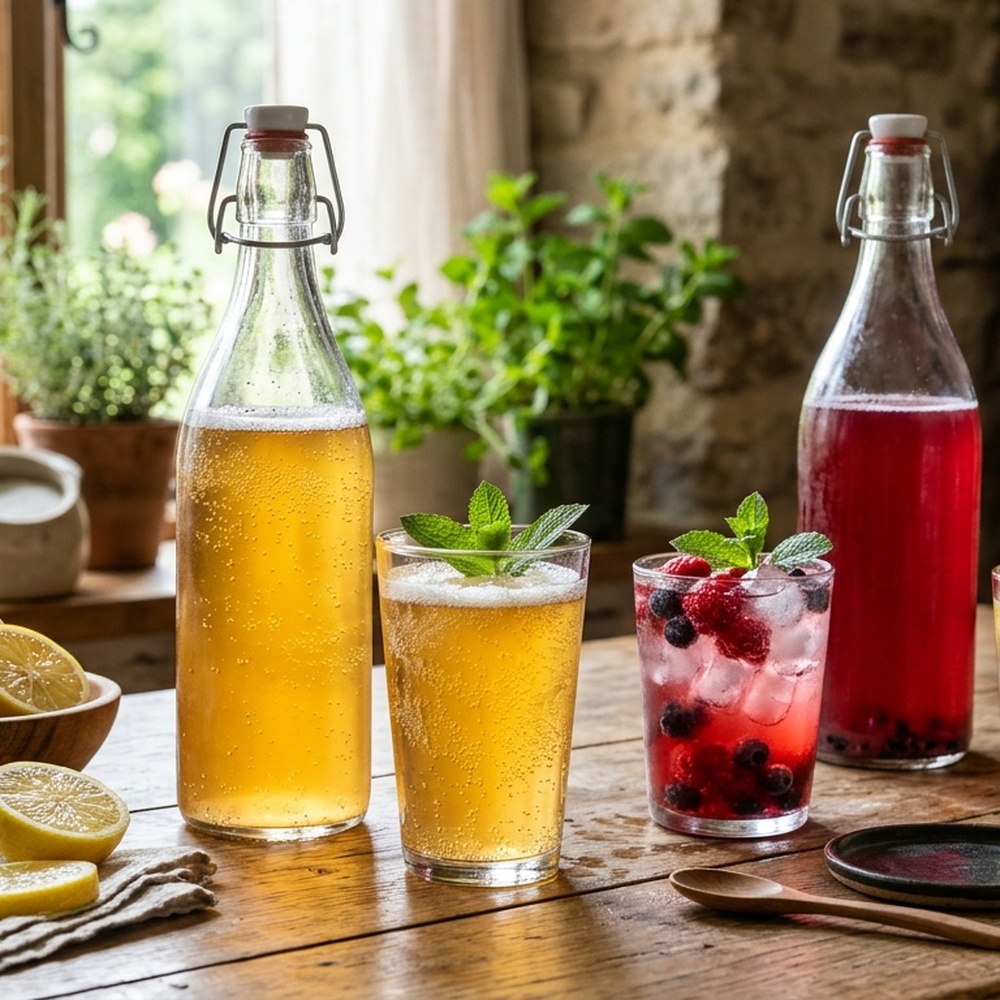
- Fermented Tepache & Ginger Beer: For drinkers exploring world sodas, amazake offers an uncarbonated, velvety texture distinct from sparkling fruit ferments.
- Botanical Sparkling Tea: Both provide layered, alcohol-free complexity for sophisticated social sipping.
Where to Buy Amazake and Koji in the USA
You can purchase ready-to-drink amazake and dried kome koji at Japanese supermarkets (such as Mitsuwa and Marukai), Pan-Asian grocers (like H Mart), natural food stores, and online retailers.
When shopping, check product labels carefully: look for kome koji if you want the non-alcoholic rice-malt style, or sakekasu if you prefer the richer sake-lees version.
Frequently Asked Questions About Amazake
What is amazake?
Amazake is a traditional Japanese sweet rice beverage made by fermenting cooked rice with kome koji or mixing sake lees (sakekasu) with water and sugar.
Is amazake alcoholic?
Koji amazake made with rice and kome koji is non-alcoholic (0.0% ABV). Sakekasu amazake made from sake brewing lees contains trace amounts of residual alcohol (typically 0.5% to 1.5% ABV).
What does amazake taste like?
Koji amazake tastes naturally sweet, rich, and creamy with subtle rice notes, often enhanced with a spicy pinch of fresh grated ginger.
Does koji amazake have added sugar?
No. Koji amazake achieves its intense natural sweetness entirely through enzyme saccharification, where koji enzymes convert rice starches into glucose.
Where can I buy amazake in the USA?
You can find bottled amazake and dry kome koji at Japanese grocery stores, Asian supermarkets, specialty natural food shops, and online Asian food markets.
Can I make amazake in a rice cooker?
Yes. A rice cooker set to Keep Warm with the lid propped slightly open maintains the 55°C to 60°C temperature range needed for koji enzymes to saccharify rice.
Is amazake probiotic?
Not necessarily. While amazake is cultured, the standard heating step (80°C) deactivates live cultures, though it retains beneficial prebiotic oligosaccharides and dietary fiber.
Can I drink amazake during pregnancy?
Clearly labeled alcohol-free koji amazake is commonly enjoyed during pregnancy in Japan, but sakekasu amazake containing residual alcohol should be avoided.
Sources and References
- Japan Ministry of Agriculture, Forestry and Fisheries (MAFF): Traditional Foods in Japan - Beverages and Amazake
- Journal of Bioscience and Bioengineering / PubMed: Effect of Temperature on Saccharification and Oligosaccharide Production in Koji Amazake
- PubMed: Metabolite Profile of Koji Amazake and Nutritional Chemistry Analysis
- PubMed: Ingredients, Functionality, and Safety of the Japanese Traditional Sweet Drink Amazake
- U.S. Centers for Disease Control and Prevention (CDC): Alcohol Use and Health Guidance
- Japan Ministry of Agriculture, Forestry and Fisheries (MAFF): Traditional Fermented Foods and Amazake Standards
- U.S. FDA: Microorganisms and Microbial-Derived Enzyme Ingredients Used in Food (Aspergillus oryzae GRAS Records)
- PubMed: Intake of Koji Amazake and Gastrointestinal Health Dynamics in Adults
- PubMed: Effects of Amazake Produced with Different Aspergillus Strains on Gut Barrier Markers


Comments and reviews (0)