


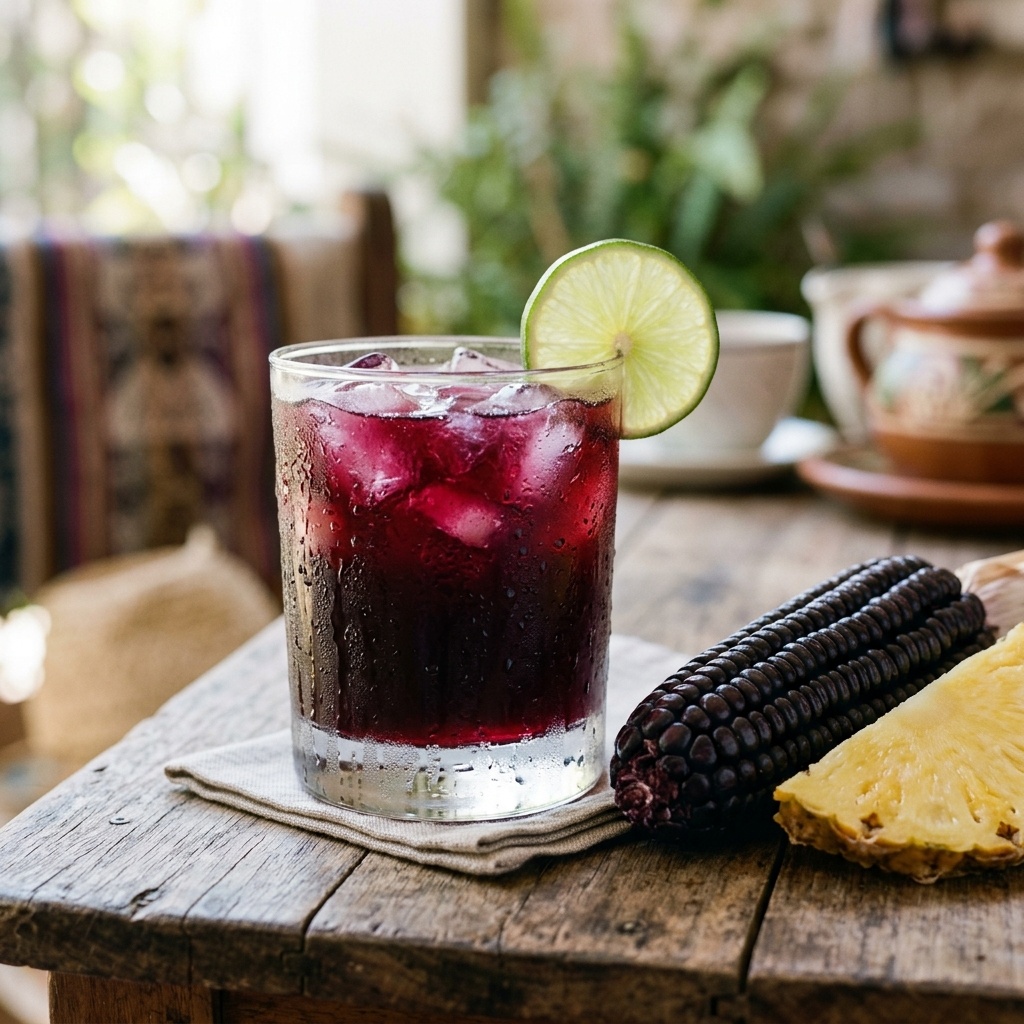
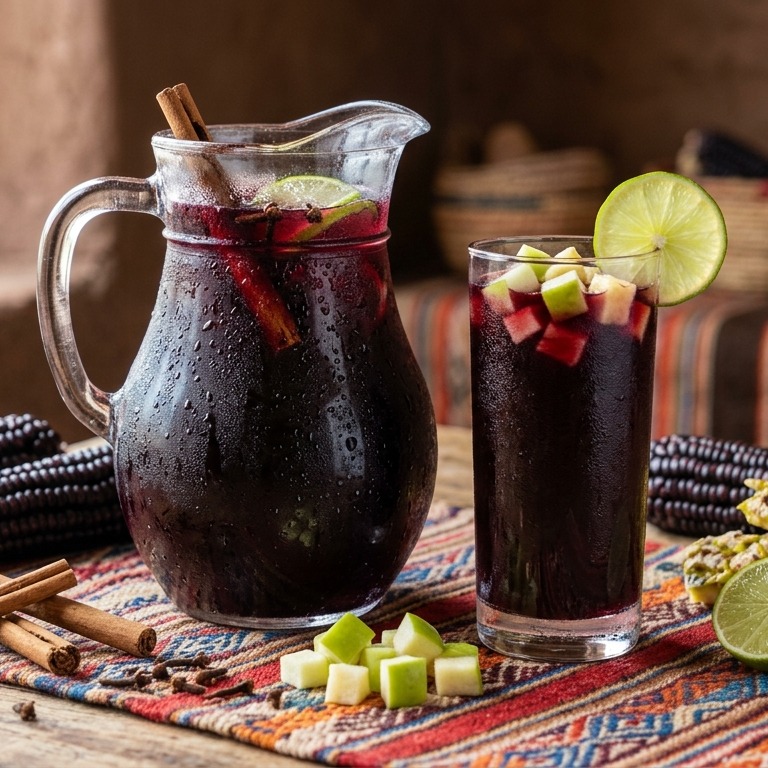
Chicha morada gets your attention before you taste it. In the pitcher, it can look almost black-purple. Add fresh lime and the color often shifts toward a brighter ruby-purple.
The flavor is just as distinct. Purple corn gives the drink a mild earthy base. Cinnamon and clove add warm spice. Pineapple and apple bring fruit notes, while lime keeps the finish fresh.
This traditional Peruvian drink is made from maíz morado, or purple corn. It is boiled, strained, sweetened, chilled, and finished with citrus. Traditional chicha morada is not fermented, which separates it from chicha de jora.
This guide covers the drink from every angle: what it is, how it tastes, how purple corn creates the color, how to make it at home, what the research says about anthocyanins, how much sugar may be in a serving, and where it fits beside other Peruvian and Latin American drinks.
Quick Answer: What Is Chicha Morada?
Chicha morada is a traditional Peruvian purple corn drink. A classic version simmers dried purple corn with pineapple rind, cinnamon, cloves, and fruit. The liquid is strained, sweetened, chilled, and finished with fresh lime. It is non-fermented, non-alcoholic, and a beloved national refresher.
What Is Chicha Morada?
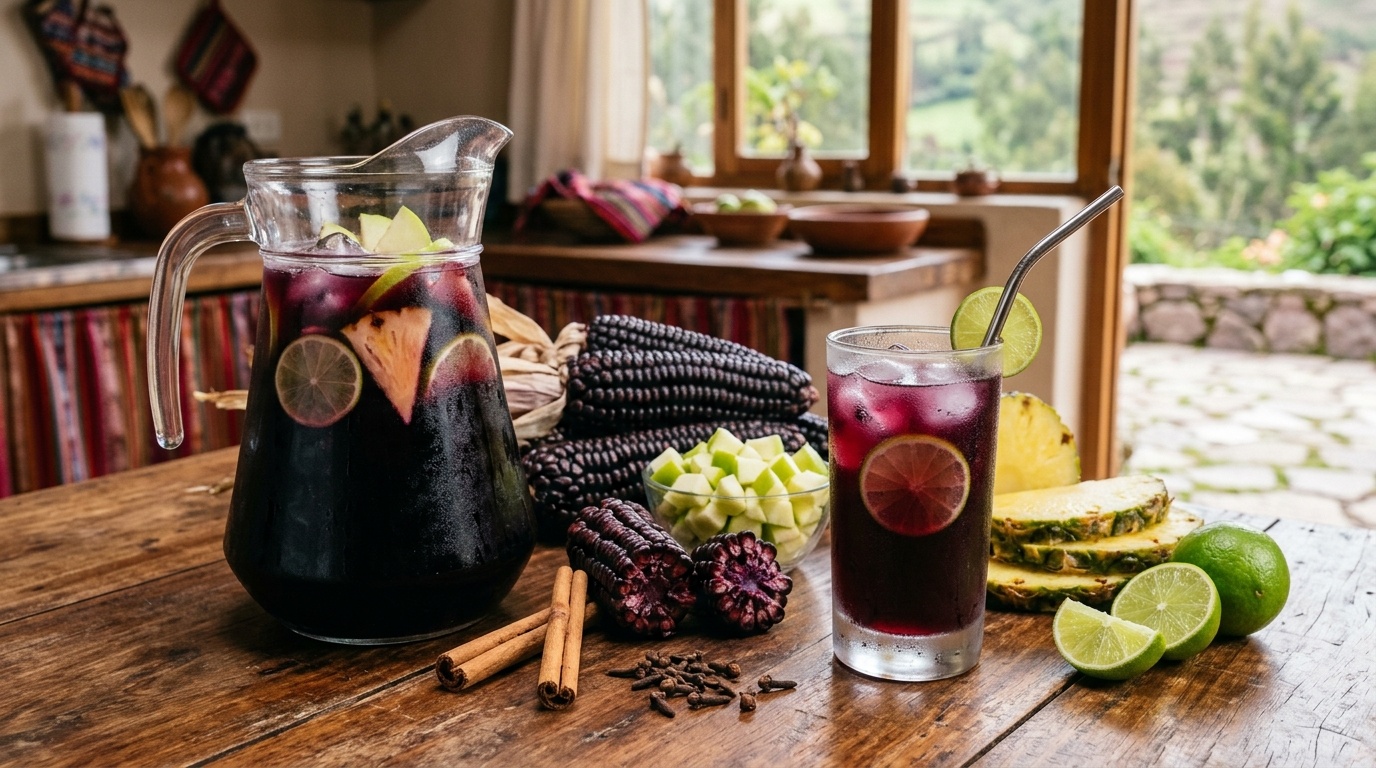
Chicha morada is a traditional Peruvian purple corn drink. A classic version simmers dried purple corn with pineapple rind, cinnamon, cloves, and fruit. The liquid is strained, sweetened, chilled, and finished with fresh lime.
A standard home recipe typically includes dried purple corn (maíz morado), pineapple rind and core, Granny Smith apple or quince, cinnamon sticks (canela), whole cloves, sugar or chancaca, fresh lime juice, and cold water over ice.
What Does Chicha Morada Taste Like?
Chicha morada tastes sweet, fruity, lightly earthy, and spiced.
Cinnamon gives it warmth. Cloves add a darker spice note. Pineapple brings fruit and mild acidity. Lime makes the drink sharper and fresher. Purple corn adds a soft grain flavor under the fruit and spice.
The final taste depends on the recipe. More clove makes the drink heavier. More lime makes it brighter. More sugar can hide the corn flavor. For a balanced batch, keep the cloves controlled and adjust sweetness after the drink has cooled.
What Is Maíz Morado?
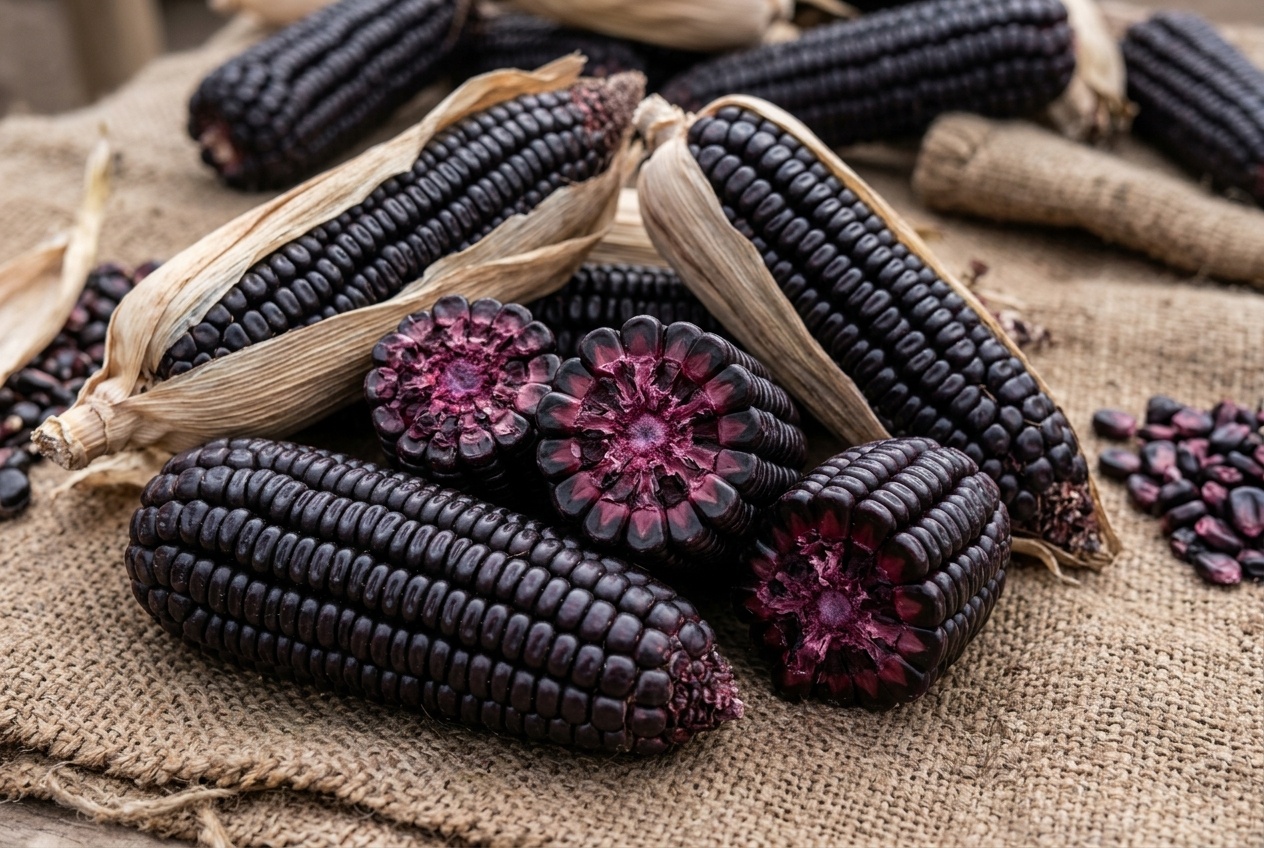
Maíz morado is Peruvian purple corn (Zea mays L.), a native botanical variety grown across the Andean highlands.
Its deep color comes from anthocyanins, water-soluble plant pigments that can appear red, purple, or blue depending on their chemical form and the acidity of the food.
For chicha morada, the cob matters. In Peru, the purple cob is called the coronta. Agronomic research from INIA confirms high anthocyanin concentrations in the coronta, which is why an authentic recipe uses whole dried ears containing both kernels and the inner cob core.
Purple Corn Anthocyanins: What the Science Shows
Anthocyanins are powerful polyphenol compounds that give plant tissues their vibrant violet and purple pigmentation.
Scientific analysis of Peruvian purple corn identifies cyanidin-3-O-glucoside (C3G), pelargonidin-3-glucoside, and peonidin-3-glucoside as primary anthocyanin fractions. Published studies show anthocyanin concentrations vary across cultivars, soil conditions, and plant parts, with coronta tissues exhibiting especially high pigment density.
Why Does Lime Change the Color?
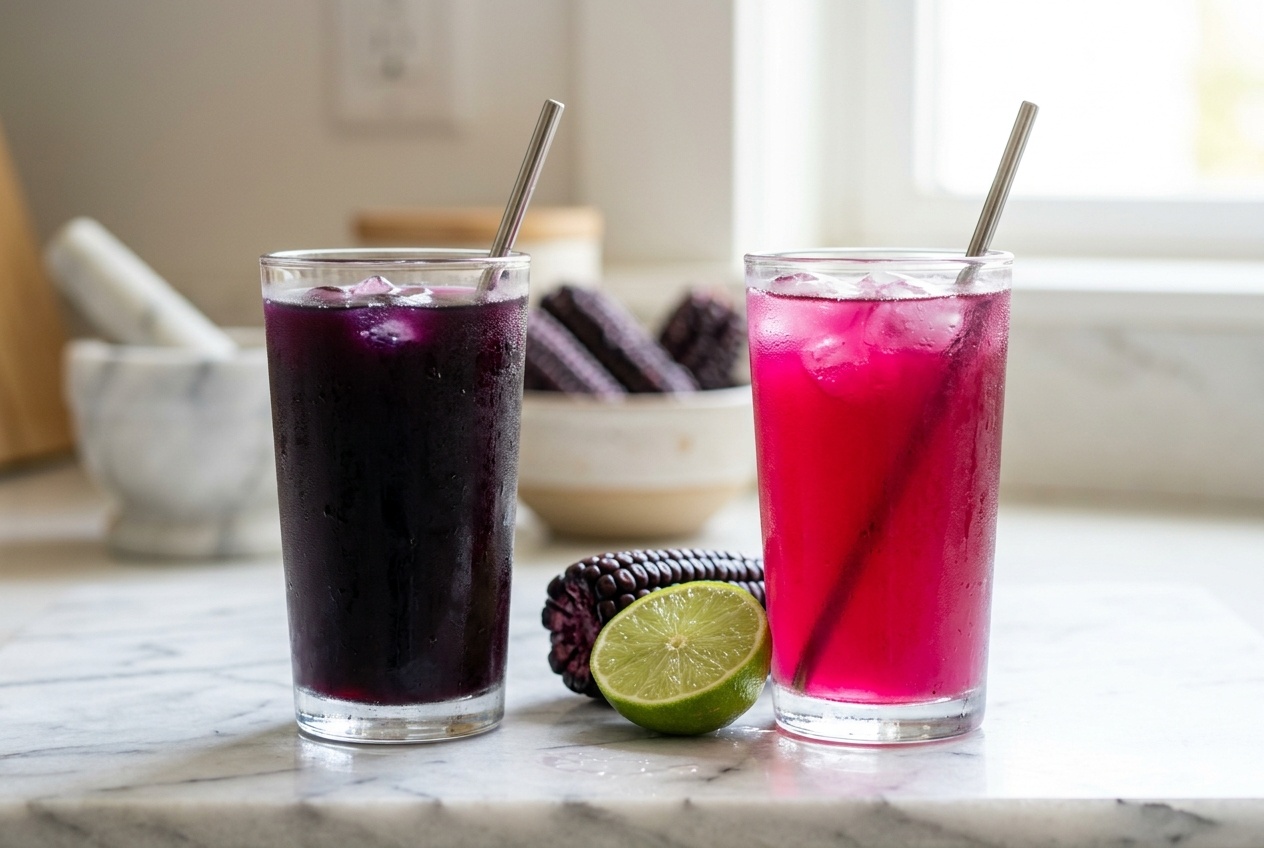
Fresh lime does more than add tartness. Anthocyanin color shifts based on pH.
Adding fresh lime juice lowers the beverage pH (typically to around 3.2 to 3.6), transforming the liquid from a deep dark violet into a radiant, ruby-magenta hue. This natural chemical response indicates the active preservation of anthocyanin pigments.
Chicha Morada vs. Chicha de Jora
The word chicha spans multiple distinct Andean traditions. While both drinks originate from corn, their processing, flavor profile, and alcohol content differ completely:
| Feature | Chicha Morada | Chicha de Jora |
|---|---|---|
| Main corn | Purple corn (maíz morado) | Germinated or malted yellow corn (jora) |
| Main process | Boiled with fruit and spices | Cooked and naturally fermented |
| Fermentation | No (unfermented) | Yes (spontaneous or cultured fermentation) |
| Alcohol content | Non-alcoholic (0.0% ABV) | Typically low alcohol (~1% to 3% ABV) |
| Color | Deep violet to bright ruby-purple | Yellow to cloudy amber |
| Flavor | Sweet, fruity, spiced, tart | Sour, tangy, earthy, fermented |
| Cultural role | Everyday cold refresher | Traditional ceremonial & social fermented drink |
In Peruvian cuisine, chicha morada is famously served alongside classics like ceviche and lomo saltado, offering a crisp, non-alcoholic counterpoint to savory and citrus-rich dishes.
The History of Purple Corn and Chicha Morada
Maíz morado has deep pre-Columbian roots in Peru, documented across ancient Andean agricultural heritage.
The modern recipe reflects a rich culinary fusion: native purple corn joined with Spanish colonial introductions like cinnamon, cloves, apples, and cane sugar, alongside Caribbean pineapple. The resulting drink is an iconic symbol of Peruvian gastronomy.
Authentic Peruvian Chicha Morada Recipe
This master home recipe makes approximately 2.5 liters (about 8 servings).
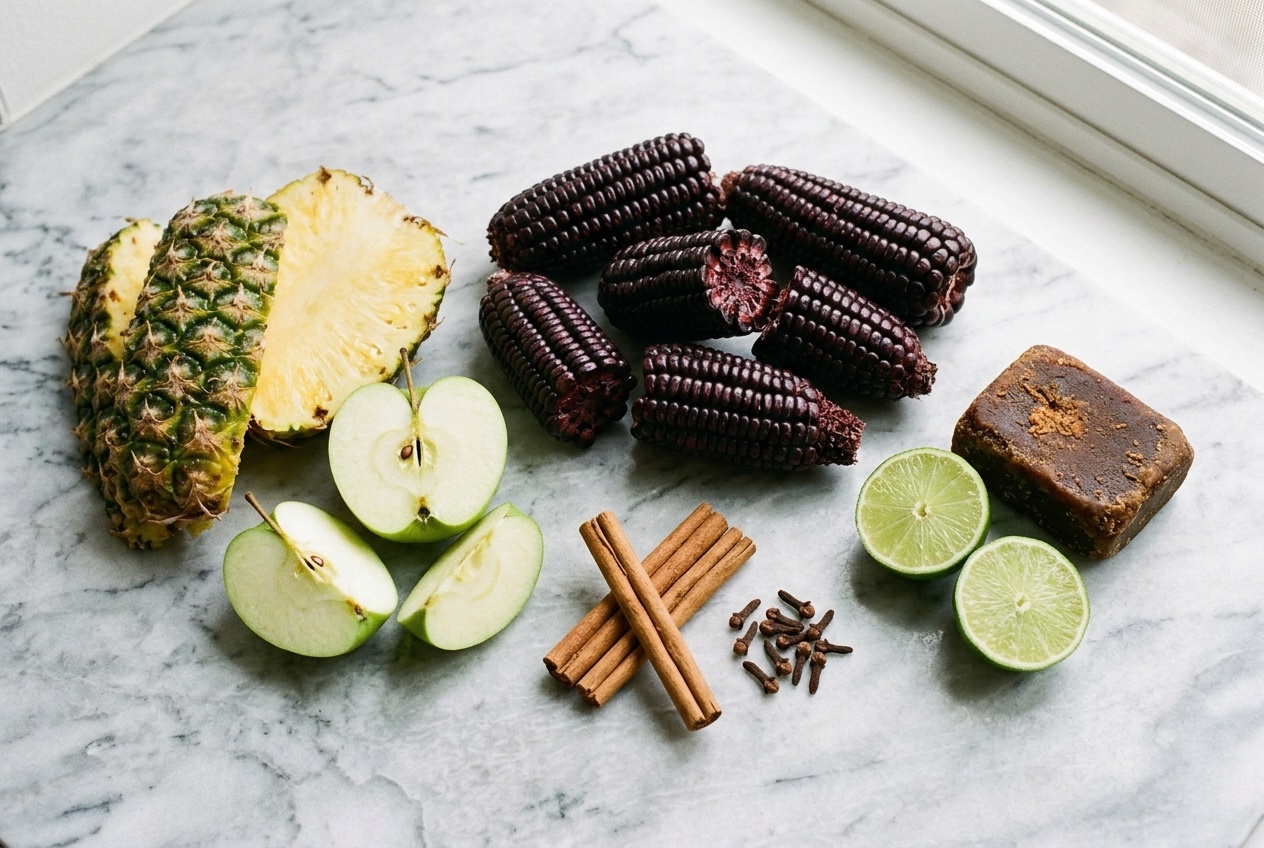
| Ingredient | Amount | Preparation |
|---|---|---|
| Dried purple corn (maíz morado) | 500 g (about 1 lb) | Break whole ears into pieces; keep kernels and cobs together |
| Pineapple rind and core | From 1 ripe pineapple | Wash outside thoroughly before peeling |
| Granny Smith apple or quince | 1 large | Quartered (skin on) |
| Cinnamon sticks | 2 large sticks | Whole fragrant cinnamon |
| Whole cloves | 6 to 8 cloves | Do not overuse |
| Water | 3 to 3.5 liters | Cold filtered water |
| Sugar or chancaca | 150 to 200 g | Adjust to taste while warm |
| Fresh lime juice | Juice of 4 to 5 limes | Add only after chilling |
| Diced apple & pineapple | Small amount | Optional garnish for serving |
Step-by-Step Method
- Prepare the corn and fruit: Break the dried purple corn ears into pieces, keeping kernels and coronta together. Wash pineapple skin thoroughly. Quarter the apple.
- Bring to a boil: Place the purple corn, pineapple rind and core, apple quarters, cinnamon sticks, and cloves in a large stockpot. Add 3 to 3.5 liters of cold water and bring to a rolling boil over high heat.
- Simmer: Lower heat to medium-low and simmer uncovered for 60 to 90 minutes. The liquid will reduce by about 20% and develop an intense, ink-dark purple color as the kernels soften.
- Strain: Pour the hot liquid through a fine-mesh sieve lined with cheesecloth into a heat-safe pitcher. Press solids gently without forcing cloudy pulp through.
- Sweeten while warm: Stir in 150 to 200 g of sugar or grated chancaca until completely dissolved. Chancaca adds a deeper caramel complexity, while white sugar offers a clean, crisp profile.
- Chill: Refrigerate the strained liquid for at least 2 hours until thoroughly chilled.
- Finish with fresh lime: Stir in the freshly squeezed lime juice right before serving. Watch the color illuminate into a brilliant ruby-purple.
- Serve: Pour over glasses filled with ice, garnishing with finely diced apple or pineapple.
Chicha Morada Calories and Sugar Content
Nutritional values for homemade chicha morada depend on sweetener quantity and serving size. Using 150 to 200 g of sugar across a 2.5-liter batch yields approximately 14.4 to 19.2 g of added sugar per 240 ml (8 oz) glass.
| Nutrient | Standard Recipe Estimate (per 240 ml) | Lower-Sugar Version (per 240 ml) |
|---|---|---|
| Calories | 110 to 130 kcal | 25 to 35 kcal |
| Carbohydrates | About 28 g | About 6 g |
| Sugar | About 26 g | About 3 g |
| Anthocyanins (C3G) | About 65 to 120 mg | About 65 to 120 mg |
| Vitamin C | About 12 mg | About 12 mg |
| Potassium | About 95 mg | About 95 mg |
| Iron | Trace | Trace |
Is Chicha Morada Healthy?
Purple corn delivers significant concentrations of anthocyanin antioxidants. Peer-reviewed reviews have linked dietary anthocyanins to beneficial cardiovascular, glucose metabolism, and endothelial markers.
However, sweetened chicha morada remains a sugar-containing beverage. For optimal health benefits, keep added sugar moderate, or prepare an unsweetened base and sweeten lightly to taste.
How Chicha Morada Fits With Other Traditional Drinks
Chicha morada belongs to a remarkable spectrum of global heritage beverages:
- Agua Fresca: While Mexican agua fresca blends fresh fruit, hibiscus, or seeds, chicha morada relies on slow-simmered purple corn and warm spices.
- Guarapo: Cuban and Latin American guarapo is extracted directly from raw sugarcane stalks, whereas chicha morada is a decoction of corn and fruit.
- Aguapanela: Colombian aguapanela dissolves concentrated panela cane sugar in water, offering a lighter caramel profile compared to the berry-like tang of chicha morada.
- Tepache: Both utilize pineapple rind and cinnamon, but tepache is lightly fermented while chicha morada is boiled and served unfermented.
- Sparkling Tea & Malt Drinks: For drinkers seeking layered, botanical non-alcoholic alternatives, purple corn drink delivers an earthy, antioxidant-rich profile.
Where to Buy Purple Corn in the USA
To prepare authentic chicha morada, search for whole dried maíz morado at Peruvian markets, Latin American grocery stores, international supermarkets, and online specialty retailers. Look for intact, dark-purple ears with clean cobs free from moisture or mustiness.
Frequently Asked Questions About Chicha Morada
What is chicha morada?
Chicha morada is a traditional non-fermented Peruvian beverage made by boiling dried purple corn (maíz morado) with pineapple rind, apples, cinnamon, and cloves, sweetened with sugar or chancaca and finished with fresh lime juice.
Is chicha morada alcoholic?
No. Traditional chicha morada is unfermented and completely non-alcoholic (0.0% ABV). It is distinct from chicha de jora, which is a fermented maize drink containing 1% to 3% ABV.
What does chicha morada taste like?
It has a unique, refreshing flavor combining sweet spiced fruit punch notes with a gentle, earthy corn backbone, brightened by tart fresh lime.
Where can I buy purple corn in the USA?
You can find dried Peruvian maíz morado at Latin American groceries, Peruvian specialty markets, international supermarkets, and online food retailers.
What is the difference between chicha morada and chicha de jora?
Chicha morada is boiled from purple corn with spices and served fresh and sweet without fermentation. Chicha de jora is brewed from germinated yellow corn and fermented into a tangy, low-alcohol beverage.
How many calories are in chicha morada?
A standard 240 ml (8 oz) glass typically contains 110 to 130 calories and about 26 g of sugar, though making it at home allows you to reduce sugar to as low as 25 to 35 calories per cup.
Can I make chicha morada with less sugar?
Yes. You can brew the purple-corn and spice base without sweetener, chill it, and add natural sweetener or lime to taste per glass.
Why is lime added after the drink cools?
Fresh lime juice lowers the beverage pH, shifting anthocyanin plant pigments from dark violet into a brilliant ruby-purple while preserving fresh citrus acidity.
Sources and References
- Inca Garcilaso Cultural Center: Chicha Nuestra - Traditional Peruvian Purple Corn Refresher
- Instituto Nacional de Innovación Agraria (INIA): Peruvian Research on Purple Corn, Coronta, and Anthocyanin Density
- Journal of Agricultural and Food Chemistry / PubMed: Effects of Growing Conditions on Purple Corncob Anthocyanins
- Annals of Microbiology / PMC: Microbial Populations of Traditional Chicha de Jora and Fermentation Dynamics
- Peru Travel: Cuisine of Lima - Traditional Beverages in Peruvian Gastronomy
- Nutrition Reviews / PubMed: Umbrella Review of Anthocyanins and Human Health Outcomes
- American Journal of Clinical Nutrition / PubMed: Systematic Review and Meta-Analysis of Dietary Anthocyanins
- World Health Organization (WHO): Healthy Diet Guidance on Free Sugars and Energy Intake


Comments and reviews (0)