


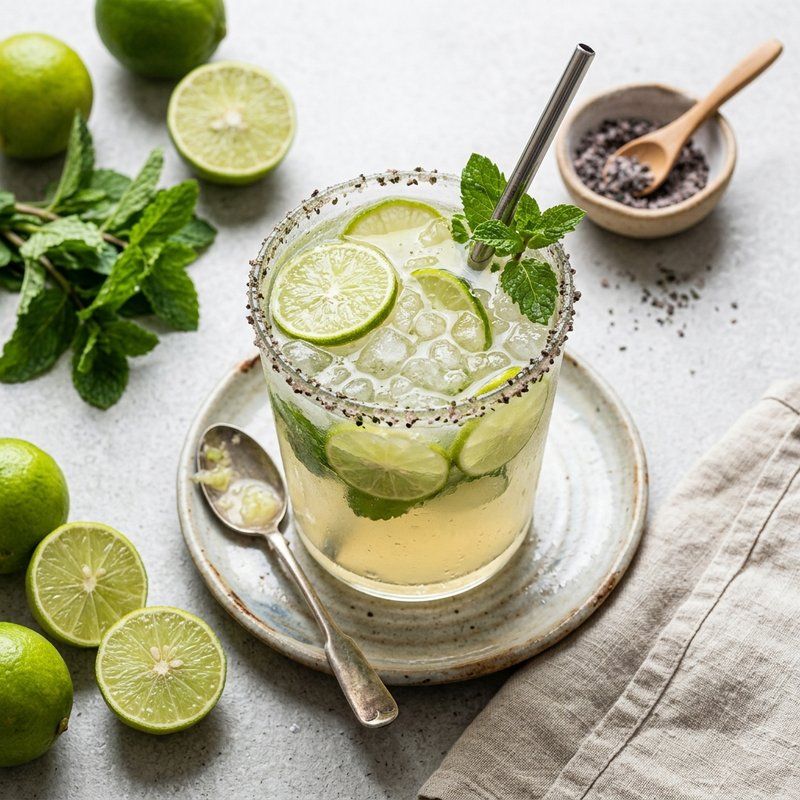
Nimbu pani is an Indian lemon or lime drink made with water and, often, sugar and salt. Many versions add kala namak, or black salt, roasted cumin, and mint, yielding a tart citrus refresher tailored to hot climates.
What Is Nimbu Pani?
Nimbu pani is a traditional Indian citrus cooler made with fresh lime or lemon juice, water, salt, and optional sugar. Spiced variations incorporate Himalayan black salt (kala namak), roasted cumin (bhuna jeera), and fresh mint. It provides essential hydration and electrolyte replacement during hot weather, bridging simple street refreshments and medicinal Ayurvedic formulations.
Important Safety Note: Fact-checked October 23, 2026. While nimbu pani provides pleasant hydration, it is not a sterile clinical replacement for medical oral rehydration salts (ORS) in acute medical dehydration. Individuals with severe acid reflux, gastritis, or salt-sensitive hypertension should monitor their intake of concentrated citrus juices and black mineral salt.
This comprehensive guide explains authentic nimbu pani ingredients, culinary variations, step-by-step preparation, nutritional breakdowns, and safety boundaries.
Nimbu Pani at a Glance
| Question | Short Answer |
|---|---|
| What is it? | A fresh lemon or lime drink associated with Indian and wider South Asian food traditions |
| What does it taste like? | Tart citrus forward, with optional sweetness, savory black salt, cumin, and fresh mint |
| Is it the same as shikanji? | The names overlap regionally; shikanji often refers to a more heavily spiced variation |
| Is it fizzy? | Usually still; nimbu soda uses chilled carbonated water for effervescence |
| Alcohol & caffeine | Neither is present in traditional home preparation; naturally 0.0% ABV and zero caffeine |
| Is it dairy-free? | The basic citrus and water recipe is 100% plant-based and dairy-free |
| Is it an ORS replacement? | No; a home glass lacks the measured clinical osmolarity of medical rehydration solutions |
What Makes Indian Lemonade Different?
Many American and European lemonade recipes center strictly on lemon juice, water, and granulated sugar. In contrast, nimbu pani incorporates mineral salts and carminative spices, creating a complex savory-sour note alongside the bright citrus. However, both beverage traditions encompass multiple variations, including unsweetened or lightly seasoned versions.
A salted nimbu pani tastes strikingly different from a sugary fairground lemonade, while a lightly sweetened home version is much closer in profile. The critical difference is the seasoning balance rather than a rigid rule that Western lemonade is always syrupy or Indian lemonade always savory.
In Indian kitchens, cooks use small, round, highly acidic limes (often called Kagzi nimbu), while Western home cooks frequently use Eureka lemons, Lisbon lemons, or Persian limes. All produce an excellent drink, but because acidity and essential oil levels vary across citrus cultivars, measuring juice volume rather than counting fruit pieces produces far more consistent results.
A Drink with Many Home and Street Versions
As a quintessential Indian lime drink, nimbu pani is an essential staple of everyday home cooking and lively street-side refreshment. In Northern India, variations known as shikanji or shikanjvi feature bold additions of crushed fresh mint, black pepper, grated ginger, and commercial chaat masala blends.
Street vendors often keep large blocks of ice floating inside earthen clay pots (matkas) and serve the beverage in disposable unglazed clay cups called kulhads. While these serving vessels represent cherished culinary traditions, safe drinking water, clean handling, and cold storage remain the true prerequisites for beverage safety.
Nimbu Pani Ingredients and What They Do
You can prepare a minimalist glass with citrus and water, or craft a rich street-style cooler with spices and herbs (similar to the botanical complexity of a Mexican tamarindo drink or choices in our caffeine-free drinks guide):
| Ingredient | What It Contributes | Preparation & Handling Note |
|---|---|---|
| Lemon or Lime Juice | Sharp acidity, citric acid, and floral citrus aroma | Measure juice volume rather than relying on counting pieces of fruit |
| Drinking Water | Clean dilution base and cellular hydration | Use filtered, ice-cold water and food-safe ice |
| Granulated Sugar | Sweetness that balances sharp citric acid | Dissolve in a small amount of liquid first before diluting with ice water |
| Kala Namak (Black Salt) | Savory, sulfur-rich mineral depth | Provides sodium; start with 1/8 teaspoon and adjust to taste |
| Roasted Cumin (Bhuna Jeera) | Warm, earthy, nutty aromatic undertone | Toast gently in a dry skillet; burnt seeds taste bitter |
| Fresh Mint (Pudina) | Cooling herbal freshness (carvone notes) | Bruise leaves lightly; vigorous blending turns the liquid dark |
| Black Pepper or Ginger | Subtle spice warmth in the finish | Optional additions; add in small pinches |
| Chaat Masala | Complex salty-sour spice profile (amchur base) | Check product labels for salt and gluten carriers before adding |
Lemon or Lime: Botanical Realities
Lemon is Citrus limon, while true Key lime is small round acid lime (Citrus aurantiifolia) and larger grocery store limes are Persian limes (Citrus latifolia). In Hindi, the word nimbu can refer to either lemons or limes. Both work exceptionally well.
When extracting juice, press the halved citrus gently through a small sieve into a measuring container. Squeezing or twisting too forcefully extracts bitter peel oils (d-limonene) and pith polyphenols, which can impart an undesirable harshness to delicate lemon water.
Why Kala Namak Has a Distinct Aroma
Kala namak (Himalayan black mineral salt) is kiln-fired with charcoal and botanicals, giving it a pinkish-gray appearance and a pungent, savory aroma derived from trace sulfides. Ordinary table salt supplies saltiness but lacks this characteristic umami-sulfur note.
Despite folklore marketing claims, black salt is not an iron supplement or an antacid. The American Heart Association clarifies that all dietary salts contribute sodium; black salt contains roughly 35% to 38% elemental sodium by weight and must be counted within daily cardiovascular guidelines.
Nimbu Pani vs Shikanji, Nimbu Soda, and Jaljeera
Regional names and recipes frequently overlap, but these distinctions clarify what to expect across different menus:
| Beverage Style | Usual Base & Ingredients | Flavor & Serving Experience |
|---|---|---|
| Nimbu Pani | Lemon or lime, still water, sugar, salt | Sweet, salty, or lightly spiced everyday home cooler |
| Shikanji (Shikanjvi) | Citrus, roasted cumin, ginger, chaat masala | Heavily spiced North Indian street drink with sharp warmth |
| Nimbu Soda | Citrus base topped with carbonated water | Effervescent, sparkling street soda (Banta style) |
| Jaljeera | Cumin-led base with tamarind pulp and herbs | Savory, dark-green digestive appetizer; see our jaljeera guide |
Nimbu Pani Recipe: A Measured Home Version
Spiced Indian Nimbu Pani
Measured citrus, roasted cumin, and black mineral salt refreshment.
Ingredients
- ✓ 60 ml fresh lemon or lime juice (approx. 1/4 cup)
- ✓ Cold drinking water to reach 600 ml final volume
- ✓ 16 g granulated sugar (4 level tsp; adjust or omit)
- ✓ 1/8 tsp kala namak (Himalayan black mineral salt)
- ✓ 1/4 tsp whole cumin seeds
- ✓ 6 to 8 fresh spearmint leaves
- ✓ Optional: small pinch of ground black pepper
- ✓ Optional: food-safe ice cubes for serving
Kitchen Tools
- Citrus reamer or squeezer
- Small fine-mesh strainer
- Small dry skillet and spice grinder (or mortar)
- Marked measuring jug (600 ml to 1 liter capacity)
Instructions
- 1 Clean Produce: Rinse fresh lemons or limes and mint leaves under cool running water. Pat dry before cutting. Never wash produce with soap.
- 2 Toast Cumin: Toast whole cumin seeds in a small skillet over medium-low heat for 60 to 90 seconds until fragrant and slightly darker. Cool completely, then grind finely.
- 3 Dissolve Sweetener and Salt: Squeeze and strain 60 ml fresh citrus juice into your measuring jug. Add sugar, kala namak, and 50 ml water. Stir until completely dissolved.
- 4 Add Spices and Herbs: Stir in the ground roasted cumin and optional black pepper. Lightly bruise the fresh mint leaves between your fingers to release oils and drop them in.
- 5 Dilute and Taste: Pour in ice-cold drinking water until the mixture reaches exactly 600 ml. Stir well. Taste and adjust with extra water for lightness or sugar for sweetness.
- 6 Pour and Serve: Divide between two glasses filled with ice cubes. Give the pitcher a final stir right before pouring, as ground cumin naturally settles.
Toast cumin seeds gently until they turn warm brown and release a nutty perfume. Charred, smoking seeds develop harsh acrid compounds that overpower fresh citrus. Cool seeds before grinding so they powder evenly.
Sweet, Salty, and Sugar-Free Variations
Nimbu pani accommodates several distinct dietary profiles:
- Meetha Nimbu Pani (Sweet): Retain the 16 g of sugar and reduce black salt to a tiny pinch (under 1/16 tsp) for a sweet, refreshing profile.
- Namkeen Nimbu Pani (Salted): Omit added sugar entirely; use 1/4 tsp kala namak and 1/2 tsp roasted cumin for a purely savory electrolyte cooler.
- Without Added Sugar: Skipping added sweetener yields a tart beverage. Note that pure citrus juice still contains roughly 1.5 g of naturally occurring fruit sugars per serving.
How to Make Nimbu Soda (Street Banta Style)
To make sparkling nimbu soda, prepare the citrus, sugar, salt, and cumin base using only 100 ml of still water. Divide this concentrated syrup equally between two chilled glasses, then slowly top each glass with plain unflavored sparkling water right before serving. Stir gently with a long bar spoon; never shake sealed carbonated drinks.
Troubleshooting Flavor and Texture
| Observed Problem | Likely Cause | Correction Method |
|---|---|---|
| Too sour | Concentrated citrus juice or too little water | Add 50 to 100 ml extra cold water, then adjust sweetness in small steps |
| Excessively salty | Over-measured kala namak or salty chaat masala | Dilute with fresh water and extra citrus; sugar alone cannot neutralize sodium |
| Bitter taste | Burnt cumin seeds or hard-squeezed citrus peel oils | Replace charred cumin; press citrus gently through a strainer without twisting peel |
| Gritty texture | Coarsely crushed cumin seeds | Grind toasted cumin into fine powder or pass the finished drink through a fine sieve |
| Spices settle on bottom | Insoluble botanical seed particles | Normal physical settling; stir the pitcher thoroughly right before each pour |
| Soda loses carbonation | Warm ingredients or over-stirring | Chill all components thoroughly and add ice-cold sparkling water at the very last second |
Nimbu Pani Nutrition: Calories, Sugar, and Sodium
Nutritional figures for homemade nimbu pani depend directly on ingredient measurements. In the recipe above, 16 g of sugar across two 300 ml servings supplies 8 g of added sugar (32 calories from sugar alone per glass). Pure citrus juice contributes roughly 6 to 8 calories of natural fructose.
| Nutritional Metric | What Determines It | Practical Estimate (Per 300ml Serving) |
|---|---|---|
| Calories & Carbs | Added sweetener and natural citrus sugars | ~38 to 45 kcal (sweetened) vs ~8 kcal (unsweetened) |
| Sodium | Kala namak weight and carbonated water type | ~140 to 180 mg per glass (with 1/8 tsp across batch) |
| Vitamin C (Ascorbic Acid) | Citrus freshness and volume used | ~15 to 20 mg (approx. 20% to 25% Daily Value) |
| Dietary Fat & Protein | Naturally negligible in filtered citrus infusions | 0 g fat, under 0.5 g plant protein |
According to data from USDA FoodData Central, raw lime and lemon juices provide useful micronutrients, but diluting juice into a large pitcher means a single glass does not supply the full nutrient payload of whole citrus fruit.
Nimbu Pani Benefits: What the Evidence Supports
Hydration and Hot Weather
Nimbu pani provides enjoyable fluid replacement during warm weather. However, claims that a homemade spice lemonade hydrates faster than plain water or prevents heat cramps lack clinical verification. The Centers for Disease Control and Prevention (CDC) note that heat-related illnesses require shade, cooling, and prompt medical intervention when warning signs appear.
Why It Is Not the Same as Medical ORS
Clinical Oral Rehydration Salts (ORS) approved by the World Health Organization (WHO) rely on exact molar ratios of sodium to glucose (roughly 75 mmol/L sodium and 75 mmol/L glucose) with a total osmolarity of 245 mOsm/L. This precise concentration triggers the sodium-glucose cotransporter protein (SGLT1) in the intestinal epithelium, pulling water into the bloodstream even during severe diarrheal dehydration.
Mixing unmeasured kitchen sugar, salt, and lemon juice cannot replicate this physiological osmolarity. For illness-induced dehydration or pediatric fluid loss, always use verified clinical ORS packets rather than homemade kitchen lemonade.
Kidney Stones and Citrate
Citrus fruits contain natural citrate, and dietary guidelines from the National Institute of Diabetes and Digestive and Kidney Diseases (NIDDK) note that dietary citrate can inhibit the formation of calcium oxalate kidney stones in certain individuals. However, kidney stone prevention depends heavily on stone chemistry, total urine volume, and sodium restrictions. Because salty nimbu pani adds dietary sodium, it should not replace prescribed medical potassium citrate therapies.
Five-Way Beverage Comparison
| Beverage | Dominant Flavor | Sweetener & Salt Control | Primary Use Case |
|---|---|---|---|
| Nimbu Pani | Tart citrus with savory cumin and black salt | Fully adjustable at home | South Asian street cooler and light home hydration |
| American Lemonade | Sweet and tart citrus forward | Often high in added cane sugar (20-30g) | Classic Western summer picnic beverage |
| Agua de Limón | Lime-forward, crisp, light fruit water | Moderate sugar, rarely salted | Mexican taquería refresher; see agua fresca guide |
| Commercial Sports Drink | Synthetic fruit flavors, sweet-tart | Fixed sodium and carbohydrate formula | Prolonged athletic endurance (>60 mins) |
| Pure Coconut Water | Mildly sweet, nutty, light mineral | Naturally occurring sugars and potassium | Natural post-workout potassium repletion |
Serving, Storage, and Practical Precautions
Serve nimbu pani chilled over ice cubes with a sprig of fresh mint or a thin lime wheel garnish. Always keep fresh pitchers covered in the refrigerator at or below 40°F (4°C) and consume within 24 hours. Under FDA Food Safety Guidelines, perishable citrus beverages left at room temperature for over two hours (or one hour above 90°F / 32°C) must be discarded.
To protect dental enamel from repeated acid exposure, American Dental Association guidance recommends rinsing your mouth with plain water after consuming citrus drinks and waiting at least 60 minutes before brushing teeth with fluoride toothpaste.
Commercial Beverage Supply & Private Formulation
Hospitality groups, cafes, and premium non-alcoholic beverage brands seeking bulk botanical concentrates, exotic fruit purees, and authentic regional syrups can partner with our team as an accredited wholesale exotic drinks supplier for wholesale distribution and custom contract bottling.
Frequently Asked Questions About Nimbu Pani
Q. What does nimbu pani taste like?
Q. Can I substitute regular table salt for kala namak?
Q. Is nimbu pani good for weight loss?
Q. Can you make nimbu pani without sugar?
Q. What is the difference between nimbu pani and shikanji?
Q. Why do people put cumin in lemonade?
Q. Can you make nimbu pani with sparkling water?
Q. How long does homemade nimbu pani last in the fridge?
Q. Does nimbu pani help with hangovers?
Q. Is nimbu pani safe to drink every day?
Q. Is nimbu pani the same as ORS?
Q. Can I use lemons instead of limes?
Q. Does nimbu pani contain alcohol or caffeine?
Q. Can people with diabetes drink nimbu pani?
Q. Is black salt healthier than regular salt?
Q. Can I use honey or simple syrup?
Q. Can nimbu pani prevent kidney stones?
Q. Why is my nimbu pani bitter?
Q. Can I drink nimbu pani on an empty stomach?
Q. Is nimbu pani vegan and gluten-free?
Editorial Fact-Checking and Evidence Standards
- All citrus cultivars (Citrus limon, small round acid lime (Citrus aurantiifolia), Citrus latifolia) were verified against USDA agricultural taxonomies.
- Oral rehydration and SGLT1 cotransporter mechanisms are benchmarked against official World Health Organization (WHO) clinical ORS standards.
- Heat-related illness and emergency dehydration symptoms reflect clinical guidance from the Centers for Disease Control and Prevention (CDC).
- Dietary citrate and calcium stone formation principles are aligned with National Institute of Diabetes and Digestive and Kidney Diseases (NIDDK) nephrology guidelines.
- Daily sodium limits and salt substitute advisories follow official clinical statements from the American Heart Association (AHA).
- Post-citrus dental enamel erosion timing adheres to peer-reviewed consumer guidance from the American Dental Association (ADA).
Sources and References
- World Health Organization (WHO): The Treatment of Diarrhoea: A Manual for Physicians and Other Senior Health Workers (Oral Rehydration Salts).
- Centers for Disease Control and Prevention (CDC): Warning Signs and Symptoms of Heat-Related Illness.
- National Institute of Diabetes and Digestive and Kidney Diseases (NIDDK): Eating, Diet, & Nutrition for Kidney Stones.
- National Institute of Diabetes and Digestive and Kidney Diseases (NIDDK): Acid Reflux (GER and GERD) in Adults: Dietary Triggers.
- American Heart Association (AHA): How Much Sodium Should I Eat Per Day? Understanding Salt Limits.
- American Dental Association (ADA): Dietary Acids and Your Teeth: Protecting Enamel from Citrus Exposure.
- Food and Drug Administration (FDA): Safe Food Handling: Fresh Produce and Cold-Storage Guidance.
- USDA FoodData Central: Lime Juice, Raw and Lemon Juice, Raw Nutrient Breakdown.





Comments and reviews (0)