


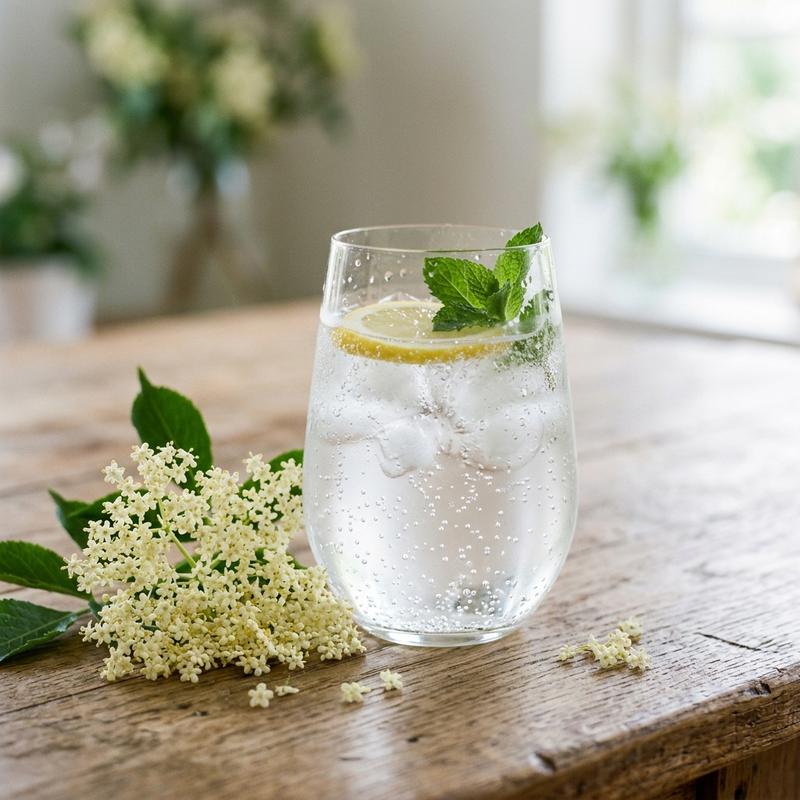
Elderflower cordial is a sweet, floral syrup made by steeping fresh elderflowers with sugar, lemon, water, and food-grade citric acid. Mixed with still or sparkling water, it makes a crisp summer drink, cocktail mixer, or dessert syrup with delicate notes of pear, lychee, and honey.
Fresh elderflowers bloom in a short seasonal window from late spring into early summer, filling British hedgerows with a heady grape, pear, honey, and citrus fragrance. While making homemade cordial is a cherished culinary tradition, accurate plant identification, proper stem removal, and food safety practices are essential before foraging wild flowers.
This guide explains what elderflower cordial is, how it tastes, how to safely identify the elder plant from toxic lookalikes like poison hemlock, a tested 9-step homemade recipe, dilution ratios, and creative uses for drinks and desserts.
Quick Answer: What Is Elderflower Cordial?
Elderflower cordial is a non-alcoholic concentrated botanical syrup prepared by infusing the blossoms of European elder (Sambucus nigra) in warm sugar syrup with fresh lemons and food-grade citric acid. Because it is a sweet concentrate, it is diluted with 5 to 8 parts still or sparkling water before serving. Fresh homemade batches must be refrigerated at 5°C or colder and consumed within 1 week, or frozen in portions for up to 6 months.
| Key Feature | Summary |
|---|---|
| Botanical Source | European elder (Sambucus nigra) or American elder (Sambucus canadensis) |
| Flavor Profile | Sweet, floral, muscat grape, pear, lychee, honey, and citrus |
| Serving Method | Diluted concentrate (1 part cordial to 5 to 8 parts still or sparkling water) |
| Alcohol Content | 0.0% ABV (non-alcoholic when fresh, distinct from 20% ABV St-Germain liqueur) |
| Homemade Shelf Life | 1 week refrigerated at ≤5°C; up to 6 months frozen in freezer-safe containers |
| Critical Safety Rule | Only use flower heads; discard all woody stems, leaves, roots, and unripe berries. Distinguish from toxic Poison Hemlock (Conium maculatum). |
What Elderflower Cordial Is
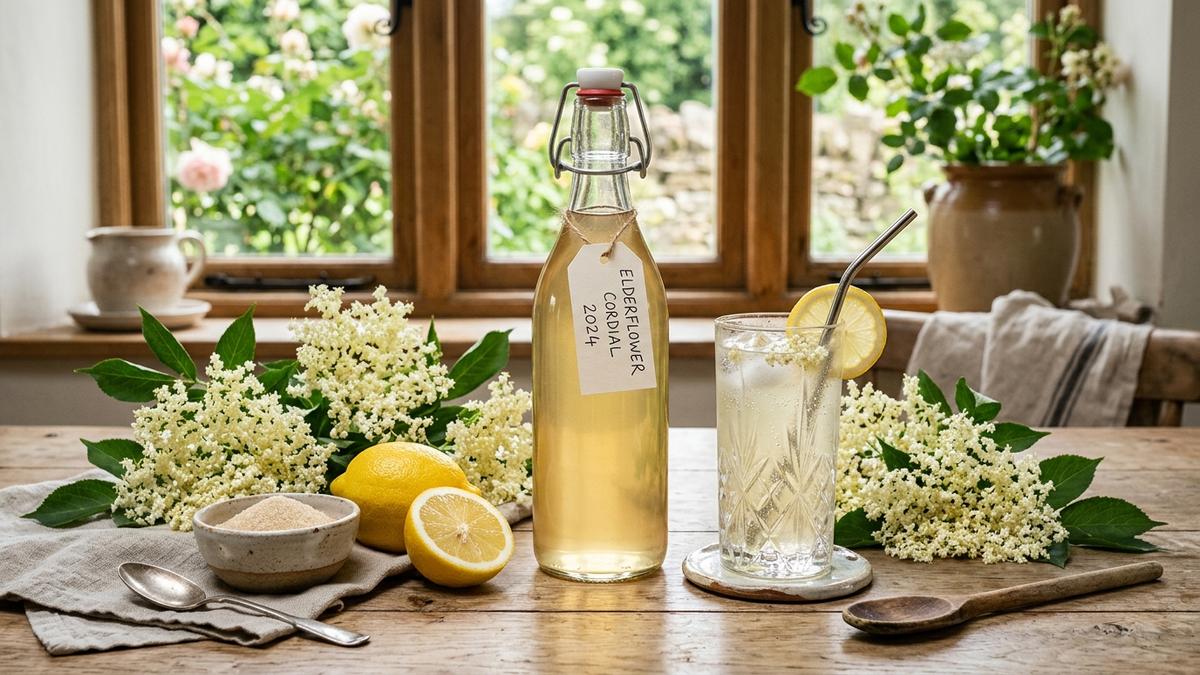
Elderflower cordial is a concentrated sweet syrup. Because it is formulated with a high proportion of sugar and acid, drinking it neat is overly intense. It is intended to be diluted with water or used as a flavouring component in beverages, desserts, and dressings.
The traditional ingredients for authentic homemade elderflower cordial include:
- Fresh elderflower heads: Hand-picked cream-coloured blossoms, carefully trimmed.
- Granulated sugar: Provides sweetness, body, and osmotic preservation.
- Water: Forms the extraction base for the floral essence.
- Fresh lemons (zest and juice): Adds bright citrus notes and balances the sweetness.
- Food-grade citric acid: Lowers the pH, sharpens tartness, and helps inhibit microbial growth.
Some recipes incorporate orange, lime, or tartaric acid for alternative acidity profiles. Commercial cordial brands may use elderflower extract, natural flavourings, preservatives, or artificial sweeteners, so reviewing product labels is recommended if specific dietary criteria are required.
A Short History of Elderflower Drinks
The elder tree has held an established place in European rural cooking and household medicine for centuries. Its fragrant blossoms were steeped for teas and cordials, while its cooked ripe berries were processed into jams, syrups, and country wines.
While historical claims connecting modern cordial to specific Roman or Victorian recipes are difficult to substantiate, the beverage known today as elderflower cordial is deeply rooted in British seasonal home preserving and country foraging traditions.
The Elder Plant (Sambucus nigra)
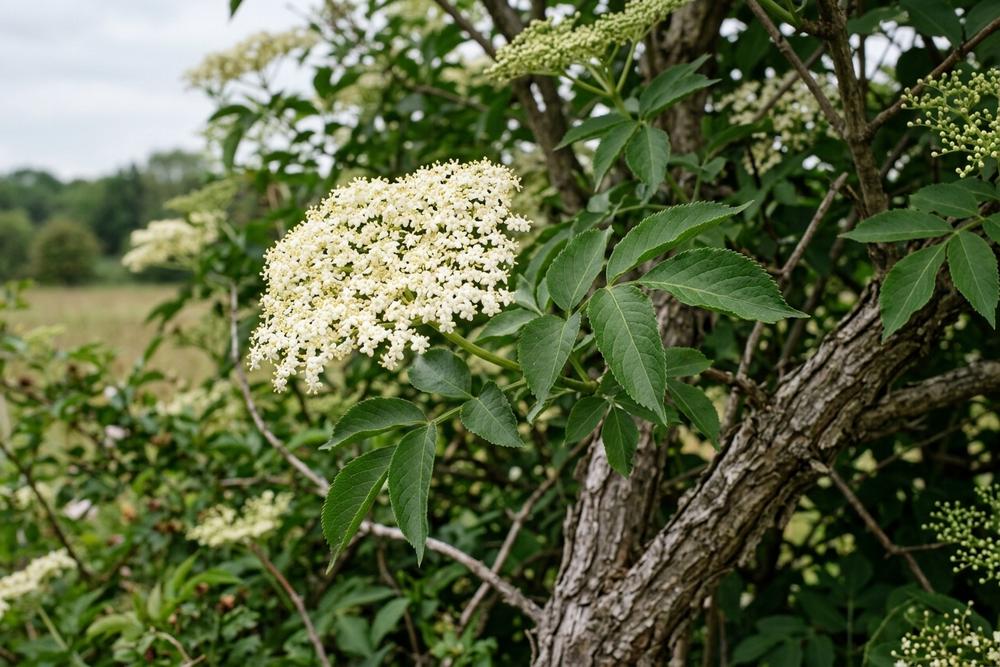
European elder (Sambucus nigra) is a deciduous woody shrub or small tree native to Europe and North Africa, commonly growing in hedgerows, woodland edges, and scrubland. It features grey-brown furrowed bark, opposite compound leaves with 5 to 7 toothed leaflets, and broad, flat-topped clusters of small, fragrant cream-white flowers.
The distinctive flat flower cluster is botanically termed a corymb. In a corymb, flower stalks arise from different points along the stem but reach a uniform horizontal plane, forming flower heads measuring 10 to 20 cm across.
In North America, the closely related American elder (Sambucus canadensis, or Sambucus nigra subsp. canadensis) grows with a similar habit and broad flower heads. Because regional species and lookalikes vary, using a reputable plant identification guide or foraging with an experienced local specialist is essential before collecting wild blossoms.
What Elderflower Cordial Tastes Like
Elderflower cordial offers a refined sweet, floral, and lightly citrusy flavour. Drinkers frequently detect delicate notes reminiscent of muscat grape, ripe pear, lychee, elderberry blossom, and light summer honey.
Fresh lemon juice and citric acid deliver a clean, tart finish that cuts through the sugar, preventing the syrup from feeling heavy or cloying. The quality of flavour depends heavily on flower freshness: fully open, dry morning blossoms provide the richest aroma, whereas browning heads or excessive green stalks can introduce unwanted bitterness.
Elderflower Cordial vs. St-Germain Liqueur
While both celebrate the distinct aroma of elderflowers, elderflower cordial and St-Germain are entirely different products:
| Product | Alcohol by Volume (ABV) | Type | Primary Ingredients | Usage |
|---|---|---|---|---|
| Elderflower Cordial | 0.0% ABV (Non-Alcoholic) | Concentrated sweet syrup | Fresh elderflowers, sugar, water, lemon, citric acid | Diluted with still/sparkling water, mocktails, desserts |
| St-Germain | 20.0% ABV | French elderflower liqueur | Macerated wild elderflowers, neutral spirit, sugar | Cocktails (St-Germain Spritz), alcoholic aperitifs |
Because St-Germain contains 20% ABV spirit and a different sweetness level, they cannot be substituted 1:1 without fundamentally altering a drink's alcohol content and balance. For a crisp zero-proof serve, mix elderflower cordial with sparkling water or an alcohol-free sparkling wine.
How to Identify Elderflowers Safely: Avoiding Toxic Lookalikes
Wild foraging carries real safety risks. White flower clusters appear on several unrelated plant species, including highly toxic plants such as Poison Hemlock (Conium maculatum). Never rely on a single visual clue.
| Characteristic | European Elder (Sambucus nigra) - SAFE | Poison Hemlock (Conium maculatum) - DEADLY TOXIC |
|---|---|---|
| Plant Habit | Woody perennial shrub or small tree with grey-brown furrowed bark | Soft-stemmed biennial herb; green hollow stems with purple spots/blotches |
| Leaf Structure | Opposite compound leaves with 5 to 7 oval, toothed leaflets | Finely divided, lacy, fern-like alternate leaves |
| Flower Head | Broad, flat-topped corymb of tiny cream-coloured flowers; sweet floral scent | Umbrella-shaped compound umbels; rank, musty, unpleasant odour |
| Toxicity | Flowers edible when prepared; other plant parts toxic | All parts contain deadly piperidine alkaloids; ingestion can be fatal |
Foraging Safety & Emergency Medical Guidance
Never harvest plants near busy roadsides, chemically treated farmland, or industrial zones. If you have any doubt about a plant's identity, do not pick or consume it. If wild plant poisoning is suspected, seek immediate emergency medical care: in the UK, call NHS 111 or 999; in the United States, call Poison Control at 1-800-222-1222.
Which Parts of the Elder Plant Can Be Used?
The Royal Horticultural Society (RHS) classifies elderflowers as a safe culinary ingredient but notes that other parts of the Sambucus plant, including leaves, bark, roots, and raw unripe green berries, contain cyanogenic glycosides and should never be consumed.
When preparing flower heads for cordial, snip away as much of the thick green stem structure as possible. Shake each flower head gently over a flat surface to dislodge insects and loose dust. If gathered from a clean hedgerow or garden, a thorough inspection and gentle shake preserves delicate aromatic pollen. If dusty, a brief gentle rinse in cold water can be used.
When and How to Pick Elderflowers
Harvest on a warm, dry morning once the dew has evaporated, choosing heads where the tiny florets are newly opened, creamy-white, and fragrant. Avoid browning, weathered, or closed green buds.
Use clean kitchen scissors to snip stems just beneath the flower cluster into an open basket or cloth bag. Avoid sealed plastic bags, which trap humidity and accelerate wilting. Always forage responsibly, taking only a modest portion from each shrub to support pollinators and allow autumn elderberries to develop for local birdlife.
Homemade Elderflower Cordial Recipe (Tested 9-Step Method)
This traditional method yields approximately 1.5 litres of fragrant cordial concentrate. Active preparation requires 25 minutes, followed by a 24-hour refrigerated steep.
Classic British Elderflower Cordial
Yield: ~1.5 Litres Concentrate | Prep Time: 25 mins | Cold Steep: 24 hrs
Ingredients:
• 25 fresh elderflower heads, carefully inspected and trimmed
• 1 kg white granulated sugar
• 1.2 litres water
• 3 unwaxed lemons (finely zest 2, slice all 3)
• 50 g food-grade citric acid
Equipment:
• Large stainless steel stockpot
• Clean heatproof container or bowl with lid
• Fine mesh sieve and sterilized muslin / jelly straining bag
• Clean, sterilized glass bottles or freezer-safe containers
• Digital kitchen scale
Step-by-Step Preparation Method
- Inspect and trim: Examine flower heads, shake out insects, and snip away thick green stalks with kitchen scissors.
- Prepare lemons: Wash lemons thoroughly. Finely zest 2 lemons (avoiding bitter white pith), then slice all 3 into rounds.
- Make sugar syrup: Combine 1 kg granulated sugar and 1.2 litres water in a large stainless steel pan. Heat gently over medium heat, stirring until sugar is completely dissolved, then bring just to a simmer and remove from heat.
- Add citric acid and zest: Stir 50 g food-grade citric acid and lemon zest into the warm syrup until fully dissolved. Allow syrup to cool slightly until warm rather than boiling.
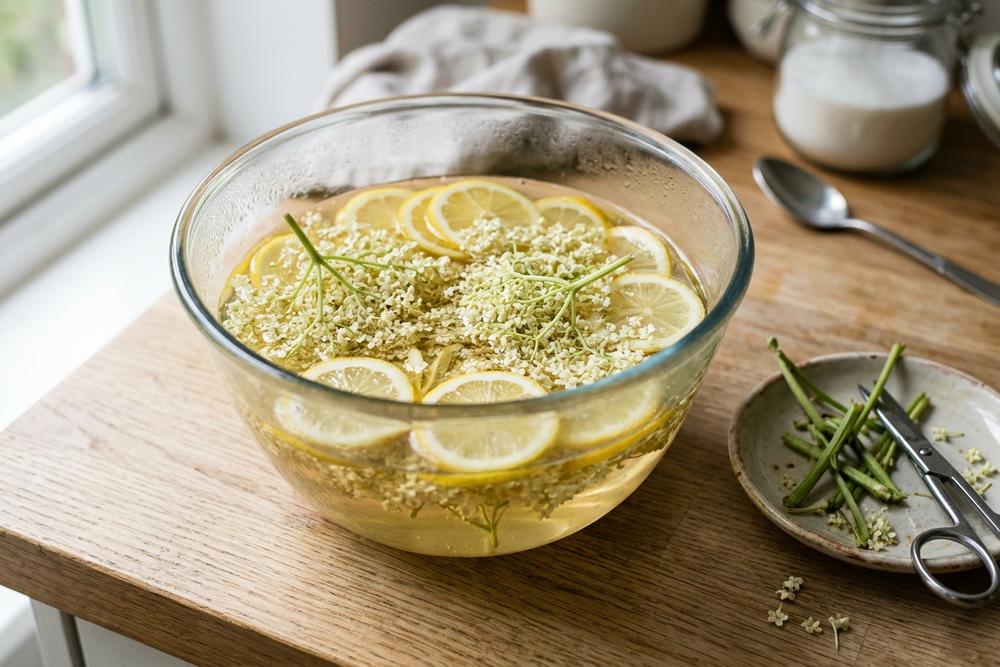
- Infuse flowers and lemon: Place trimmed elderflower heads and sliced lemons into a clean heatproof container. Pour warm syrup over flowers, pressing blossoms gently beneath liquid with a clean spoon.
- Cold steep (24 hours): Cover container tightly, allow to cool to room temperature, then transfer to the refrigerator to steep at ≤5°C for a full 24 hours.
- Strain: Pour mixture through a scalded jelly bag or multi-layer muslin cloth set over a clean bowl. Allow liquid to drain naturally without heavy squeezing for optimal clarity.
- Pasteurize and bottle: Pour strained cordial into a clean pan, bring to a gentle simmer (approx. 85°C), then carefully funnel into clean, sterilized heat-safe bottles, leaving 2 cm headspace. Seal tightly.
- Label and store: Label bottles with preparation date. Refrigerate at ≤5°C and consume within 1 week, or freeze in portions for up to 6 months.
How to Dilute Elderflower Cordial
Because homemade cordial is a concentrated syrup, proper dilution is essential for balanced sweetness and refreshing floral aroma.
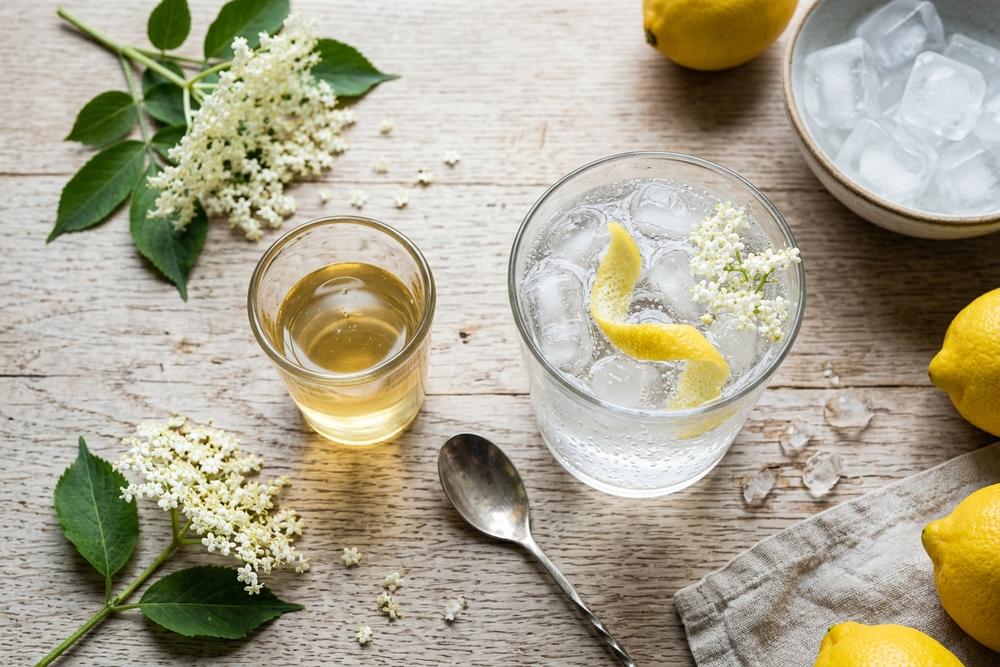
Recommended starting ratio: Mix 1 part cordial with 6 parts cold water (e.g., 25 ml cordial to 150 ml water or sparkling mineral water). If you prefer a lighter, drier refreshment, extend the ratio to 1:7 or 1:8. Serve over plenty of ice with a fresh lemon slice, cucumber ribbon, or mint sprig.
Why Citric Acid Is Used in Cordial Making
Food-grade citric acid fulfills two essential roles in elderflower cordial:
1. Flavour Balance: It provides a sharp, clean sourness that cuts through heavy sugar sweetness and complements floral elderflower notes.
2. pH Reduction: Citric acid lowers the syrup's pH, creating an acidic environment that inhibits the proliferation of spoilage organisms.
Important safety note: High sugar and citric acid slow microbial growth, but they do not make an unpasteurized home batch shelf-stable at room temperature for months. Kitchen hygiene, lemon acidity, and storage conditions vary, which is why strict refrigeration is recommended. Ensure any citric acid purchased is explicitly labelled food grade rather than cleaning grade.
Can You Make Elderflower Cordial Without Citric Acid?
Yes, you can substitute additional freshly squeezed lemon juice (approx. 2 extra lemons per batch). However, lemon juice acidity varies widely by fruit and growing condition, providing less standardized pH control. If omitting citric acid, keep cordial strictly refrigerated and consume within 5 to 7 days, or freeze immediately.
Storage Guidelines and Signs of Spoilage
Because this home recipe has not undergone commercial laboratory testing, follow conservative food safety practices:
| Storage Method | Temperature | Safe Duration | Best Practice |
|---|---|---|---|
| Refrigeration | ≤ 5°C (41°F) | Up to 1 week (7 days) | Keep tightly sealed in sterilized glass bottles; store on interior fridge shelves rather than the door |
| Freezing | ≤ -18°C (0°F) | Up to 6 months | Freeze in plastic freezer-safe bottles, jars with 3 cm expansion headroom, or silicone ice-cube trays for single portions |
| Defrosting | Refrigerator | Use within 3 days of thawing | Thaw frozen cordial in the fridge; do not refreeze after thawing |
Signs of Spoilage: Inspect cordial before every pour. Discard the entire container immediately if you observe active bubbling/fizzing without shaking, surface mould growth, cloudy murkiness, sour fermented beer-like odours, or pressurization inside the bottle. Never taste spoiled cordial to check its safety.
Elderflower Cordial Nutrition Facts (Per 25 ml Serving)
The following nutritional estimates represent a standard 25 ml serving of undiluted cordial concentrate (diluted with 150 ml water to create a 175 ml beverage):
| Nutrient | Per 25 ml Concentrate | Per Prepared Glass (1:6 Dilution with Water) |
|---|---|---|
| Calories | 65 to 70 kcal | 65 to 70 kcal |
| Total Carbohydrates | ~17 g | ~17 g |
| Sugars | ~16.5 g | ~16.5 g |
| Protein | 0 g | 0 g |
| Fat | 0 g | 0 g |
| Sodium | ||
| Vitamin C | ~3 to 5 mg | ~3 to 5 mg |
Diluting with extra water reduces the sweetness intensity per sip, but does not alter the total sugar consumed unless a smaller volume of cordial is poured.
6 Delicious Ways to Use Elderflower Cordial
Elderflower cordial's floral sweetness makes it a versatile ingredient for drinks, mocktails, and culinary creations:
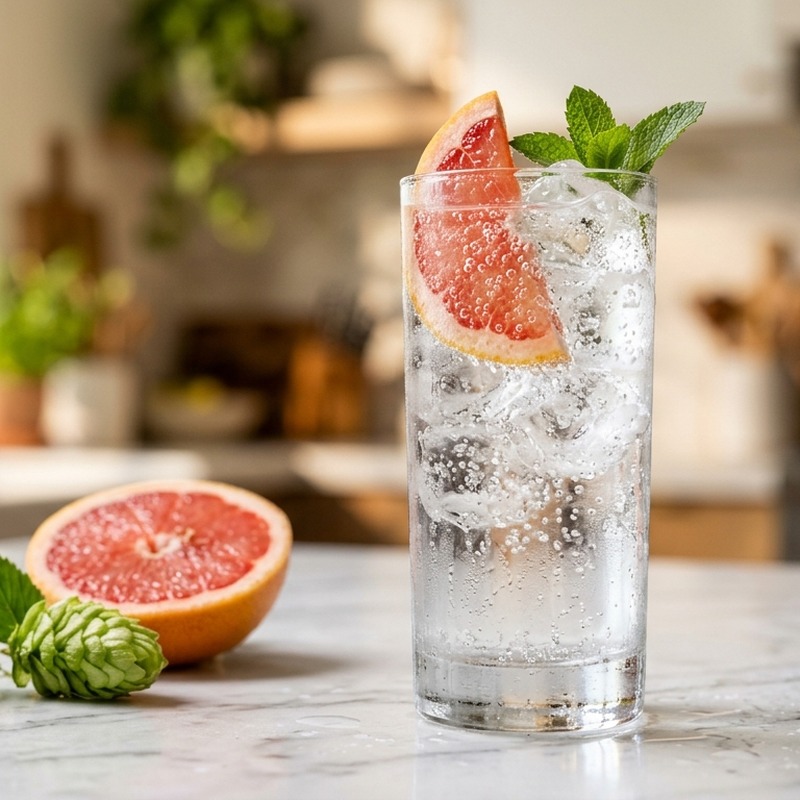
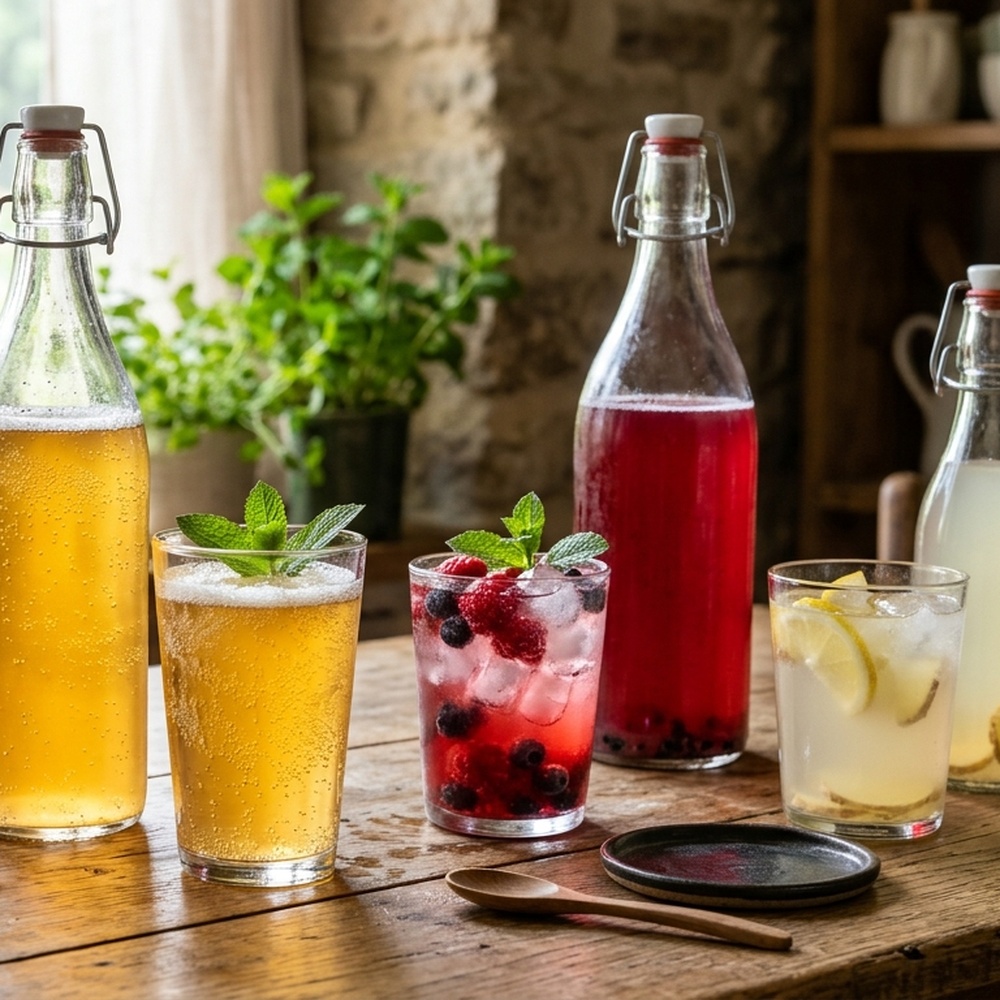
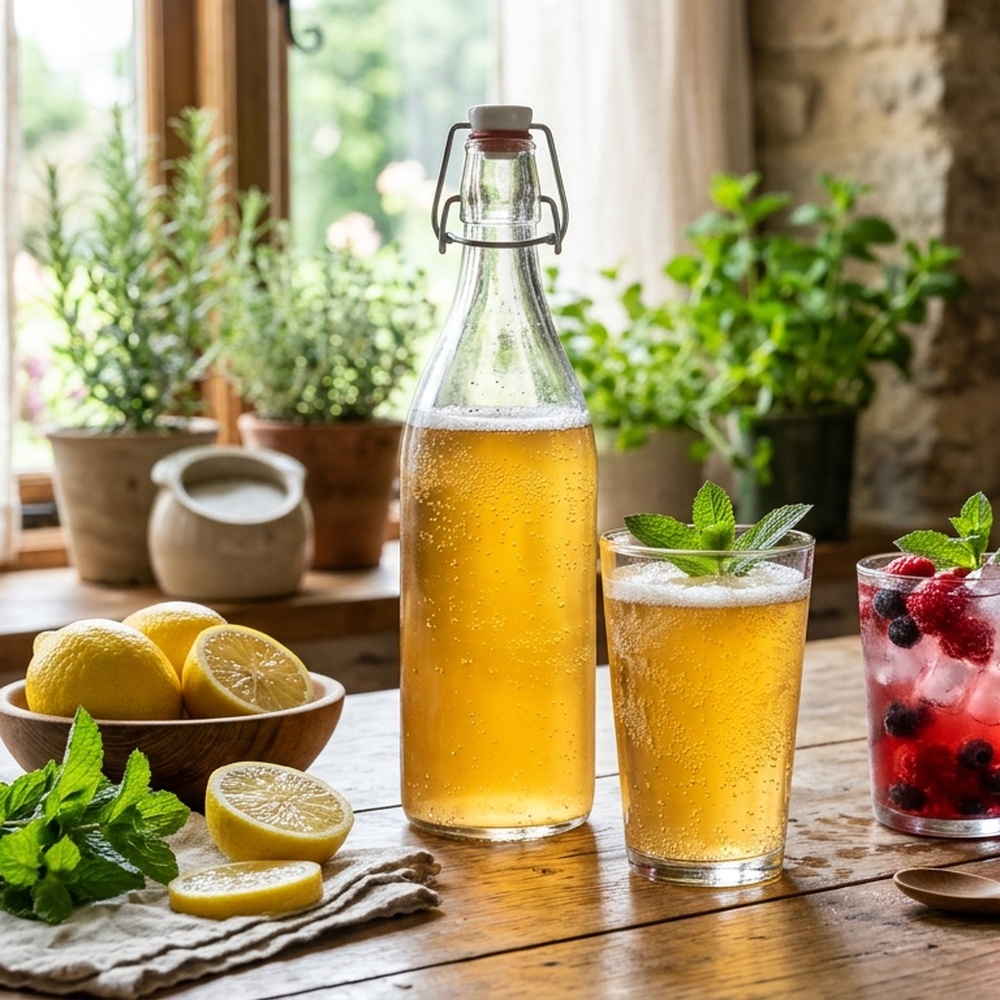
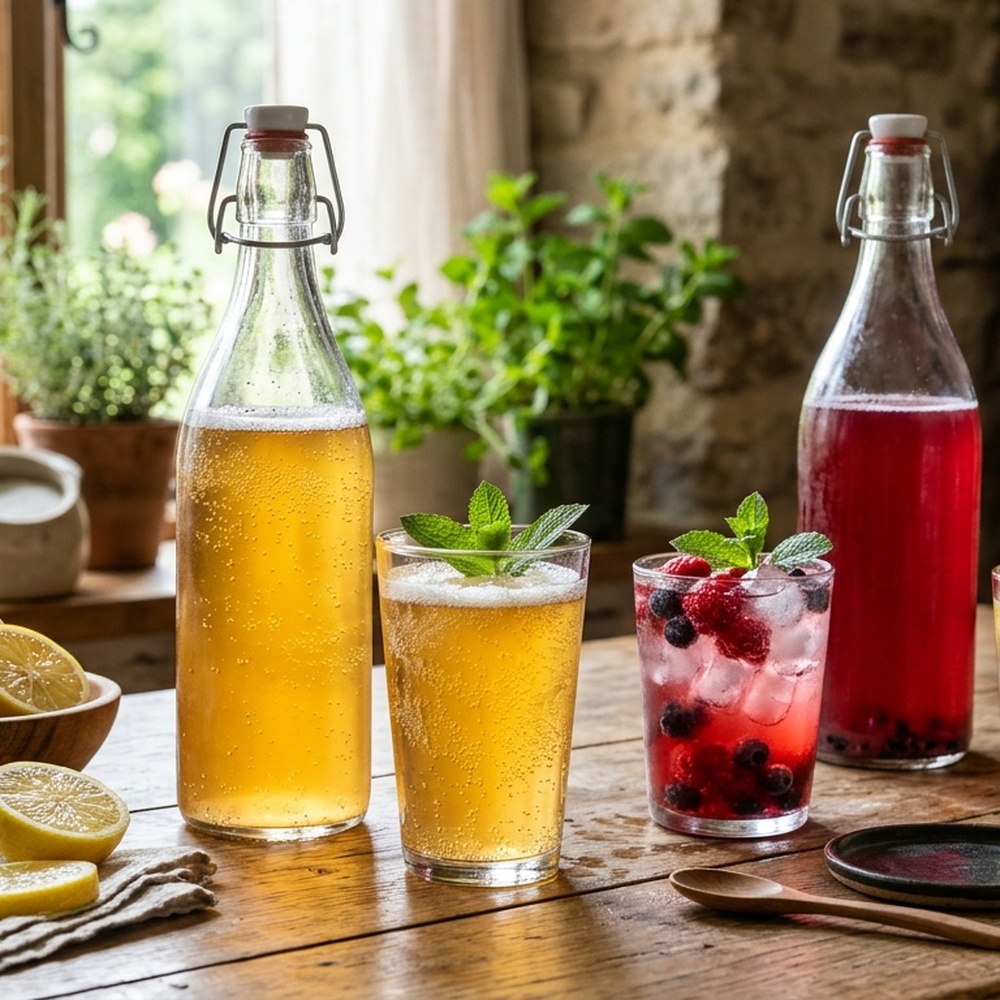
- Classic Elderflower Pressé: Mix 1 part cordial with 6 parts chilled sparkling water over ice with fresh mint and lemon. For mixer comparisons, explore our club soda vs tonic water guide.
- Hugo Spritz Cocktail: Combine 25 ml elderflower cordial, 100 ml Prosecco, and 50 ml sparkling soda in a wine glass filled with ice, garnished with fresh mint and lime.
- Zero-Proof Hugo Mocktail: Combine 25 ml cordial with 150 ml premium alcohol-free sparkling white wine or tonic water, fresh mint leaves, and a lime wheel.
- Cakes and Sponge Drizzle: Whisk 2 tablespoons cordial with 1 tablespoon fresh lemon juice and spoon over warm sponge cakes, lemon drizzle loaves, or berry tarts.
- Summer Fruit & Breakfasts: Drizzle over fresh strawberries, blackberries, Greek yoghurt, chia pudding, or overnight oats.
- Floral Salad Vinaigrette: Whisk 1 teaspoon cordial with 2 tablespoons extra virgin olive oil, 1 tablespoon white wine vinegar, and a pinch of salt for green salads and soft goat's cheese.
For other artisanal mixers, explore our guides to traditional cordial drinks, effervescent sparkling tea, and brewed traditional ginger beer.
How to Buy Commercial Elderflower Cordial
When purchasing commercial bottled cordials (such as Belvoir Farm, Bottlegreen, or supermarket private labels), check these key factors:
• Infusion vs. Flavouring: Premium brands use real steeped fresh elderflowers, while lower-cost alternatives may rely on artificial extracts or flavourings.
• Recommended Dilution Ratio: A 1:10 concentrate provides twice the servings of a 1:5 product. Compare sugar per 100 ml of diluted beverage rather than per 100 ml of concentrate.
• Commercial Shelf Life: Commercially pasteurized and sealed bottles have a long unopened shelf life, but should still be refrigerated after opening according to package instructions.
Frequently Asked Questions
What is elderflower cordial?
Elderflower cordial is a sweet botanical concentrate prepared by infusing the fresh flowers of European elder (Sambucus nigra) in warm sugar syrup with lemons and food-grade citric acid. It is diluted with still or sparkling water before drinking.
Is elderflower cordial alcoholic?
Fresh homemade elderflower cordial has no added alcohol and is completely zero-proof (0.0% ABV). However, if stored improperly at warm temperatures, wild yeasts naturally present on flowers can initiate spontaneous fermentation. Discard any homemade batch that fizzes unexpectedly or smells fermented.
Is elderflower cordial the same as elderflower syrup?
The terms are often used interchangeably in culinary contexts. However, products labelled 'elderflower syrup' may have a higher sugar concentration or thicker consistency intended for coffee, cocktails, or baking drops, whereas 'cordial' is formulated primarily for diluting into table refreshments.
Is elderflower cordial the same as St-Germain?
No. St-Germain is an artisanal French elderflower liqueur containing 20% alcohol by volume (ABV). Elderflower cordial is a non-alcoholic sweet concentrate made with sugar, water, lemons, and blossoms.
Are elderflower stems poisonous?
Yes. While elderflowers are safe for culinary use, the green leaves, woody bark, roots, and thick stems of Sambucus nigra contain cyanogenic glycosides and should not be consumed. Always trim away thick stems before infusing and strain thoroughly.
How can I tell European elder from toxic poison hemlock?
European elder is a woody tree or shrub with grey-brown furrowed bark, opposite compound leaves with 5 to 7 oval toothed leaflets, and flat flower clusters with a sweet fragrance. Poison Hemlock (Conium maculatum) is a soft-stemmed biennial herb with hollow purple-spotted stems, lacy fern-like leaves, and an unpleasant musty odor. Never harvest unverified wild plants.
Should I wash elderflowers before making cordial?
Carefully shake and inspect clean blossoms to dislodge insects and dust. A brief, gentle cold rinse can remove surface dirt if necessary, though excessive washing washes away the aromatic floral pollen that gives cordial its distinct perfume.
What dilution ratio should I use for elderflower cordial?
Start with a 1:6 ratio (25 ml cordial to 150 ml cold still or sparkling water). Adjust to 1:7 or 1:8 for a lighter, less sweet refreshment, and serve over generous ice with a lemon slice.
Can I make elderflower cordial without citric acid?
Yes. You can substitute extra freshly squeezed lemon juice (approx. 2 extra lemons). However, lemon acidity is variable, so batches without citric acid should be kept strictly refrigerated and consumed within 5 to 7 days, or frozen in portions.
How long does homemade elderflower cordial last?
Keep homemade elderflower cordial refrigerated at 5°C or colder and use within 1 week (7 days). For extended storage, freeze in freezer-safe containers for up to 6 months.
Can children drink elderflower cordial?
Yes. Properly prepared, non-alcoholic elderflower cordial is a traditional family drink. Ensure it is well diluted with water and note its natural sugar content for portion control.
Is elderflower cordial vegan and gluten-free?
Standard homemade elderflower cordial contains only flowers, sugar, water, lemons, and citric acid, making it naturally vegan and gluten-free. When purchasing commercial bottled brands, verify labels for manufacturing certifications.
Sources & Reference Guidelines
- Royal Horticultural Society (RHS): Sambucus Growing, Identification and Culinary Uses Guide
- University of Maryland Extension: Poison Hemlock (Conium maculatum) Identification and Toxicity
- St-Germain Official Product Documentation: Elderflower Liqueur 20% ABV Specifications
- UK Food Standards Agency (FSA): Food-Grade Citric Acid Specifications and Safety Guidelines
- Sussex Wildlife Trust: Foraging Elderflowers and Traditional Cordial Making
Medical and Foraging Note: This guide provides culinary and botanical information. It cannot confirm the identity of wild plants from written descriptions or photographs. Never ingest wild plants without 100% positive verification from experienced botanical authorities.


Comments and reviews (0)