


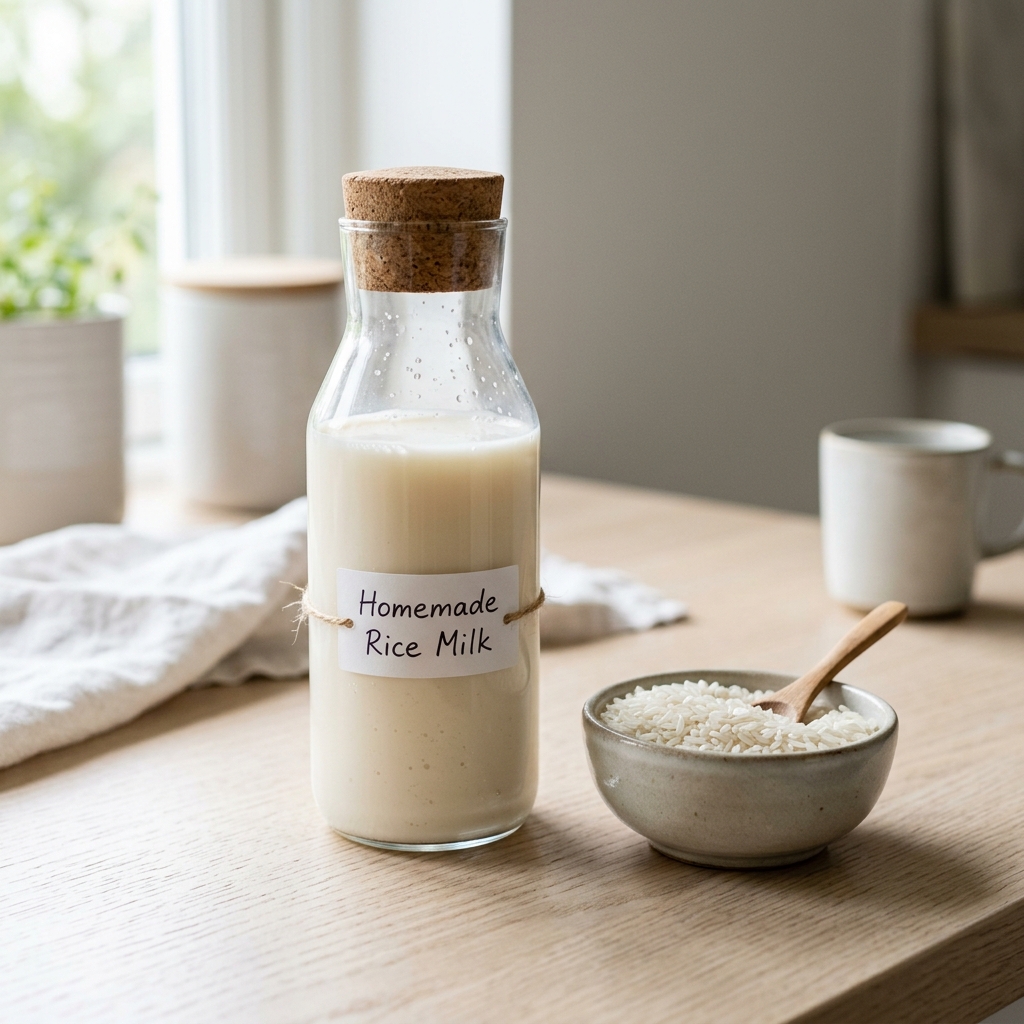
Finding a plant-based milk that does not trigger food allergies can be challenging. Many popular dairy alternatives contain tree nuts, soy, or gluten, leaving people with multiple food sensitivities searching for a safe beverage that will not cause a reaction.
What Is Rice Milk and What Does It Taste Like?
Rice milk is a plant-based dairy alternative made by blending milled brown or white rice with water and straining out the fibrous solids. It is the most hypoallergenic milk alternative available, making it completely free from dairy, lactose, soy, gluten, and tree nuts. Rice milk tastes naturally sweet because enzymes break down rice starches into simple sugars during processing. However, it contains very little protein (under 1 gram per cup), has a high glycemic index, and is not recommended for children under 5 years old due to natural arsenic accumulation in rice crops.
Clinical Pediatric Warning: The American Academy of Pediatrics (AAP) advises parents against using rice milk as a primary beverage for infants, toddlers, and young children under age 5 due to arsenic exposure risks and developmental protein deficiencies.
Severe Nutritional Deficit for Babies: Rice milk must never replace infant formula or human breast milk. Doing so can cause severe protein-calorie malnutrition (kwashiorkor) and serious electrolyte imbalances. For healthy adults, drinking an occasional glass of fortified rice milk is safe as part of a varied, balanced diet.
This guide explains how rice milk is made, its nutritional breakdown, pediatric safety boundaries, culinary behavior, and how to blend a fresh batch at home.
What Is Rice Milk? Quick Answer and Origins
Rice milk is a grain-based beverage that provides a light, refreshing alternative to animal dairy. It is especially popular among people who cannot consume dairy, nuts, or soy, offering an allergen-free alternative alongside our nut milk complete nutrition guide.
Commercial rice milk begins with whole grain brown or white rice (Oryza sativa). The production process follows three clear stages:
- 1. Cooking and Wet Milling: Whole rice grains are cleaned, cooked in water, and milled into a fine liquid slurry.
- 2. Enzymatic Hydrolysis: Producers introduce natural food enzymes, specifically alpha-amylase and glucoamylase. These enzymes break complex starches into sweet liquid sugars.
- 3. Filtration and Fortification: Industrial filters remove coarse fibrous sediment. Brewers then blend in a small amount of plant oil to stabilize the liquid and add essential vitamins before aseptic packaging.
Why Unsweetened Rice Milk Tastes Naturally Sweet
Many people take their first sip of unsweetened rice milk and assume the manufacturer poured in spoonfuls of sugar.
Rice milk tastes sweet naturally because of enzymatic hydrolysis. The added amylase enzymes cleave alpha-1,4-glycosidic bonds in cooked rice starches, converting complex amylose and amylopectin directly into maltose and glucose. A standard 8-ounce cup of plain, unsweetened commercial rice milk contains 10 to 13 grams of simple sugars without adding a single gram of cane sugar or corn syrup.
The Hypoallergenic Champion: Why People Choose Rice Milk
Rice milk holds a distinct title in the beverage world: it is the most hypoallergenic milk on Earth.
| Common Allergen | Rice Milk | Cow's Milk | Almond Milk | Soy Milk | Oat Milk |
|---|---|---|---|---|---|
| Dairy / Lactose | Free | CONTAINS | Free | Free | Free |
| Tree Nuts | Free | Free | CONTAINS | Free | Free |
| Soy | Free | Free | Free | CONTAINS | Free |
| Gluten / Wheat | Free | Free | Free | Free | Can cross-contaminate |
Free from the Top 9 Food Allergens
Many people live with severe, overlapping food allergies. An individual might be allergic to cow's milk protein (casein), allergic to soy, and allergic to almonds and cashews. For these individuals, rice milk is often the safest, most reliable choice on the grocery shelf. It naturally avoids the top major food allergens identified by the FDA, including dairy, eggs, peanuts, tree nuts, wheat, gluten, soy, fish, shellfish, and sesame. For those wanting plant seed nutrition without tree nuts, flax milk benefits and omega-3s offer another allergen-friendly avenue.
Gentle on Sensitive Digestive Tracts
Because rice milk contains zero lactose and very little protein or fat, it empties quickly from the stomach. People recovering from acute stomach flu, gastritis, or digestive flare-ups often tolerate rice milk better than heavier, high-protein beverages.
Nutritional Profile: Calories, Carbs, and the Protein Shortfall
A standard 8-ounce (1 cup) serving of fortified, unsweetened commercial rice milk contains:
| Nutrient | Amount per 8 oz Cup | Percent Daily Value (% DV) |
|---|---|---|
| Calories | 110 to 130 kcal | 6% |
| Total Carbohydrate | 22 to 26 grams | 9% (High for plant milk) |
| Sugars (Natural) | 10 to 13 grams | Starch-derived simple sugars |
| Protein | 0.5 to 1.0 gram | |
| Total Fat | 2 to 2.5 grams | 3% (Zero Saturated Fat) |
| Calcium (Fortified) | 300 to 350 mg | 25% to 30% |
| Vitamin D (Fortified) | 2.5 to 3.0 mcg | 15% |
| Vitamin B12 (Fortified) | 1.5 mcg | 60% |
Carbohydrate Density and High Glycemic Index
Rice milk is the highest-carbohydrate milk alternative available, packing roughly 24 grams of carbohydrates per cup. This is double the carbohydrates found in unsweetened almond milk. Rice milk carries a high glycemic index (GI) of 86 to 90. Because it has virtually no fiber, protein, or fat to slow digestion, the simple maltose sugars enter your bloodstream rapidly. People managing prediabetes or type 2 diabetes should consume rice milk with caution, as it can trigger postprandial glucose spikes. Those seeking rich lipid density without high glycemic impact should consult our macadamia nut milk guide.
The Protein Deficit: Less Than 1 Gram Per Cup
The main nutritional weakness of rice milk is its low protein content. A cup of cow's milk or fortified soy milk provides 8 grams of complete protein. Rice milk provides less than 1 gram. If you rely on rice milk as your primary daily dairy alternative, you must eat adequate dietary protein from other whole food sources, such as beans, lentils, eggs, poultry, or seeds.
Commercial Fortification
Unfortified, homemade rice milk contains very few micronutrients. Fortunately, commercial brands like Rice Dream and Pacific Foods fortify their milks with calcium carbonate or tricalcium phosphate, vitamin D2, and vitamin B12, matching the micronutrient density of cow's milk.
Rice Milk vs. Oat Milk vs. Almond Milk vs. Soy Milk
Choosing the right plant milk depends on your individual health needs, allergies, and taste preferences:
| Feature / Metric | Rice Milk | Oat Milk | Almond Milk | Soy Milk | Whole Dairy Milk |
|---|---|---|---|---|---|
| Calories (Per Cup) | 120 kcal | 120 kcal | 40 kcal | 100 kcal | 150 kcal |
| Carbohydrates | 24 grams | 16 grams | 1.5 grams | 4 grams | 12 grams |
| Protein Content | 0.8 grams | 3 grams | 1.2 grams | 7 to 8 grams | 8 grams |
| Fat Content | 2 grams | 5 grams | 3 grams | 4 grams | 8 grams |
| Glycemic Index (GI) | High (86-90) | Moderate (60-69) | Low ( | Low (30-34) | Low (38-42) |
| Allergen Risk | Lowest | Low to Moderate | High (Tree Nuts) | High (Soy) | High (Dairy/Lactose) |
| Mouthfeel Texture | Thin, watery | Creamy, velvety | Light, crisp | Moderate body | Rich, creamy |
The Arsenic Concern: Why Pediatricians Advise Caution
The most serious health discussion surrounding rice milk involves heavy metals, specifically inorganic arsenic.
How Rice Absorbs Inorganic Arsenic
Arsenic is a naturally occurring mineral found in soil, groundwater, and agricultural fertilizers. Because rice grows under flooded, submerged conditions, the soil becomes anaerobic (oxygen-depleted). In this low-oxygen environment, inorganic arsenic dissolves into water much more readily. The rice plant absorbs dissolved arsenite through the same internal biological channels it uses to take up silicon (nodulin 26-like intrinsic proteins). The plant then concentrates this inorganic arsenic inside the outer grain husk.
The AAP and FDA Guidelines for Children Under Age 5
The American Academy of Pediatrics (AAP) and the US Food and Drug Administration (FDA) urge parents to feed infants and young children a wide variety of grains (such as oats, barley, and quinoa) rather than relying heavily on rice-based drinks and cereals. Because a toddler's body mass is small, regular consumption of rice milk can result in disproportionately high arsenic exposure per kilogram of body weight.
How Rice Milk Performs in Coffee, Cooking, and Baking
Understanding rice milk's physical behavior in the kitchen prevents culinary disappointment:
| Cooking Application | Performance Result | Kitchen Guidance |
|---|---|---|
| Coffee Lattes | Fails (curdles and separates) | Thin liquid with under 1% fat cannot foam or hold microfoam in hot espresso. |
| Cold Breakfast Cereals | Shines (light and crisp) | Subtle sweetness pairs cleanly with oatmeal, granola, and bran flakes. |
| Fruit Smoothies | Shines (neutral liquid base) | Blends easily with frozen fruit without heavy dairy thickness. |
| Pancakes and Muffins | Shines (1:1 dairy substitute) | Natural sugars help baked goods achieve a golden, caramelized crust. |
| Cream Sauces and Gravies | Fails (watery consistency) | Lacks the viscosity and fats needed to thicken savory soups and sauces. |
Why It Fails in Coffee Lattes (The Emulsion Problem)
If you pour cold rice milk into a hot, acidic cup of dark roast coffee, the milk will likely separate into watery layers or form small curd-like flakes. Creating silky microfoam for a latte requires proteins to capture air bubbles and fats to stabilize bubble walls. Because rice milk contains virtually zero protein and very little fat, it cannot foam or steam. It simply dilutes hot coffee into a thin, watery liquid.
How to Make Fresh Rice Milk at Home (Simple 4-Step Recipe)
Making homemade rice milk takes less than 10 minutes once your rice is cooked. Pre-chilling your cooked rice is essential to prevent starch retrogradation and gummy textures during high-speed blending.
Simple Homemade Rice Milk
5 mins
2 mins
25 mins
4 Servings (1 Quart)
115 kcal / cup
Ingredients
- ✓ 1/2 cup cooked brown or white rice (chilled)
- ✓ 4 cups cold filtered water
- ✓ 1 pitted Medjool date (or 1 tablespoon pure maple syrup for sweetness)
- ✓ 1/2 teaspoon pure vanilla extract
- ✓ 1 tiny pinch of fine sea salt
Instructions
- Cook and Cool the Rice: Cook brown or jasmine rice according to package instructions. Let it cool completely in the refrigerator. Using chilled rice prevents the milk from turning gummy.
- Combine in Blender: Add cooked rice, cold filtered water, pitted date, vanilla extract, and pinch of salt to your high-speed blender container.
- Blend on High: Blend on high speed for exactly 60 to 90 seconds until the mixture is smooth and completely white. Avoid over-blending, as prolonged friction heat can break down starches into a slimy gel.
- Strain Through Nut-Milk Bag: Pour liquid through a fine-mesh nut-milk bag into a clean glass pitcher. Gently squeeze the bag to extract all liquid, leaving the gritty rice pulp behind.
- Chill and Serve: Store in an airtight glass jar in your refrigerator. Shake gently before pouring, as natural separation will occur. Keeps well for 4 to 5 days.
Frequently Asked Questions About Rice Milk
Q. What is rice milk actually made of?
Rice milk is made by blending cooked brown or white rice with water and straining out the solids. Natural enzymes break down the rice starches into simple sugars, giving it a light, naturally sweet flavor.
Q. Why is rice milk sweet if it has no added sugar?
Rice milk undergoes enzymatic hydrolysis during processing. Natural amylase enzymes break complex rice starches into simple sugars like glucose and maltose, providing a sweet taste without added cane sugar.
Q. Why is rice milk not recommended for toddlers and babies?
Rice crops absorb inorganic arsenic from soil and water. The American Academy of Pediatrics advises against rice milk for children under age 5 due to arsenic exposure risks and because it lacks the protein and fats essential for child growth.
Q. Does rice milk contain gluten?
Pure rice milk made from rice and water is naturally 100 percent gluten-free. It is also free from dairy, lactose, soy, peanuts, and tree nuts, making it the most hypoallergenic plant milk available.
Q. Can you use rice milk in coffee?
Rice milk works as a splash in iced coffee, but it performs poorly in hot espresso lattes. Because it has very little protein and fat, it curdles and separates easily in hot, acidic coffee and cannot form microfoam.
Q. Is rice milk safe for people with diabetes?
Rice milk has a very high glycemic index (86 to 90) and contains over 20 grams of fast-digesting carbohydrates per cup. Drinking it on an empty stomach can cause significant blood sugar spikes. Diabetics should choose low-carbohydrate alternatives like unsweetened almond milk or unsweetened soy milk.
Q. Can you boil rice milk?
Yes, you can heat rice milk for cooking or baking. However, boiling it vigorously will cause the liquid to reduce and thicken slightly due to residual rice starches. Stir frequently over medium-low heat to avoid scorching the bottom of the pot.
Q. Does rice milk have cholesterol?
No. Because rice milk comes entirely from a plant grain (Oryza sativa), it contains zero dietary cholesterol and virtually zero saturated fat.
Final Verdict: Is Rice Milk Right for You?
Rice milk is a helpful beverage for individuals navigating severe, complex food allergies. If your body cannot tolerate dairy, soy, almonds, oats, or gluten, rice milk provides an allergen-safe, pleasantly sweet liquid for morning cereal, baking, and smoothies.
However, it is not a complete nutritional replacement for dairy milk. Because it lacks dietary protein and carries a high glycemic index, adults should pair it with protein-rich foods, and parents should follow pediatric guidance by keeping it off the menu for children under age 5. For commercial juice bars and clean-label beverage formulation, consult an established wholesale exotic drinks supplier for certified supply chains.
Editorial Fact-Checking and Evidence Standards
- Arsenic Phytoremediation & Physiology: Inorganic arsenic accumulation mechanisms verified via silicon transporter (nodulin 26-like intrinsic protein) studies.
- Pediatric Guidance: American Academy of Pediatrics Committee on Nutrition statements on plant milk protein malnutrition and arsenic exposure thresholds confirmed.
- Glycemic Dynamics: Carbohydrate hydrolysis and GI ratings cross-referenced with international glycemic index clinical tables.
Sources and References
- U.S. Food and Drug Administration (FDA) - Guidance on Inorganic Arsenic in Rice Cereals and Plant Beverages
- American Academy of Pediatrics (AAP) - Healthy Beverage Consumption in Early Childhood Consensus Statements
- National Center for Biotechnology Information (NCBI / PubMed) - Arsenic in Rice and Rice-Based Beverage Products: Health Risks and Dietary Exposures
- U.S. Department of Agriculture (USDA) FoodData Central - Rice Milk, Unsweetened, Fortified (FDC ID: 1097552)










Comments and reviews (0)