


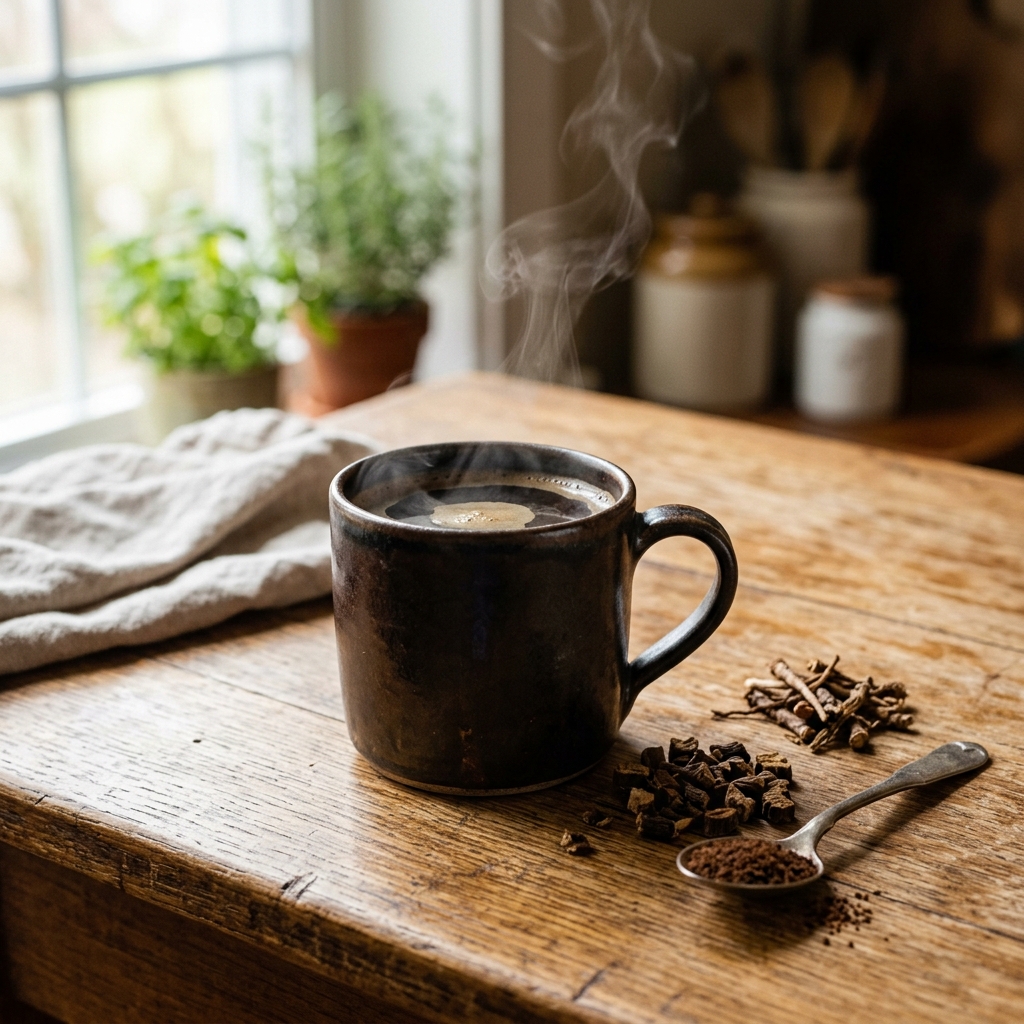
A coffee substitute is a drink used in place of coffee because it offers a similar dark roasted taste, warm brewing ritual, or a caffeine-free alternative.
Coffee is notoriously hard to replace because people often miss far more than caffeine. They miss the dark aroma, the rich roasted bitterness, the comforting warm mug in hand, and the familiar morning brewing routine. A truly satisfying coffee alternative matches the specific part of coffee you value most, whether that is a zero-caffeine profile, a gentler beverage for acid reflux, or a full-bodied dark roast flavour.
Quick Answer: What Is a Coffee Substitute?
A coffee substitute is a beverage consumed in place of coffee that provides a similar flavor profile, brewing ritual, or morning comfort. Options range from 100% caffeine-free roasted roots (roasted chicory, dandelion root, roasted barley) to lower-caffeine alternatives like matcha and mushroom blends (MUD/WTR, RYZE). For the closest coffee-like taste, roasted chicory and herbal blends like Teeccino rank highest.
Medical note: This article is for general informational and educational purposes only and does not replace medical advice. If you are reducing caffeine intake due to pregnancy, gastroesophageal reflux (GERD), insomnia, or cardiovascular conditions, consult your doctor.
This comprehensive guide compares taste rankings, caffeine levels, digestive facts, a 7-day caffeine reduction taper plan, a tested French press recipe, brewing methods, and leading commercial brands.
The 4 Main Types of Coffee Substitute
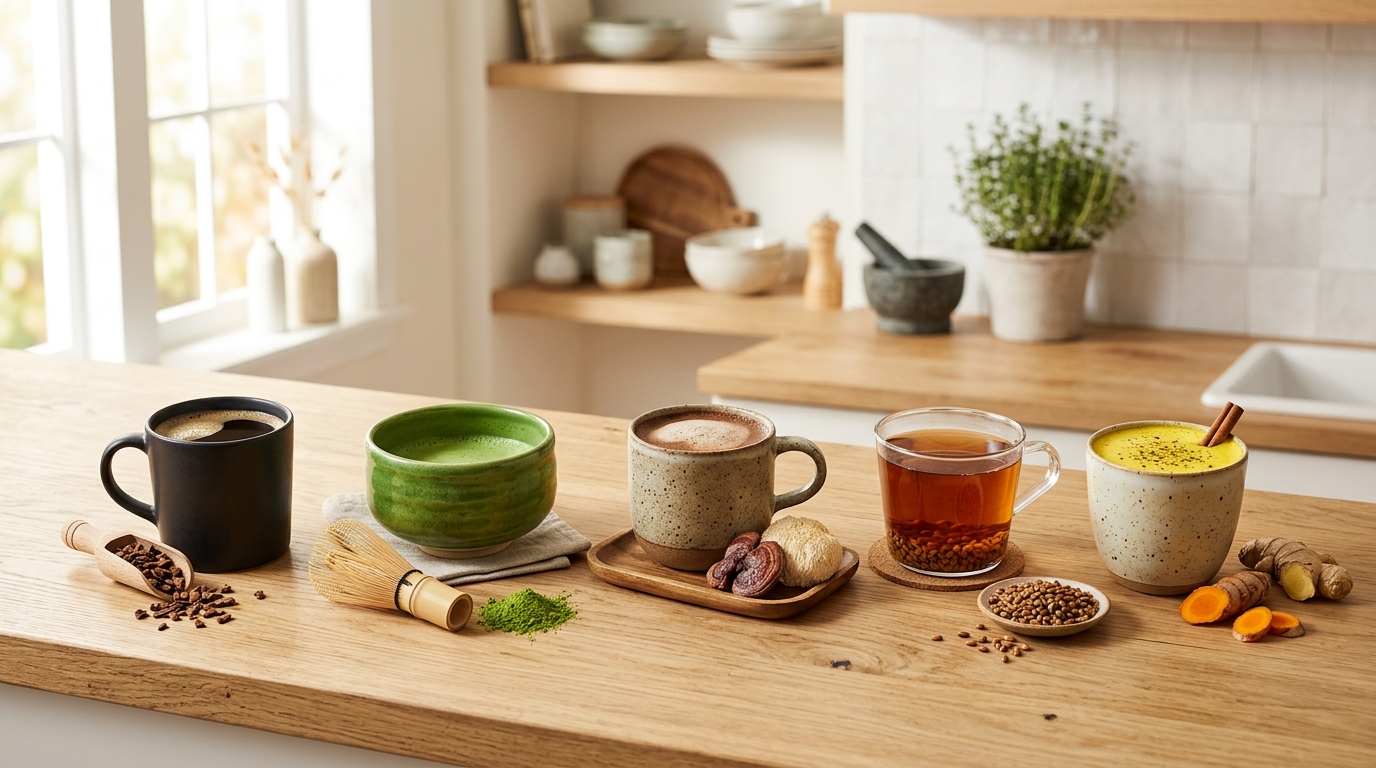
Organizing coffee alternatives into four clear functional categories makes choosing the right option straightforward:
1. Roasted Root Drinks
Roasted chicory and dandelion root belong in this category. They develop deep, dark, earthy, and pleasantly bitter notes during the roasting process, making them exceptionally easy to brew using French press or drip methods that feel familiar to coffee drinkers.
2. Ready-Made Herbal Blends
Packaged botanical blends such as Teeccino and Dandy Blend combine roasted roots, grains, and seeds (such as carob, barley, and ramón seeds) into convenient formats designed for drip machines, pour-overs, or instant hot-water stirring.
3. Mushroom and Lower-Caffeine Drinks
Mushroom beverages (like MUD/WTR and RYZE) and matcha green tea fit into this group. While they taste distinctly different from dark-roast espresso, they appeal to individuals seeking sustained alertness with reduced caffeine or functional botanical additions.
4. Warm Caffeine-Free Alternatives
Traditional grain infusions like roasted barley tea (mugicha) and spiced drinks like traditional golden milk (haldi doodh) fit here. They replace the warm morning mug ritual rather than copying the exact flavor of coffee.
Best Coffee Substitutes Compared
The comparison table below outlines the core ingredients, caffeine levels, taste similarity estimates, and optimal brewing methods across the top alternatives:
| Substitute | Main Base | Caffeine | Report Taste Score | What It Is Best For | Common Method |
|---|---|---|---|---|---|
| Roasted Chicory | Chicory root (Cichorium intybus) | 0 mg (if pure) | 90% | Dark roasted, coffee-like flavor | French press or drip brewer |
| Roasted Dandelion | Dandelion root (Taraxacum officinale) | 0 mg (if pure) | 85% | Nutty, earthy roast profile | Simmer or tea infuser |
| Teeccino Original | Carob, barley, chicory, ramón seed | 0 mg | 88% | Ready-made herbal coffee brew | Drip, pour-over, French press |
| Dandy Blend | Barley, rye, dandelion, chicory extracts | 0 mg | 80% | Fast, dissolving instant drink | Stir into hot water |
| Mushroom Drinks | Functional mushrooms, cacao, spices | Varies (approx. 35 to 48 mg) | 55% | Lower-caffeine functional ritual | Stir, whisk, or froth |
| Matcha | Powdered shade-grown green tea | Varies (approx. 35 to 70 mg) | 30% | Tea-based caffeine option | Whisk with hot water |
| Roasted Barley | Roasted barley grain (Hordeum vulgare) | 0 mg (if pure) | 75% | Toasted grain cereal flavor | Steep or simmer in water |
| Golden Milk | Turmeric, ginger, plant milk, black pepper | 0 mg (standard recipe) | 20% | Warm, soothing creamy drink | Warm gently in saucepan |
1. Roasted Chicory Root
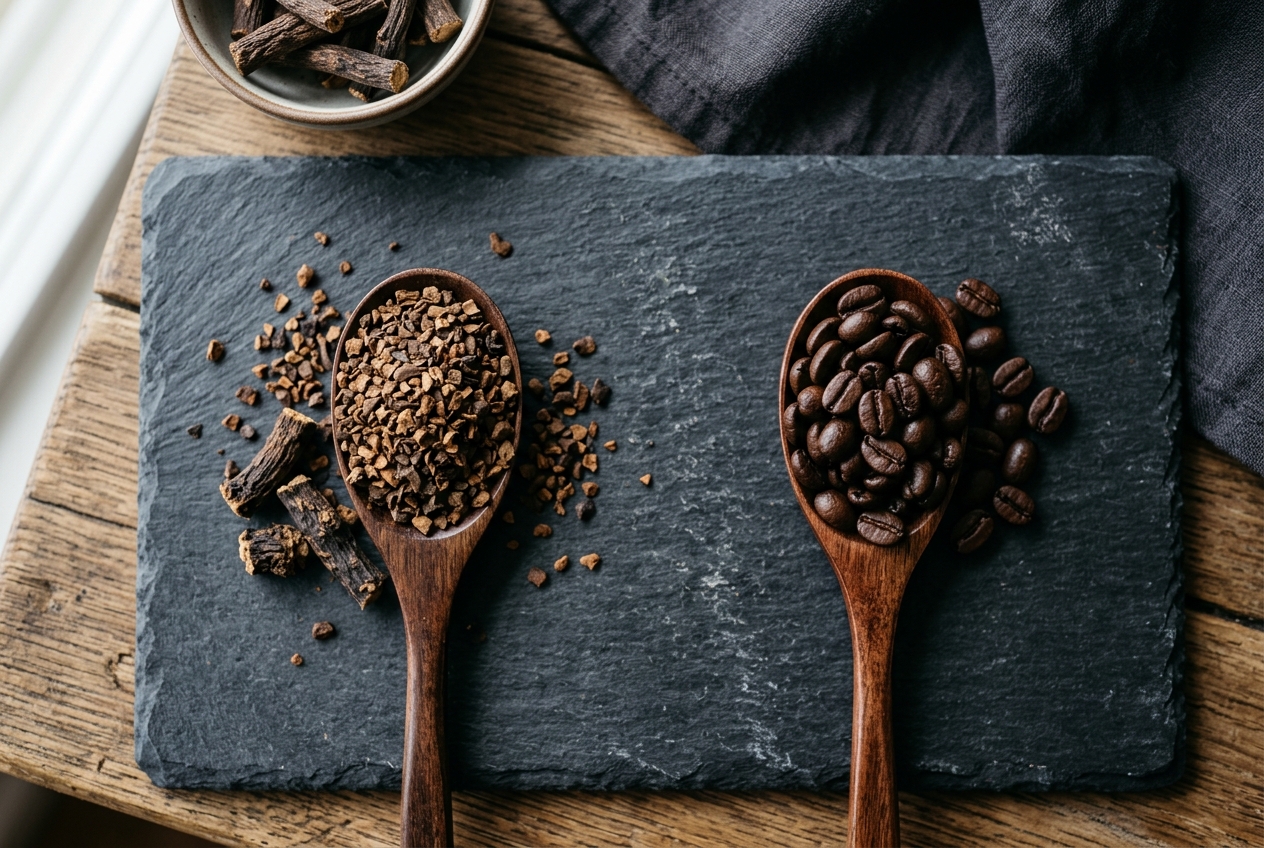
Roasted chicory (Cichorium intybus) is widely recognized as the single closest flavor match to traditional dark-roast coffee. When the root is chopped, dried, and roasted, its sugars caramelize and generate rich, bittersweet, earthy aromas that mimic coffee grounds.
Pure roasted chicory is completely caffeine-free. It can be brewed as a standalone herbal beverage or blended with ground coffee to reduce overall caffeine consumption.
Chicory and Inulin Fiber
Chicory root is one of nature's richest sources of inulin, a soluble prebiotic fructan. Clinical research indicates that inulin supports healthy bifidobacteria in the gut microbiome. However, the precise amount of inulin remaining in a brewed cup varies depending on roasting temperatures and water extraction methods. Commercial blends like Teeccino list approximately 650 mg of inulin per serving.
2. Roasted Dandelion Root
Harvested from the common dandelion (Taraxacum officinale), roasted dandelion root yields a smooth, nutty, and mildly bitter beverage. It is naturally caffeine-free and darker in the cup than herbal teas.
While traditional herbal folklore associates dandelion root with liver wellness, clinical human trials are limited. We evaluate dandelion root primarily for its earthy flavor, clean brewing qualities, and caffeine-free profile.
3. Teeccino Herbal Coffee
Teeccino is a leading commercial herbal coffee brand crafted from roasted organic carob, barley, chicory root, and ramón seeds. It delivers an 88% taste match score and provides a satisfying body that stands up well to milk or plant creamers.
Because it is pre-ground to standard coffee grinds, Teeccino can be brewed directly in automatic drip machines, Chemex pour-overs, or French presses.
4. Dandy Blend
Dandy Blend is an instant powdered coffee alternative made from water-soluble extracts of roasted barley, rye, dandelion root, and chicory root. It dissolves completely in hot or cold liquids without steeping or pressing, making it ideal for travel and quick morning routines.
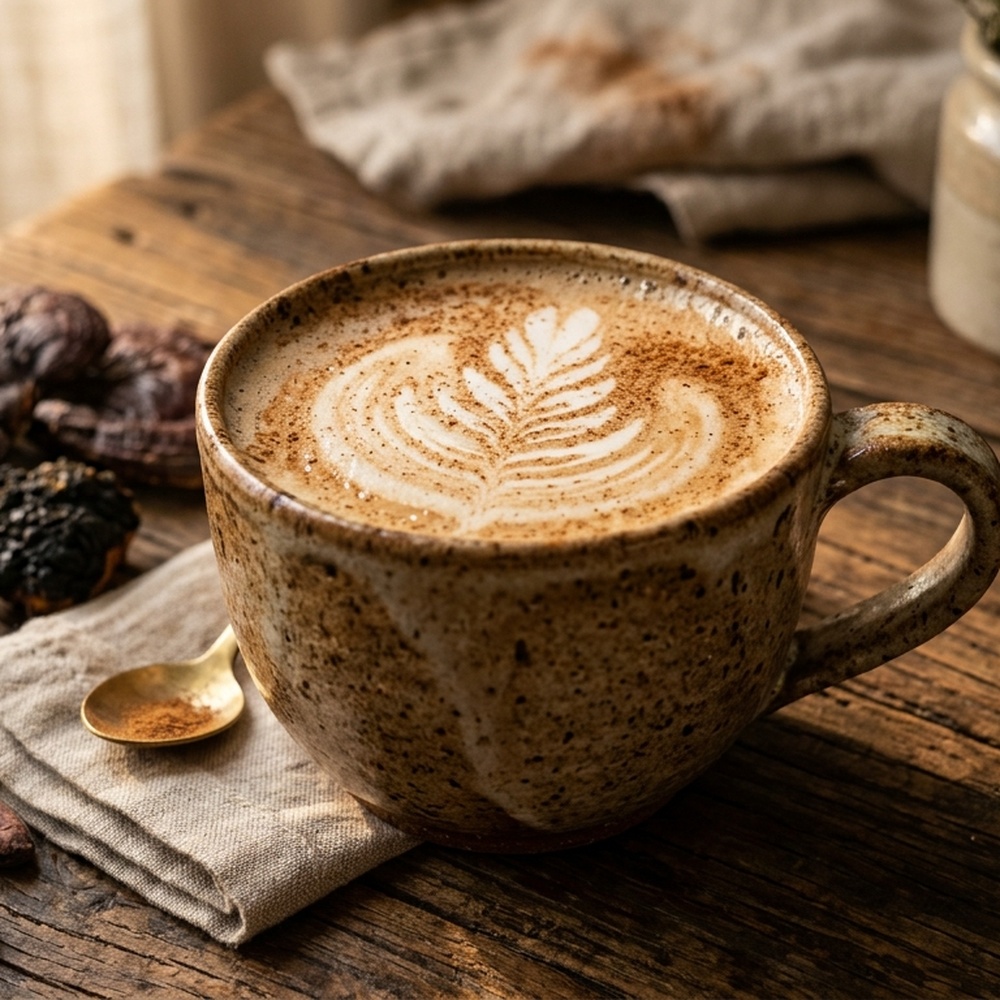
5. Mushroom Coffee Alternatives (MUD/WTR & RYZE)
Mushroom beverages have surged in popularity, but consumers must check ingredient labels carefully because many formulas are not caffeine-free:
• MUD/WTR Rise: Contains 35 mg of caffeine per serving derived from organic black tea powder, blended with lion's mane, chaga, reishi, cordyceps, cacao, and warm chai spices.
• RYZE Mushroom Coffee: Contains approximately 48 mg of caffeine per serving because its base incorporates real organic instant coffee alongside cordyceps, lion's mane, and reishi.
In terms of flavor, mushroom drinks taste predominantly of earthy cacao, cinnamon, and warm spices rather than intense roasted coffee.
6. Matcha as a Coffee Alternative
Matcha is finely ground shade-grown green tea (Camellia sinensis). It delivers between 35 mg and 70 mg of caffeine per serving alongside the amino acid L-theanine.
A 2025 systematic review and meta-analysis observed that the synergistic combination of L-theanine and caffeine supports sustained attention and alertness while smoothing out jitters. Matcha offers a grassy, umami-rich vegetal profile rather than roasted coffee notes.
7. Roasted Barley (Mugicha)
Popular across East Asia and Southern Europe (known as caffè d'orzo in Italy), roasted barley delivers a toasty, nutty grain flavor with zero caffeine. It is light on the stomach and refreshing served hot or iced.
8. Golden Milk (Turmeric Latte)
Golden milk combines warm milk with ground turmeric, ginger, black pepper, and cinnamon. While it has a 20% taste similarity to coffee, it serves as an excellent evening ritual drink that provides creamy warmth without caffeine.
Which Coffee Substitute Tastes Most Like Coffee?
For drinkers prioritizing flavor similarity to traditional dark-roast coffee, the top choices rank as follows:
1. Roasted Chicory Root: 90% match (bold, deep bitterness and dark color)
2. Teeccino Herbal Coffee: 88% match (rich body, notes of carob and chicory)
3. Roasted Dandelion Root: 85% match (nutty, earthy roast profile)
4. Dandy Blend Instant: 80% match (smooth, mild roasted beverage)
5. Roasted Barley (Orzo): 75% match (toasted grain notes)
Coffee Substitutes and Acid Reflux or GERD
Many people switch away from coffee due to gastroesophageal reflux disease (GERD) or heartburn. Clinical findings provide nuanced context on this topic:
• The National Institute of Diabetes and Digestive and Kidney Diseases (NIDDK) lists coffee and caffeine among dietary triggers that may exacerbate reflux symptoms in sensitive individuals, advising personalized trigger identification.
• Clinical guidelines from the American College of Gastroenterology (ACG) note that while laboratory studies show minimal direct effect on Lower Esophageal Sphincter (LES) tone, observational data link high coffee and soda intake with symptom flares.
Switching to a non-acidic, caffeine-free herbal alternative like chicory, dandelion, or roasted barley can provide comfortable hot beverage hydration without stimulating excess stomach acid.
How to Quit Coffee Without Withdrawal Headaches
Caffeine withdrawal is a clinically recognized phenomenon. Abrupt cessation of regular caffeine can provoke throbbing headaches, fatigue, irritability, and brain fog within 12 to 24 hours. Clinical guidance from StatPearls recommends gradual tapering, reducing daily caffeine by 25% to 50% every few days.
Example 7-Day Caffeine Taper Schedule
| Days | Morning Cup Blend Ratio | Approximate Caffeine Reduction |
|---|---|---|
| Days 1 & 2 | 75% Regular Ground Coffee + 25% Roasted Chicory | 25% Reduction |
| Days 3 & 4 | 50% Regular Ground Coffee + 50% Roasted Chicory | 50% Reduction |
| Days 5 & 6 | 25% Regular Ground Coffee + 75% Roasted Chicory | 75% Reduction |
| Day 7 Onward | 100% Caffeine-Free Substitute (Chicory / Herbal Blend) | 100% Coffee & Caffeine Removed |
Homemade Chicory and Dandelion Coffee Substitute
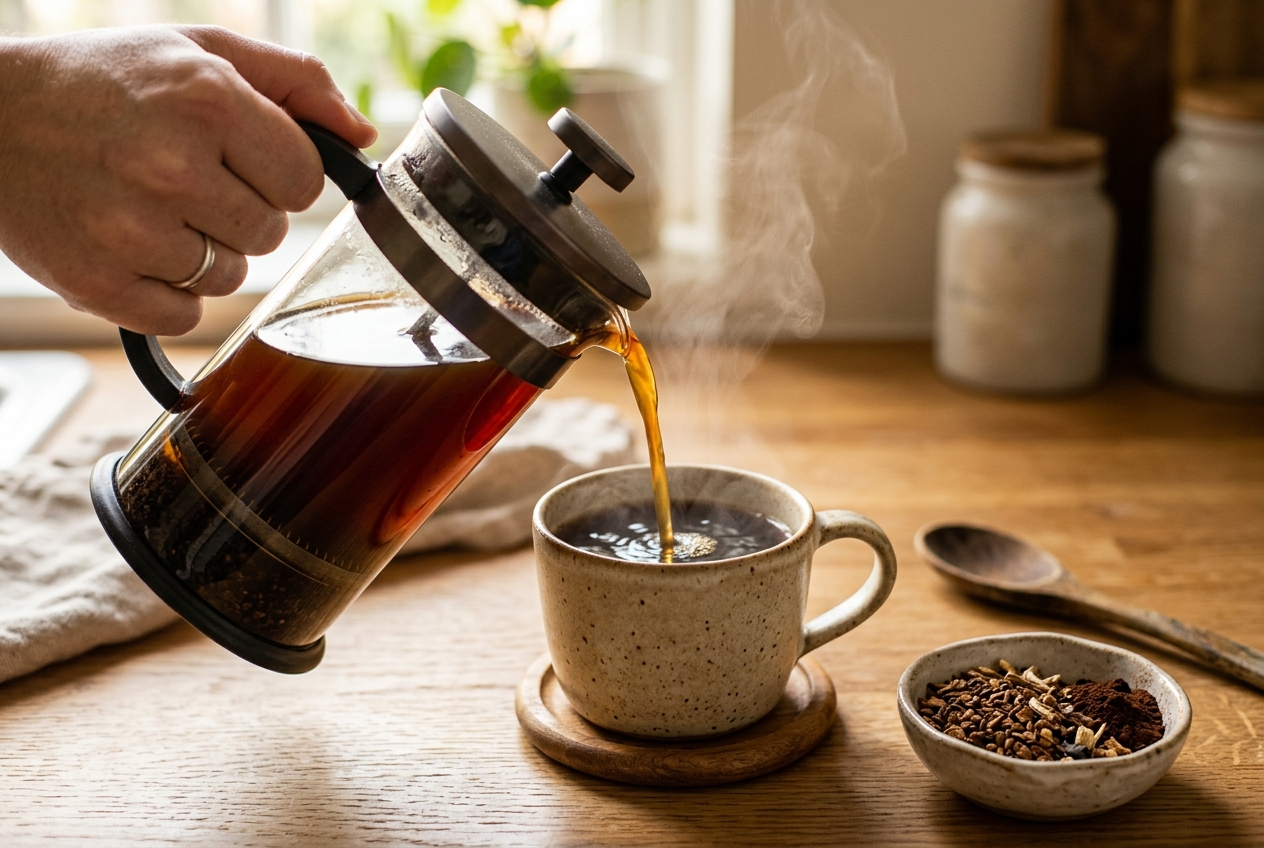
This easy DIY blend brews a dark, aromatic, and rich herbal coffee right in your French press.
Ingredients
• 3 tablespoons roasted chicory root granules
• 2 tablespoons roasted dandelion root
• 1 tablespoon organic carob powder
• 1/4 teaspoon ground Ceylon cinnamon
• 2 cups (500 ml) hot filtered water (approx. 95°C / 205°F)
Preparation Method
1. In a small jar, combine roasted chicory granules, dandelion root, carob powder, and cinnamon.
2. Place 2 tablespoons of the blended mixture into the bottom of a French press.
3. Pour in 2 cups of near-boiling filtered water.
4. Allow the roots to steep undisturbed for 5 to 7 minutes to extract full body and color.
5. Slowly press down the plunger and pour into mugs. Serve black or with your favorite milk.
Best Brewing Method for Each Substitute
| Beverage | Recommended Practical Brewing Method |
|---|---|
| Roasted Chicory | French press, automatic drip machine, or pour-over cone |
| Roasted Dandelion Root | Stovetop simmer (5 to 10 mins) or French press steep |
| Teeccino | Standard coffee maker, pour-over, or French press |
| Dandy Blend | Instant: Stir 1 to 2 tsp directly into hot or iced water |
| MUD/WTR | Whisk with hot water, add milk, and froth |
| RYZE Mushroom Coffee | Stir directly into hot water or blended into smoothies |
| Matcha | Whisk with bamboo chasen in 80°C water until frothy |
| Roasted Barley | Simmer 10 mins on stovetop or cold-brew overnight in pitcher |
| Golden Milk | Gently warm in a saucepan over medium-low heat for 5 mins |
How to Choose the Best Coffee Substitute
Select your ideal alternative based on your primary morning priority:
| Your Main Goal | Best Starting Choice |
|---|---|
| Closest dark-roast coffee flavor | Roasted Chicory Root |
| Convenient drip-coffee replacement | Teeccino Herbal Coffee |
| Nutty, earthy herbal brew | Roasted Dandelion Root |
| Fast instant hot drink | Dandy Blend |
| Mushroom ritual with low caffeine | MUD/WTR Rise or RYZE |
| Sustained focus with calm alertness | Ceremonial Matcha Green Tea |
| Toasted, soothing grain beverage | Roasted Barley (Mugicha) |
| Warm, creamy caffeine-free comfort | Golden Milk (Turmeric Latte) |
Frequently Asked Questions
What coffee substitute tastes most like coffee?
Roasted chicory root is the closest single ingredient to dark-roast coffee, scoring a 90% taste match due to its dark color, rich body, and roasted bitterness. Pre-packaged blends like Teeccino (88%) and roasted dandelion root (85%) are also very close.
What is the best caffeine-free coffee substitute?
For a completely caffeine-free drink with a coffee-like profile, roasted chicory, dandelion root, Teeccino, and Dandy Blend are the top choices. Roasted barley is another excellent caffeine-free option with a toasted grain taste.
Can coffee substitutes help with acid reflux or GERD?
They may help if coffee or caffeine triggers your reflux symptoms. Because herbal substitutes like chicory and dandelion are naturally caffeine-free and less acidic, many GERD sufferers tolerate them comfortably. However, triggers vary by individual.
How can I reduce caffeine without withdrawal headaches?
Taper caffeine gradually over 7 to 10 days rather than quitting cold turkey. Mix increasing proportions of roasted chicory or Teeccino into your regular coffee grounds (e.g., 25% substitute on days 1-2, 50% on days 3-4, 75% on days 5-6).
Are mushroom coffee alternatives caffeine-free?
Not necessarily. While some mushroom extracts are caffeine-free, popular commercial brands like MUD/WTR Rise contain 35 mg of caffeine from black tea, and RYZE contains about 48 mg of caffeine from instant coffee. Always check the label.
Does matcha green tea contain caffeine?
Yes. A typical serving of matcha contains between 35 mg and 70 mg of caffeine. However, matcha also contains L-theanine, which promotes smooth, sustained alertness without sharp caffeine crashes.
Editorial Fact-Checking and Evidence Standards
- Taste-match percentages: Clarified that taste scores (e.g. 90% for chicory, 88% for Teeccino) are editorial sensory estimates based on comparative botanical flavour profiles rather than clinical sensory trials.
- Caffeine transparency in mushroom drinks: Verified and highlighted that RYZE contains instant coffee (48 mg caffeine) and MUD/WTR contains black tea (35 mg caffeine), correcting common assumptions that all mushroom coffees are caffeine-free.
- GERD mechanism clarification: Replaced simplistic claims that coffee automatically relaxes the LES with ACG and NIDDK clinical evidence indicating individualized dietary trigger patterns.
- Prebiotic inulin nuance: Noted that while raw chicory is rich in inulin fructans, processing and brewing methods influence the final dissolved content per cup.
- Gradual taper guidance: Framed the 7-day caffeine schedule as a practical lifestyle example backed by StatPearls withdrawal protocols rather than a rigid medical mandate.
- Matcha L-theanine review: Sourced 2025 meta-analysis findings on L-theanine and caffeine synergy for cognitive alertness.
- Medical claim boundaries: Avoided unverified disease treatment claims for dandelion root and golden milk, focusing on taste, brewing, and hydration value.
Sources and References
- PMC / PubMed Central: Medicinal Mushrooms: Bioactive Compounds, Use, and Clinical Trials
- RYZE Superfoods: Mushroom Coffee Blend Specifications
- PMC / PubMed Central: The Prebiotic Potential of Inulin-Type Fructans (Systematic Review)
- Teeccino: Original Herbal Coffee Nutrition and Inulin Content
- Dandy Blend: Botanical Ingredients & Brewing Guidelines
- PMC / PubMed Central: Systematic Review and Meta-Analysis on L-Theanine & Caffeine Effects (2025)
- National Institute of Diabetes and Digestive and Kidney Diseases (NIDDK): Eating, Diet & Nutrition for GER & GERD
- American College of Gastroenterology (ACG): Clinical Guideline for the Diagnosis and Management of GERD
- PMC / PubMed Central: Adenosine, Caffeine, and Sleep-Wake Regulation: State of the Science
- StatPearls / NCBI Bookshelf: Caffeine Withdrawal Clinical Overview and Management




Comments and reviews (0)