


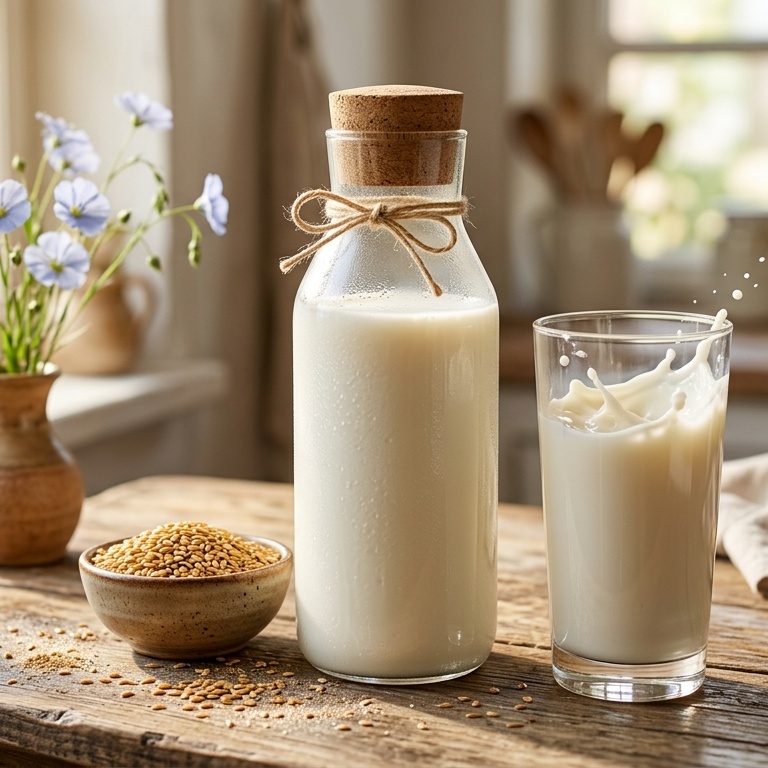
Many people searching for a nutritious plant-based milk feel stuck between frustrating tradeoffs. Almond milk contains almost no protein and triggers severe tree nut allergies, while oat milk carries heavy carbohydrates that spike blood sugar.
What Is Flax Milk?
Flax milk is an allergen-friendly plant milk made by blending cold-pressed flaxseed oil or whole golden flaxseeds with filtered water. It delivers a clean, neutral taste with a velvety texture, supplies roughly 1,200 milligrams of heart-healthy plant omega-3s (alpha-linolenic acid / ALA) per 8-ounce cup, and is naturally free from nuts, dairy, soy, and gluten. Unsweetened versions contain only 45 to 50 calories with zero grams of sugar, making it an outstanding choice for low-carb, keto, and allergy-sensitive households.
Unlike watery nut milks or carb-heavy grain drinks, flax milk provides sustained nourishment through essential polyunsaturated fatty acids. It produces zero waste, requires significantly less irrigation water than almond orchards, and pours with a creamy mouthfeel comparable to 2 percent cow milk.
Flax Milk at a Glance
| Characteristic | Specification |
|---|---|
| Botanical Source | Linum usitatissimum (Golden or Brown Flaxseed / Linseed) |
| Primary Flavor | Clean, mild, neutral, lightly nutty, velvety finish |
| Allergen Status | Free from Top 9 allergens (Nut-free, dairy-free, soy-free, gluten-free) |
| Omega-3 Content | Approx. 1,200 mg ALA per 8 oz cup (over 100% daily plant reference intake) |
| Calorie Count | 45 to 50 kcal per 8 oz cup (Unsweetened commercial varieties) |
| Carbohydrates | 1 g total / net carbs (0 g sugar in unsweetened versions) |
| Protein Density | 1 g (Plain commercial lines) up to 8 g (Pea protein fortified lines) |
| Environmental Footprint | Requires up to 90% less water than industrial almond orchards |
What Is Flax Milk and How Is It Made?
Flax milk is a dairy-free beverage derived from the seeds of the flax plant (Linum usitatissimum), an ancient crop cultivated for thousands of years across Eurasia for its culinary oil and linen fibers.
Commercial beverage makers typically create flax milk using cold-pressed, unrefined flaxseed oil. The oil is blended with pure filtered water and processed through high-pressure homogenization. This mechanical shearing breaks the oil into microscopic droplets that suspend evenly throughout the water, creating a stable, opaque white milk that will not separate in your glass.
Producers then fortify the liquid with essential minerals and vitamins: calcium carbonate, vitamin D2, and vitamin B12, matching or exceeding the micronutrient density of whole dairy milk.
The Ultimate Allergy-Friendly Milk Alternative
Managing dietary restrictions in American schools and households has become increasingly challenging. Almond and cashew milks pose severe dangers to anyone with tree nut sensitivities, while soy milk can trigger allergic responses or digestive distress.
Flax is an annual flowering herb, not a nut or legume. Authentic commercial flax milk is manufactured in dedicated nut-free facilities, making it completely free from:
- Tree nuts (almonds, cashews, walnuts, macadamias)
- Peanuts
- Cow milk and lactose
- Soy and soy lecithin
- Gluten and wheat
Flax Milk Taste and Sensory Profile
If you have never sampled flax milk, its mild neutrality often comes as a pleasant surprise. Many consumers assume it will taste grassy or intensely bitter like whole ground flaxseed meal, but the liquid emulsion is remarkably gentle:
- Front Taste: Clean, smooth, and mild with zero of the strong vegetal grassiness found in hemp milk.
- Mid Palate: A subtle, pleasant nuttiness resembling lightly toasted sunflower seeds or fresh pumpkin seeds.
- Finish: A velvety, rounded mouthfeel with zero chalky residue or watery dilution.
Unlike skim almond milk, which can feel thin and watery, flax milk carries natural body from healthy plant lipids. It coats the tongue with satisfying richness, making it an excellent 1:1 replacement for dairy milk over morning granola, oatmeal, and cereal.
Science-Backed Health Benefits of Flax Milk
| Nutritional Component | Amount per 8 oz Cup (Unsweetened) |
|---|---|
| Calories | 45 kcal |
| Total Fat | 3.5 g (Predominantly heart-healthy polyunsaturated fats) |
| Omega-3 Fatty Acids (ALA) | 1,200 mg (Over 100% Daily Value) |
| Total Carbohydrates | 1.0 g (0 g sugar) |
| Protein | 1 g (Standard) to 8 g (Protein fortified varieties) |
| Calcium | 300 mg to 350 mg (25% Daily Value) |
| Vitamin D | 2.5 mcg (15% Daily Value) |
| Vitamin B12 | 2.4 mcg (100% Daily Value when fortified) |
1. Loaded with Heart-Protective ALA Omega-3s
Flaxseed is the botanical kingdom's most concentrated source of alpha-linolenic acid (ALA), an essential omega-3 fatty acid required for cell membrane integrity. A single 8-ounce cup of flax milk provides 1,200 mg of ALA, meeting 100 percent of the National Academy of Medicine's daily recommended intake for women (1,100 mg) and the majority for men (1,600 mg).
2. Zero Sugar and Keto Compliant
While oat milk delivers 15 to 19 grams of rapidly digested carbs that elevate blood sugar, unsweetened flax milk contains just 1 gram of total carbohydrates and zero sugar. With only 45 calories per glass, it supports low-carb and ketogenic lifestyles without triggering insulin spikes.
3. The Phytoestrogen Question: Is Flax Milk Estrogenic?
Some consumers hesitate to drink flax milk because whole flaxseeds contain lignans, a class of plant phytoestrogens. However, this concern does not apply to commercial flax milk. Most commercial brands use cold-pressed flax oil, which leaves fibrous lignans behind in the seed cake. Even homemade whole-seed milks contain safe, natural amounts shown in clinical literature to offer protective antioxidant support.
Flax Milk vs. Almond Milk vs. Oat Milk: Head-to-Head Comparison
| Characteristic | Flax Milk (Unsweetened) | Almond Milk (Unsweetened) | Oat Milk (Plain) |
|---|---|---|---|
| Calories | 45 kcal | 30 to 35 kcal | 90 to 120 kcal |
| Natural Sugars | 0 g | 0 g | 7 to 12 g (Maltose from oats) |
| Total Carbohydrates | 1 g (Keto compliant) | 1 to 2 g | 16 to 20 g (High glycemic) |
| Omega-3 Fats (ALA) | 1,200 mg | Trace / 0 mg | Trace / 0 mg |
| Allergen Profile | Free from Top 9 allergens | Tree Nut (Common allergen) | Gluten risk (unless certified GF) |
| Texture & Body | Creamy, smooth, coats palate | Thin, watery | Thick, very creamy |
| Water Footprint | Minimal (Thrives on natural rainfall) | Extreme (Approx. 12 gallons per single almond) | Moderate |
Top Store-Bought Flax Milk Brands in the United States
If you prefer the convenience of store-bought cartons, two prominent American brands lead the market in shelf-stable and refrigerated aisles:
| Brand Name | Production Method | Protein per Cup | Key Advantages |
|---|---|---|---|
| Good Karma Foods Flaxmilk | Cold-pressed flax oil emulsion | 1 g (Plain) or 8 g (+Protein line) | Top 9 allergen-free, widely distributed at Target, Sprouts, and Whole Foods |
| Malibu Mylk Organic | Whole organic golden flaxseeds | 2 g to 4 g per cup | Whole food formula, zero gums or chemical emulsifiers, prebiotic fiber retention |
How to Make Smooth, Slime-Free Flax Milk at Home
Many home cooks attempt homemade flax milk once and abandon it because their batch turns into a thick, slimy gel. Understanding the food science makes creating silky, delicious flax milk effortless every single time.
| Science Rule | Why It Prevents Gelation |
|---|---|
| Rule 1: Use Ice-Cold Water | Warm water rapidly dissolves soluble mucilage polysaccharides in the seed coat. Cold water slows this extraction. |
| Rule 2: Cap Blending at 50 Seconds | Blender blades generate thermal friction. Blending beyond 60 seconds heats the water and draws out slimy hydrocolloids. |
| Rule 3: Choose Whole Golden Seeds | Golden flaxseeds have a thinner seed coat and milder flavor than brown seeds, producing a sweeter, paler milk. |
| Rule 4: Drain Gently via Gravity | Do not squeeze or wring the nut milk bag aggressively. Forceful squeezing pushes gelatinous seed paste through the cloth. |
5-Minute Slime-Free Homemade Flax Milk
Ingredients
- 1/3 cup whole raw golden flaxseeds
- 4 cups ice-cold filtered water
- 1 to 2 pitted Medjool dates (optional, for gentle natural sweetness)
- 1/2 teaspoon pure vanilla extract (optional)
- Small pinch of fine sea salt
Step-by-Step Instructions
- Add to Blender: Place whole golden flaxseeds, ice-cold water, dates, vanilla, and salt into your blender pitcher.
- Blend for Exactly 50 Seconds: Blend on high speed for 50 seconds. Do not exceed 60 seconds. The mixture will turn frosty, opaque white, and creamy.
- Drain Gently: Place a fine-mesh nut milk bag over a large glass pitcher. Pour the blended liquid in and let gravity draw the milk through. Squeeze the lower sack gently once, but avoid hard twisting.
- Chill and Enjoy: Bottle the fresh milk in an airtight glass container and refrigerate immediately. Enjoy within 3 to 4 days, giving the bottle a gentle shake before each pour.
How to Use Flax Milk in Daily Life
Flax milk behaves seamlessly across everyday culinary applications:
- Morning Coffee: Fortified flax milk blends smoothly into medium-roast coffees. To prevent thermal shock with light acidic roasts, warm the milk gently for 15 seconds before pouring.
- Post-Workout Smoothies: Its neutral flavor lets berries, peanut butter, and cacao shine without competing nutty undertones, while delivering 1,200 mg of anti-inflammatory ALA.
- Baking 1:1 Swaps: Replace dairy milk or almond milk cup-for-cup in pancakes, muffins, banana bread, and waffle batters.
Frequently Asked Questions About Flax Milk
Q. Does flax milk taste like whole flaxseeds?
No. Commercial flax milk and cold-strained homemade flax milk have a very light, clean, and neutral flavor. They do not carry the strong, earthy, or bitter taste often associated with whole ground flaxseed meal.
Q. Can toddlers and young children drink flax milk?
Yes. Fortified flax milk containing added pea protein, calcium, and vitamin D is an excellent dairy-free alternative for children over 12 months who manage cow milk or soy allergies. Always consult your pediatrician to confirm your child meets total daily dietary calorie and fat targets.
Q. Does commercial flax milk require refrigeration?
Shelf-stable aseptic cartons of commercial flax milk can stay in your pantry until opened. Once opened, you must refrigerate the carton below 40 degrees Fahrenheit and consume it within 7 to 10 days. Homemade flax milk contains no preservatives and must always be kept refrigerated.
Q. Does flax milk curdle in hot coffee?
Unsweetened commercial flax milk rarely curdles in standard medium-roast coffees. If you drink highly acidic, light-roast pour-overs or espresso, warm your flax milk for 15 seconds in the microwave before adding it to your cup to prevent thermal separation.
The Bottom Line
Summary and Practical Takeaways
Flax milk provides a compelling, sustainable alternative in the plant milk landscape, combining exceptional heart-healthy fats with total allergen safety.
- Omega-3 Powerhouse: Supplies 1,200 mg of ALA omega-3 fatty acids per cup, covering your entire daily plant-based requirement.
- Top 9 Allergen-Free: Completely safe for nut-free schools, gluten-free households, and dairy-free diets.
- Low Carb & Keto Safe: Contains only 45 calories and 1 gram of net carbs with zero sugar in unsweetened cartons.
- Easy Homemade Protocol: Blend golden seeds with ice-cold water for 50 seconds and strain gently for a fresh, slime-free milk in five minutes.
Sources and Review Standards
- U.S. Department of Agriculture (USDA) FoodData Central: Whole Flaxseeds (FDC ID 169414) and Flaxseed Oil Profiles
- American Heart Association (AHA): Polyunsaturated Fats and Dietary Alpha-Linolenic Acid (ALA) Benefits
- National Academy of Medicine: Dietary Reference Intakes for Omega-3 Fatty Acids
- National Institutes of Health (PubMed): Systematic Review of Dietary Flaxseed on Cardiovascular Risk and Lipid Biomarkers











Comments and reviews (0)