


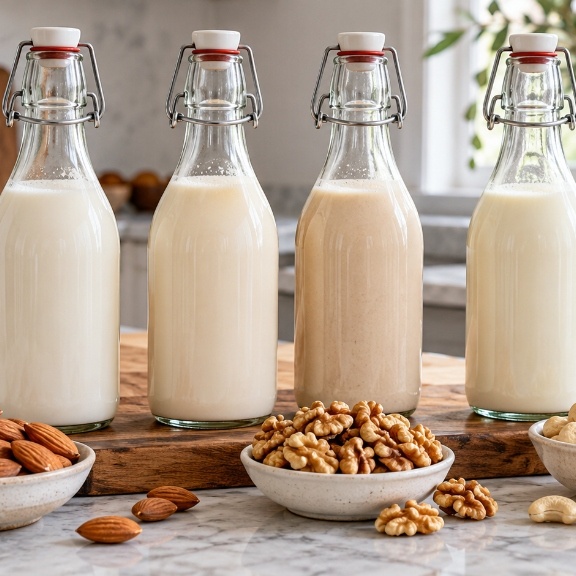
Nut milk is a popular plant-based beverage made by blending nuts with purified water. Most varieties are strained to remove coarse solids, though soft nuts like cashews and macadamias blend smoothly enough to drink without straining.
What Is Nut Milk?
Nut milk is an emulsion of finely ground tree nuts and water. Unsweetened almond milk usually has the fewest calories (30 to 45 kcal per cup), cashew and macadamia milks provide rich culinary body, and walnut milk supplies plant omega-3s (ALA). Most nut milks contain far less natural protein than cow milk (1 to 2 grams vs. 8 grams), and homemade versions lack the calcium and vitamin D added to fortified commercial cartons.
People use nut milk in coffee, breakfast cereal, smoothies, savory cooking, and dairy-free baking. Because it contains no lactose or dairy ingredients when made simply from nuts and water, understanding the Nutrition Facts panel helps you choose the right formula for your dietary goals.
What Is Nut Milk and How Does It Stay Creamy?
Blending breaks nuts into microscopic particles, releasing plant lipids and soluble proteins into the water. Straining through a fine-mesh cloth removes insoluble fibrous hulls, producing a smooth, drinkable liquid.
Despite its popular name, nut milk is not mammalian milk. The U.S. Food and Drug Administration (FDA) categorizes these beverages as "plant-based milk alternatives" made from nuts, grains, seeds, and legumes.
Nut milk is a mechanical fat-in-water emulsion and suspension. High-speed blender blades sheer nut fats into tiny droplets suspended throughout the liquid. Homemade nut milk naturally separates over time because those droplets float upward; a simple 5-second shake re-emulsifies the drink. Commercial brands frequently add plant gums (like gellan or acacia) and sunflower lecithin to prevent settling during shelf storage.
Types of Nut Milk Compared
No single nut milk fits every kitchen use. Select your carton based on flavor profile, mouthfeel, allergen considerations, and culinary application:
| Nut Milk Type | Typical Character | Best Culinary Uses | Key Nutrition Check |
|---|---|---|---|
| Almond Milk | Light, mild, delicate toasted note | Everyday cereal, light fruit smoothies, baking | Lowest calories (30 to 45 kcal); low protein (1 g) |
| Cashew Milk | Smooth, velvety, rich neutral finish | Creamy pasta sauces, cream soups, iced lattes | Blends without straining; check calorie density |
| Walnut Milk | Earthy, deep, robust, slight tannin edge | Warm oatmeal, dark cocoa, spiced baked goods | Rich in plant omega-3 alpha-linolenic acid (ALA) |
| Macadamia Milk | Rich, buttery, decadent mouthfeel | Specialty coffee steaming, keto smoothies, desserts | May contain more fat than almond milk; 0 g net carbs |
| Pistachio Milk | Distinctive, fragrant, pale jade tint | Artisan iced lattes, puddings, bubble teas | Contains 3 to 4 g natural protein per cup |
| Hazelnut & Pecan | Intensely roasted, aromatic, festive | Hot chocolate, holiday baking, dessert drinks | Higher price point; check for added sugars |
| Peanut & Seed Milks | High protein or complete allergen freedom | Fitness recovery, nut-free school lunchboxes | Peanut milk gives 6 to 8 g protein; flax milk is completely tree-nut free |
Nut Milk vs. Cow Milk: The Nutritional Breakdown
The nutrition in plant milks depends on four factors: the specific nut, the water-to-nut ratio, whether the pulp is strained, and commercial fortification. A homemade milk made with 1 cup of nuts and 4 cups of water will not match every commercial carton.
| Nutrient (per 8 oz cup) | Unsweetened Almond Milk | Commercial Cashew Milk | Whole Cow Milk (3.25% Fat) |
|---|---|---|---|
| Calories | 30 to 45 kcal | 25 to 60 kcal | About 150 kcal |
| Protein | 1 g | Under 1 to 2 g | About 8 g (Complete protein) |
| Carbohydrates | 1 to 2 g (0 g sugar) | 1 to 3 g | About 12 g (Natural lactose) |
| Calcium | 300 to 450 mg (Fortified) | 300 to 450 mg (Fortified) | About 300 mg (Naturally occurring) |
| Vitamin D | 2.5 mcg (15% DV fortified) | 2.5 mcg (15% DV fortified) | 2.5 to 3.0 mcg (Fortified in USA) |
| Lactose & Cholesterol | 0 g lactose / 0 mg cholesterol | 0 g lactose / 0 mg cholesterol | 12 g lactose / 24 to 30 mg cholesterol |
Understanding the Protein Gap
Most strained nut milks supply 1 to 2 grams of protein per serving compared to 8 grams in cow milk. If you use plant milk as a core protein pillar in your diet, supplement with protein-rich foods (tofu, legumes, eggs) or choose fortified plant lines that incorporate organic pea protein.
Store-Bought vs. Homemade Nut Milk
| Decision Factor | Store-Bought Commercial Cartons | Homemade Fresh Nut Milk |
|---|---|---|
| Convenience | Ready to pour directly from carton | Requires soaking nuts, blending, and straining cleanup |
| Micronutrients | Frequently fortified with calcium, D2/D3, and B12 | Contains whole nut nutrients, but unfortified in calcium/D |
| Shelf Life | 7 to 10 days refrigerated after opening | 3 to 4 days strictly refrigerated in glass bottle |
| Purity Control | May include gellan gum, dipotassium phosphate, or oils | 100% clean: nuts, pure water, and optional pinch of sea salt |
Classic Homemade Nut Milk Recipe (1:4 Ratio)
The golden standard for homemade nut milk is a 1:4 ratio: 1 cup of raw nuts to 4 cups of cold filtered water. This creates a versatile, everyday milk for cereal, smoothies, and cooking. For rich coffee creamer, decrease water to 2.5 or 3 cups.
Universal 1:4 Homemade Nut Milk
Ingredients
- 1 cup raw, unsalted nuts (almonds, cashews, walnuts, or pecans)
- 4 cups cold filtered water (plus extra water for soaking)
- Small pinch of fine sea salt (enhances sweetness and stabilizes flavor)
- Optional: 1 or 2 pitted Medjool dates or 1/2 tsp pure vanilla extract
Step-by-Step Instructions
- Soak the Nuts: Submerge nuts in cool water. Soak hard nuts (almonds, hazelnuts) for 8 hours in the refrigerator. Soak softer nuts (cashews, walnuts) for 2 to 4 hours. Discard soak water and rinse thoroughly.
- Blend on High: Combine drained nuts, 4 cups fresh cold water, sea salt, and optional dates in a high-speed blender. Blend continuously for 60 to 90 seconds until milky and frothy.
- Strain (Nut Milk Bag): Place a nut milk bag or fine cheesecloth over a large glass bowl. Pour the liquid through and squeeze gently to extract the milk. (If using cashews or macadamias, straining is optional).
- Bottle and Refrigerate: Pour fresh milk into a sealed glass bottle. Refrigerate immediately and enjoy within 3 to 4 days. Shake gently before serving.
Frequently Asked Questions About Nut Milk
Q. Is nut milk completely lactose-free and vegan?
Yes. Tree nuts contain zero lactose, and milk made purely from nuts and water is naturally 100 percent vegan and dairy-free. Always inspect ingredient labels on flavored cartons to confirm no dairy-derived additives are present.
Q. Why does nut milk curdle in hot coffee?
Freshly brewed espresso and coffee are acidic. The combination of heat and acidity destabilizes plant proteins, causing them to clump into visible flakes. To prevent curdling, warm your nut milk slightly before pouring, add coffee slowly into the milk, or choose a specialized barista blend formulated with acidity-buffering salts.
Q. Can you freeze homemade nut milk?
Yes. Freeze fresh nut milk in silicone ice cube trays or freezer-safe glass jars for up to 3 months. When thawed in your refrigerator, the milk will separate naturally; simply blend or whisk vigorously to restore its creamy emulsion.
Q. What can you do with leftover nut milk pulp?
Never throw away leftover nut pulp! You can stir fresh wet pulp directly into oatmeal, pancake batter, or quick breads. Alternatively, spread it onto a baking sheet and dehydrate in a low oven (200°F) to create coarse homemade nut flour for gluten-free baking.
The Bottom Line
Summary and Practical Takeaways
Nut milk offers endless variety for coffee lovers, cereal eaters, and home bakers seeking lactose-free alternatives.
- Tailor by Character: Pick almond milk for lowest calories, cashew or macadamia milk for creamy mouthfeel, and walnut milk for plant omega-3s.
- Check the Label: Commercial cartons often add calcium and vitamin D; always review protein content if replacing dairy milk.
- Simple 1:4 Home Formula: Soak raw nuts, blend with fresh water for 90 seconds, and strain for fresh milk in minutes.
- Variety of Choices: Explore different culinary profiles including macadamia nut milk, high-protein peanut milk, allergen-free flax milk, and holiday favorites like dairy-free eggnog.
Sources and Review Standards
- U.S. Food and Drug Administration (FDA): Guidance on Labeling of Plant-Based Milk Alternatives and Nutrient Differences
- U.S. Department of Agriculture (USDA) FoodData Central: Nut Milk Beverage Profiles vs. Whole Cow Milk
- American Academy of Pediatrics (AAP): Plant-Based Milks and Pediatric Dietary Recommendations
- National Institutes of Health (PubMed): Comparative Nutritional Assessment of Plant-Based Milk Alternatives










Comments and reviews (0)