


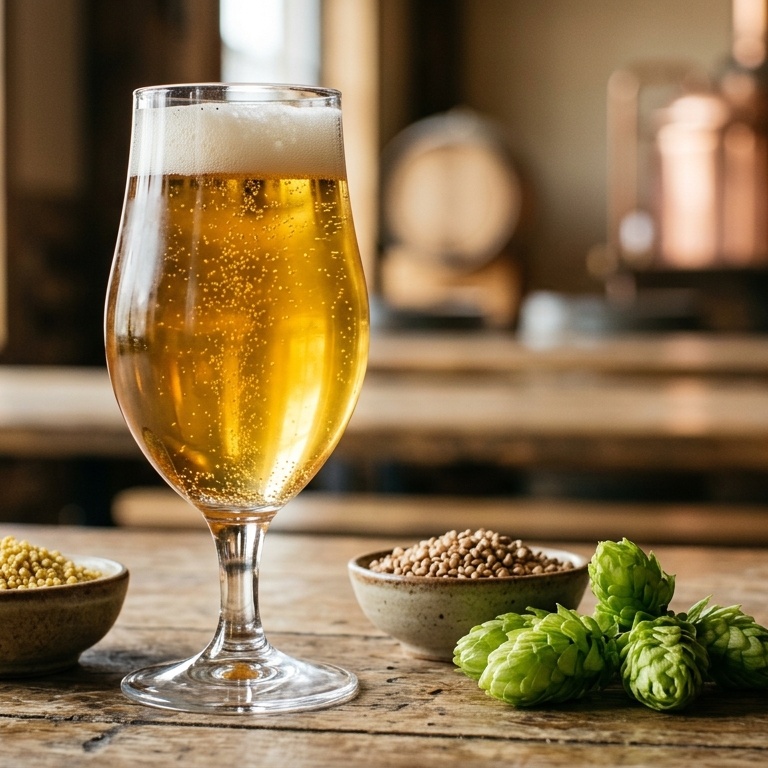
Gluten-free non-alcoholic beer does exist, but most non-alcoholic beer is brewed with barley and contains gluten. For anyone managing celiac disease or a wheat allergy, choosing a beverage crafted without barley, wheat, or rye and carrying a clear gluten-free claim is essential. Phrases like "gluten-reduced" and "crafted to remove gluten" do not mean a beer is safe for a strict gluten-free diet.
Which Non-Alcoholic Beers Are Truly Gluten-Free?
Go Brewing's Freedom range currently offers non-alcoholic craft beers brewed from naturally gluten-free grains, including millet, buckwheat, and certified gluten-free oats. Hop waters such as Sierra Nevada Hop Splash provide a grain-free, 0.0% ABV alternative. Popular brands like Athletic Brewing Upside Dawn, Grüvi Golden, Bravus, and Partake start with malted barley or wheat and are merely gluten-reduced—making them unsuitable for anyone requiring a strict celiac-safe diet.
This guide explains the labels, testing limits, grains, brands, and cross-contact questions that matter in the United States.
Gluten-Free Non-Alcoholic Beer at a Glance
| Type | Starting Ingredients | Typical Label | Celiac Decision |
|---|---|---|---|
| Beer made without gluten | Millet, buckwheat, sorghum, rice, corn, quinoa, or certified gluten-free oats | Gluten-free or crafted without gluten | Check the current label, ingredient list, certification, and cross-contact controls |
| Gluten-reduced beer | Barley or wheat treated during brewing | Gluten-reduced, treated to remove gluten, or crafted to remove gluten | Avoid when following a strict celiac diet |
| Standard non-alcoholic beer | Usually malted barley, sometimes wheat | Non-alcoholic, alcohol-free, or 0.0% | Assume it contains gluten unless the label clearly says otherwise |
| Hop water | Carbonated water and hops, sometimes flavoring or yeast | Hop water, 0.0% ABV, and often gluten-free | A useful option when the package confirms gluten-free status |
"Non-alcoholic" describes alcohol content. "Gluten-free" describes ingredients and gluten controls. One claim does not guarantee the other.
What Is Gluten-Free Non-Alcoholic Beer?
In the United States, non-alcoholic beer generally contains less than 0.5% alcohol by volume (ABV). Some products achieve 0.0% ABV, while others retain a small residual amount after fermentation.
Gluten-free beer is produced using ingredients that comply with federal gluten-free labeling regulations. Standard grain choices include millet, buckwheat, sorghum, brown rice, corn, quinoa, and certified gluten-free oats.
Beer made with barley, wheat, or rye starts with gluten. While enzymatic treatments or filtration can fracture those proteins into smaller fragments, the starting grain remains problematic for individuals with celiac disease.
Does Removing Alcohol Remove Gluten?
No. Alcohol and gluten are fundamentally different components of beer.
Brewers reduce or eliminate alcohol through controlled low-fermentation, vacuum distillation, reverse osmosis membrane filtration, or thermal evaporation. These methods remove or prevent ethanol formation. They do not remove barley or wheat proteins. That is why an ordinary barley-based lager remains full of gluten even when dealcoholized to 0.0% ABV.
Gluten-Free and Gluten-Removed Beer Are Different
This critical distinction dictates clinical safety for anyone managing celiac disease.
Beer Made from Gluten-Free Grains
A true gluten-free recipe begins entirely without barley, wheat, or rye. Brewers build body, malt complexity, and fermentable sugars using grains or seeds such as millet, buckwheat, sorghum, rice, or corn.
This is the only dependable starting point for celiac-safe non-alcoholic beer. Packaging still requires inspection to ensure oats are certified gluten-free and that the facility controls against cross-contact on shared canning lines.
Gluten-Reduced or Crafted to Remove Gluten
Gluten-reduced beer begins with standard gluten grains, typically malted barley. During fermentation, the brewer adds an enzyme (such as Brewers Clarex) that chops long prolamin protein chains into smaller peptide fragments.
Manufacturers frequently cite test results below 20 parts per million (ppm) on finished cans. However, the Celiac Disease Foundation warns that current testing methods have not validated gluten-removed beer as safe for people with celiac disease. Clinical research indicates that blood antibodies in celiac patients can react to hydrolyzed gluten fragments left behind in gluten-removed beers.
For a strict celiac diet, treat the following label descriptors as warnings to avoid:
- Gluten-reduced
- Crafted to remove gluten
- Processed to remove gluten
- Treated to remove gluten
- Brewed to reduce gluten
Why Fermented Beer Is Hard to Test for Gluten
Standard food allergen testing uses antibodies to detect intact prolamin proteins (gliadin in wheat, hordein in barley). A standard sandwich ELISA test requires two intact binding sites on the same protein molecule to generate a positive reading.
When barley is fermented and treated with clarifying enzymes, large hordein proteins break into fragmented peptides. Because these broken pieces may contain only a single antibody binding site, the sandwich test fails to detect them, dramatically underestimating gluten presence.
Under FDA regulations (21 CFR 101.91), manufacturers making a gluten-free claim on fermented and hydrolyzed foods must maintain records verifying that all ingredients met the gluten-free definition prior to fermentation. Similarly, the Alcohol and Tobacco Tax and Trade Bureau (TTB Ruling 2020-2) prohibits malt beverages brewed with gluten grains from carrying an unqualified gluten-free label, mandating strict disclaimer language on any enzyme-treated product.
Gluten Proteins and Celiac Disease
Gluten is a composite family of seed storage prolamins. Wheat contains gliadins and glutenins; barley contains hordeins; rye contains secalins. In individuals with celiac disease, ingestion of these proteins triggers an autoimmune attack that flattens small intestinal villi, impairing nutrient absorption.
Intestinal damage can occur even in the absence of immediate gastrointestinal symptoms. Therefore, lack of pain or bloating after drinking a gluten-reduced beer does not confirm that damage did not take place.
Wheat Allergy Requires a Separate Label Check
A gluten-free claim does not automatically satisfy wheat allergy requirements. FDA allergen disclosures and gluten-free definitions address different clinical risks. Always check the ingredient panel for specific wheat declarations and consult your allergist regarding shared manufacturing equipment.
Current Gluten-Free Non-Alcoholic Beer Choices
The American non-alcoholic craft beer landscape evolves rapidly. Always verify the specific can before purchasing, as recipe formulations and distributor batches can vary.
Go Brewing Freedom California Pale
Go Brewing formulates its Freedom California Pale specifically as a gluten-free and non-alcoholic craft beer with less than 0.5% ABV (testing at a maximum of 0.21% ABV). The grain bill features certified gluten-free oats paired with Sultana and Galaxy hops, delivering bright citrus aromas, light body, and approximately 45 calories per 12-ounce can.
Go Brewing Freedom Amber
Freedom Amber utilizes a grain base of millet, buckwheat, certified gluten-free oats, and gluten-free brewing yeast. The producer reports laboratory testing confirming less than 5 ppm gluten. It offers a malt-forward profile with toasted caramel notes, less than 0.5% ABV, and 68 calories per can.
Go Brewing Freedom Hazy IPA
Go Brewing's Freedom Hazy IPA delivers authentic juicy hop haze, citrus bitterness, and fuller body without relying on malted barley or wheat, offering craft IPA fans a dedicated gluten-free alternative.
Orange Bike Brewing's Dedicated Gluten-Free Program
Located in Portland, Maine, Orange Bike Brewing Company operates a dedicated 100% gluten-free facility and produces specialized gluten-free non-alcoholic beers. A dedicated brewery eliminates cross-contact risks common in shared brewing environments.
Comparison of Beer-Style and Hop-Water Options
| Product | Gluten Basis | ABV | Calories | Expected Taste | Buying Note |
|---|---|---|---|---|---|
| Go Brewing Freedom California Pale | Certified gluten-free oats; no barley or wheat | Up to 0.21% | 45 | Light pale ale with citrus-forward hops | Producer currently labels it gluten-free |
| Go Brewing Freedom Amber | Millet, buckwheat, certified oats, GF yeast | Up to 0.49% | 68 | Caramel, toasted grain, mild earthiness | Producer reports testing below 5 ppm |
| Go Brewing Freedom Hazy IPA | Gluten-free grains in Freedom collection | Less than 0.5% | Varies | Fuller body and hazy IPA hop punch | Check current can label |
| Sierra Nevada Hop Splash | Carbonated water and hops; zero malt or grain | 0.0% | 0 | Dry, sparkling, citrus and tropical hop aroma | Gluten-free hop water, not brewed beer |
| Lagunitas Hoppy Refresher | Sparkling water, hops, yeast; no malted grain | 0.0% | 0 | Effervescent with pine, citrus, and tropical notes | Producer currently claims zero gluten |
Popular Non-Alcoholic Beers That Are NOT Gluten-Free
| Brand / Product | What the Producer States | Grain Base | Strict GF Choice? |
|---|---|---|---|
| Athletic Brewing Upside Dawn | Crafted to remove gluten; gluten content cannot be verified | Malted barley, oats, and wheat | No |
| Grüvi Golden | Gluten-reduced; FAQ confirms beers are not gluten-free | Malted barley | No |
| Bravus Brewing Beers | Brewed to reduce gluten below 20 ppm; all styles contain barley | Malted barley | No |
| Partake Beers | "Gluten friendly"; FAQ states beers cannot be called gluten-free | Malted barley | No |
| Surreal Natural Bridges | Gluten-reduced; product may contain gluten | Malted barley | No |
| Sierra Nevada Trail Pass | Producer states Trail Pass is brewed with barley and not gluten-free | Malt and yeast | No |
What Grains Make Gluten-Free Non-Alcoholic Beer?
To recreate the malt sweetness, mouthfeel, head retention, and color of traditional beer without barley or wheat, craft brewers utilize alternative grains:
- Millet: Can be malted and roasted just like barley, providing crisp fermentable sugars and familiar cereal grain body in pale ales and lagers.
- Buckwheat: A seed rather than a true grass grain. When kilned, it imparts rich nutty, toasted, and earthy notes that support dark ambers and stouts.
- Sorghum: Supplies clean fermentable sugars. It tends to contribute a light, slightly tangy fruit nuance to brewing worts.
- Brown Rice and Corn: Produce a dry, refreshing, light-bodied character that prevents heavy gluten-free beers from feeling cloying.
- Certified Gluten-Free Oats: Add silky mouthfeel and stable foam head retention. Because oats frequently suffer cross-contact in conventional agricultural mills, using certified gluten-free oats is non-negotiable.
- Quinoa: Offers protein structure, body, and subtle earthy undertones in select specialty brews.
Hop Water: A Grain-Free Alternative
Hop water is pure carbonated water steeped with aromatic hops. It delivers pine, citrus, and tropical hop character with zero calories, zero alcohol (0.0% ABV), and zero grain.
Because it undergoes no fermentation and uses no malted grains, hop water eliminates gluten risk entirely at the ingredient level. Major examples include Sierra Nevada Hop Splash (pure carbonated water, hops, and carbon dioxide) and Lagunitas Hoppy Refresher (sparkling water, hops, and brewer's yeast). It is an accessible order in bars when true gluten-free non-alcoholic beer is unavailable.
How to Shop for Celiac-Safe Non-Alcoholic Beer
- Scrutinize the core claim: Look for "gluten-free" prominently displayed. Treat "gluten-reduced," "gluten friendly," and "crafted to remove gluten" as red flags.
- Examine the grain list: Disqualify any product listing barley, malted barley, wheat, or rye.
- Verify third-party certification: Seals from the Gluten-Free Certification Organization (GFCO) confirm strict independent facility auditing below 10 ppm.
- Inspect oat and yeast sourcing: If oats are listed, verify they are certified gluten-free. Inquire about brewer's yeast provenance if unverified.
- Assess brewery cross-contact: Dedicated 100% gluten-free breweries offer maximum safety compared to shared industrial contract facilities.
- Confirm true ABV: Standard NA beer contains up to 0.5% ABV. Verify 0.0% labeling if you observe total alcohol abstinence.
- Inspect the physical can: Never rely on outdated website reviews or third-party store descriptions; inspect the packaging in your hand.
Frequently Asked Questions
Q. What non-alcoholic beer is completely gluten-free?
Look for a non-alcoholic beer made without barley, wheat, or rye and carrying a current gluten-free claim. Go Brewing's Freedom California Pale, Freedom Amber, and Freedom Hazy IPA are current US examples. Check the exact can because formulas and claims can change.
Q. What is the best gluten-free non-alcoholic beer?
The best choice depends on the style you enjoy and the label controls you need. Go Brewing Freedom California Pale suits a lighter pale-ale preference, Freedom Hazy IPA gives more hop character, and Freedom Amber has a darker toasted profile. Hop water is lighter and usually has no malt sweetness.
Q. What non-alcoholic beer is certified gluten-free?
Certification status can change and may apply to one product rather than a full brand. Look for a current GFCO or other recognized certification seal on the package, then verify the product in the certifier's directory. A producer's gluten-free claim and a third-party certification are not the same thing.
Q. Can people with celiac disease drink non-alcoholic beer?
Yes, when the product meets their gluten-free needs. Most standard non-alcoholic beer uses barley, so a non-alcoholic claim alone is not enough. Choose a clearly labeled gluten-free product and review cross-contact information.
Q. Can people with celiac disease drink Athletic Brewing Upside Dawn?
Athletic Upside Dawn contains malted barley and wheat. It is crafted to remove gluten, and its label says the gluten content cannot be verified and the product may contain gluten. It is not a suitable choice for a strict celiac diet.
Q. What is the difference between gluten-free and gluten-removed beer?
Gluten-free beer begins with ingredients that meet gluten-free rules. Gluten-removed beer begins with barley, wheat, or rye and uses processing to break down gluten. Current testing cannot reliably quantify all gluten fragments in fermented beer.
Q. Does non-alcoholic beer contain barley?
Most non-alcoholic beers contain malted barley because they begin as beer or use a beer-style brewing process. Products made from millet, buckwheat, sorghum, rice, corn, quinoa, or certified gluten-free oats can avoid barley.
Q. Is Corona Non-Alcoholic gluten-free?
No. Corona USA states that Corona Non-Alcoholic is made from malted barley, which naturally contains gluten. It contains less than 0.5% ABV, but its non-alcoholic status does not make it gluten-free.
Q. Does non-alcoholic beer have less gluten than regular beer?
Not necessarily. Reducing or removing alcohol does not remove grain proteins. A barley-based non-alcoholic beer can still contain gluten.
Q. Is beer below 20 ppm gluten safe for celiac disease?
The answer depends on how the beer was made. A fermented beer that started with barley cannot prove celiac safety through a simple finished-product result below 20 ppm. Choose beer made from gluten-free ingredients and review the label and manufacturing controls.
Q. Is hop water gluten-free?
Many hop waters are gluten-free because they contain water and hops without malted grain. Sierra Nevada Hop Splash and Lagunitas Hoppy Refresher currently carry gluten-free claims. Check each flavor and package because recipes vary.
Q. Is hop water the same as non-alcoholic beer?
No. Hop water usually has no grain, malt, or fermentation. Non-alcoholic beer uses a brewing process and often contains grain and up to 0.5% ABV.
Q. Is gluten-free beer safe for a wheat allergy?
Do not rely on the gluten-free statement alone. Read the wheat allergen declaration and full ingredient list, then ask the manufacturer about cross-contact when needed. Follow your allergist's plan for severe allergy risk.
Q. What should you do after drinking gluten-removed beer by mistake?
Symptoms and reactions vary. Stop drinking the product, note the brand and amount, and follow the care plan provided by your clinician. Contact a healthcare professional if you are concerned, and seek urgent care for signs of a severe allergic reaction such as trouble breathing, facial swelling, or faintness.
The Bottom Line
The Practical Celiac Choice
Start with the grain list. A non-alcoholic beer brewed from millet, buckwheat, sorghum, rice, or certified gluten-free oats gives you a sound basis for a gluten-free choice. A barley-based beer labeled gluten-reduced or crafted to remove gluten does not. Go Brewing's Freedom range and dedicated gluten-free breweries like Orange Bike offer authentic craft beer options without gluten grains, while hop waters deliver crisp hop flavor with 0.0% ABV and zero grain. Check the package label, ingredients, and certification every time.
Sources and Review Standards
- U.S. Food and Drug Administration (FDA): Questions and Answers on Gluten-Free Food Labeling Final Rule
- Alcohol and Tobacco Tax and Trade Bureau (TTB): Ruling 2020-2 on Gluten Content Statements in Malt Beverages
- Celiac Disease Foundation: Clinical Perspective on Gluten-Removed vs. Gluten-Free Beer
- Athletic Brewing Company: Upside Dawn Ingredients, Barley Base, and Gluten Disclaimers
- Go Brewing: Freedom Range Ingredients, Grain Formulation, and Gluten Testing
- Orange Bike Brewing Company: Dedicated Gluten-Free Facility and Non-Alcoholic Offerings
- Grüvi: Product Ingredients, Barley Malts, and Gluten-Reduced Clarifications
- Bravus Brewing Company: FAQ and Brewing Specifications
- Partake Brewing: Ingredients, Grain Base, and Gluten Friendly Disclosures
- Sierra Nevada Brewing Co.: Hop Splash Water and Trail Pass Specifications
- Lagunitas Brewing Company: Hoppy Refresher Ingredients and Gluten Disclosures







Comments and reviews (0)