


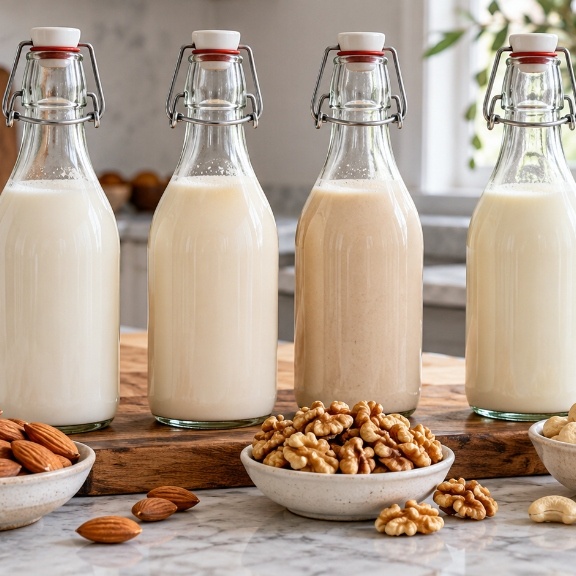
Compare popular nut milks, nutrition, additives, coffee frothing, and storage. Learn how to make creamy homemade nut milk from scratch with a simple 1:4 blender recipe.
Nut milk is a popular plant-based beverage made by blending nuts with purified water. Most varieties are strained to remove coarse solids, though soft nuts like cashews and macadamias blend smoothly enough to drink without straining, while pale green pistachio milk offers an antioxidant-dense, distinctive roasted flavor.
What Is Nut Milk?
Nut milk is an emulsion of finely ground tree nuts and water. Unsweetened almond milk usually has the fewest calories (30 to 45 kcal per cup), cashew and macadamia milks provide rich culinary body, and walnut milk supplies plant omega-3s (ALA). Most nut milks contain far less natural protein than cow milk (1 to 2 grams vs. 8 grams), and homemade versions lack the calcium and vitamin D added to fortified commercial cartons.
Important Safety Note: Tree nuts (almonds, cashews, walnuts, macadamias, hazelnuts) are major allergens capable of triggering severe IgE-mediated anaphylaxis. Individuals with confirmed tree nut allergies must avoid nut milks and verify certified allergen-segregated processing facilities. Unfortified homemade plant milks lack adequate protein, calcium, and vitamin D, and must never be used as a primary infant formula replacement.
This comprehensive guide compares nut milk varieties, nutritional breakdowns against dairy milk, additive evaluation, frothing stability, and an easy universal 1:4 blender recipe.
People use nut milk in coffee, breakfast cereal, smoothies, savory cooking, and dairy-free baking. Because it contains no lactose or dairy ingredients when made simply from nuts and water, understanding the Nutrition Facts panel helps you choose the right formula for your dietary goals.
What Is Nut Milk and How Does It Stay Creamy?
Blending breaks nuts into microscopic particles, releasing plant lipids and soluble proteins into the water. Straining through a fine-mesh cloth removes insoluble fibrous hulls, producing a smooth, drinkable liquid.
Despite its popular name, nut milk is not mammalian milk. The U.S. Food and Drug Administration (FDA) categorizes these beverages as "plant-based milk alternatives" made from nuts, grains, seeds, and legumes.
Nut milk is a mechanical fat-in-water emulsion and suspension. High-speed blender blades sheer nut fats into tiny droplets suspended throughout the liquid. Homemade nut milk naturally separates over time because those droplets float upward; a simple 5-second shake re-emulsifies the drink. Commercial brands frequently add plant gums (like gellan or acacia) and sunflower lecithin to prevent settling during shelf storage.
Because steamed plant milks foam nicely under gentle heat, parents frequently warm them for caffeine-free cafe treats such as a fluffy baby chino topped with a dusting of cinnamon.
Understanding fat content is also helpful when navigating coconut products, where the dramatic distinction between light coconut water and canned coconut milk determines whether a liquid hydrates as a light drink or adds rich culinary body.
Types of Nut Milk Compared
No single nut milk fits every kitchen use. Select your carton based on flavor profile, mouthfeel, allergen considerations, and culinary application. For households managing tree-nut allergies or seeking higher omega-3 levels, seed-based options like cold-pressed flaxseed milk provide a completely nut-free emulsion rich in alpha-linolenic acid.
| Nut Milk Type | Typical Character | Best Culinary Uses | Key Nutrition Check |
|---|---|---|---|
| Almond Milk | Light, mild, delicate toasted note | Everyday cereal, light fruit smoothies, baking | Lowest calories (30 to 45 kcal); low protein (1 g) |
| Cashew Milk | Smooth, velvety, rich neutral finish | Creamy pasta sauces, cream soups, iced lattes | Blends without straining; check calorie density |
| Walnut Milk | Earthy, deep, rich, slight tannin edge | Warm oatmeal, dark cocoa, spiced baked goods | Rich in plant omega-3 alpha-linolenic acid (ALA) |
| Macadamia Milk | Rich, buttery, decadent mouthfeel | Specialty coffee steaming, keto smoothies, desserts | May contain more fat than almond milk; 0 g net carbs |
| Pistachio Milk | Distinctive, fragrant, pale jade tint | Artisan iced lattes, puddings, bubble teas | Contains 3 to 4 g natural protein per cup |
| Hazelnut & Pecan | Intensely roasted, aromatic, festive | Hot chocolate, holiday baking, dessert drinks | Higher price point; check for added sugars |
| Peanut & Seed Milks | High protein or complete allergen freedom | Fitness recovery, nut-free school lunchboxes | Peanut milk gives 6 to 8 g protein; flax milk is completely tree-nut free |
When frothing milk for espresso drinks or seeking higher monounsaturated fats for low-carb routines, creamy macadamia nut milk produces glossy microfoam without needing added emulsifiers.
Nut Milk vs. Cow Milk: The Nutritional Breakdown
The nutrition in plant milks depends on four factors: the specific nut, the water-to-nut ratio, whether the pulp is strained, and commercial fortification. A homemade milk made with 1 cup of nuts and 4 cups of water will not match every commercial carton.
| Nutrient (per 8 oz cup) | Unsweetened Almond Milk | Commercial Cashew Milk | Whole Cow Milk (3.25% Fat) |
|---|---|---|---|
| Calories | 30 to 45 kcal | 25 to 60 kcal | About 150 kcal |
| Protein | 1 g | Under 1 to 2 g | About 8 g (Complete protein) |
| Carbohydrates | 1 to 2 g (0 g sugar) | 1 to 3 g | About 12 g (Natural lactose) |
| Calcium | 300 to 450 mg (Fortified) | 300 to 450 mg (Fortified) | About 300 mg (Naturally occurring) |
| Vitamin D | 2.5 mcg (15% DV fortified) | 2.5 mcg (15% DV fortified) | 2.5 to 3.0 mcg (Fortified in USA) |
| Lactose & Cholesterol | 0 g lactose / 0 mg cholesterol | 0 g lactose / 0 mg cholesterol | 12 g lactose / 24 to 30 mg cholesterol |
Understanding the Protein Gap
Most strained nut milks supply 1 to 2 grams of protein per serving compared to 8 grams in cow milk. If you use plant milk as a core protein pillar in your diet, supplement with protein-rich foods (tofu, legumes, eggs) or prepare high-protein alternatives like homemade peanut milk, which naturally provides complete plant protein.
Store-Bought vs. Homemade Nut Milk
| Decision Factor | Store-Bought Commercial Cartons | Homemade Fresh Nut Milk |
|---|---|---|
| Convenience | Ready to pour directly from carton | Requires soaking nuts, blending, and straining cleanup |
| Micronutrients | Frequently fortified with calcium, D2/D3, and B12 | Contains whole nut nutrients, but unfortified in calcium/D |
| Shelf Life | 7 to 10 days refrigerated after opening | 3 to 4 days strictly refrigerated in glass bottle |
| Purity Control | May include gellan gum, dipotassium phosphate, or oils | 100% clean: nuts, pure water, and optional pinch of sea salt |
Classic Homemade Nut Milk Recipe (1:4 Ratio)
The golden standard for homemade nut milk is a 1:4 ratio: 1 cup of raw nuts to 4 cups of cold filtered water. This creates an everyday base for cereal, smoothies, and cooking. Thicker nut creams, particularly from cashew and almond, also form the traditional foundation for festive holiday drinks like creamy dairy-free eggnog spiced with freshly grated nutmeg.
Universal 1:4 Homemade Nut Milk
Ingredients
- • 1 cup raw, unsalted nuts (almonds, cashews, walnuts, or pecans)
- • 4 cups cold filtered water (plus extra water for soaking)
- • Small pinch fine sea salt (sharpens natural sweetness and balances flavor)
- • Optional: 1 or 2 pitted Medjool dates or 1/2 tsp pure vanilla extract
Equipment Needed
- • High-speed blender (e.g. Vitamix, Ninja)
- • Fine nylon nut-milk bag or multi-layer cheesecloth
- • Large mixing bowl or pitcher
- • Airtight glass bottle or mason jar
Preparation Method
Never throw away leftover nut pulp! Stir fresh wet pulp directly into morning oatmeal, pancake batter, or quick breads. Alternatively, spread it across a baking sheet and dehydrate in a low oven (200°F / 95°C) to make coarse, nutritious homemade nut flour for gluten-free baking.
Frequently Asked Questions About Nut Milk
Q. Is nut milk completely lactose-free and vegan?
Q. Why does nut milk curdle in hot coffee?
Q. Can you freeze homemade nut milk?
Q. What can you do with leftover nut milk pulp?
The Bottom Line
Summary and Practical Takeaways
Nut milk offers endless variety for coffee lovers, cereal eaters, and home bakers seeking lactose-free alternatives.
- Tailor by Character: Pick almond milk for lowest calories, cashew or macadamia milk for creamy mouthfeel, and walnut milk for plant omega-3s.
- Check the Label: Commercial cartons often add calcium and vitamin D; always review protein content if replacing dairy milk.
- Simple 1:4 Home Formula: Soak raw nuts, blend with fresh water for 90 seconds, and strain for fresh milk in minutes.
- Variety of Choices: Explore different culinary profiles including macadamia nut milk, high-protein peanut milk, allergen-free flax milk, and holiday favorites like dairy-free eggnog.
Commercial Plant Milk Formulation and Cafe Sourcing
For specialty coffee shops, artisanal bakeries, and beverage operators seeking stable microfoam and clean-label plant milk formulations, partnering with an accredited wholesale exotic drinks supplier ensures bulk organic nut supply, certified allergen-segregated processing, and consistent fat emulsion standards.
Editorial Fact-Checking and Evidence Standards
- Macronutrient comparisons (calories, lipids, proteins) are derived directly from USDA FoodData Central reference entries for whole cow milk and commercial tree nut beverages.
- Labeling guidance and nutrient replacement definitions reflect the U.S. Food and Drug Administration (FDA) regulatory framework on plant-based milk alternatives.
- Pediatric nutritional constraints and milk substitution protocols are validated against American Academy of Pediatrics (AAP) dietary policies.
Sources and Review Standards
- U.S. Food and Drug Administration (FDA): Guidance on Labeling of Plant-Based Milk Alternatives and Nutrient Differences
- U.S. Department of Agriculture (USDA) FoodData Central: Nut Milk Beverage Profiles vs. Whole Cow Milk
- American Academy of Pediatrics (AAP): Plant-Based Milks and Pediatric Dietary Recommendations
- National Institutes of Health (PubMed): Comparative Nutritional Assessment of Plant-Based Milk Alternatives











Comments and reviews (0)