


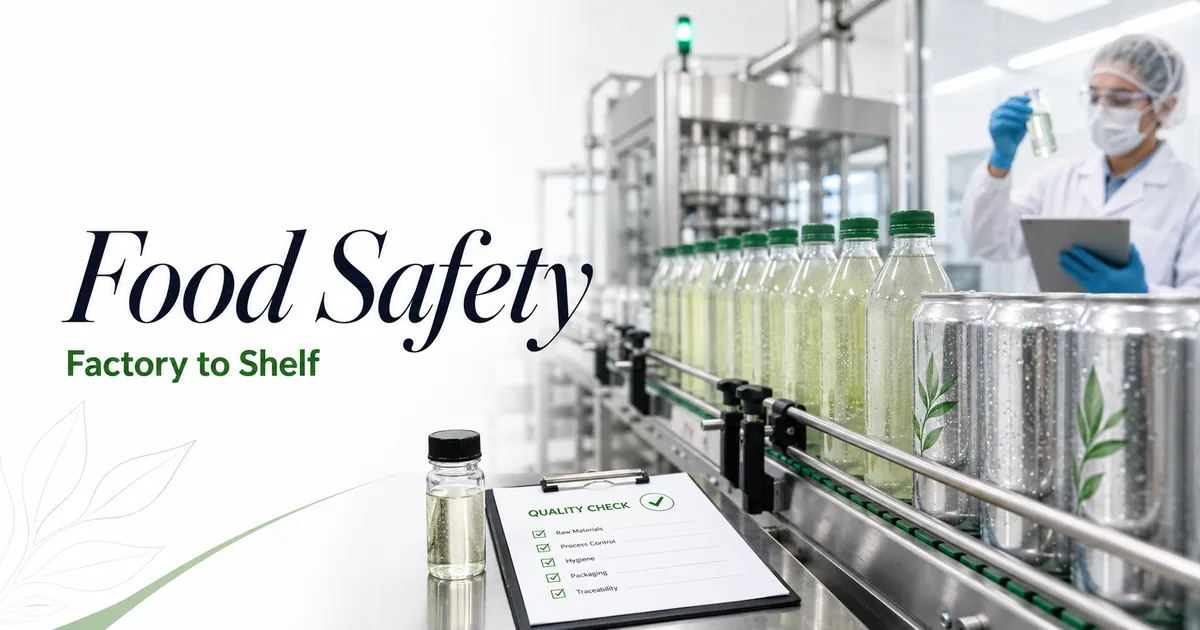
When choosing fresh juices and packaged beverages, consumers expect more than great taste, they want confidence that every bottle and carton is free from contamination and produced under rigorous hygiene standards. Navigating the balance between shelf stability and fresh nutrient preservation requires extensive quality controls throughout the bottling process.
Quick answer: Beverage and juice manufacturers ensure food safety through a multi-stage quality protocol that includes incoming ingredient screening, continuous water filtration, automated Clean-in-Place sanitation, clean-room access restrictions, and strict adherence to HACCP, GMP, and ISO 22000 standards.
Quality note: Commercial juice safety protocols vary depending on whether the product is raw cold-pressed, High-Pressure Processed, or flash-pasteurised. Always check storage labels and expiration dates for proper refrigeration guidelines.
This guide covers how modern juice and drink manufacturers monitor ingredients, secure clean-room bottling zones, and maintain cold-chain safety from factory to store shelves.
The Global Focus on Beverage Safety
According to the World Health Organization, an estimated 600 million people, nearly 1 in 10 worldwide, become ill each year after consuming contaminated food, resulting in approximately 420,000 deaths annually. At the same time, the global food safety testing market is projected to exceed $35 billion by 2030, reflecting the industry's continuous investment in quality assurance and consumer protection.
From sourcing raw fruit concentrates to delivering finished cartons to retailers, commercial beverage manufacturing follows carefully designed protocols to minimise microbial risk while preserving product freshness.
Food Safety Begins with Ingredient Sourcing
Every safe beverage starts with high-grade raw ingredients. Manufacturers evaluate agricultural suppliers before approving fruit concentrates, botanical extracts, coconut water, purees, and natural sweeteners.
Incoming ingredients undergo laboratory screening for:
- Microbial contamination, including yeast, mould, and bacteria
- Heavy metals and soil contaminants
- Pesticide residues
- Chemical impurities
- Product authenticity and Brix, or sugar concentration, levels
Only ingredients meeting documented regulatory standards enter the blending process, establishing quality control before production begins.
Water Quality and Multi-Stage Filtration
Because water serves as the foundation for most beverages, purification is a critical step in production. Processing facilities utilise multi-stage water treatment systems, including:
- Reverse osmosis filtration
- Ultraviolet sterilisation
- Activated carbon filtration
- Ozone treatment
Water samples are continuously monitored throughout each shift to ensure mineral balance, purity, and compliance with drinking water regulations.
Hygienic Facilities and Clean-In-Place Systems
Modern bottling facilities separate processing areas based on strict hygiene zones. Personnel entering production zones follow documented sanitation procedures, including protective garments, hairnets, sterile gloves, and controlled entry points.
To clean equipment without dismantling machinery, bottling plants use automated Clean-in-Place systems. These systems circulate validated chemical washes and high-temperature water through tanks, pipes, and filling heads, ensuring reliable sanitation between production batches.
Securing Clean-Room Zones with Facility Access Control
Food defence and hygiene require physical security alongside sanitation. Restricting unauthorised entry to ingredient blending rooms, testing laboratories, and automated filling lines prevents cross-contamination and maintains regulatory compliance.
Modern beverage facilities frequently install facility access control platforms that pair automated entry credentials with real-time video verification. Cloud-managed systems such as Coram illustrate how manufacturers integrate physical security with operational oversight, allowing facility managers to track clean-room permissions, verify authorised personnel via video logs, and receive automated alerts across multiple manufacturing sites.
Batch Testing and Laboratory Analysis
Quality assurance teams continuously sample products across every production run. Key parameters tested include:
- pH levels, ensuring acidity levels inhibit harmful bacterial growth
- Brix and sugar content, verifying flavour consistency and nutritional accuracy
- Microbial safety, testing for pathogenic microorganisms prior to distribution
- Sensory quality, evaluating natural colour, aroma, and mouthfeel consistency
If any batch deviates from established specifications, automated valves isolate the product immediately for review.
Common Food Safety Risks in Beverage Production
Common risks include an ingredient arriving outside its specification, residue left in a tank or filling line, poor separation between hygiene zones, a missed temperature record, or a damaged seal. None of these risks should be treated as a minor paperwork problem because each can affect a finished batch.
Good manufacturing practice relies on spotting the deviation, holding the affected stock, recording what happened, and deciding whether the batch can be released. That response is more useful than trying to correct a problem after the product has already reached a retailer.
Temperature Control and Cold Chain Integrity
Temperature fluctuations can degrade beverage flavour, texture, and microbial stability, especially in fresh fruit juices, probiotic drinks, and botanical teas. Temperature is strictly controlled during:
- Raw ingredient cold storage
- Pasteurisation or HPP treatment
- Post-bottling cooling tunnels
- Warehouse inventory staging
- Refrigerated transport to retail shelves
Maintaining an unbroken cold chain preserves natural enzymes and helps prevent spoilage in preservative-free beverages. Different categories also have different storage needs, as shown in our guide to non-alcoholic drinks.
Protective Packaging and Tamper Evidence
Packaging acts as the final protective barrier against light and oxygen degradation. Automated vision inspection systems inspect containers prior to dispatch for:
- Cap seal integrity and hermetic tightness
- Oxygen barrier efficacy in PET bottles, glass, and cartons
- Label accuracy and batch code legibility
- Tamper-evident ring security
Digital Traceability and International Safety Frameworks
Modern bottling lines utilise lot coding to link each bottle to its specific ingredient supplier, batch time, and line operator. If a quality anomaly occurs, manufacturers can execute targeted recalls rather than widespread product withdrawals.
Reputable beverage manufacturers maintain accredited certifications, including:
- HACCP, Hazard Analysis Critical Control Points
- GMP, Current Good Manufacturing Practices
- ISO 22000, Food Safety Management Systems
For more detail on these standards in practice, read our ISO certified juices quality and safety guide and our GMP certification guide.
Practical Factory Release Checklist
- Approved ingredients and current supplier records are available
- Water, cleaning and production checks meet the documented limits
- Batch results, including relevant pH, Brix and microbiological checks, are reviewed
- Packaging, labels, seals and lot codes are correct and legible
- Storage and dispatch conditions match the product specification
- Any deviation is held, investigated and recorded before release
Conclusion
Food safety in beverage manufacturing relies on thousands of controlled decisions, from testing agricultural ingredients and purifying process water to securing bottling clean rooms and maintaining unbroken cold chains. By pairing international food safety standards with automated sanitation, access controls, and digital traceability, manufacturers ensure that every bottle delivered to retail shelves meets the highest safety and quality standards.
Frequently Asked Questions
Why is food safety critical in beverage manufacturing?
Strict food safety prevents bacterial and microbial contamination, ensures compliance with national health regulations, and guarantees consumers receive uncompromised, high-quality drinks.
What are the primary certifications for beverage manufacturing?
The most widely recognised international standards are HACCP, Good Manufacturing Practices, or GMP, and ISO 22000.
How does facility access control support food safety?
Restricting physical entry to clean-room filling areas and laboratories ensures only sanitised, authorised operators enter sensitive zones, reducing the risk of contamination.
How does cold chain management protect juice quality?
Continuous temperature control helps limit microbial growth in fresh or unpasteurised juices while preserving heat-sensitive vitamins, natural colours and authentic flavour profiles.
References and Authoritative Resources
- World Health Organization, Food Safety Fact Sheet: Global Burden of Foodborne Illnesses
- Acumen Research and Consulting / GlobeNewswire, Food Safety Testing Market Size to Reach USD 35.6 Billion by 2030
- Coram AI, Facility Access Control and Security Systems for Industrial Manufacturing Facilities
- U.S. Food and Drug Administration, Hazard Analysis Critical Control Point Principles and Application Guidelines
- International Organization for Standardization, ISO 22000 Food Safety Management Standards



Comments and reviews (0)