



Introduction
Many people seeking healthier beverage alternatives find conflicting guidance online about ingredients, sugar levels, and bodily effects. Choosing the right beverage requires understanding clear nutritional boundaries and factual preparation methods.
What Are the Main Benefits of Carrot Juice?
Carrot juice supplies provitamin A carotenoids, mainly beta-carotene, alongside potassium, vitamin C, and lutein. These nutrients support normal retinal health, immune defense, and skin hydration. A modest 150ml to 200ml serving fits a balanced diet when consumed alongside healthy fats to maximize carotenoid bioavailability.
Important Safety Note: Carrot juice cannot reverse refractive vision problems or replace whole vegetables. Consuming excessive amounts daily can cause carotenodermia, a harmless orange discoloration of the skin. If pregnant, choose pasteurized juice to prevent foodborne illness.
This guide covers carrot juice nutritional values, provitamin A conversion science, vision facts, daily serving guidelines, and an easy cold-pressed recipe. For additional context, explore our companion guide to homemade beet juice recipe.
What is carrot juice?
Carrot juice is the liquid extracted from carrots, or Daucus carota. Most orange carrots contain alpha-carotene and beta-carotene. The body can convert both compounds into vitamin A.
Juicing concentrates nutrients from several carrots into one glass. It also removes much of the insoluble fiber that gives whole carrots their structure.
That difference affects fullness, serving size, and blood glucose response. A person can drink the equivalent of several carrots much faster than they could chew and eat them.
Carrot juice nutrition
The table below uses reference data for 1 cup, or about 236 milliliters, of canned carrot juice. Fresh juice and packaged products can differ. Check the Nutrition Facts label for the product you use.
| Nutrient | Amount per cup | Why it matters |
|---|---|---|
| Calories |
About 94 | Provides food energy | | Carbohydrate | About 21.9 g | Includes natural sugars and a small amount of fiber | | Total sugars | About 9.2 g | Counts toward the total carbohydrate in the drink | | Fiber | About 1.9 g | Less than many equivalent servings of whole carrots | | Protein | About 2.2 g | A small contribution | | Fat | About 0.4 g | Too little to make the drink a meaningful fat source | | Potassium | About 689 mg | Supports normal nerve, muscle, and fluid functions | | Vitamin C | About 20 mg | Supports collagen formation and immune function | | Vitamin K | About 36.6 mcg | Takes part in normal blood clotting | | Beta-carotene | About 21,955 mcg | A provitamin A carotenoid | | Lutein plus zeaxanthin | About 786 mcg | Carotenoids found in the eye and other tissues |
Carrot juice contains no preformed retinol. Its vitamin A potential comes mainly from carotenoids. Nutrition labels may report vitamin A as a percentage of Daily Value instead of listing each carotenoid.
When evaluating overall beverage quality and ingredient balance, you can also compare notes in our juicing for skin and acne.
7 possible carrot juice benefits
The possible benefits of carrot juice come from its nutrients and their normal functions in the body. Drinking the juice does not guarantee a specific health result.
1. Provides provitamin A carotenoids
Orange carrot juice is one of the richest common food sources of beta-carotene. The body converts beta-carotene into vitamin A according to need and individual conversion ability.
Vitamin A supports normal vision, immune function, reproduction, growth, and the health of the heart, lungs, and other organs. The standard conversion used for dietary planning is 12 micrograms of food beta-carotene for 1 microgram of retinol activity equivalent, or RAE.
Conversion varies with genetics, digestive health, food preparation, and the meal eaten with the juice. A large beta-carotene number does not mean every person produces the same amount of vitamin A.
2. Carrot juice for eyes and normal vision
Vitamin A is part of rhodopsin, a light-sensitive protein in the retina. It also supports the cornea and conjunctival membranes. A severe vitamin A deficiency can cause trouble seeing in low light and may lead to xerophthalmia.
Carrot juice can contribute vitamin A precursors to the diet. Vitamin A deficiency is uncommon in the United States, so extra carrot juice usually will not make normal vision sharper.
Carrot juice cannot correct myopia, farsightedness, astigmatism, cataracts, glaucoma, or age-related changes that need professional care. New vision loss, eye pain, flashes, or a curtain-like shadow needs prompt medical assessment.
3. Adds lutein and zeaxanthin
Lutein and zeaxanthin are carotenoids concentrated in the macula of the eye. They help filter some high-energy light and take part in the eye's antioxidant defenses.
Carrot juice supplies some lutein and zeaxanthin, though dark leafy greens and certain other vegetables can provide more. Evidence about specific eye-disease outcomes depends on the food pattern, health condition, dose, and nutrient combination.
The AREDS supplements studied for age-related macular degeneration are medical formulations for selected patients. A glass of carrot juice is not a substitute for an eye specialist's advice or an AREDS product when one is prescribed.
4. Carrot juice for skin and collagen formation
Vitamin C is required for collagen synthesis. Collagen is found in skin, blood vessels, cartilage, and connective tissue. Vitamin C also helps protect cells from oxidative damage.
One cup of carrot juice provides about 20 milligrams of vitamin C in the reference data. That is useful, though many fruits and vegetables provide more.
Carrot juice can support normal nutrition for skin. Research does not show that it clears acne, removes wrinkles, or creates a guaranteed glow. Sun protection, sleep, smoking status, medical conditions, and the rest of the diet also affect skin.
5. Supplies nutrients used by the immune system
Vitamins A and C have established roles in immune function. Vitamin A supports epithelial tissues, including surfaces in the respiratory and digestive tracts. Vitamin C supports several cellular immune functions.
Meeting nutrient needs helps the immune system work normally. Drinking carrot juice has not been shown to prevent colds, flu, or other infections.
6. Provides potassium
Potassium supports normal nerve signals, muscle contraction, and fluid balance. Diets containing potassium-rich foods can form part of an eating pattern that supports healthy blood pressure.
One cup of carrot juice has about 689 milligrams of potassium in the reference data. The juice should not be treated as a blood pressure treatment. Sodium intake, body weight, activity, medicines, kidney function, and the full diet also matter.
People with kidney disease or anyone told to limit potassium should ask their clinician or dietitian before making carrot juice a daily habit.
7. Adds carotenoids and other plant compounds
Carrots contain carotenoids and phenolic compounds that can act in antioxidant pathways. Laboratory and animal studies often examine these compounds at controlled doses.
Human evidence does not prove that carrot juice detoxes the liver, reverses fatty liver disease, or prevents cancer. The liver already processes and removes many substances from the blood. Liver disease needs medical diagnosis and treatment.
Golden Beta-Carotene Carrot and Citrus Elixir
Ingredients
- •5 large Fresh organic carrots (tops trimmed, scrubbed thoroughly)
- •1 medium Granny Smith green apple (cored and quartered)
- •1 inch Fresh ginger root (scrubbed, skin on)
- •1/2 large Fresh lemon (peeled, seeds removed)
- •2 tbsp Cold filtered water (if blending)
Preparation Method
Pro Tip: Beta-carotene is a fat-soluble carotenoid. Drink your carrot juice alongside a handful of raw almonds or a meal containing healthy fats to aid provitamin A absorption.
Does carrot juice improve eyesight?
Carrot juice helps supply nutrients required for normal eye function. Its clearest benefit applies when a person is not getting enough vitamin A.
The popular link between carrots and exceptional night vision grew during World War II. British publicity credited pilots' success to carrots while helping conceal the military use of radar. Vitamin A supports low-light vision, but carrots did not give pilots exceptional powers of sight.
Eating more carrots or drinking more juice cannot change the shape of the eye or lens. Glasses, contact lenses, surgery, or medical treatment address refractive errors and eye disease.
How dietary fat affects carotenoid absorption
Beta-carotene, alpha-carotene, lutein, and zeaxanthin are fat-soluble compounds. Dietary fat helps move carotenoids into mixed micelles during digestion so they can be absorbed in the small intestine.
Human studies show that the amount, type, and physical form of fat can change carotenoid absorption. The effect is not a fixed sixfold increase for every person or every meal.
Drink carrot juice with a meal that already contains some fat, such as:
- Eggs with whole-grain toast
- Yogurt with nuts or seeds
- Avocado on toast
- A salad dressed with olive oil
- Hummus with a meal
For readers interested in companion functional hydration options, review our dedicated guide to cold-pressed juice versus regular juice.
Carrot juice vs. whole carrots
Whole carrots and carrot juice provide many of the same micronutrients. Their portions and fiber structure differ.
| Feature | Carrot juice | Whole carrots |
|---|---|---|
| Eating speed |
Fast to drink | Slower to chew | | Typical concentration | Several carrots may go into one glass | Portion remains visible | | Fiber | Much of the insoluble fiber is removed | Natural fiber structure remains | | Fullness | Often less filling | Usually more filling | | Carbohydrate delivery | Easier to consume quickly | Slower eating and intact structure | | Best use | Small drink alongside a meal | Everyday vegetable, snack, or meal ingredient |
Cup-for-cup comparisons can mislead because juice may contain several times more carrot by weight. Check how much carrot and carbohydrate you consume at one time.
Whole carrots are the better default when fullness, fiber, and blood glucose control are priorities. Juice can provide variety when the portion fits the rest of the meal.
Carrot juice and blood sugar
Carrot juice contains natural sugar and counts as a carbohydrate food. Removing much of the insoluble fiber makes it easier to drink a concentrated portion quickly.
Glycemic index and glycemic load vary between products and portions. Glycemic load accounts for the carbohydrate in the serving. The glucose response also depends on processing, the rest of the meal, medicines, activity, and the person's metabolism.
If you have diabetes or insulin resistance:
- Check total carbohydrate on the label.
- Start with a smaller serving, such as 4 fluid ounces.
- Drink it with a meal containing protein, fiber, or fat.
- Avoid products with added sugar.
- Use your glucose readings and care plan to judge your response.
For more options and serving guidance, read our guide to juice for type 2 diabetes.
How much carrot juice should you drink a day?
There is no official daily requirement for carrot juice. Most people can get carotenoids and vitamin A precursors from a varied diet that includes orange, red, and dark-green produce.
A 4- to 8-ounce serving is a reasonable practical range for many healthy adults who choose to drink it. Smaller servings make it easier to manage carbohydrate intake and leave room for whole vegetables.
Daily use deserves more care when you have diabetes, kidney disease, a medically restricted diet, or unexplained yellow skin. Children need age-appropriate portions and should not receive juice as a replacement for meals, milk, formula, or water.
Carrot juice side effects and safety
Carrot juice is safe for many people in ordinary food portions. Concentrated intake can create problems.
Carotenemia can turn skin yellow-orange
Carotenemia occurs when carotene builds up in the blood and the stratum corneum, the outermost layer of skin. Color often appears first on the palms, soles, forehead, or around the nose.
Diet-related carotenemia is usually harmless and fades after carotene intake falls. The whites of the eyes usually remain white. Yellow eyes, dark urine, pale stool, abdominal pain, or illness can point to jaundice or another condition and need medical care.
Clinical sources do not support one exact juice amount or timeline for carotenemia. Risk depends on the carotenoid content, total diet, duration, metabolism, thyroid function, diabetes, and liver or kidney health.
Juice can add carbohydrate quickly
Large servings can contribute more carbohydrate than expected. This matters most for people managing diabetes, insulin resistance, or a prescribed carbohydrate plan.
Choose 100% juice without added sugar and measure the serving. Whole carrots provide more chewing and fiber for a similar food choice.
Carrot juice contains potassium
Potassium is useful in a normal diet, but some people with chronic kidney disease must limit it. Follow the target provided by your kidney clinician or renal dietitian.
Vitamin K intake should stay consistent with some medicines
Carrot juice contains vitamin K. People taking warfarin are often advised to keep vitamin K intake consistent instead of suddenly changing it. Ask the prescribing clinician before adding a large daily serving.
Beta-carotene food is different from high-dose supplements
Large trials found a higher lung cancer risk in heavy smokers who took high-dose beta-carotene supplements. Those results concern pharmacological supplements, not ordinary servings of carrots.
Current smokers and people with significant smoking or asbestos exposure should avoid high-dose beta-carotene supplements unless a qualified clinician specifically recommends them. Food and supplement doses should not be treated as interchangeable.
Unpasteurized juice carries a food-safety risk
Raw produce can carry harmful bacteria into fresh juice. FDA advises pregnant people, young children, older adults, and people with weakened immune systems to avoid untreated juice.
Choose pasteurized juice when safety risk is higher. A juice sold by the glass at a market, cafe, or juice bar may be unpasteurized even when it has no warning label.
How to make carrot juice safely
You can use a juicer or blend carrots with water and strain the mixture. Straining removes more fiber, while leaving some pulp keeps more of it in the drink.
Basic carrot juice
Makes: About 1 to 2 small servings, depending on the carrots and machine
Ingredients
- 4 medium carrots
- Cold water as needed for blending
- A small piece of fresh ginger, optional
- Lemon juice, optional
1. Wash your hands with soap and water. 2. Rinse and scrub the carrots under running water. Do not wash produce with soap or bleach. 3. Cut away bruised or damaged areas. 4. Trim the ends and cut the carrots to fit the juicer or blender. 5. Juice the carrots, or blend them with enough water to move the blades. 6. Strain only if you prefer a thinner texture. 7. Pour a measured serving and drink it with food.
Wash the equipment after use. Refrigerate fresh juice promptly and discard it if it has been left warm, smells fermented, develops gas, or shows another sign of spoilage.
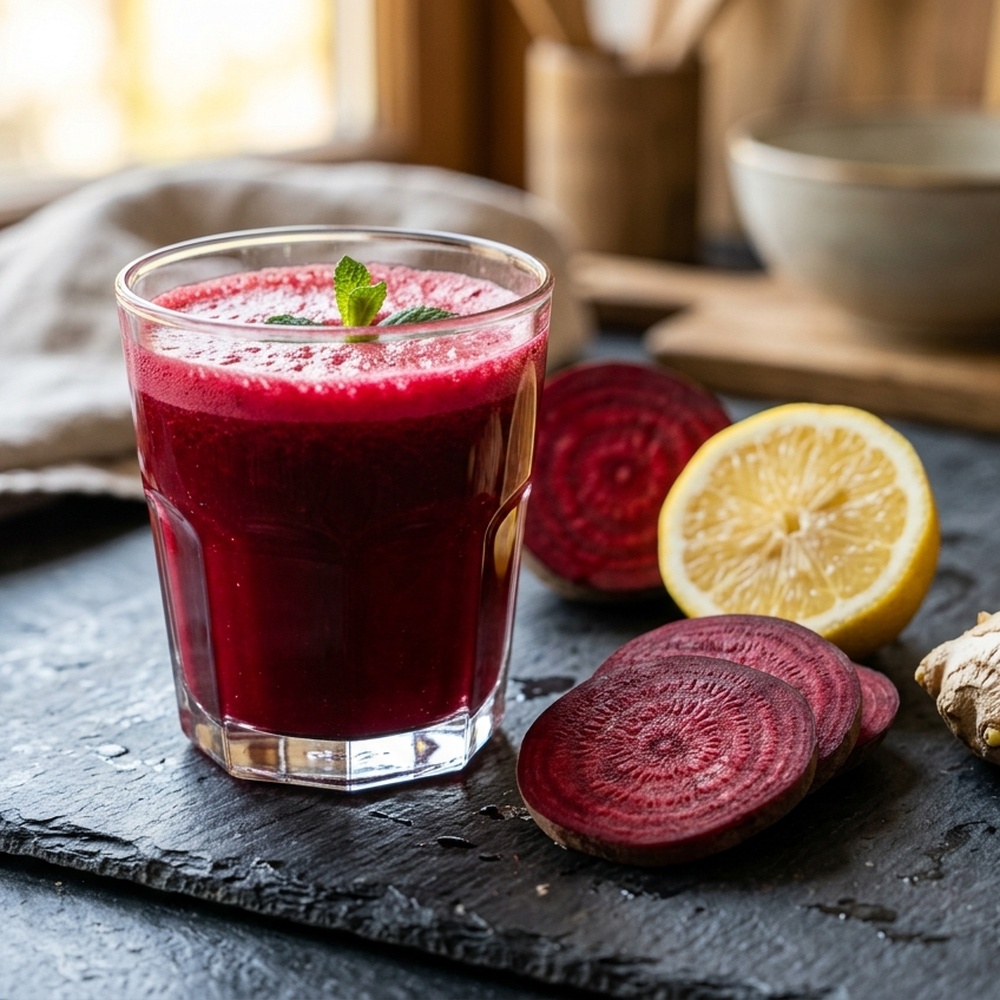
Our beet juice recipe explains another root-vegetable juice with different nutrients and safety points. You can also use a small amount of ginger after reviewing our ginger drink guide.
Is bottled or fresh carrot juice better?
Fresh juice gives you control over ingredients and pulp. It also requires careful washing, clean equipment, and refrigeration.
Commercial pasteurized juice has been treated to reduce harmful bacteria. It may be more suitable during pregnancy or when immunity is reduced. Some bottled products contain added fruit juice, salt, or sugar, so compare labels.
Neither version automatically has better nutrition. Processing, storage time, heat, carrot variety, serving size, and added ingredients all affect the final drink.
When is the best time to drink carrot juice?
Carrot juice works at any time that fits your meals and carbohydrate plan. Morning use has no proven advantage over evening use.
Drinking it with a meal that contains some fat may support carotenoid absorption. People who notice reflux, stomach discomfort, or glucose changes can adjust the timing and portion.
Carrot juice contains no caffeine. If you are replacing an evening coffee or energy drink, compare it with the options in our caffeine-free drinks guide.
Choosing carrot juice
Look for 100% carrot juice with no added sugar. Compare the serving size, total carbohydrate, sodium, potassium, and added ingredients.
Choose a small glass when you want the flavor and concentrated carotenoids. Choose whole carrots when fiber, fullness, and slower eating matter more.
The bottom line
Carrot juice benefits normal nutrition by supplying beta-carotene, potassium, vitamin C, and other plant compounds. A small serving can add variety to a balanced diet.
Its side effects and trade-offs matter too. Juice has less fiber than whole carrots, adds carbohydrate quickly, and can cause carotenemia when consumed in large amounts for a long time. A measured portion with a meal is a practical choice for many adults.
Frequently Asked Questions
Common questions about carrot juice benefits: nutrition, eyesight, skin, and side effects, ingredients, daily consumption limits, and safety guidelines:
Q.What happens if you drink carrot juice every day?
Drinking modest servings of carrot juice provides consistent vitamin A precursors and potassium. However, excessive daily consumption can cause carotenodermia, a harmless temporary yellow-orange tint to the skin caused by high circulating beta-carotene.
Q.Does carrot juice improve eyesight?
Carrot juice supplies beta-carotene, which the body converts into vitamin A to support normal retinal function and low-light vision. It prevents vision loss caused by vitamin A deficiency, but it cannot reverse refractive errors such as nearsightedness or astigmatism.
Q.How much carrot juice should you drink per day?
A practical serving is about 150ml to 200ml per day. Because juicing removes insoluble fiber and concentrates natural fruit and vegetable sugars, consuming larger volumes can lead to higher caloric and carbohydrate intake.
Q.Is carrot juice safe during pregnancy?
Pasteurized carrot juice is safe in dietary amounts during pregnancy and provides provitamin A carotenoids, which do not carry the toxicity risks of high-dose preformed retinol supplements. Pregnant individuals should avoid unpasteurized juices due to foodborne pathogen risks.
The Bottom Line
Carrot Juice in a Balanced Diet
Carrot juice is a nutrient-dense botanical drink rich in beta-carotene and potassium. Enjoying a small 150ml glass alongside solid meals supports natural vision and skin health without causing excessive sugar consumption.
Sources and Review Standards
The London Juice Company applies rigorous editorial standards to all functional beverage and nutrition guides. Every nutritional claim, clinical boundary, and safety guideline is validated using peer-reviewed publications and public health agency databases:
- Carrot Juice, 100% Juice, Canned or Bottled Nutrition Facts - USDA FoodData Central
- Vitamin A and Carotenoids: Fact Sheet for Health Professionals - National Institutes of Health (NIH) Office of Dietary Supplements
- Dietary Carotenoids and the Risk of Age-Related Macular Degeneration - JAMA Ophthalmology / PubMed
- Carotenodermia: Clinical Presentation and Differential Diagnosis - National Library of Medicine / PubMed










Comments and reviews (0)