


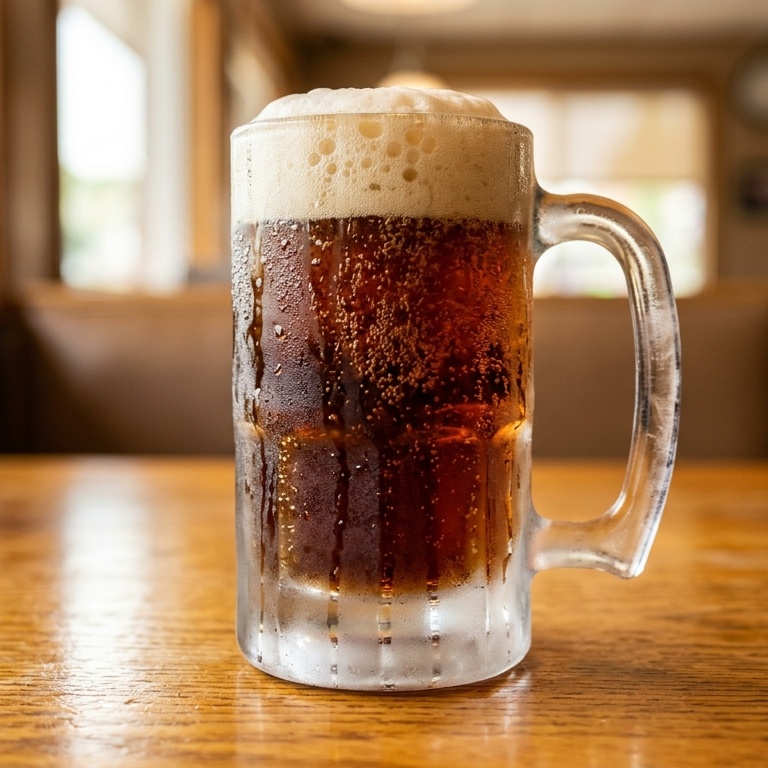
Is root beer alcoholic? Standard root beer sold in the grocery store soda aisle is a non-alcoholic soft drink. Hard root beer is fundamentally different: it contains distilled or fermented alcohol and is sold alongside craft beer, cider, and flavored malt beverages.
Does Root Beer Contain Alcohol?
Commercial brands like A&W, Barq's, Mug, IBC, Virgil's, and Boylan are non-alcoholic carbonated soft drinks (0.0% ABV). Hard root beers, such as Not Your Father's Root Beer, are intoxicating alcoholic malt beverages containing about 4% to 6% ABV. Always inspect the packaging for an alcohol by volume (ABV) statement and the mandatory federal government health warning.
The word "beer" comes from the drink's 19th-century brewing history. It does not mean modern soda contains alcohol.
Root Beer Alcohol Content at a Glance
| Type of Root Beer | Typical Alcohol Content | Where You May Find It | What to Check |
|---|---|---|---|
| Commercial root beer soda | Sold as non-alcoholic (0.0% ABV) | Soda aisle, fountain dispensers, restaurants | Nutrition Facts panel and ingredient list |
| Hard root beer | 4.0% to 6.0% ABV (regular beer strength) | Beer, hard cider, or liquor department | ABV percentage, product class, government health warning |
| Home-carbonated root beer | 0.0% ABV (made without fermentation) | Prepared at home with syrups and siphon | Extract ingredients and CO2 carbonation method |
| Home-fermented root beer | Variable (0.3% to 2.0%+ ABV) | Prepared at home using brewer's yeast | Fermentation duration, temperature, and hydrometer test |
Why Is Root Beer Called Beer?
Root beer evolved from historic herbal remedies and indigenous beverages concocted from wild roots, bark, herbs, sugar, and spring water. In pre-industrial North America, early colonial households fermented these mixtures using wild yeasts to produce gentle effervescence and natural preservation.
These drinks belonged to the historic "small beer" tradition: lightly fermented beverages with substantially lower alcohol levels than standard beers, consumed safely by entire households when municipal water supplies were unreliable. Common botanicals included sassafras root, sarsaparilla, wintergreen, sweet birch bark, wild cherry bark, licorice root, dandelion, and molasses.
Charles Hires and the 1876 Centennial
Philadelphia pharmacist Charles Elmer Hires transformed root beer into an iconic commercial American soft drink. Hires formulated a shelf-stable dry blend of roots and herbs that families boiled with sugar and yeast at home.
According to historical archives at the Library of Congress, Hires officially debuted his commercial product at the 1876 Centennial International Exhibition in Philadelphia. Marketed aggressively as a wholesome temperance alternative to hard liquor, Hires cemented the name "root beer" in the national lexicon.
How Modern Root Beer Is Made
Modern commercial root beer is manufactured using pure carbonated water, sweeteners (such as cane sugar or high-fructose corn syrup), caramel color, citric or phosphoric acid, sodium benzoate preservative, and a complex matrix of natural and artificial flavor extracts.
These flavor extracts recreate the nostalgic profile of wintergreen, vanilla bean, licorice, star anise, birch, and sarsaparilla. Carbon dioxide gas is injected mechanically under high pressure, completely bypassing biological yeast fermentation. As a result, commercial root beer produces zero alcohol.
What Is Hard Root Beer?
Hard root beer is an intoxicating alcoholic beverage formulated to mimic the sweet, botanical flavor of classic root beer soda. Most hard root beers are categorized legally as flavored malt beverages (FMBs) or specialty beers.
Brewers brew a clear fermented base from malted barley, grains, or fermentable cane sugar. Active brewer's yeast converts the sugars into ethanol and carbon dioxide, reaching an alcohol level between 4% and 6% ABV. After filtering and sweetening, the manufacturer blends in concentrated root beer flavors, producing an alcoholic beverage that tastes remarkably like fountain soda.
How to Identify Hard Root Beer
- Alcohol by Volume statement: Alcoholic beverages clearly print an ABV percentage (e.g., "5.0% ALC/VOL") on the front or neck of the container.
- Hard or Alcoholic designation: Clear descriptors like "Hard Root Beer" or "Spiked Soda" appear prominently in branding.
- Federal Government Health Warning: U.S. law strictly mandates the Surgeon General's alcohol warning on all drinks containing 0.5% ABV or greater.
- Class and type declaration: Small print will designate "Ale with natural flavors," "Flavored malt beverage," or "Beer."
- Store shelving and ID verification: Hard root beer is restricted to the beer aisle and requires age-21 legal photo identification at checkout.
Commercial vs. Hard vs. Homemade Root Beer
| Feature | Commercial Root Beer Soda | Hard Root Beer | Home-Fermented Root Beer |
|---|---|---|---|
| Beverage type | Carbonated soft drink | Flavored malt beverage | Yeast-fermented craft drink |
| Alcohol | 0.0% ABV | 4.0% to 6.0% ABV | Variable (0.3% to 2%+ ABV) |
| Carbonation method | Forced CO2 injection | Brewing fermentation plus added CO2 | Active live yeast conditioning |
| Age restriction | None (all ages) | Strict legal drinking age (21+) | Should not be served to children |
| Main dietary concern | High sugar and caffeine in select brands | Intoxication and alcohol health risks | Uncontrolled ABV and bottle burst pressure |
Root Beer Brands: Alcohol, Caffeine, and Ingredients
| Brand | Sold As | Caffeine Content | Sweetener / Ingredients | Label Check |
|---|---|---|---|---|
| A&W Root Beer | Soft drink | Caffeine-free | High-fructose corn syrup, quillaia extract | Restaurant draft and cans have separate formulations |
| Barq's Root Beer | Soft drink | 22 mg per 12 fl oz | High-fructose corn syrup, acacia, artificial flavors | Barq's Zero Sugar is caffeine-free |
| Mug Root Beer | Soft drink | Caffeine-free (0 mg) | High-fructose corn syrup, citric acid, caramel color | Certified 0.0% non-alcoholic |
| IBC Root Beer | Soft drink | Caffeine-free | Pure cane sugar formula in glass bottles | Brown glass bottle resembles craft beer |
| Virgil's Handcrafted | Soft drink | Caffeine-free | Cane sugar, clove, anise, nutmeg, licorice, wintergreen | Rich herbal craft recipe with zero alcohol |
| Boylan Bottling Co. | Soft drink | Caffeine-free | Pure cane sugar, sweet birch, vanilla | Heritage recipe bottled in glass |
What Happened to Sassafras in Root Beer?
Historic root beers derived their defining spicy, rooty aroma from the root bark of the sassafras tree (Sassafras albidum). Essential oil of sassafras naturally contains high concentrations of safrole.
In 1960, the U.S. Food and Drug Administration officially banned safrole as a food additive under 21 CFR 189.180 after toxicology studies demonstrated that high dietary doses caused hepatic tumors in laboratory animals.
Today, root beer manufacturers use safrole-free sassafras extract, wintergreen (methyl salicylate), sweet birch extract, vanilla, licorice root, star anise, and citrus oils. This ensures complete regulatory safety while preserving the classic flavor profile.
Health, Safety, and Special Dietary Considerations
Children and Minors: Ordinary commercial root beer soda is alcohol-free and safe for children. Parents should note that regular Barq's contains 22 mg of caffeine per can, whereas A&W, Mug, and Virgil's are completely caffeine-free. Hard root beer contains intoxicating alcohol and is legally prohibited for minors.
Pregnancy: Commercial root beer soda is non-alcoholic and safe regarding ethanol risks. However, expectant mothers managing gestational diabetes or caffeine limits should check sugar and caffeine content. Hard root beer must be avoided completely, as the American College of Obstetricians and Gynecologists (ACOG) confirms no safe alcohol threshold during pregnancy.
Alcohol Recovery: While commercial root beer contains 0.0% ABV, its deep brown color, foamy head, and brown glass bottles can serve as sensory triggers for some individuals in sobriety. When dining out, explicitly confirm that fountain orders are virgin soda rather than craft hard root beer.
Halal and Kosher Dietary Rules: Most commercial root beers are formulated without alcohol or animal byproducts. Look for recognized kosher (OU, OK, Star-K) or halal certification symbols on the product label.
Breathalyzer Tests: Sealed commercial soda containing 0.0% ABV will not trigger blood alcohol readings or breathalyzer interlocks.
Does Homemade Root Beer Contain Alcohol?
It depends entirely on the preparation technique:
- Direct Carbonation: Blending root beer extract, cane sugar, and chilled water using a CO2 siphon or SodaStream creates guaranteed 0.0% ABV soda.
- Yeast Fermentation: Pitching baker's or brewer's yeast into warm sugary root tea initiates anaerobic fermentation. Yeast naturally converts sugars into ethanol. Depending on temperature and fermentation time, home-brewed root beer can reach 0.5% to 2.0% ABV.
Active yeast continues producing carbon dioxide gas inside sealed containers. If left at room temperature too long, internal bottle pressure can cause standard glass bottles to violently shatter. Always use fermentation-rated swing-top bottles, refrigerate as soon as carbonation develops to slow yeast metabolism, and never serve home-fermented root beer to children as verified alcohol-free soda.
Root Beer vs. Ginger Beer vs. Birch Beer
Root Beer
Complex botanical bouquet dominated by wintergreen, licorice, vanilla, and sweet spices. Rich, creamy, and mildly herbal.
Ginger Beer
Fiery, spicy, and peppery bite derived from steeped ginger root. Less sweet and more pungent than ginger ale.
Birch Beer
Distinct minty wintergreen freshness derived from sweet birch tree bark oil (Betula lenta). Clear, red, or dark amber.
Frequently Asked Questions
Q. Is root beer alcoholic?
Standard root beer from the soda aisle is non-alcoholic. Hard root beer contains alcohol, and home-fermented root beer can develop alcohol.
Q. Is root beer non-alcoholic?
Standard commercial root beer is a non-alcoholic carbonated soft drink. Check for the word "hard," an ABV statement, and a government warning because alcoholic root beer products also exist.
Q. Does root beer have alcohol?
Commercial root beer soda is made and sold as a non-alcoholic soft drink. Check the label because hard root beer and fermented homemade versions are different products.
Q. Why is root beer called beer if it has no alcohol?
The name comes from older brewed and lightly fermented root drinks. Charles Hires helped popularize the term root beer as a commercial American drink in the late 1800s.
Q. What is hard root beer?
Hard root beer is an alcoholic beverage flavored to taste like root beer soda. Its package displays alcohol labeling, and legal-age restrictions apply.
Q. What makes hard root beer alcoholic?
Yeast fermentation creates the alcohol in many hard root beers. Producers often ferment a malt or sugar base, then add root beer flavors and carbonation. The printed ABV shows the finished drink's alcohol level.
Q. Does Barq's Root Beer contain alcohol or caffeine?
Regular Barq's is a non-alcoholic soft drink. The current US version contains 22 mg of caffeine per 12 fl oz. Barq's Zero Sugar is caffeine-free.
Q. Can children drink root beer?
Children can drink standard root beer soda. Hard root beer contains alcohol and is restricted to people of legal drinking age. Parents may also want to check sugar and caffeine.
Q. Can minors buy root beer legally?
Minors can generally buy ordinary root beer soda in the United States. Hard root beer is an alcoholic drink and follows state alcohol-sale and legal-age rules.
Q. Can pregnant people drink root beer?
Standard root beer soda does not contain the alcohol found in hard root beer. Check caffeine and sugar, and ask a prenatal care professional about personal dietary or medical concerns.
Q. Is root beer halal and kosher?
Certification depends on the exact product, ingredients, and production process. Look for a recognized halal or kosher symbol rather than relying only on the drink's name.
Q. Can recovering alcoholics drink root beer?
Ordinary root beer soda does not cause alcohol intoxication. Personal triggers differ, so people in recovery may prefer a clearly labeled can or another soft drink. Check restaurant orders carefully to avoid hard or spiked root beer.
Q. Does homemade root beer contain alcohol?
It can. A yeast-fermented recipe produces alcohol, and the amount varies. Root beer made with forced carbonation and no fermentation does not create alcohol.
Q. Can root beer show up on a breathalyzer?
Ordinary root beer soda should not create a sustained alcohol reading because it contains no beverage alcohol. Hard or fermented root beer can contain alcohol. Follow any testing program's rules.
Q. Is root beer the same as ginger beer?
No. Root beer uses a mixed root, herb, spice, and vanilla flavor. Ginger beer tastes strongly of ginger. Both have non-alcoholic and alcoholic variations.
Q. Is a root beer float alcoholic?
A standard root beer float made with soda and ice cream is non-alcoholic. Adult versions may include hard root beer or spirits, so check the recipe.
The Bottom Line
Summary and Practical Takeaways
Standard commercial root beer is a non-alcoholic soft drink containing 0.0% ABV. Hard root beer is an intoxicating alcoholic beverage with about 4% to 6% ABV, requiring legal-age purchase verification and bearing government health warnings. Yeast-fermented homemade root beers can develop variable alcohol content. Always check labels for ABV statements, caffeine disclosures, and ingredients when specific dietary boundaries apply.
Sources and Review Standards
- U.S. Food and Drug Administration (FDA): 21 CFR 189.180 Prohibition of Safrole and Sassafras in Food
- Alcohol and Tobacco Tax and Trade Bureau (TTB): Malt Beverage Alcohol-Content Labeling Regulations
- Alcohol and Tobacco Tax and Trade Bureau (TTB): Mandatory Alcoholic Beverage Health Warning Statement
- Library of Congress: Historical Archives on Charles Hires and the 1876 Centennial International Exhibition
- The Coca-Cola Company: Barq's Root Beer Product Varieties and 22 mg Caffeine Disclosures
- A&W Root Beer: Packaged Soft Drink Formulation and Caffeine-Free Verification
- PepsiCo Product Facts: Mug Root Beer Ingredients and Nutrition Details
- Virgil's Handcrafted Soda: Real Cane Sugar Formulation and Herbal Sourcing FAQ
- American College of Obstetricians and Gynecologists (ACOG): Clinical Guidance on Alcohol Avoidance During Pregnancy





Comments and reviews (0)