

Healthy skin is affected by many factors, and high-sugar drinks can make a skin-friendly diet harder to maintain. Vegetable-led juices can be a lighter option when they are used in small portions alongside whole foods.
Quick answer: The best juice for skin is a low-sugar drink built around vegetables, vitamin C-rich fruit and hydration. Juice cannot treat acne, but it can fit a skin-friendly diet when it replaces sugary drinks and does not crowd out meals.
Medical note: This article is for general information only and does not replace medical or dermatological advice. Speak with a healthcare professional or dermatologist before making significant dietary changes.
This guide covers skin-friendly ingredient choices, low-sugar recipes, and portion limits for general skin support.
Breakouts have multiple drivers, including excess sebum production, blocked pores, inflammation, bacterial activity, genetics, hormones, and high-glycaemic dietary patterns. Juice only touches the nutrition side of that picture.
Vegetable-forward juices can help by replacing high-sugar drinks with lower-sugar, hydrating options that provide vitamin C, carotenoids, polyphenols, and minerals. That can support a better diet pattern, but it does not directly clear hormones, resolve infection, or replace professional skin care.
For best results, use juice as one part of a wider routine: balanced meals, enough protein, sleep, consistent skincare, and professional dermatological care when skin concerns are persistent or severe.
A practical everyday option for blemish-prone skin routines. It is low in sugar, vegetable-led, and easy to maintain as a daily habit.
Ingredients:
Method: Rinse all ingredients. Juice cucumber and celery first, then spinach, then ginger. Add lemon juice and stir.
Drink immediately.
Serving size: 200 to 250ml. Best time: Morning on an empty stomach.
Cucumber hydrates without adding sugar load. Celery adds a crisp flavour and fluid content without much sugar. Spinach adds carotenoids and minerals that fit a skin-supportive diet.
Ginger adds a warming flavour and is commonly used in wellness drinks. Lemon adds vitamin C and brightness without much sugar.
Hormonal skin fluctuations typically present around the jawline and chin, worsens in the week before a period, and is driven by fluctuating oestrogen and progesterone affecting sebum production and skin inflammation. This recipe targets those mechanisms.
Ingredients:
Method: Juice celery, cucumber, turmeric, and ginger together. Add lemon juice. Stir in black pepper directly in the glass.
Drink fresh.
Serving size: 150 to 200ml. Best time: Morning before food, daily. Most relevant in the week before menstruation.
Turmeric contains curcumin, a plant compound studied for inflammation-related pathways. Ginger is commonly used in warming drinks and may fit an anti-inflammatory-style diet. Celery contains apigenin, a flavonoid that has been studied for its interaction with oestrogen activity in the body.
Black pepper increases curcumin absorption considerably and should not be left out.
For a broader guide on drinks for hormonal skin support, our celery juice for skin guide covers the apigenin and hormonal skin support connection in more detail.
Dark spots, or post-inflammatory hyperpigmentation, form when a breakout triggers excess melanin production during skin renewal. Vitamin C inhibits the enzyme tyrosinase that drives melanin overproduction. Beta-carotene from carrots also supports even skin tone by reducing oxidative damage to melanocytes.
Ingredients:
Method: Juice carrots, orange, cucumber, and ginger. Add lemon juice. Stir and drink fresh.
Serving size: 150 to 200ml. Best time: Morning or mid-morning.
This recipe provides vitamin C from orange and lemon, beta-carotene from carrots, and a warming note from ginger. The combination addresses both active spots and the dark marks they leave behind. It is a useful option for people whose main concern has shifted from active breakouts to the appearance of marks left behind.
A low-sugar green juice that addresses skin congestion at the hydration and mineral level rather than the antioxidant level. This may suit people who want a greener, lower-sugar drink as part of a better daily diet pattern.
Ingredients:
Method: Juice cucumber and apple first. Alternate kale and spinach to improve extraction. Add celery and lime juice.
Stir and serve chilled.
Serving size: 200 to 250ml. Best time: Morning before breakfast.
Kale adds minerals and carotenoids that support a nutrient-dense diet. Spinach adds iron and magnesium, both relevant to skin cell health. The green apple provides just enough natural sugar to make the juice palatable without raising the glycaemic load significantly.
Lime adds vitamin C, which supports normal collagen formation.
The liver processes many compounds in the body, but dietary support claims should be treated carefully. When liver processing is sluggish, these compounds recirculate and contribute to the internal environment that affects skin wellness, particularly along the jawline and forehead.
Ingredients:
Method: Juice cucumber and celery first, then beetroot, ginger, and parsley. Add lemon juice. Stir and drink fresh.
Serving size: 150 to 200ml. Best time: Morning before food.
Beetroot contains betalains and gives the drink colour, earthy flavour, and plant compounds. Parsley adds a fresh flavour and micronutrients. Lemon adds acidity and vitamin C while keeping the drink fresh and low in added sugar.
This is a vegetable-led option for people searching for purifying vegetable juice, but it should be understood as nutrition support, not a medical remedy.
For more on how liver function connects to skin wellness, our liver cleansing juice guide covers this in detail.
Morning skin glow is primarily a hydration and circulation effect. Skin that is well hydrated and has good blood flow reflects light more evenly and appears more radiant. This recipe is built around those two mechanisms.
Ingredients:
Method: Juice carrots, orange, cucumber, turmeric, and ginger together. Add lemon juice and black pepper. Stir well and drink fresh.
Serving size: 150 to 200ml. Best time: First thing in the morning before food.
Beta-carotene from carrots and the vitamin C from orange and lemon are the two most important nutrients for skin glow. Beta-carotene gives skin a natural warmth and supports barrier function. Vitamin C supports collagen, which maintains skin plumpness and the structural evenness that makes skin appear radiant.
Turmeric adds curcumin, which is often studied in inflammation-related nutrition.
A stronger-flavoured recipe for people who want turmeric, ginger, and citrus in one drink. It may suit people dealing with visible redness or tender breakouts as part of a wider routine.
Ingredients:
Method: Juice the celery, cucumber, turmeric, and ginger. Add lemon juice and warm water. Stir in black pepper and honey if using.
Drink warm.
Serving size: Full recipe as one serving. Best time: Morning before food, or at the first signs of a new breakout.
Curcumin is a researched plant compound, but food-level intake should not be relied upon like medicine. Warm water facilitates faster absorption than cold. Honey adds trace antimicrobial properties and improves the flavour enough to make this easy to drink when your skin is already making you feel low.
Carrot juice specifically addresses two of the most common skin wellness concerns: skin cell turnover and uneven tone. It is also the most frequently searched carrot-skin question in the GSC data, making it worth a dedicated recipe.
Ingredients:
Method: Juice carrots, apple, cucumber, and ginger. Add lemon juice. Stir and drink fresh.
Serving size: 150 to 200ml. Best time: Morning or mid-morning.
Beta-carotene from carrots converts to vitamin A in the body. Vitamin A supports normal skin cell turnover, which may matter for pores and texture. It is also discussed in skin nutrition research.
Is carrot juice good for skin-friendly diets? Yes, in a properly proportioned recipe that combines carrot with low-sugar vegetables. Carrot juice alone has a relatively high natural sugar content that can influence blood sugar and therefore insulin response, which in turn affects sebum production.
Combining carrot with cucumber and celery in roughly equal proportions brings the overall glycaemic load down to a level appropriate for daily use.
Post-breakout marks often change slowly. Nutrients such as vitamin C can support normal collagen formation and fit into a skin-supportive diet.
Ingredients:
Method: Juice all ingredients together or blend with a splash of water and strain. Serve chilled.
Serving size: 150 to 200ml. Best time: Afternoon, or as an alternative to sweet snacks.
Blueberries and strawberries provide some of the highest antioxidant concentrations available from everyday fruit. Their anthocyanins protect skin cells from oxidative damage, support microcirculation, and reduce the inflammatory environment that causes dark marks to deepen and persist. Lemon adds vitamin C, which is involved in normal collagen formation.
Mint aids digestion, which has an indirect but real effect on skin clarity through the gut-skin axis.
Some people want a single recipe that addresses both blemish-prone skin and skin radiance at the same time rather than rotating between targeted blends. This recipe covers both by combining anti-inflammatory, hydrating, and glow-supporting ingredients in one glass.
Ingredients:
Method: Juice carrot, cucumber, spinach, orange, turmeric, and ginger. Add lemon juice. Add a pinch of black pepper.
Stir and drink fresh.
Serving size: 150 to 200ml. Best time: Morning before food.
This is the recipe to return to when you do not want to think about which one to make. It covers hydration through cucumber, warming flavour from ginger and turmeric, carotenoids from carrot, vitamin C from orange and lemon, and green vegetable nutrients from spinach. It is not the most concentrated version of any single benefit but it delivers a meaningful amount of all of them in one drink.
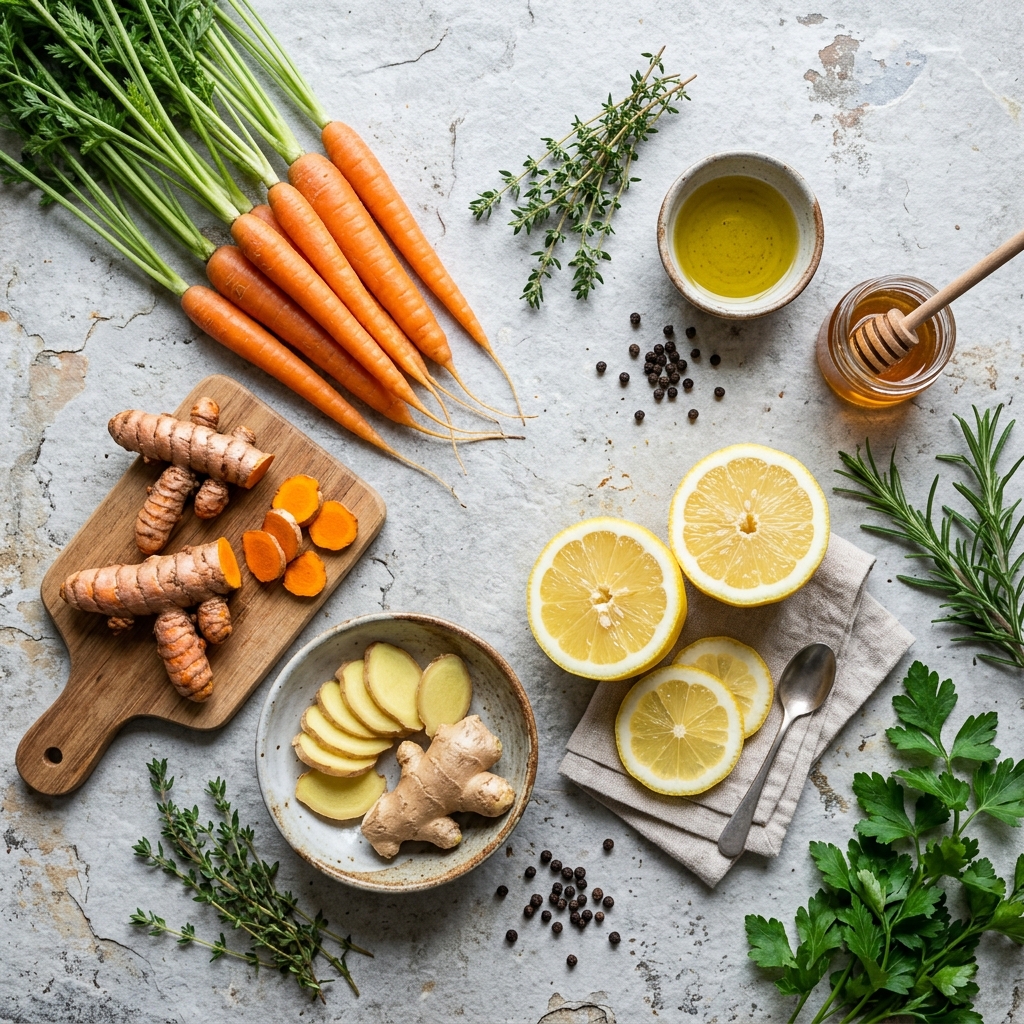
Yes, with an important qualification about quantity and sugar content.
Raw carrots are a well-established source of beta-carotene, which converts to vitamin A in the body. Vitamin A is one of the most important nutrients for general skin support. Vitamin A is involved in normal skin cell turnover, which is one reason vitamin-A-related ingredients are often discussed in skin health.
Clinical retinoid treatments are different from food sources of vitamin A, so do not view juice like a medicine.
The issue with pure carrot juice in large quantities is natural sugar. Carrot juice has a higher glycaemic index than most vegetable juices, and high-sugar diets are consistently associated with increased blemish severity through the insulin and IGF-1 pathway. A sharp rise in blood sugar triggers insulin, which stimulates androgen hormones, which increase sebum production.
The practical answer: carrot juice at 100 to 150ml per serving, combined with lower-sugar vegetables, is useful for blemish-prone skin. A large glass of pure carrot juice daily is less appropriate for blemish-prone skin. Recipes 3 and 8 in this guide both use carrot at the right proportion alongside cucumber and celery.
Choosing between juicing and eating whole fruits affects how your skin responds. Below is a comparative breakdown of key features.
Hormonal skin blemish patterns differ from other patterns in its location, timing, and the ingredients that help most.
It typically appears along the lower face: jaw, chin, and neck. It tends to follow a cyclical pattern, worsening in the seven to ten days before menstruation. The spots are often deeper, more painful, and slower to resolve than surface pimples.
The nutritional approach for hormonal skin fluctuations focuses on two things. First, reducing systemic inflammation, because elevated inflammatory markers make the hormonal skin response worse. Second, supporting a more balanced overall diet and routine, while recognising that hormone-related skin issues should be discussed with a clinician.
The most relevant juice ingredients for hormonal skin support are: turmeric and ginger for inflammation, celery for apigenin (a flavonoid with documented oestrogenic modulating activity), lemon and beetroot for liver support, and leafy greens for zinc and magnesium that support hormonal regulation at the cellular level.
Recipe 2 in this guide is specifically built around these mechanisms. Drink it daily for a minimum of four weeks to assess impact, as hormonal skin fluctuations respond slowly to dietary changes because the underlying hormonal cycle operates over weeks not days.
A simple daily routine is more effective than occasional intensive juicing. Here is a practical structure.
On waking: 300ml warm water with lemon juice. This is a light start to the day and provides vitamin C before breakfast.
Before breakfast (15 to 20 minutes later): 200ml of Recipe 1, the Classic Green Vegetable Juice, or Recipe 4, the Green Juice for Blemish-Prone Skin.
Mid-morning: Plain water or herbal tea. Keeping fluid intake consistent through the morning maintains the hydration that regulates sebum production.
If hormonal breakouts are current: Replace the morning juice with Recipe 2 in the week before and during menstruation.
This routine costs under five minutes in preparation time, uses standard supermarket ingredients at roughly one pound per serving, and requires no specialist equipment beyond a basic juicer.
Knowing what to cut back on matters as much as knowing what to add.
High-sugar fruit juices: Orange juice, apple juice, mango juice, and grape juice in large quantities raise blood sugar sharply and consistently. The resulting insulin spike increases sebum production through androgen stimulation. These are not off-limits but should be consumed in small amounts combined with vegetables rather than as standalone drinks.
Dairy-based smoothies in excess: Dairy is associated with increased blemish severity in several studies, possibly through IGF-1 pathways. If you already have blemish-prone skin, monitoring your dairy intake alongside juicing is worth doing.
Fizzy drinks and energy drinks: Both raise blood sugar sharply and often contain additives that contribute to systemic inflammation. Replacing these with vegetable-forward juices is one of the highest-impact dietary changes for blemish-prone skin.
Alcohol: Alcohol can affect sleep, hydration, and overall health, which can indirectly affect skin routines. It also causes dehydration that triggers increased sebum production. Reducing alcohol intake is consistently associated with skin improvement in people with breakout-prone skin.
Realistic timelines matter here because most people give up before the benefit becomes visible.
Some people notice their skin feels less tight when hydration and diet improve.
If diet is one of your triggers, breakout patterns may start to change after several weeks of consistent lower-sugar eating and better hydration. This is one reason consistency matters more than expecting one drink to change the skin quickly.
Hormonal skin fluctuations take longer: two to three full menstrual cycles, so six to twelve weeks minimum, to assess whether dietary changes are having a meaningful effect on the hormonal pattern.
Post-breakout marks often change over months rather than weeks. Consistent vitamin C and beta-carotene intake supports the melanin regulation and collagen remodelling that gradually fades hyperpigmentation, but this is a slow process even with clinical skincare assistance.
While natural, specific juice ingredients require caution under certain conditions:
Use this reference table to resolve common side effects when starting a daily juicing routine:
Searches such as which juice is good for skin, juice for glowing skin and juice for clear skin are usually asking for a practical daily drink. The best answer is a low-sugar juice that supports hydration and micronutrient intake without promising to clear acne.
For a related ingredient guide, read our celery juice for skin article.
| Skin goal | Juice idea | Why it fits |
|---|---|---|
| Glowing skin | Carrot, orange, ginger and lemon. | Bright flavour with carotenoids and vitamin C. |
| Clear skin diet | Cucumber, celery, spinach and lemon. | Hydrating and lower in sugar than fruit-only juice. |
| Blemish-prone skin | Green vegetable juice with a small apple slice. | Fresh taste without making the drink too sweet. |
| Dark spots search intent | Carrot, citrus and leafy greens. | Supports a varied diet, but does not remove pigmentation. |
A green blend of cucumber, celery, spinach, lemon, and ginger is the most reliable everyday skin-supportive juice. It supports hydration and provides vegetables, ginger, spinach, and lemon in a low-sugar format. Drink 200 to 250ml daily before breakfast.
Celery, cucumber, turmeric, ginger, lemon, and black pepper is the most relevant recipe for people asking about hormonal skin blemish fluctuations. Turmeric contains curcumin, which is studied for inflammation-related pathways. Celery's apigenin may modulate oestrogenic activity.
Ginger is a warming ingredient commonly used in wellness drinks.
Carrot, orange, lemon, cucumber, and ginger. Vitamin C from orange and lemon supports normal collagen formation and is often discussed in skin tone routines. Beta-carotene from carrot supports even skin tone and protects melanocytes from oxidative damage.
This combination addresses both active spots and the marks they leave.
Yes, in moderate portions of 100 to 150ml combined with low-sugar vegetables. Beta-carotene is a provitamin A carotenoid that fits a skin-supportive diet. Pure carrot juice in large quantities has a higher sugar load that can raise blood sugar and stimulate sebum production, so always combine it with cucumber or celery.
Carrot, orange, turmeric, ginger, and lemon. Beta-carotene, vitamin C, and turmeric make this a colourful, nutrient-rich drink option. Drink it before breakfast on an empty stomach for best absorption.
Is green juice good for skin-friendly diets? Yes. Green vegetable juices are the lowest-sugar category for blemish-prone skin because they are low in sugar and high in zinc, magnesium, and vitamin A.
Keep fruit content minimal: half a green apple or a squeeze of lemon is enough for flavour without raising the glycaemic load.
Water is the most important drink for general skin support. Vegetable-forward juices add nutritional support. Herbal teas, particularly spearmint tea for hormonal blemish fluctuations and green tea for its antioxidant content, are useful additions.
Avoid high-sugar fruit juices, energy drinks, and alcohol.
Detox juice is a popular search term, but juice does not resolve skin conditions. Vegetable juices may support a healthier diet pattern when they replace sugary drinks. Ingredients like lemon, beetroot, and parsley support liver and kidney function.
The effect is most noticeable for people whose breakouts appear to track with hormonal fluctuations or digestive sluggishness.
Blueberry, strawberry, cucumber, and lemon. Berries provide anthocyanins and vitamin C, which fit a nutrient-rich skin-supportive diet. Vitamin C from lemon inhibits excess melanin production that deepens dark marks.
Drink consistently over months for results.
No. Skin blemishes have multiple causes including genetics, hormones, bacterial activity, and environmental factors that juice cannot address. Juicing can meaningfully reduce blemish frequency and severity when the drivers are inflammation, dehydration, blood sugar instability, or sluggish liver function.
For persistent or severe skin concerns, clinical care alongside dietary changes is the most effective approach.
Once daily is sufficient. 200 to 250ml before breakfast on an empty stomach, consistently every day, produces better results than larger amounts drunk occasionally. Consistency over weeks matters considerably more than volume per serving.
The Classic Green Vegetable Juice, Recipe 1 in this guide, is the most practical and maintainable morning option. It takes under five minutes, costs around one pound per serving, and addresses hydration, inflammation, and liver support simultaneously. Add the morning lemon water step before it for maximum effect.
Yes. Curcumin in turmeric is studied for inflammation-related pathways, but turmeric juice should not replace professional skin care. Always add black pepper to any turmeric recipe as it increases curcumin absorption considerably.
Turmeric alone in water has limited effect without the black pepper addition.
Start with a daily morning lemon water followed by a vegetable-forward green juice. Replace high-sugar drinks in your routine with herbal tea or plain water. Add spearmint tea if your skin blemish fluctuations are hormonal.
These changes address hydration, inflammation, and blood sugar in a way that is maintainable long-term without supplements or specialist products.
Lemon juice as part of a wider recipe adds vitamin C and flavour, but it should not be used directly on skin or viewed as a breakout solution. Do not apply lemon juice topically to skin as its acidity can cause irritation and photosensitivity. The benefit is internal, not external.
Which vegetable juice is best for skin-friendly diets? Celery and cucumber are the excellent hydrating choices for daily use. Spinach and kale add zinc and vitamin A.
Beetroot adds antioxidants and liver support. Carrot provides beta-carotene and vitamin A. A blend of two or three of these vegetables outperforms any single vegetable juice for overall skin benefit.
Some people notice their skin feels less tight when hydration and diet improve. Skin changes are gradual, and diet is only one possible factor. Results depend on consistency and on what is driving the blemishes.
Carrot, spinach, cucumber, orange, turmeric, and lemon covers both goals. Carrot and vitamin C from orange and lemon address glow and even skin tone. Spinach provides zinc and magnesium for general skin support.
Turmeric reduces inflammation that drives both dullness and breakouts. This is the recipe to use when you want one daily juice that serves both purposes. Popular Claim vs.
Reality Popular ClaimMore Accurate Take"Celery or green juice clears acne completely"It supports hydration and provides antioxidants, but does not treat the root hormonal causes of acne Final takeaway:Green vegetable-led juices can support skin hydration as part of a low-sugar, balanced diet. Best choice:A cucumber-mint-spinach green juice with a squeeze of fresh lemon. Main caution:Limit sweet fruits like apples or grapes to avoid insulin-driven breakouts.
Next step:Read our guide to low-sugar skin-friendly ingredients and consult a dermatologist. Conclusion The best juices for skin-friendly diets are those that matches what is actually causing your breakouts. For most people, that is a combination of factors: some inflammation, some dehydration, some blood sugar variability, and occasionally some hormonal involvement.
Start with Recipe 1, the Classic Green Vegetable Juice, as your daily base. Add Recipe 2 in the week before your period if hormonal skin fluctuations are a pattern. Rotate Recipe 3 or Recipe 9 when your focus shifts to dark spots and recovery.
Use the morning glow recipe when you want a brighter, lighter drink. The results are real and measurable, but they build over weeks not days. A glass of vegetable juice does not clear a surface blemish overnight.
A daily glass as part of your routine supports the internal conditions that determine how your skin looks.
A good skin-friendly juice is usually low in added sugar and based on cucumber, celery, spinach, carrot, citrus or ginger. It can support hydration and nutrient intake, but it cannot treat acne or replace skincare or medical care.
There is no juice that guarantees clear skin. A sensible option is green vegetable juice with lemon or a small amount of carrot or apple for flavour. Keep it low in sugar if breakouts seem to worsen with sweet drinks.

.webp)
Share this article


.webp)


.jpg)


.jpg)


.jpg)


.png)


