


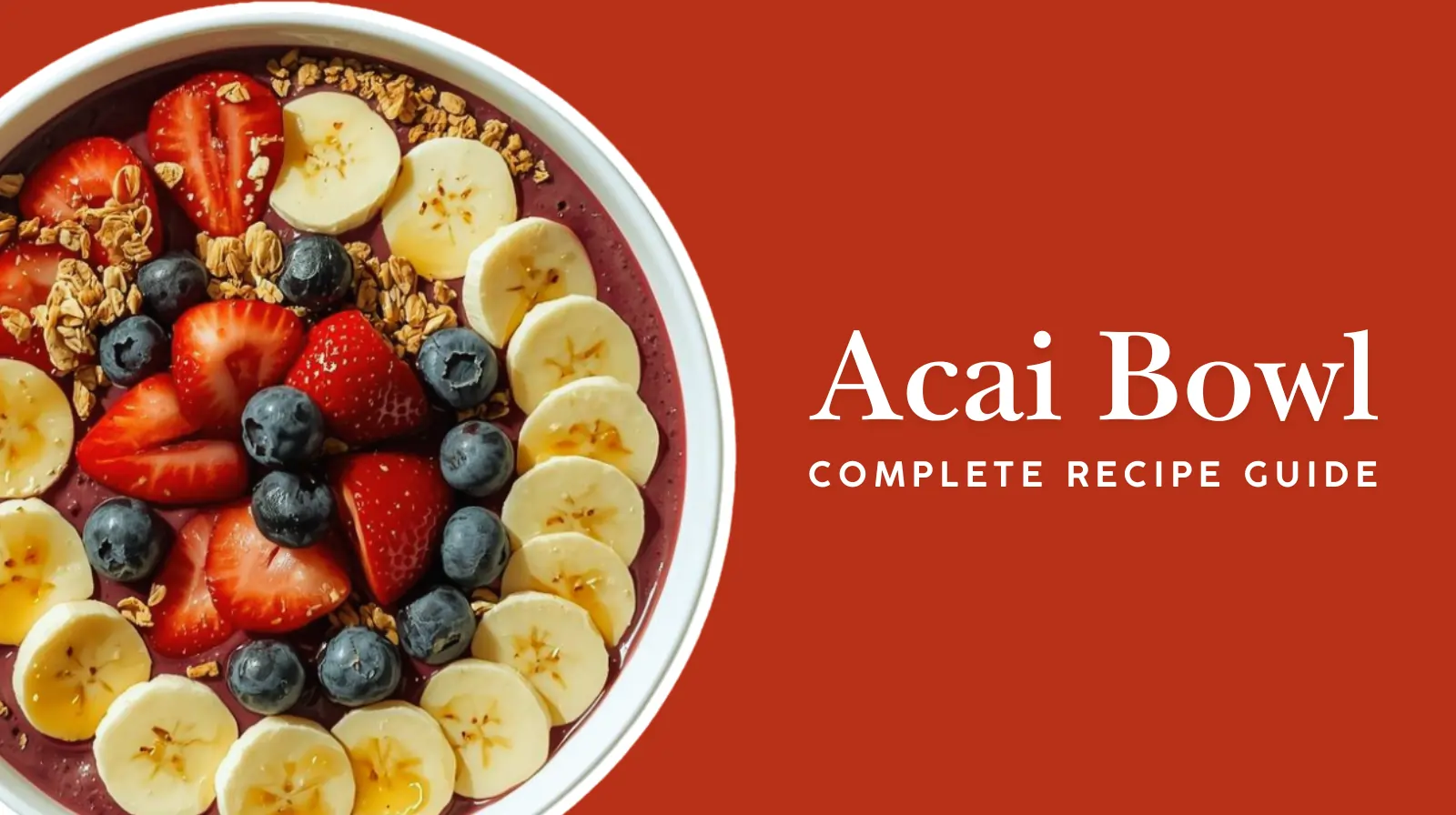
Making a Jamba Juice acai bowl recipe at home is more straightforward than it looks once you understand two things: the base needs to be thick enough to eat with a spoon, and the granola is doing more work than most people give it credit for. Get those two elements right and everything else follows.
This guide covers the full Jamba-style acai bowl recipe, what granola Jamba Juice actually uses and how to replicate it, how to make an acai base from scratch, the calories and nutrition breakdown, the acai smoothie version, the Primo Bowl, and answers to the questions that consistently come up around making acai bowls at home.
Quick Answer: How to Make a Jamba Juice Acai Bowl
Blend 100g of frozen acai puree with half a cup of frozen mixed berries, half a banana, and 60ml of cold juice or coconut water until thick and creamy. Pour into a wide bowl, smooth the surface, and top with granola, sliced banana, fresh strawberries, and blueberries. Add a light drizzle of honey if you want it. The key is keeping the blend thick enough to hold the toppings without them sinking.
What Is an Acai Bowl?
An acai bowl is a thick, blended frozen acai base served in a bowl and eaten with a spoon rather than drunk as a liquid. The consistency sits somewhere between a firm sorbet and soft-serve ice cream. It holds toppings on its surface rather than letting them sink.
The base is made from frozen acai puree or acai powder blended with frozen fruit and minimal liquid. Toppings typically include granola for crunch, fresh fruit for flavour and colour, and optional drizzles such as honey or nut butter.
Acai bowls became popular in Brazil, where acai has been consumed for centuries, before spreading globally through wellness and surf culture. Jamba Juice helped bring them into mainstream American and international consciousness, and their version has become one of the most-replicated acai bowl styles.
What Is Acai and Why Does It Matter?
Acai is a small, dark purple berry that grows on acai palm trees in the Amazon rainforest, primarily in Brazil. It looks like a blueberry but tastes quite different: earthy, slightly chocolate-like, with a hint of berry and a dry, tannic finish.
Raw acai berries have an extremely short shelf life and are almost never available fresh outside South America. The acai available internationally is either frozen puree (the most useful form for bowls), freeze-dried powder, or juice. Frozen puree preserves the flavour and nutritional profile most effectively.
Acai's reputation as a superfood rests primarily on its exceptionally high antioxidant content, specifically anthocyanins, the same pigment compounds that give blueberries, red wine, and pomegranate their colour and much of their health benefit. It also provides healthy fats, primarily oleic acid (the same as olive oil), fibre, and a small amount of protein relative to most fruits.
What Is an Acai Base?
The acai base is the blended foundation of the bowl: the thick, smooth, frozen layer that everything else sits on top of. It is not just acai blended with liquid. Getting it right requires understanding the role of each ingredient.
Frozen acai puree provides the flavour, colour, and antioxidants. It is the non-negotiable ingredient. Use 100g per serving as a starting point.
Frozen banana adds natural sweetness, creaminess, and helps the base achieve a smooth rather than icy texture. Use half a banana per serving. A fully ripe banana that has been peeled and frozen before use works best.
Frozen mixed berries extend the volume, add additional antioxidants, and deepen the flavour. Strawberries, blueberries, and raspberries all work well. Aim for approximately half a cup per serving.
Liquid is the variable that most people get wrong. Too much and the base becomes runny. The goal is the minimum amount needed to get the blender moving: start with 50ml and add more one tablespoon at a time only if the blender is struggling. Cold apple juice, cold orange juice, or coconut water all work well.
How to Make Acai Base From Scratch
This is the section most searched for but least well covered in existing acai bowl content.
What you need:
- 100g frozen acai puree (available in most health food shops and large supermarkets, usually sold in 100g sachets)
- Half a ripe banana, peeled and previously frozen
- Half a cup of frozen mixed berries
- 50 to 60ml cold juice or coconut water
- A high-speed blender with a tamper, or a food processor
Method:
Remove the frozen acai from the freezer five minutes before blending. This makes it slightly easier to break up without requiring more liquid. Break the sachet into pieces if possible before opening.
Add the juice to the blender first. This helps the blades start moving without needing to force dry ingredients. Add the frozen berries, then frozen banana, then the acai pieces.
Blend on low speed first, then increase gradually. Use the tamper to push ingredients toward the blades. If the blender stalls, add one tablespoon of additional liquid and try again. The goal is thick and creamy, not smooth and pourable.
The finished base should hold its shape when you tap the side of the blender. If it runs and levels itself like a liquid, it is too thin. Add more frozen banana or berries and blend again briefly.
Using acai powder instead of puree: Mix two tablespoons of acai powder with one cup of ice before blending. The result is similar but the flavour is less intense. Puree is preferable for a genuine Jamba Juice-style taste.
What Granola Does Jamba Juice Use?
This is one of the most consistently searched questions about Jamba's acai bowls. Jamba Juice does not publicly disclose its exact granola supplier, but the characteristics of their granola are well documented through customer descriptions and copycat recipe testing.
Jamba's granola is oat-based, lightly sweetened with honey, has a medium-fine cluster size that does not overwhelm the acai base, holds its crunch for several minutes against the frozen base before softening, and has a clean, slightly nutty flavour that does not compete with the fruit.
Does Jamba Juice granola have nuts? The standard Jamba Juice granola does not prominently feature whole nuts, though some versions may contain traces depending on the specific product and facility. If you have a nut allergy, always check with the specific location, as preparation areas may vary.
Jamba Juice granola ingredients (replicated): Rolled oats, honey, sunflower seeds, pumpkin seeds, a small amount of brown rice crisps for extra texture, a touch of coconut oil for toasting, and cinnamon. It is lightly sweet, not aggressively sugary.
How to make it at home:
- 2 cups rolled oats
- 3 tablespoons honey
- 2 tablespoons coconut oil, melted
- 2 tablespoons sunflower seeds
- 2 tablespoons pumpkin seeds
- Half a teaspoon cinnamon
- Pinch of salt
Combine all ingredients and mix until every oat is coated. Spread on a lined baking tray in a thin layer. Bake at 160°C for 18 to 22 minutes, stirring once at the halfway point. Allow to cool completely before storing. It will crisp up further as it cools.
Store in an airtight container for up to two weeks. This produces a granola that is almost identical in character to Jamba's: lightly sweet, crunchy, seed-forward, and clean-tasting against frozen fruit.
Full Jamba Juice Acai Bowl Recipe
Ingredients (serves 1):
For the base:
- 100g frozen acai puree
- Half a cup frozen mixed berries (strawberries, blueberries, raspberries)
- Half a ripe banana, frozen
- 50 to 60ml cold apple juice or coconut water
For the toppings:
- Half a cup granola (homemade as above, or a good shop-bought equivalent)
- Half a banana, sliced
- 4 to 5 fresh strawberries, halved
- Quarter cup fresh blueberries
- 1 teaspoon honey, optional
Method:
Step 1: Prepare everything before blending. Slice the fresh banana and strawberries. Have the granola and blueberries measured out. The base needs to go straight from blender to bowl to toppings without delay, as it softens quickly.
Step 2: Add juice to the blender. Add frozen berries, frozen banana, then acai pieces broken up as much as possible.
Step 3: Blend on low, increasing to medium. Use the tamper constantly to push ingredients down. The blend should take 30 to 45 seconds with a powerful blender. Stop when the mixture is thick and no ice chunks remain.
Step 4: Pour the base into a wide, flat bowl. Use the back of a spoon to smooth the surface evenly. Work quickly.
Step 5: Spoon granola across the centre of the bowl in a strip or over one half. Arrange banana slices, strawberry halves, and blueberries in rows or sections alongside the granola.
Step 6: Drizzle a small amount of honey across the fruit if using. Serve immediately.
Prep time: 5 minutes Total time: 7 minutes Serves: 1
Jamba Juice Acai Bowl Calories
Understanding the calorie breakdown helps you make sensible decisions about portions without overthinking it.
Jamba Juice Acai Bowl calories (standard serving): Approximately 380 to 490 calories depending on the size and toppings selected.
Breakdown by component:
- Acai base (100g puree with berries and half banana): 120 to 150 calories
- Granola (half a cup): 150 to 200 calories
- Fresh banana topping (half banana): 50 calories
- Fresh berries (combined): 30 to 40 calories
- Honey drizzle (1 teaspoon): 20 to 25 calories
The granola is consistently the highest-calorie component. Reducing granola from half a cup to a quarter cup saves 75 to 100 calories without significantly changing the eating experience, because a thin even layer of granola provides crunch across the whole bowl rather than a thick cluster in one area.
Calories in an acai bowl with granola at home: A well-proportioned homemade version using the recipe above comes in at approximately 380 to 440 calories per bowl, making it a solid and genuinely filling meal rather than a snack.
Is a Jamba Juice Acai Bowl Healthy?
Yes, with context. The ingredients in a Jamba-style acai bowl are whole, unprocessed foods with meaningful nutritional value. Acai provides antioxidants. Berries provide vitamin C and more antioxidants. Banana provides potassium. Granola provides fibre and sustained energy from complex carbohydrates. The full bowl is a better breakfast than most processed alternatives.
The considerations worth knowing: sugar and calorie content can be higher than people expect for something perceived as a health food. A bowl with a full banana, half a cup of sweetened granola, and a honey drizzle contains 35 to 50g of natural sugars. This is not the same as 35g of refined sugar from a chocolate bar, because it comes with fibre, vitamins, and antioxidants that slow absorption. But for people managing blood sugar closely, it is worth being aware of.
Are acai bowls healthy compared to other breakfasts? For most people, a well-proportioned acai bowl is a nutritious and satisfying breakfast choice. Compared to a bowl of sweetened cereal with milk, it provides more antioxidants, more fibre from real fruit, and more varied micronutrients. Compared to eggs and vegetables, it is higher in sugar and lower in protein.
The healthiest approach is to treat it as a meal: a proper, considered serving of real food rather than a light snack or a dessert. Portions matter more than the ingredients themselves.
Jamba Juice Acai Smoothie Recipe
As well as the bowl, Jamba Juice offers an acai smoothie, which uses the same base ingredients but with more liquid to create a drinkable rather than spoonable consistency.
Ingredients (serves 1):
- 100g frozen acai puree
- Half a cup frozen mixed berries
- Half a banana, frozen
- 1 cup cold apple juice or coconut water
- Optional: 1 tablespoon honey or a few dates for sweetness
Method: Combine all ingredients in a high-speed blender. Blend until completely smooth and pourable. Unlike the bowl, you want the smoothie to be fully liquid, so add juice gradually until you reach the right drinkable consistency. Serve immediately in a tall glass.
The primary difference from the bowl recipe is the liquid ratio. Use approximately three times as much liquid for a smoothie as you would for a bowl base. The result is a rich, purple-coloured smoothie with the same flavour profile as the bowl but designed to drink rather than eat.
For anyone who finds the bowl too thick or time-consuming to prepare, the smoothie version captures most of the same nutritional benefits in a more portable format.
Acai Primo Bowl: What Is It?
The Jamba Juice Primo Bowl is their larger, more premium acai bowl option. It typically features the same base but with a more generous topping arrangement: more granola, more varied fruit, and often the addition of coconut flakes and a more structured presentation.
At home, the Primo Bowl equivalent simply means scaling up the toppings rather than the base. Use the same 100g acai base, but add a wider variety of toppings: fresh mango or kiwi alongside the standard banana and berries, a tablespoon of shredded coconut, a drizzle of almond butter alongside or instead of honey, and a slightly more generous granola layer.
The Primo Bowl is also typically larger in base volume at Jamba. If you want to replicate the fuller serving, increase the base to 150g acai with three-quarters of a cup of frozen berries and a whole frozen banana.
Acai Bowl Variations to Try at Home
Tropical Acai Bowl
Blend the acai base with frozen mango chunks instead of mixed berries. Top with sliced kiwi, fresh mango pieces, shredded coconut, and granola. Add a squeeze of lime over the finished bowl.
This variation is lighter and more refreshing than the classic, with a natural sweetness from mango that makes it appealing to people who find the standard acai base slightly tart.
Protein Acai Bowl
Add one scoop of unflavoured or vanilla protein powder to the base blend. Top with Greek yoghurt alongside the standard granola and fruit. Add a tablespoon of almond butter for healthy fat.
This version provides 20 to 25g of protein per bowl, making it far more suitable as a post-exercise meal than the standard recipe. The protein also slows the absorption of the natural sugars from the fruit.
Green Superfood Bowl
Add a large handful of spinach to the base blend. The spinach does not noticeably change the flavour because the acai and berries are strong enough to mask it, but the bowl remains dark purple because of the acai pigment.
Top with chia seeds, hemp seeds, and sliced kiwi alongside the standard granola. This version provides iron, magnesium, and additional vitamin C from the spinach and kiwi.
Berry Antioxidant Bowl
Use only dark berries in the base and as toppings: blueberries, raspberries, blackberries, and strawberries. Add pomegranate seeds as a topping. Skip the banana and use a small amount of dates blended into the base for sweetness instead.
This produces the highest antioxidant version of an acai bowl and is particularly useful for anyone interested in the skin and cardiovascular benefits of anthocyanin-rich foods. Our best juicing for acne guide covers the skin connection to berry antioxidants in more detail.
Acai Bowl Toppings Guide
The toppings determine the texture, nutritional balance, and visual appeal of an acai bowl as much as the base itself.
For crunch: Granola is the standard. Cacao nibs, toasted coconut flakes, and chopped nuts all add different types of crunch with different flavour characters.
For sweetness: Fresh banana is the classic. Mango, kiwi, and strawberries are the most versatile fruit toppings. Honey or agave drizzle adds a finishing sweetness without overwhelming the fruit.
For protein and fat: Almond butter, peanut butter, or tahini drizzled over the fruit adds healthy fat and protein that slows sugar absorption. Hemp seeds and chia seeds add protein with a subtle nutty flavour.
For extra antioxidants: Pomegranate seeds, goji berries, and blueberries on top of the already antioxidant-rich base push the nutritional value even further.
For colour and visual appeal: Alternating rows of banana, strawberry, and blueberry is the Jamba Juice signature. Kiwi slices add bright green. Pomegranate seeds add deep red contrast.
Do Acai Bowls Have a Lot of Sugar?
Yes, relative to a vegetable-based meal. A standard acai bowl with granola, banana, and a honey drizzle contains 35 to 50g of sugar. The majority of this is natural fructose from fruit.
The distinction from refined sugar matters but should not be used to ignore portion size. Natural fruit sugars come with fibre, vitamins, and antioxidants that slow their absorption and provide nutritional value alongside the sweetness. Refined sugars provide only the sweetness.
For people managing blood sugar, the practical steps are: use a smaller portion of banana (quarter rather than half), choose unsweetened granola, skip the honey drizzle, add a protein source such as Greek yoghurt or protein powder to slow sugar absorption, and avoid adding mango or other high-sugar fruits on top of an already fruit-heavy base.
For anyone with diabetes who wants more specific guidance on fruit and juice, our diabetic natural juices guide covers portion control and low-sugar fruit choices in detail.
Acai Bowl vs Smoothie: Which Is Better?
They serve different purposes rather than one being objectively better.
An acai bowl is a sit-down meal. The thick base, crunchy granola, and fresh fruit require a spoon and attention. It is slower to eat, more filling because of the fibre from granola and whole fruit, and provides a more varied texture experience. It is appropriate as a breakfast or a substantial snack.
An acai smoothie is portable, faster to consume, easier to digest, and more suitable for people who want breakfast on the go or a quick post-exercise drink. It provides similar antioxidants but less fibre overall because granola is not part of the format.
If you have time and want a proper meal, the bowl is better. If you need something fast that you can drink while commuting or before exercise, the smoothie version makes more sense. Neither is nutritionally superior in absolute terms.
Tips for Getting the Base Right Every Time
The single most common problem people encounter with acai bowls at home is a base that is too thin. Here is how to avoid it.
Freeze everything. The acai, the banana, the berries. Nothing going into the base blend should be at room temperature. Even slightly thawed frozen fruit makes the base runnier.
Use the minimum liquid. Less than you think you need. Start with 50ml for a single serving. Add more only if the blender absolutely cannot process the ingredients.
Use a tamper. A high-speed blender with a tamper is considerably more effective for acai bases than a standard blender without one. The tamper pushes frozen ingredients toward the blades without adding extra liquid. A food processor is a reasonable alternative if you do not have a high-speed blender.
Work quickly. Once blended, the base starts warming and thinning within about two minutes. Have the bowl and toppings ready before you start blending so you can assemble immediately.
If the base is too thin, add more frozen banana or frozen berries, blend again briefly, and recheck. A tablespoon of frozen Greek yoghurt can also thicken a base that has been over-liquidised.
FAQs
What is a Jamba Juice acai bowl made of?
A Jamba Juice acai bowl is made of a thick frozen base blended from acai puree, mixed berries, and banana, topped with oat-based granola, fresh banana slices, strawberries, blueberries, and an optional honey drizzle. The base is blended to a sorbet-like consistency using minimal liquid so it holds the toppings on its surface.
What granola does Jamba Juice use?
Jamba Juice uses a lightly honey-sweetened, oat-based granola with seeds. It has a medium cluster size, holds its crunch well against the frozen base, and has a clean flavour that does not overpower the fruit. It does not heavily feature whole nuts in the standard version. You can replicate it at home with rolled oats, honey, coconut oil, sunflower seeds, pumpkin seeds, and cinnamon baked at 160°C for 18 to 22 minutes.
Does Jamba Juice granola have nuts?
The standard Jamba Juice granola does not prominently feature whole nuts. Some products may contain traces depending on the specific location and preparation area. If you have a nut allergy, check with the specific Jamba Juice location before ordering.
What is an acai base?
An acai base is the thick, blended frozen mixture that forms the foundation of an acai bowl. It is made by blending frozen acai puree with frozen banana, frozen berries, and a small amount of cold liquid until thick and smooth enough to eat with a spoon. The consistency should resemble firm sorbet rather than a pourable smoothie.
How do you make acai base?
Blend 100g frozen acai puree with half a cup of frozen mixed berries, half a frozen banana, and 50ml of cold juice or coconut water until thick and creamy. Use minimal liquid and a tamper if available. The finished base should hold its shape. Work quickly once blended as it warms and thins within two minutes.
How many calories are in a Jamba Juice acai bowl?
A standard Jamba Juice acai bowl contains approximately 380 to 490 calories depending on size and toppings. The granola contributes 150 to 200 calories of this total. A homemade version using the recipe in this guide comes in at approximately 380 to 440 calories.
Is a Jamba Juice acai bowl healthy?
Yes. The ingredients are whole, unprocessed foods with meaningful nutritional value: acai provides antioxidants, berries provide vitamin C, banana provides potassium, and granola provides fibre and sustained energy. Sugar content is higher than a vegetable-based meal, which is worth noting for people managing blood sugar, but overall it is a nutritious option compared to most processed breakfast alternatives.
What is the acai base at Jamba Juice made of?
The Jamba Juice acai base is made from frozen acai puree blended with frozen banana, frozen strawberries, and a small amount of apple juice or similar liquid. The blend is kept very thick to achieve the spoonable sorbet consistency that holds granola and fruit toppings on its surface.
How do you make a Jamba Juice acai smoothie?
Use the same ingredients as the bowl base but triple the liquid: 100g frozen acai, half a cup of frozen berries, half a banana, and one cup of cold apple juice or coconut water. Blend until fully smooth and pourable. Serve immediately in a tall glass. The result has the same flavour as the bowl but a drinkable rather than spoonable consistency.
What is the Jamba Juice Primo Bowl?
The Primo Bowl is Jamba's larger premium acai bowl with a more generous topping arrangement. At home, replicate it by using the standard base recipe but adding a wider variety of toppings: fresh mango or kiwi alongside banana and berries, shredded coconut, a drizzle of almond butter, and a slightly more generous granola layer.
Why is my acai bowl too thin?
The most common cause is too much liquid in the base blend. Start with 50ml for a single serving and add more only if the blender cannot process the frozen ingredients. Also ensure all components going into the base are fully frozen, including the banana. Room-temperature or slightly thawed fruit thins the base significantly.
Can you make an acai bowl without a high-speed blender?
Yes. A food processor works well for acai bases because it handles frozen ingredients without requiring as much liquid as a standard blender. Let the frozen acai and berries sit at room temperature for three to five minutes before processing to make them slightly easier to break down. A standard blender will work but may require slightly more liquid, producing a thinner result.
Are acai bowls good for weight loss?
Acai bowls can be part of a weight management diet at controlled portion sizes. A bowl with quarter cup granola, half a banana, and no honey drizzle comes in at approximately 280 to 320 calories, which is a reasonable breakfast calorie target. The fibre content supports satiety. The main risk with acai bowls and weight management is portion creep: large servings with full cups of granola and multiple drizzles can reach 700 calories.
Do acai bowls have a lot of sugar?
Yes, relative to a vegetable-based meal. A standard bowl contains 35 to 50g of natural sugar from fruit. This is natural fructose that comes with fibre and antioxidants rather than refined sugar, but it is still worth being portion-aware. To reduce sugar: use less banana, skip the honey drizzle, and choose unsweetened granola.
What are the best toppings for an acai bowl?
Granola for crunch, sliced banana and fresh berries for sweetness and colour, and a light drizzle of honey or almond butter for finishing flavour. For extra nutrition: chia seeds, hemp seeds, pomegranate seeds, or coconut flakes. For more protein: a tablespoon of Greek yoghurt or almond butter.
Conclusion
Making a Jamba Juice acai bowl at home comes down to three things: the right base consistency, the right granola, and working quickly once the blend is done. The base needs to be thick enough to eat with a spoon, the granola needs to be light and crunchy rather than sweet and heavy, and the toppings need to be ready before you start blending.
Start with the full recipe in this guide. Get the base right first before experimenting with variations. Once the technique is consistent, the variations, tropical, protein, green, berry, are straightforward to build from the same foundation.
The homemade version is fresher, less expensive, and considerably more customisable than anything you can order. It also takes under ten minutes.
References
- Healthline. (2023). Acai berries: health benefits and nutritional information. https://www.healthline.com/nutrition/benefits-of-acai-berries
- NHS. (2022). Fruit and vegetables: How to get five a day. NHS UK. https://www.nhs.uk/live-well/eat-well/5-a-day/
- Healthline. (2023). Are acai bowls healthy? Calories and nutrition. https://www.healthline.com/nutrition/acai-bowl-calories-and-nutrition
- British Nutrition Foundation. (2024). Antioxidants and health. https://www.nutrition.org.uk/healthy-sustainable-diets/antioxidants/
- European Food Safety Authority. (2024). Dietary reference values. https://www.efsa.europa.eu/en/topics/topic/dietary-reference-values


Comments and reviews (0)