


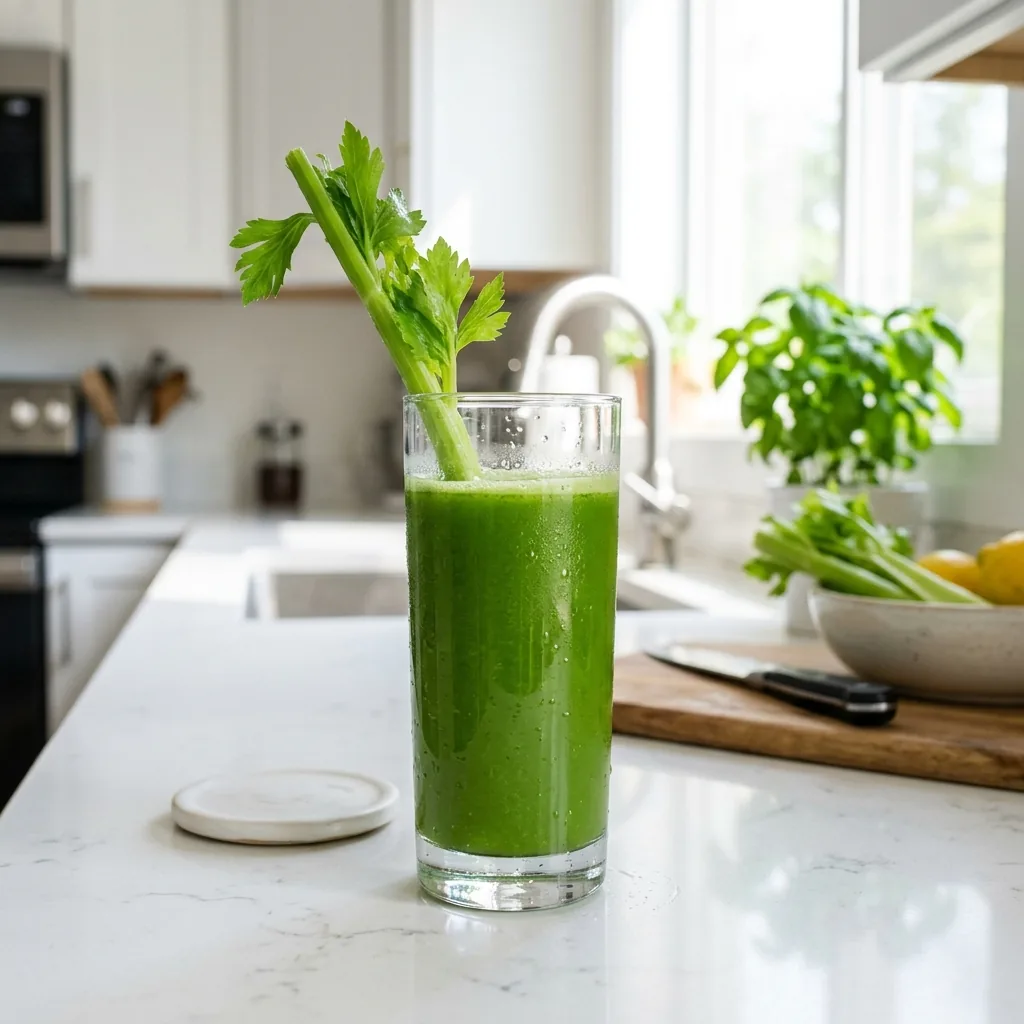
Celery juice has been widely praised online as a miracle skin cure, but it is important to separate marketing claims from actual nutrition. While it cannot resolve skin conditions on its own, it can be a highly hydrating, low-sugar addition to a skin-conscious lifestyle.
Quick answer: Celery juice is mostly a hydrating, low-sugar vegetable drink. It may fit into a skin-conscious diet, but it is not a treatment for acne or skin conditions and should not replace fibre-rich whole foods or dermatologist advice.
Medical note: This article is for general information only and does not replace medical or dermatological advice. Speak with a healthcare professional before making major dietary changes.
This guide covers celery juice nutrition, skin health claims, and safety guidelines for daily servings.
| Question | Short Answer |
|---|---|
| Best serving size | 250ml portion |
| Best base | 100% pure celery juice |
| Main caution | High concentration of FODMAP starches can cause digestive sensitivity |
| Best use | A highly hydrating, low-sugar addition to a skin-conscious diet |
| Who should ask a professional | People with chronic skin conditions, digestive issues, or kidney concerns |
How Celery Juice Fits Into a Skin-Friendly Diet
The connection between celery juice and skin hydration is straightforward once you look at what celery contains.
At 95% water, celery juice is one of the most hydrating vegetables you can juice. Hydration matters for skin because without adequate water, skin cells lose their plumpness, the skin barrier weakens, and the body compensates by producing more sebum, which can affect how skin feels.
The antioxidant compounds in celery, particularly apigenin, luteolin, and quercetin, reduce systemic inflammation. Inflammation is the common factor behind general skin discomfort, redness, and puffiness. Supporting the body with nutrients through diet and hydration has a positive effect on how skin looks and behaves.
Vitamin C in celery contributes to collagen synthesis. Collagen keeps skin firm, elastic, and smooth, and natural production declines by around one percent each year from the mid-twenties. Vitamin A supports cell turnover, keeping dead cells from accumulating and blocking pores.
5 Key Celery Juice Benefits for Skin
Benefit 1: Deep Hydration From Within
Celery's 95% water content makes it exceptionally effective at contributing to skin hydration from inside the body, not just through a topical moisturiser. When skin is properly hydrated internally, it appears plumper, fewer fine lines are visible, and the natural glow that dehydrated skin loses is much easier to maintain.
The electrolytes in celery, primarily potassium and sodium in their natural form, support the body's fluid balance. This is different from plain water, which does not carry the same electrolyte profile. Electrolytes help cells actually absorb and retain water rather than simply passing it through.
People who drink 200 to 250ml of celery juice consistently in the morning often report that their skin feels less tight and dry. This is primarily a general hydration effect.
Benefit 2: Antioxidants That Reduce Ageing and Redness
Celery contains several well-studied antioxidant compounds. Apigenin and luteolin are flavonoids with specific anti-inflammatory activity. Quercetin is known for reducing histamine-related inflammation. Phenolic acids including caffeic acid and ferulic acid protect cells from oxidative damage caused by UV exposure, pollution, and stress.
Oxidative stress is one of the primary drivers of premature skin ageing. Free radicals from the environment damage collagen fibres, disrupt melanin production causing uneven skin tone, and accelerate the breakdown of the skin's structural proteins. Antioxidants neutralise these free radicals before they cause damage.
The practical effect of consistent antioxidant intake for skin is reduced redness, slower development of fine lines and dark spots, and a more even complexion over time. Celery juice is not the most antioxidant-dense juice available, but its combination of antioxidants alongside its hydration makes it particularly effective for daily use.
Benefit 3: Collagen Support Through Vitamin C
Vitamin C is not optional for collagen production. Without it, the body cannot form stable collagen molecules. This is the direct nutritional connection between celery juice and firmer, more elastic skin.
Celery contains moderate vitamin C, approximately 3mg per 100ml of fresh juice. This is less than citrus juice, which is why adding a squeeze of lemon to celery juice both improves palatability and significantly boosts the vitamin C content for collagen purposes.
The benefit is cumulative rather than immediate. Consistent daily vitamin C intake and months supports the ongoing production of new collagen to replace what the body naturally breaks down through ageing and sun exposure.
Dietary Hydration: What Celery Juice Can and Cannot Do
Celery juice is not a treatment or cure for skin conditions, but it can play a supportive role in a skin-friendly diet.
Proper hydration supports normal skin function. When the body is hydrated, skin barrier function is supported, which is helpful for general skin health.
While the anti-inflammatory compounds in celery support general health, they do not replace standard dermatological care. Managing skin wellness requires looking at daily routines, skincare, and medical advice.
Vitamin A supports skin cell turnover. When dead skin cells are shed efficiently, they are less likely to accumulate on the surface, supporting a smoother texture.
The realistic expectation for most people is general skin comfort and hydration rather than structural improvements. Skin changes involve factors that celery juice cannot address, including genetics, hormones, and other concerns that require clinical advice.
Hydration, Sodium and Practical Limits
Celery is highly hydrating and contains natural sodium, which plays a role in fluid balance. Sipping celery juice can support daily fluid intake, which is necessary for maintaining hydrated skin.
Like other green vegetables, celery provides vitamins and minerals that support overall metabolic health and natural filtering processes, which in turn benefits the body as a whole.
The positive effects most people notice after a few weeks of daily celery juice are primarily due to improved hydration and the general benefits of consuming nutrient-dense vegetables.
Celery Juice and General Hydration Support
The question "what does celery do for the female body" appears consistently in search data. The honest answer is that many of the benefits are not gender-specific, but several are relevant to female hormone patterns.
Hormonal fluctuations: Changes across the menstrual cycle can affect skin appearance. Celery's antioxidants, while not a medical fix, may fit into a skin-friendly diet during these cycles.
Perimenopause and skin changes: As estrogen declines, collagen production slows more sharply, skin can become drier, and inflammatory responses can increase. The hydration and vitamin C in celery juice support skin barrier health during this transition.
Under-eye circles and puffiness: Fluid retention is common during specific phases of the cycle. Celery's potassium content supports normal fluid balance and hydration, which can help manage fluid retention.
General collagen maintenance: Consistent vitamin C intake supports the body's natural collagen synthesis, which is a key part of maintaining healthy skin over time.
Does Celery Juice Support General Cellular Health?
Celery contains antioxidants like apigenin and luteolin, which have been studied in laboratory settings for their role in supporting general cellular health.
Apigenin inhibits the production of pro-inflammatory cytokines, the signalling molecules that trigger and sustain inflammatory responses in the body. Luteolin has similar properties and has been studied specifically in the context of skin health. Quercetin modulates histamine release, which is relevant for people whose skin inflammation has an allergic component.
For the skin, proper hydration and nutrients support the skin's natural barrier function and general appearance.
It is also relevant for general skin comfort. A skin-friendly diet may benefit from consistent nutrition, supporting the skin barrier alongside appropriate care for any dryness or sensitivities.
Celery Juice and Hydration Support
While celery juice is not a treatment for rosacea and does not address vascular reactivity or redness, the fluid intake supports overall hydration. If you have rosacea, consult your dermatologist before making major changes to your diet.
Cold Pressed Celery Juice Benefits
Cold pressing preserves more of the heat-sensitive nutrients in celery, particularly vitamin C and the enzyme activity of the raw juice. Standard centrifugal juicing introduces heat through friction, which degrades some of these compounds during extraction.
For skin purposes, the practical difference is that cold-pressed celery juice delivers more intact vitamin C per serving, more active antioxidant compounds, and a higher enzyme content. These factors make cold-pressed marginally more effective than standard centrifugal juicing for skin health goals.
The other benefit of cold pressing for celery specifically is that celery is a fibrous vegetable with a relatively low juice yield from centrifugal juicers. Cold pressing extracts more juice per stalk and produces a cleaner, less pulpy drink that is easier to maintain as a daily habit. Our cold press drinks vs regular juice guide covers the broader nutrient comparison between the two methods.
Celery Cucumber Juice for Skin
Combining celery with cucumber produces one of the most skin-supportive juices available from standard ingredients. Cucumber adds silica, a mineral that supports collagen and connective tissue, additional hydration, and a mild flavour that makes celery much easier to drink for people who find pure celery juice too intense.
Simple celery cucumber recipe:
- 4 celery stalks, washed
- 1 large cucumber
- Juice of half a lemon
- Small piece fresh ginger, optional
Method: Juice the cucumber first, then celery, then ginger. Add lemon juice. Drink immediately.
The silica from cucumber complements celery's vitamin C by providing another mechanism for collagen support. Vitamin C enables collagen formation; silica contributes to the structural integrity of the collagen that forms. They work at different points in the same process.
For more combinations that pair celery with other skin-supporting vegetables, our carrot celery juice recipe guide covers a range of combinations with complementary nutritional profiles.
Celery Juice vs. Whole Celery
| Feature | Celery Juice (Liquid Only) | Whole Celery Stalks |
|---|---|---|
| Fibre Content | Discarded during juicing | Fully retained (supports digestion and satiety) |
| Nutrient Density | Concentrated (more vitamins per volume) | Standard (requires eating larger volume) |
| Hydration Level | Very high (rapid absorption of fluids) | High (released slowly during digestion) |
| Skin Support | Supports skin hydration through electrolytes | Supports gut-skin axis through dietary fiber |
How Much Celery Juice to Drink for Skin Benefits
200 to 250ml per day is the most commonly recommended amount and the one that aligns with realistic nutrient contribution. More than this does not proportionally increase the skin benefit and very large quantities, above 500ml daily, can cause digestive discomfort in some people due to celery's diuretic and high-fibre characteristics.
The morning timing recommendation exists for a practical reason: drinking celery juice on an empty stomach before food allows the nutrients to be absorbed without competing with the digestion of a meal. This is consistent with how the body absorbs vitamins and minerals more efficiently when the digestive system is not already occupied.
That said, if drinking celery juice in the morning does not suit your routine, drinking it at any other time of day still provides the same nutritional benefit. Consistency matters considerably more than timing.
How Long After Celery Juice Can I Eat?
Most guidance suggests waiting 15 to 30 minutes after drinking celery juice before eating. The reasoning is that the nutrients from fresh juice absorb more efficiently on an empty stomach, without the presence of food slowing or competing with absorption.
In practice, waiting 15 minutes is sufficient for most people. If you are in a hurry, drinking celery juice and then eating breakfast 10 minutes later is not going to meaningfully reduce the benefit. The 15 to 30 minute window is a guideline for optimal absorption, not a strict requirement.
Drinking Celery Juice at Night
Morning is the recommended time, but drinking celery juice in the evening is not harmful and still delivers the same nutritional profile.
The mild diuretic effect of celery juice is worth factoring in if you drink it close to bedtime. Increased urine production during the night disrupts sleep for some people. Drinking it no later than one to two hours before bed minimises this.
If your schedule genuinely suits an evening routine better than a morning one, evening celery juice is preferable to no celery juice at all.
Celery Juice Recipe for Skin
Basic celery juice:
- 5 to 6 large celery stalks, washed
- Juice of half a lemon, optional
Method: Wash celery stalks thoroughly. Juice them through a cold press or centrifugal juicer. Add lemon juice and stir. Drink immediately. Makes approximately 200 to 250ml.
Celery ginger skin juice:
- 5 celery stalks
- 1-inch piece fresh ginger
- Half a cucumber
- Juice of half a lemon
Method: Juice cucumber first, then celery and ginger. Add lemon juice. Serve over ice.
Celery apple skin glow juice:
- 4 celery stalks
- 1 small green apple
- Half a cucumber
- Juice of half a lime
Method: Juice all ingredients together. The apple adds enough sweetness to make this easy to drink daily without the intensity of pure celery juice.
The green apple version is particularly useful for people who are new to celery juice and find the pure version difficult to tolerate. Once the habit is established, you can reduce the apple content gradually until you reach pure celery or celery-cucumber.
What to Expect: Celery Juice and Hydration
When introducing celery juice, the primary effect most people notice is improved daily hydration. Consuming vegetable-led juices consistently provides vitamins and fluids that support the body's natural processes, contributing to overall well-being and general skin health.
Troubleshooting Common Issues
| Symptom | Likely Cause | Action Step |
|---|---|---|
| Digestive discomfort or loose stools | High concentration of FODMAP starches in celery | Reduce portion to 100ml, dilute with water, or eat whole stalks. |
| Hormonal breakout / skin purging | Unrelated hormonal cycle or diet shifts | Focus on low-sugar bases and consult a dermatologist if acne persists. |
Popular Claim vs. Reality
| Popular Claim | More Accurate Take |
|---|---|
| "Celery juice is a miracle skin cure that clears acne" | It is a hydrating, low-sugar green juice, but it does not replace medical treatments or whole foods |
Final takeaway: Celery juice is an excellent low-sugar hydration option that supports general skin barrier health.
Best choice: Fresh-pressed or cold-pressed pure celery juice, consumed in the morning.
Main caution: Watch for stomach sensitivity, and do not use it to replace fiber-rich whole vegetables.
Next step: Read our celery juice skin guide and speak to a dermatologist about persistent breakouts.
Frequently Asked Questions
Does celery juice help your skin?
Yes. celery juice supports skin health through hydration, anti-inflammatory antioxidants, vitamin C for collagen, and vitamin A for cell turnover. These nutrients and hydration support skin cell turnover and normal skin barrier function.
Is celery juice good for blemish-prone skin?
celery juice can support skin hydration and cellular health. It is commonly discussed for supporting hydration as part of a skin-friendly diet. Persistent or severe skin concerns require clinical advice and treatment alongside dietary support.
What does celery do for the female body?
For skin specifically, celery provides anti-inflammatory compounds that may support general skin comfort during hormonal cycles, potassium that reduces premenstrual fluid retention and puffiness, vitamin C that supports collagen maintenance, and hydration that counteracts the skin dryness associated with hormonal shifts in perimenopause.
What are the celery juice benefits for women?
Women often find celery juice most useful for reducing premenstrual puffiness, maintaining skin hydration during hormonal fluctuations, supporting collagen production from the mid-twenties onwards, and supporting general skin barrier comfort during hormonal cycles.
Does celery juice reduce inflammation?
Yes. Apigenin and luteolin in celery inhibit pro-inflammatory cytokines. Quercetin moderates histamine-related inflammation. These are well-established mechanisms in the research literature. For skin, proper hydration and nutrients support the skin's natural barrier function and general appearance.
Can celery juice help with red or sensitive skin?
celery juice is a hydrating beverage that provides antioxidants as part of a balanced diet. It is a supportive hydration option, not a treatment for sensitive skin. Celery juice cannot address the underlying causes of skin conditions.
Is cold pressed celery juice better for skin?
Yes, marginally. Cold pressing retains more vitamin C and active antioxidant compounds than centrifugal juicing. The practical difference matters most for people using celery juice specifically for its nutritional effects on skin rather than as a general hydration drink.
How long after celery juice can I eat?
15 to 30 minutes is the recommended window for optimal nutrient absorption on an empty stomach. Waiting 15 minutes is sufficient for most people. Eating sooner is not harmful but slightly reduces the absorption efficiency of the juice's nutrients.
Can I drink celery juice at night?
Yes. The nutritional benefit is the same regardless of when you drink it. The only consideration is that celery's mild diuretic effect may interrupt sleep if drunk very close to bedtime. Drink it at least one to two hours before sleeping.
What are the benefits of celery cucumber juice for skin?
Celery provides antioxidants and anti-inflammatory compounds. Cucumber adds silica, which supports collagen structure, along with additional hydration and a milder flavour. Together they cover hydration, inflammation, and collagen support more completely than either ingredient alone.
How much celery juice should I drink per day for skin?
200 to 250ml daily is sufficient. More does not proportionally increase the skin benefit and very large daily quantities can cause digestive discomfort. Consistency matters more than volume per serving.
How long does celery juice take to work for skin?
Most people notice hydration-related improvements, such as less tight or dry skin, after a few weeks of consistent daily use. Structural skin changes develop over a much longer period of consistent nutrition and skincare.
Does celery juice help with skin glow?
Yes, primarily through hydration and puffiness reduction rather than any single nutrient effect. Well-hydrated skin reflects light more evenly and appears more radiant. The diuretic effect reduces the facial bloating that dulls skin tone. The antioxidants protect against the dullness caused by oxidative damage.
Is it better to drink celery juice on an empty stomach?
For skin benefits specifically, yes. Nutrients absorb more efficiently without competing with food digestion. The morning timing on an empty stomach is the most commonly recommended approach and the one most consistent with how the body processes vitamins and minerals.
Does celery juice improve skin appearance?
celery juice supports hydration, which is a key factor in normal skin barrier function. It will not change skin overnight or replace clinical care. For mild dehydration, the increased fluid intake provides helpful skin hydration.
Can I add lemon to celery juice for better skin results?
Yes, and it is recommended. Lemon significantly increases the vitamin C content, which directly supports collagen synthesis. It also improves flavour, making the habit easier to maintain. Add the juice of half a lemon per 250ml serving of celery juice. Conclusion Celery juice benefits for skin are genuine, grounded in its nutritional profile, and accessible through a simple daily habit. The hydration, antioxidants, and vitamins in celery address four of the most common skin concerns: dryness, fluid balance, and hydration support. Start with 200 to 250ml in the morning on an empty stomach. Add a squeeze of lemon for extra vitamin C. Add cucumber if the flavour is too intense to maintain daily. Any hydration or dietary benefits depend on long-term consistency. The benefits build with consistency. A single glass of celery juice does very little. A daily glass as part of your routine supports the internal environment your skin operates in.
References
- Kooti, W., & Daraei, N. (2017). A review of the antioxidant activity of celery. Journal of Evidence-Based Complementary and Alternative Medicine. https://www.ncbi.nlm.nih.gov/pmc/articles/PMC5871295/
- Salehi, B., et al. (2019). The therapeutic potential of apigenin. International Journal of Molecular Sciences. https://www.ncbi.nlm.nih.gov/pmc/articles/PMC6472148/
- NHS. (2023). Vitamins and minerals: Vitamin C. National Health Service. https://www.nhs.uk/conditions/vitamins-and-minerals/vitamin-c/
- Panche, A.N., et al. (2016). Flavonoids: An overview. Journal of Nutritional Science. https://www.ncbi.nlm.nih.gov/pmc/articles/PMC5465813/
- Pullar, J.M., et al. (2017). The roles of vitamin C in skin health. Nutrients. https://www.ncbi.nlm.nih.gov/pmc/articles/PMC5579659/
- Binic, I., et al. (2013). Skin ageing: Natural weapons and strategies. Evidence-Based Complementary and Alternative Medicine. https://www.ncbi.nlm.nih.gov/pmc/articles/PMC3569896/
- Cao, G., et al. (1996). Antioxidant capacity of tea and common vegetables. Journal of Agricultural and Food Chemistry. https://pubmed.ncbi.nlm.nih.gov/8862533/
- Rattanawiwatpong, P., et al. (2020). Anti-aging and brightening effects of a topical treatment containing vitamin C. Journal of Cosmetic Dermatology. https://pubmed.ncbi.nlm.nih.gov/32860468/











Comments and reviews (0)